
Chatra has carved out a niche specifically serving small businesses wanting straightforward, affordable live chat without extensive configuration or advanced AI complexity.
ChatDrill serves a similar small-to-growing business market but with a different emphasis, investing more heavily in AI training depth to deliver genuine automation value rather than primarily basic chat coverage.
For a small business specifically, this comparison often comes down to whether you need simple, low-cost chat coverage today, or whether you're ready to invest a bit more for AI that genuinely reduces manual support work.
This comparison covers simplicity versus AI depth, pricing for small business budgets, and which type of small business each platform tends to fit, along with guidance on when to reconsider your choice as you grow.
Quick answer: Chatra offers a simple, affordable live chat option well suited to a very small business wanting basic chat coverage without much complexity, while ChatDrill offers deeper AI training capability at a somewhat higher investment, better suited to a small business ready to rely on chat for genuine efficiency rather than just basic coverage.
Simplicity vs AI Depth
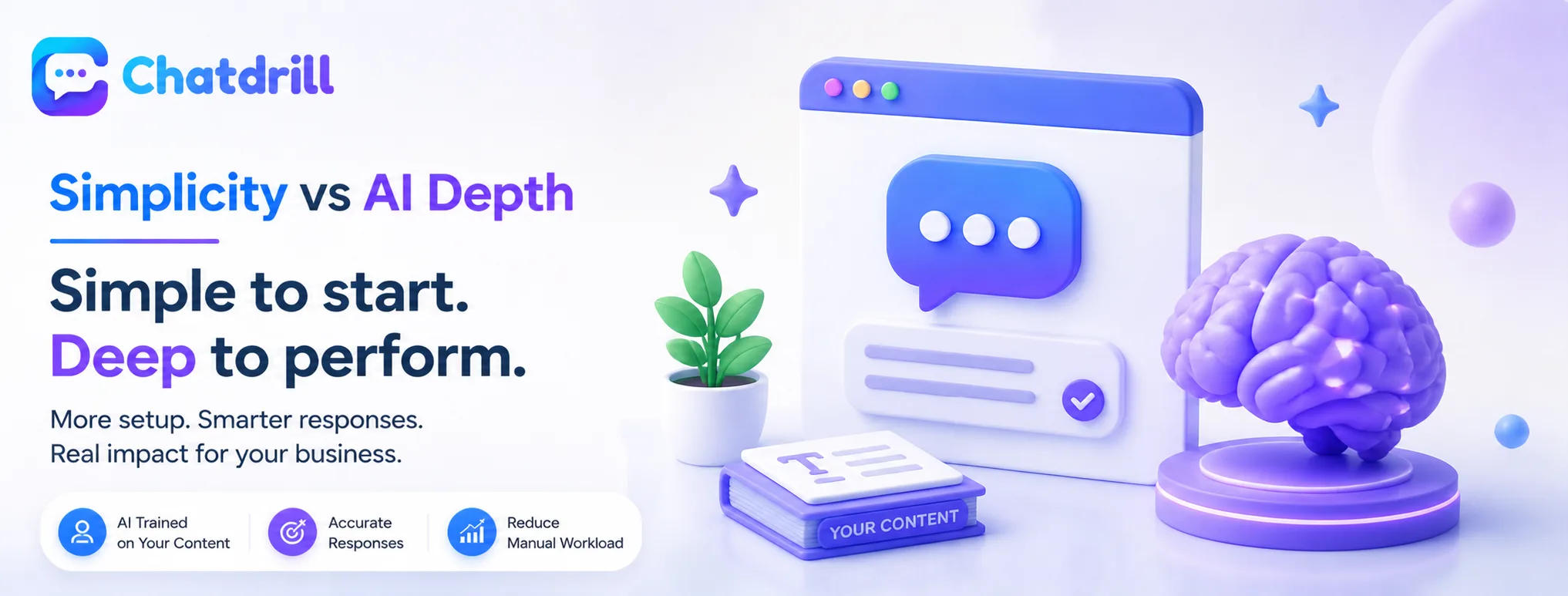
Chatra prioritizes simplicity and ease of use for a small team, while ChatDrill prioritizes deeper AI capability that requires a bit more setup investment.
Chatra's straightforward simplicity
Chatra's interface and setup process are designed to be genuinely simple for a small team without dedicated technical resources, prioritizing ease of use over extensive customization or deep AI configuration.
This simplicity suits a very small business wanting to add chat to their website quickly without a significant learning curve or ongoing configuration burden.
ChatDrill's deeper AI investment
ChatDrill asks for somewhat more upfront setup investment in exchange for AI trained specifically on your business content, producing genuinely automated, accurate responses rather than primarily facilitating human-to-human chat.
This investment pays off specifically for a business wanting chat to meaningfully reduce manual support workload, not just provide a communication channel.
Pricing for Small Business Budgets
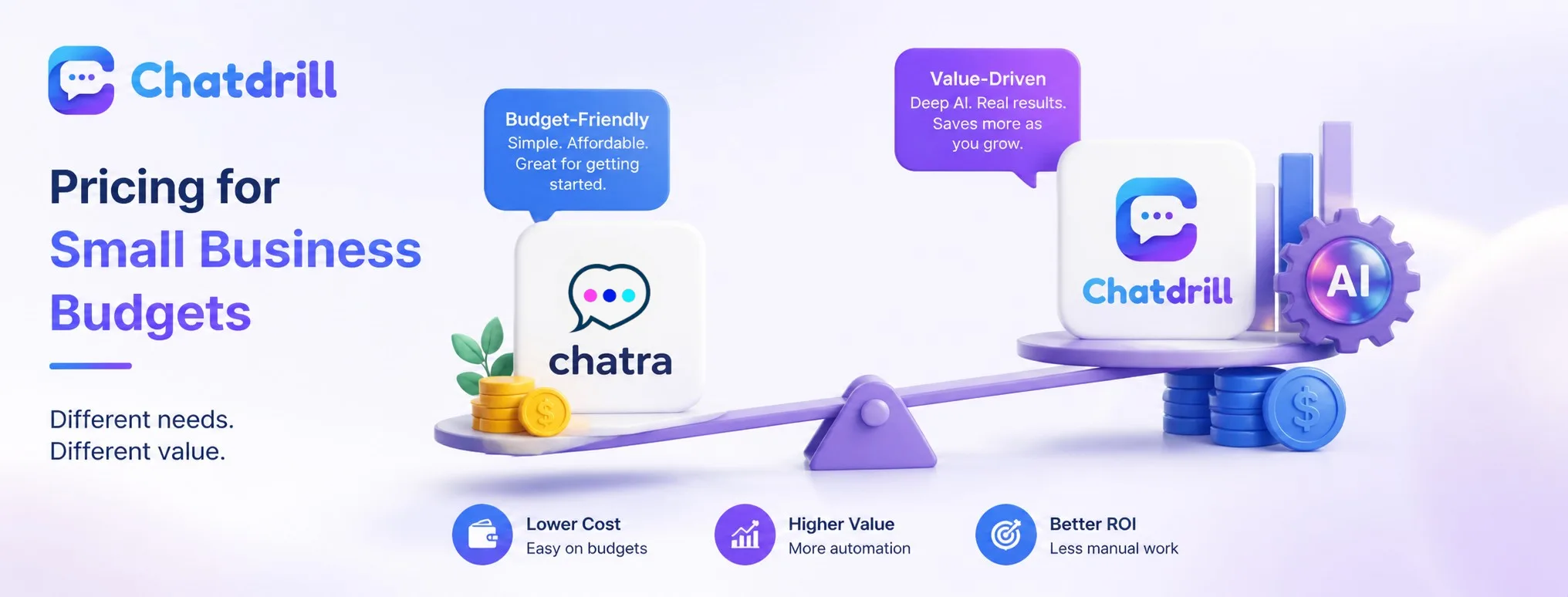
Chatra's pricing is generally positioned at the lower end suited to very small budgets, while ChatDrill's pricing reflects its deeper AI capability at a somewhat higher but still accessible range.
Chatra's budget-friendly positioning
Chatra's pricing tiers are generally accessible for a very small business or solo operator, reflecting its focus on straightforward chat functionality without extensive AI infrastructure costs.
This affordability matters most for a business genuinely operating on a tight budget where even a modest cost difference is meaningful.
ChatDrill's value-driven pricing
ChatDrill's pricing sits somewhat higher, reflecting the cost of genuinely deep AI training, though this investment often pays for itself through reduced manual support time once volume reaches even a modest, ongoing level.
This value calculation favors ChatDrill once a business has enough chat volume that AI-driven efficiency meaningfully offsets the higher upfront cost.
Feature Comparison for Everyday Use
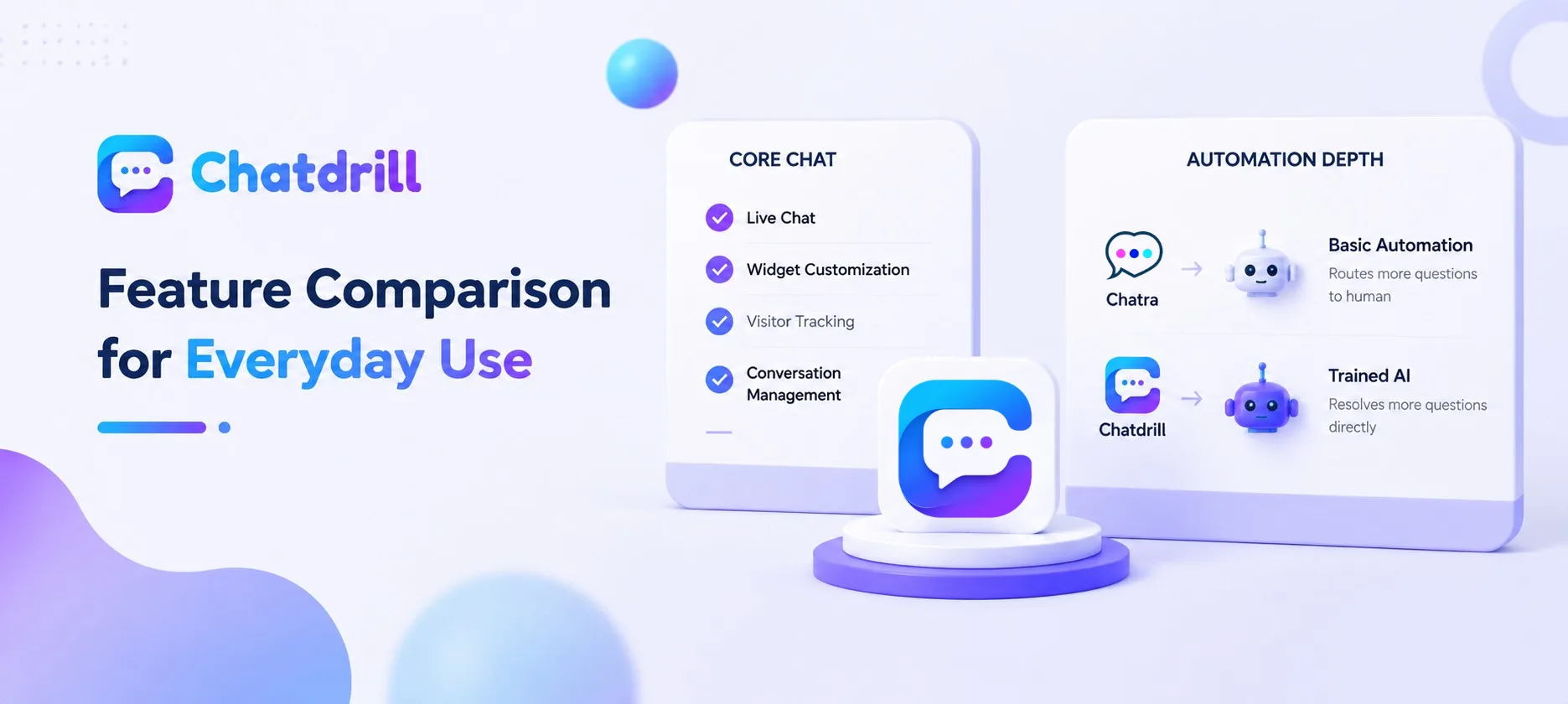
Both platforms cover core live chat essentials well, with the meaningful difference emerging specifically in automated response accuracy and depth.
Core chat functionality parity
Both Chatra and ChatDrill provide solid core chat functionality, widget customization, visitor tracking, and basic conversation management, meaning neither platform has a meaningful gap in these fundamental features.
This parity means the deciding factor genuinely comes down to automation depth rather than basic chat capability itself.
Where the automation gap shows up
The practical difference emerges specifically when a customer asks a genuine question requiring an accurate answer, where ChatDrill's trained AI tends to resolve it directly while Chatra's more basic automation may route more questions to a human regardless.
This gap matters most for a business fielding a meaningful volume of repetitive questions that trained AI could handle without human involvement.
Which Small Business Each Platform Fits
Chatra fits a very small business wanting simple, affordable chat coverage, while ChatDrill fits a small business ready to invest in genuine AI-driven efficiency.
When Chatra is likely the better fit
A very small business or solo operator wanting basic chat coverage without significant setup investment or ongoing AI configuration tends to find Chatra's simplicity a genuinely good match for their current stage.
This fit is strongest when chat volume is low enough that manual, human-handled conversation remains entirely manageable.
When ChatDrill is likely the better fit
A small business experiencing genuine, growing chat volume, or one wanting AI to meaningfully reduce manual support workload rather than just facilitate conversation, tends to find ChatDrill's deeper investment pays off relatively quickly.
This fit is strongest once repetitive question volume reaches a level where trained AI resolution delivers clear time savings.
Knowing When to Reconsider as You Grow
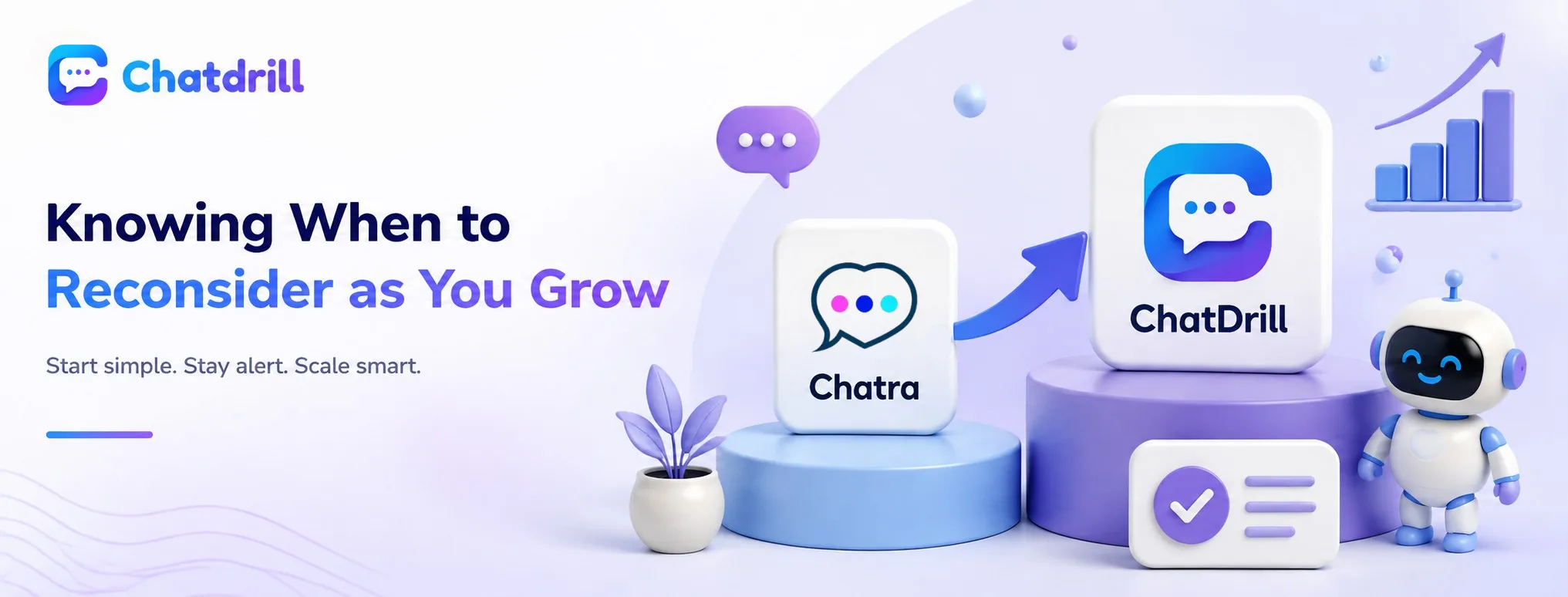
A small business starting with Chatra's simplicity should watch for specific signals suggesting it's time to consider a deeper AI investment like ChatDrill.
Signals worth watching for
Noticing that the same handful of questions come up repeatedly, or that chat volume has grown enough that manual responses are taking meaningful staff time, are both reasonable signals that a deeper AI investment could pay off.
Reviewing this pattern periodically, rather than only when volume becomes genuinely overwhelming, allows a smoother, more proactive transition if and when it makes sense.
Making the transition smoothly
If moving from Chatra to ChatDrill later, exporting existing conversation history and using it as a starting point for AI training gives ChatDrill a genuine head start reflecting your real, historical customer questions.
This approach turns your accumulated Chatra conversation history into a practical asset for the transition, rather than starting ChatDrill's training completely from scratch.