
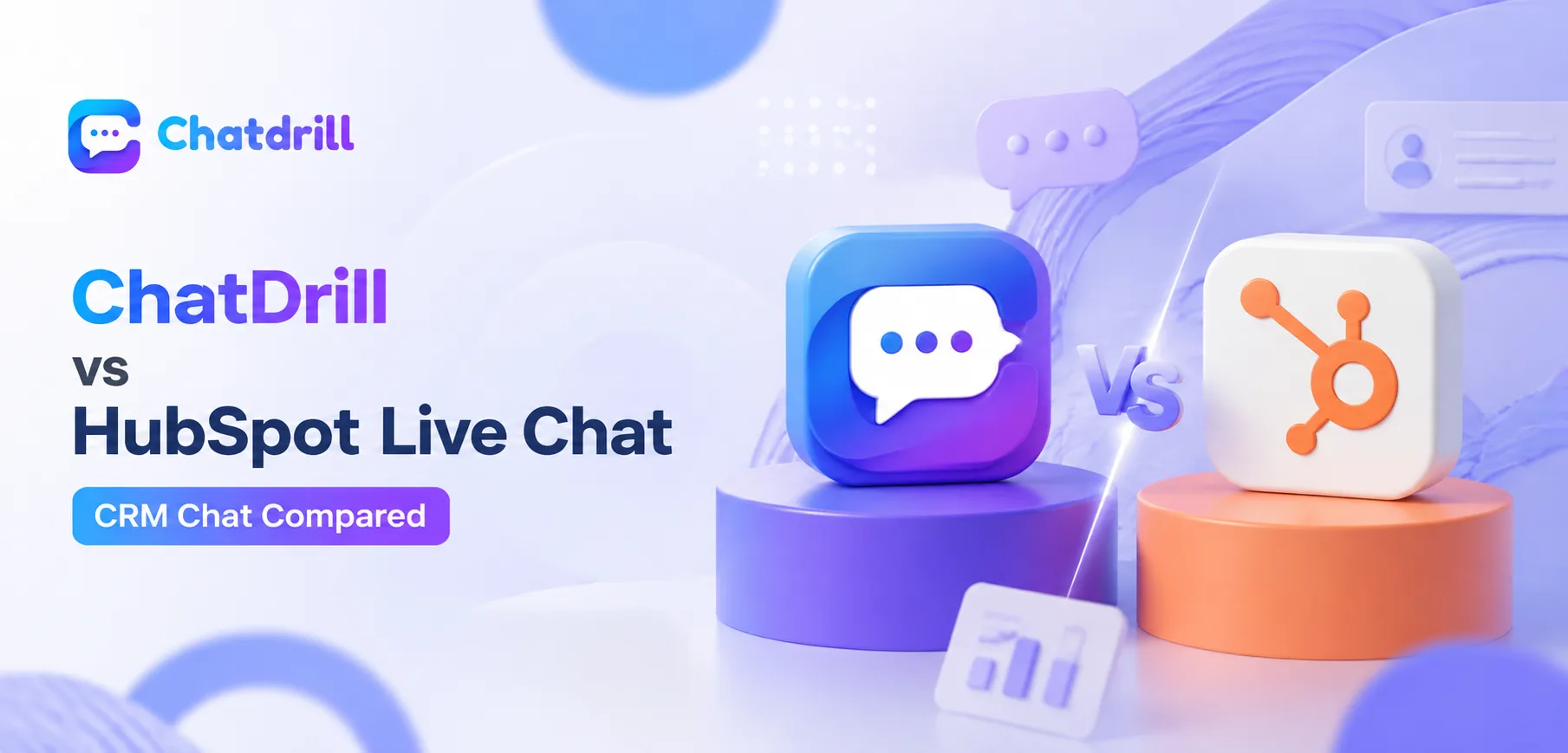
HubSpot's live chat exists as one feature within its much larger CRM and marketing platform, meaning its biggest strength is how naturally it connects to contact records, deal pipelines, and marketing automation a HubSpot-using team already relies on.
ChatDrill takes the opposite starting point, building specifically around chat and its AI, with the goal of making that one channel genuinely capable rather than one module within a broader suite.
For a team already deep in the HubSpot ecosystem, this difference often comes down to convenience versus specialization, native CRM connection on one side, deeper chat-specific AI capability on the other.
This comparison covers CRM integration depth, AI and automation capability, pricing structure, and which team each platform tends to fit, plus guidance on migration and making the final decision.
Quick answer: HubSpot's live chat is tightly bundled with its CRM, marketing, and sales hubs, making it a natural fit for a team already running on HubSpot, while ChatDrill is a
standalone, chat-first platform with deeper AI training capability, better suited to a team wanting genuinely capable chat regardless of which CRM they use.
CRM Integration Depth
HubSpot's live chat benefits from native, deep connection to its own CRM, while ChatDrill supports integration with HubSpot and other CRMs without being built around any single one.
HubSpot's native CRM advantage
Because HubSpot's chat lives inside the same platform as its contact records, deal stages, and marketing lists, a conversation automatically enriches a contact's timeline without any separate integration step.
This native depth is difficult for any standalone chat tool to fully replicate, since it reflects the advantage of chat and CRM being built by the same team as one connected product from the start.
ChatDrill's CRM-agnostic integration approach
ChatDrill connects to HubSpot's CRM through its integration layer, syncing conversation data and contact details without requiring your team to actually run HubSpot as your core CRM.
This flexibility matters for a team using a different CRM alongside HubSpot for marketing, or one that might switch CRMs down the line without wanting to also replace their chat platform at the same time.
AI and Automation Capability
ChatDrill's concentrated focus on chat AI tends to produce deeper training and more natural automation than HubSpot's chat functionality, which exists as one piece of a much broader platform.
Where ChatDrill's focus shows
Because ChatDrill's entire product development concentrates on chat and its AI, training depth and conversational accuracy tend to be genuinely stronger than a chat feature built as one part of a company managing CRM, marketing, sales, and service hubs simultaneously.
This shows up specifically in how naturally ChatDrill's AI can be trained on nuanced product or policy detail, compared to a more generalized automation layer.
HubSpot's automation within a broader context
HubSpot's chat automation works well for straightforward routing and basic bot flows, particularly when paired with its broader marketing and lead-scoring tools, but doesn't receive the same concentrated AI development investment as a chat-first platform.
For a team whose chat needs are relatively simple, this may not matter much, but for one wanting genuinely sophisticated, natural AI conversation, the gap becomes more noticeable.
Pricing Structure Compared
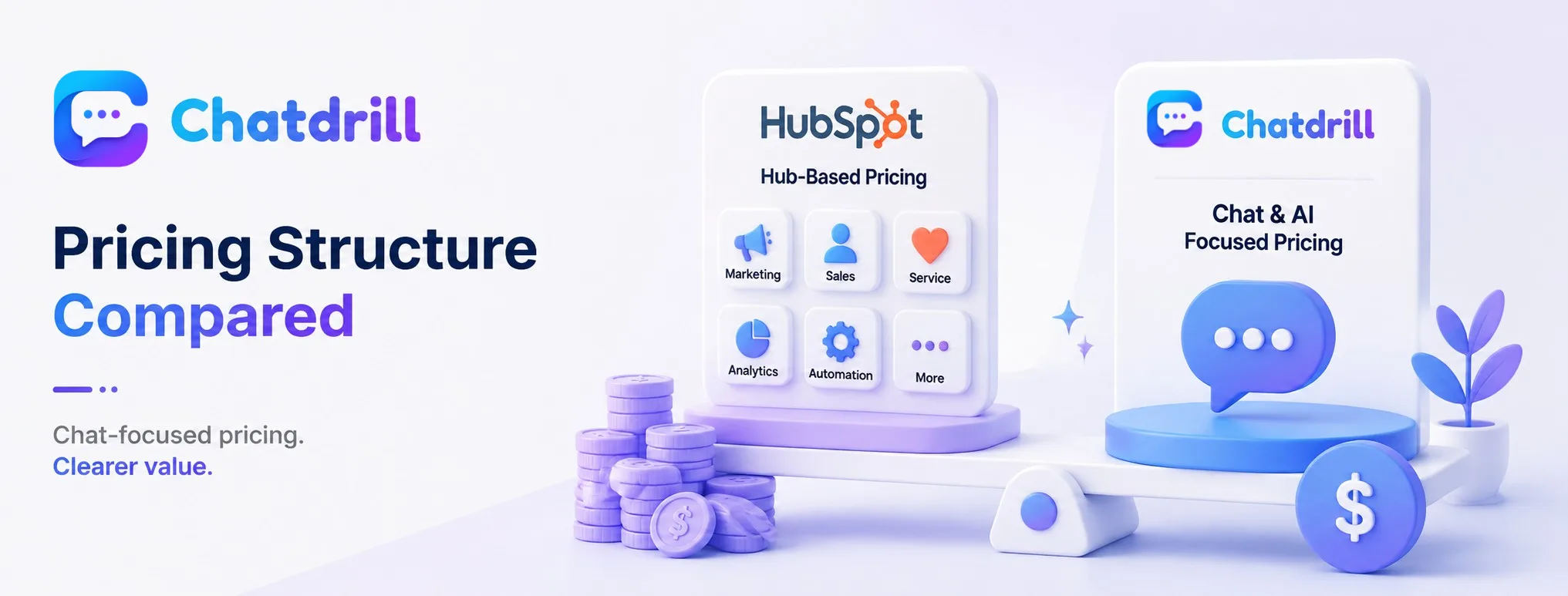
HubSpot's chat pricing is tied to its broader hub-based plans, while ChatDrill's pricing concentrates specifically on chat and AI usage.
How HubSpot bundles chat into hub pricing
HubSpot's live chat is generally included within its Marketing or Service Hub plans, meaning the effective cost of chat is wrapped into a broader subscription that includes many other features, some of which a team may not fully utilize.
This bundling can represent excellent value for a team using most of what a given Hub offers, but poor value for one wanting chat specifically without the rest.
How ChatDrill's focused pricing compares
ChatDrill's pricing reflects specifically chat and AI capability, making the direct cost of getting genuinely capable chat clearer and often lower for a team not otherwise needing HubSpot's broader hub features.
This distinction matters most for a team evaluating chat on its own merits rather than as part of a larger platform decision already made for other reasons.
Which Team Each Platform Fits
HubSpot's chat fits a team already committed to the HubSpot ecosystem, while ChatDrill fits a team prioritizing chat-specific AI depth independent of CRM choice.
When HubSpot Live Chat is likely the better fit
A team already running its marketing, sales, and service operations through HubSpot gains genuine, hard-to-replicate value from chat living natively within that same system.
This fit is strongest when a team's chat needs are reasonably straightforward and the value of unified CRM context outweighs deeper AI sophistication.
When ChatDrill is likely the better fit
A team not built around HubSpot, or one prioritizing genuinely deep, naturally trained AI conversation capability regardless of which CRM they use, tends to find ChatDrill's focused approach delivers more value in the chat channel specifically.
This fit is strongest for a team treating chat as a capability worth optimizing on its own terms, rather than accepting whatever chat feature comes bundled with their CRM choice.
Migration and Decision-Making Guidance
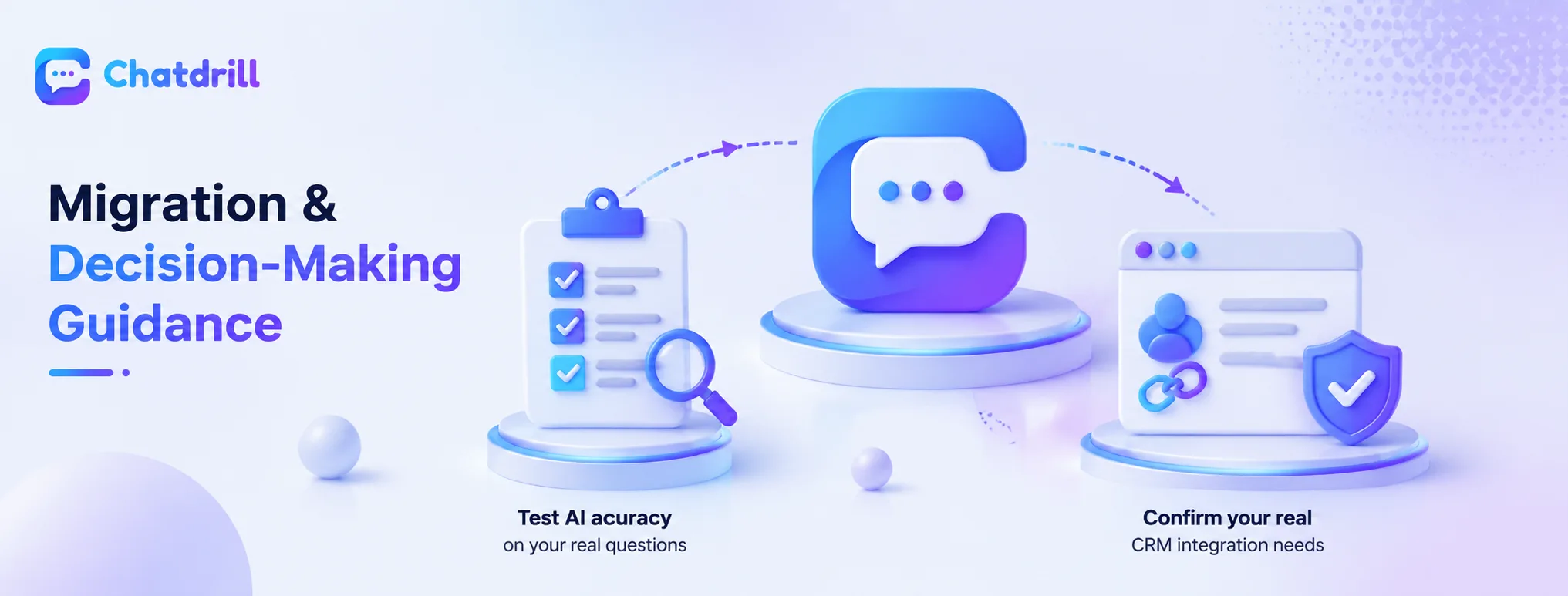
Deciding between these platforms benefits from testing actual AI accuracy on your real questions and confirming your specific HubSpot integration needs before committing either direction.
Testing AI accuracy on your own real questions
Running the same set of genuinely representative customer questions through each platform's chat AI reveals the practical accuracy gap more reliably than comparing marketing claims or general reputation.
This hands-on test is worth doing specifically with your own nuanced product details, since that's where a difference in training depth tends to show up most clearly.
Confirming your genuine CRM integration needs
If choosing ChatDrill while still using HubSpot as your CRM, confirming exactly which contact and deal data syncs between the two platforms avoids assuming a level of native integration that only HubSpot's own chat feature actually provides.
This confirmation step protects against a workflow gap emerging only after you've already committed to a new platform.