
Chaport has built a reputation as an accessible, affordable live chat option, particularly appealing to small and mid-sized businesses wanting solid core functionality without a significant price commitment.
ChatDrill occupies a different position, investing more heavily in AI training depth specifically, aiming to deliver genuinely capable automated question resolution rather than primarily affordable core chat functionality.
The comparison here largely comes down to budget priorities and how much genuine AI automation capability actually matters for your specific support volume and complexity.
This comparison covers core functionality and pricing, AI capability differences, feature parity in everyday use, and which type of business each platform tends to fit best.
Quick answer: Chaport offers an accessible, affordable live chat option with straightforward automation aimed at small and mid-sized businesses, while ChatDrill invests more heavily in custom AI training depth at a higher price point, making Chaport the better fit for straightforward, budget-conscious chat needs and ChatDrill the better fit for a business wanting genuinely capable, automated question resolution.
Core Functionality and Pricing Position
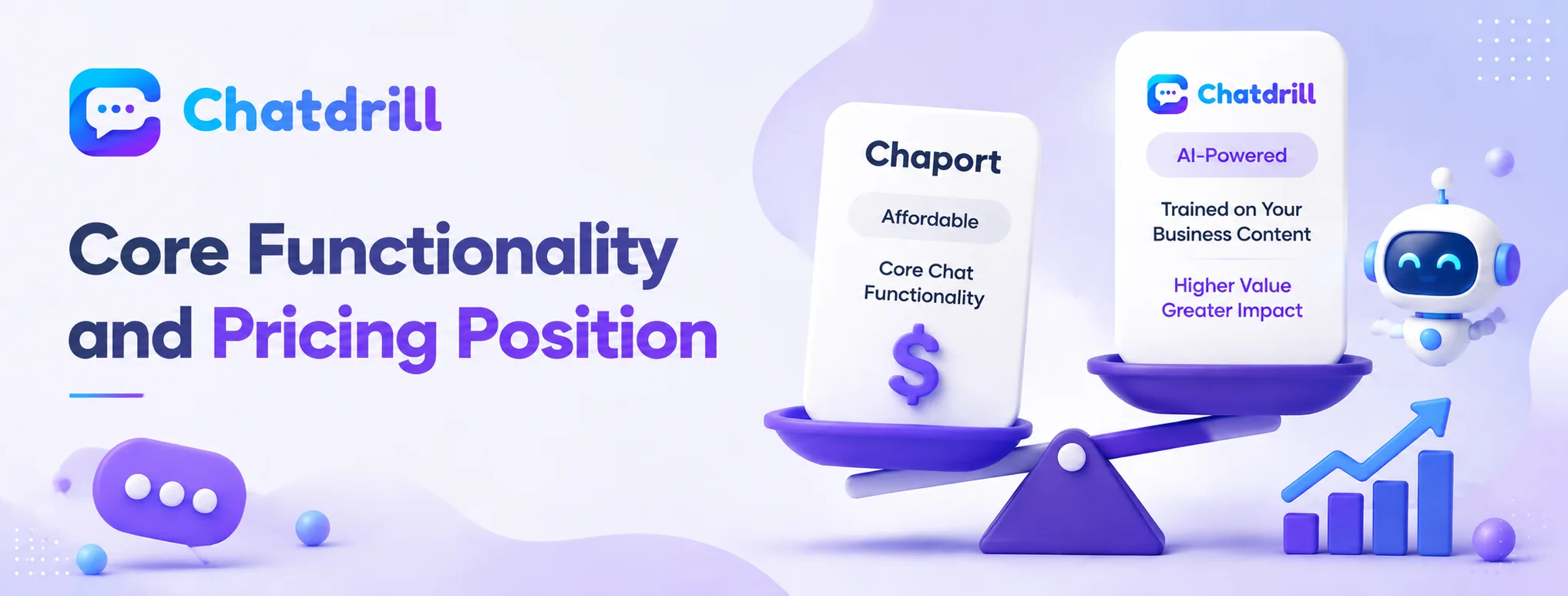
Chaport positions itself specifically around affordability and straightforward functionality, while ChatDrill's pricing reflects deeper AI investment.
Chaport's affordable, accessible positioning
Chaport's pricing tiers are generally positioned to be accessible for small and mid-sized businesses, reflecting straightforward core chat functionality without extensive AI infrastructure investment.
This positioning genuinely suits a business prioritizing budget efficiency for core chat coverage over deep, specialized automation.
ChatDrill's AI-focused investment
ChatDrill's pricing sits at a different point, reflecting investment specifically in training AI to genuinely resolve customer questions using your actual business content, rather than primarily affordable core functionality.
This investment tends to deliver clearer value once a business has enough support volume that automated resolution meaningfully offsets the higher cost.
AI Capability Differences
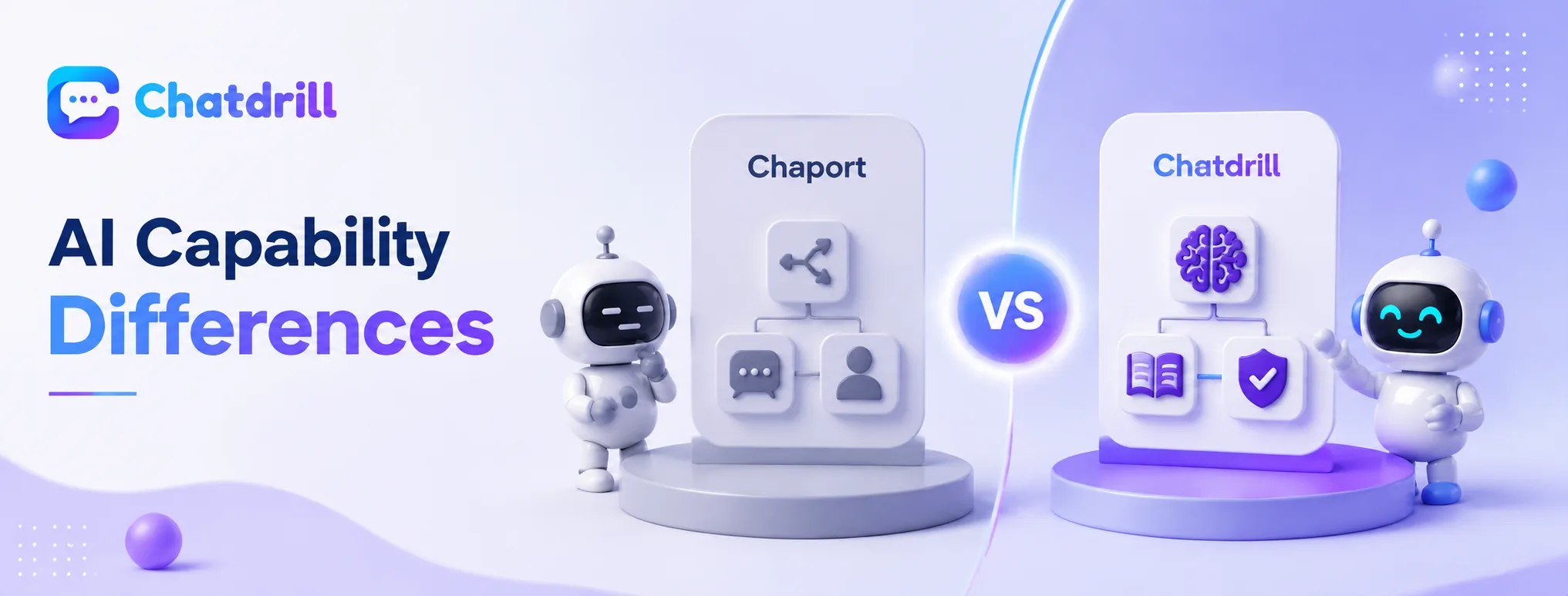
ChatDrill's concentrated AI training tends to resolve a meaningfully higher share of genuine customer questions automatically compared to Chaport's more basic automation.
Chaport's straightforward automation approach
Chaport's automation handles basic routing and simple, common scenarios reasonably well, though it doesn't emphasize the same depth of custom AI training that a chat-first, AI-focused platform provides.
This works adequately for a business whose support needs are fairly standard and don't require nuanced, deeply trained responses.
ChatDrill's depth for more nuanced questions
ChatDrill's training approach handles genuinely nuanced, business-specific questions more accurately, since its AI is built specifically around your actual product and policy details rather than general automation patterns.
This depth matters most for a business with more specific or complex support needs that basic automation would struggle to handle accurately.
Everyday Feature Parity
Both platforms cover core chat essentials solidly, meaning the practical difference in daily use comes down mainly to how much of your conversation volume each platform's AI can genuinely resolve on its own.
Where both platforms perform similarly
Widget customization, basic visitor tracking, and conversation management work solidly on both platforms, meaning neither has a meaningful functional gap in these fundamental areas.
This parity means most of the genuine, practical difference between the two platforms shows up specifically in automated resolution capability rather than basic feature availability.
Where the practical daily difference shows up
Reviewing how many conversations get resolved automatically versus requiring human involvement reveals the clearest, most practical day-to-day difference between the two platforms for your specific business.
This resolution-rate difference compounds over time, making it worth testing directly with your own real question set rather than assuming based on general platform positioning.
Which Business Each Platform Fits
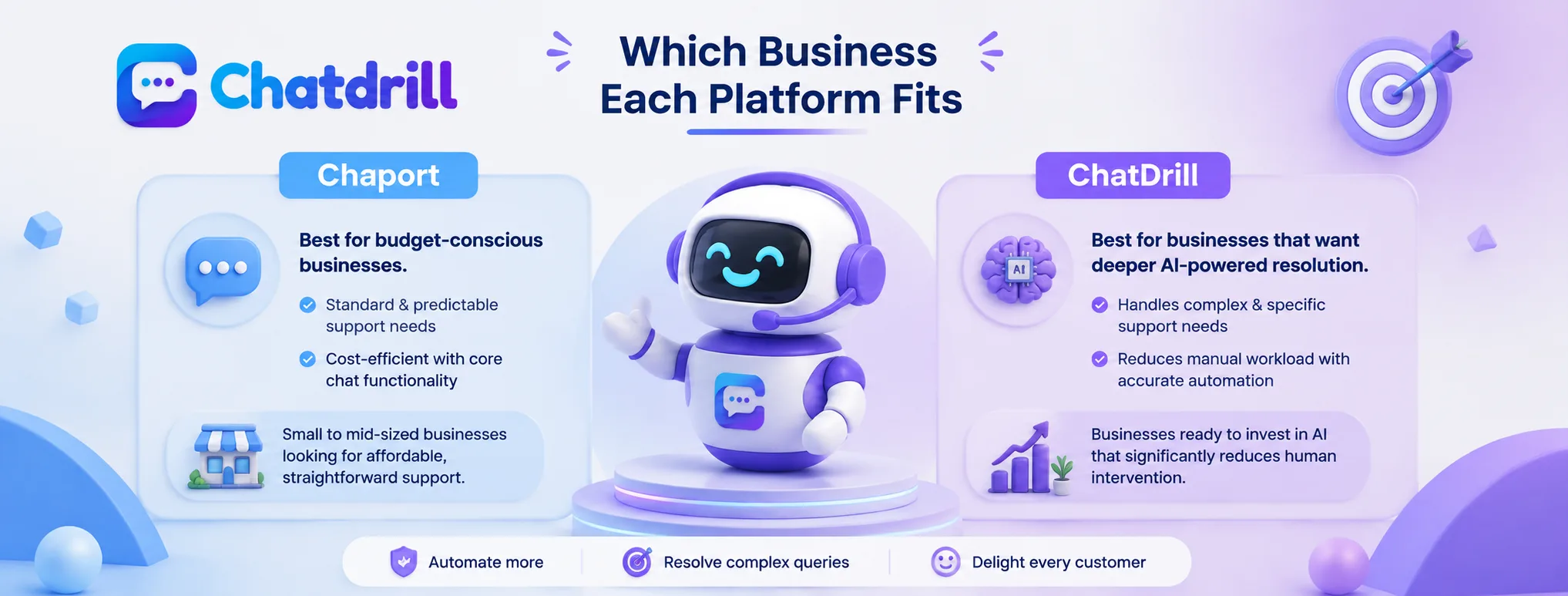
Chaport fits a budget-conscious business with fairly standard support needs, while ChatDrill fits a business wanting genuinely deep, automated question resolution regardless of complexity.
When Chaport is likely the better fit
A small or mid-sized business prioritizing budget efficiency, with support needs that are fairly standard and predictable, tends to find Chaport's accessible, straightforward approach a genuinely good match.
This fit is strongest when cost efficiency for core chat functionality matters more than deep automation capability.
When ChatDrill is likely the better fit
A business with more specific or complex support needs, or one wanting AI to genuinely reduce manual workload through accurate automated resolution, tends to find ChatDrill's deeper training investment delivers meaningfully more value.
This fit is strongest for a business willing to pay somewhat more for AI that noticeably reduces the volume of conversations requiring human attention.
Making the Final Call
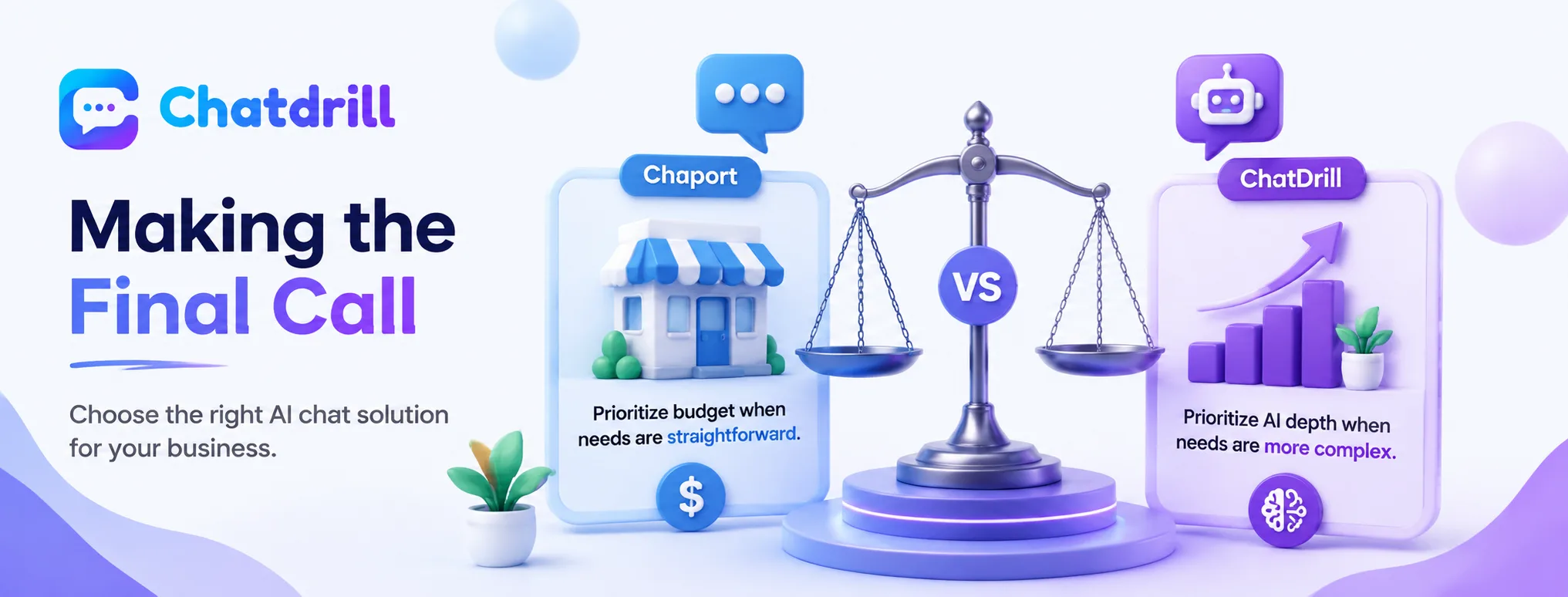
The final decision genuinely comes down to weighing your budget constraints against your actual need for deep automated question resolution.
Prioritizing budget when needs are straightforward
If your support questions are genuinely standard and predictable, and budget efficiency matters significantly, Chaport's accessible pricing and adequate automation represent reasonable, practical value.
This prioritization makes particular sense for an earlier-stage or leaner business where every cost decision carries real weight.
Prioritizing AI depth when needs are more complex
If your support questions involve genuine nuance or complexity that basic automation struggles with, ChatDrill's deeper training investment likely pays for itself through meaningfully reduced manual support burden.
This prioritization makes particular sense once support volume and complexity have grown past what a simpler, more affordable tool can adequately automate.