


A chat widget's impact on site loading speed is a genuinely legitimate evaluation concern, since a poorly optimized widget can measurably slow page load, directly affecting both user experience and search ranking factors that weigh page speed.
Quick answer: For businesses prioritizing site speed, tawk.to and Tidio are commonly cited as genuinely lightweight, efficiently coded chat widgets, though actual performance impact varies by implementation and should be tested directly on your own site rather than assumed from general reputation, with ChatDrill also built with load-time efficiency as a deliberate design priority.
This concern deserves direct testing rather than assumption, since a widget's actual performance impact depends on genuine implementation quality, not just a platform's general reputation or marketing claims about being "lightweight."
Understanding how to evaluate this specific technical characteristic properly, and which platforms tend to perform well in independent testing, helps a business add chat without meaningfully compromising site speed.
This guide covers why widget speed genuinely matters, how to test this properly, common evaluation mistakes, key questions to ask, and how ChatDrill approaches widget performance.
Why Widget Load Speed Genuinely Matters

A slow-loading widget directly affects both user experience and search ranking factors that weigh page speed as a genuine signal.
The direct user experience impact
A chat widget that measurably delays a page's overall load time creates a worse first impression before a visitor even engages with the actual page content, a genuine cost that offsets some of chat's own conversion and support benefits.
This tradeoff means widget performance deserves genuine evaluation weight, not an assumption that any added functionality justifies whatever loading cost it happens to carry.
The search ranking consideration
Page speed factors into search ranking signals, meaning a widget with a genuinely heavy loading footprint can indirectly affect organic search visibility beyond the immediate user experience cost alone.
This SEO consideration adds another genuine reason to evaluate widget performance carefully, beyond the direct visitor experience impact this guide's other points address.
How to Test Widget Performance Properly
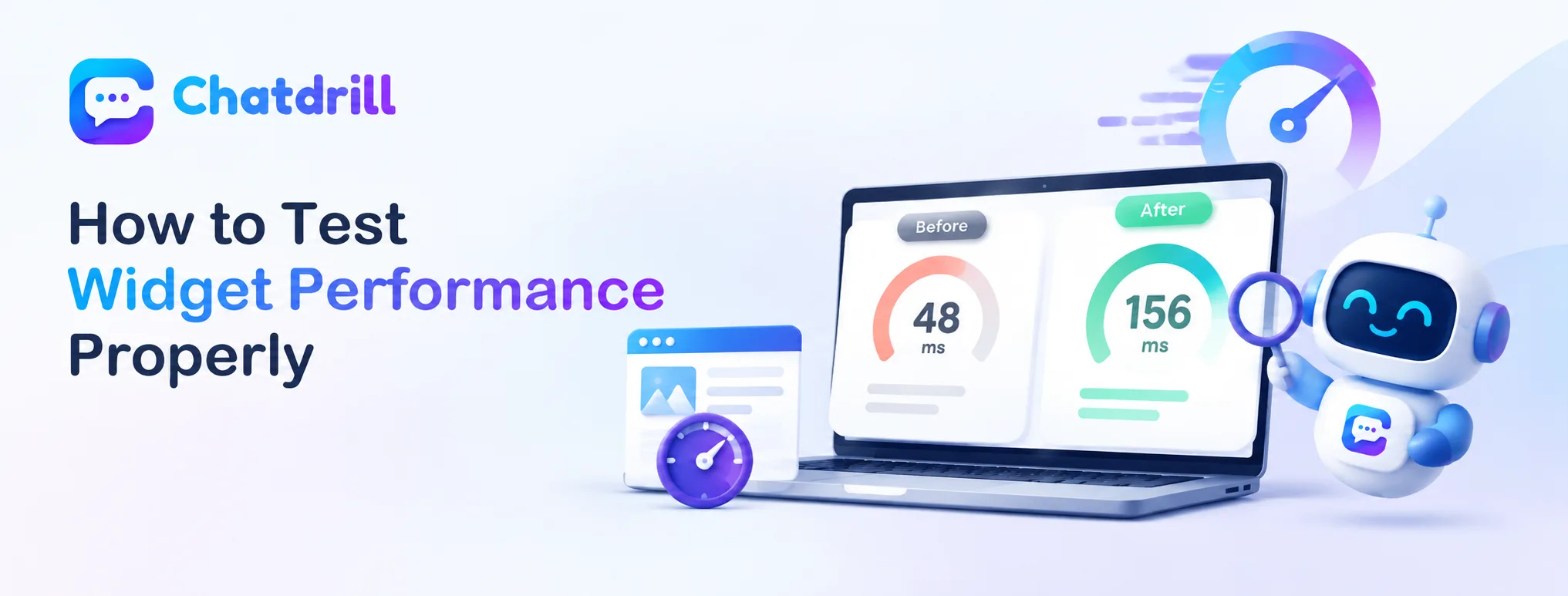
Using genuine page-speed testing tools before and after adding a candidate widget reveals its actual, measured performance impact.
Before-and-after page speed testing
Running your actual page through a genuine page-speed testing tool both before and after adding a candidate chat widget provides direct, measured evidence of its actual loading impact, rather than relying on general reputation or marketing claims.
This before-and-after comparison isolates the widget's specific contribution to any load-time change, distinguishing it from other factors that might otherwise confound a less controlled evaluation.
Testing under realistic, throttled network conditions
Testing widget performance specifically under simulated slower network conditions, not just a fast office connection, reveals how it genuinely performs for the range of actual visitors your site serves.
This realistic testing approach connects to the broader principle that a widget's genuine performance characteristics matter more than assumptions based on fast, ideal testing conditions alone.
Common Mistakes in Evaluating Widget Speed
Assuming a widget is lightweight based purely on general reputation, and testing only once without accounting for genuine variability, are common mistakes.
Assuming lightweight reputation without direct testing
Choosing a widget purely based on its general reputation for being "lightweight," without directly testing its actual impact on your own specific site, risks a mismatch between general reputation and your genuine, measured experience.
Direct testing, as this guide recommends, provides considerably more reliable evidence than relying on general claims or comparisons conducted under different conditions than your own site.
Testing only once without accounting for variability
A single page-speed test can reflect momentary variability rather than a widget's genuine, typical performance impact, making repeated testing across multiple attempts a more reliable evaluation approach.
This repeated testing habit produces a more genuinely representative picture than drawing a conclusion from one isolated measurement.
Key Questions to Ask Before Choosing
Asking for specific technical detail about loading approach and confirming your own direct test results are the most useful evaluation steps here.
What loading approach does this widget use?
Asking a vendor directly whether their widget loads asynchronously, meaning it doesn't block the rest of the page from loading, reveals a genuine technical detail relevant to actual performance impact.
A vendor genuinely confident in their widget's performance should be able to provide this specific technical detail rather than only a general assurance of being lightweight.
What did my own direct testing actually show?
Prioritizing your own genuine, direct page-speed test results over any vendor claim or general comparison ensures your final decision reflects your actual site's specific, measured experience.
This direct evidence, gathered through the testing approach this guide recommends, provides the most reliable basis for a genuinely informed decision.