
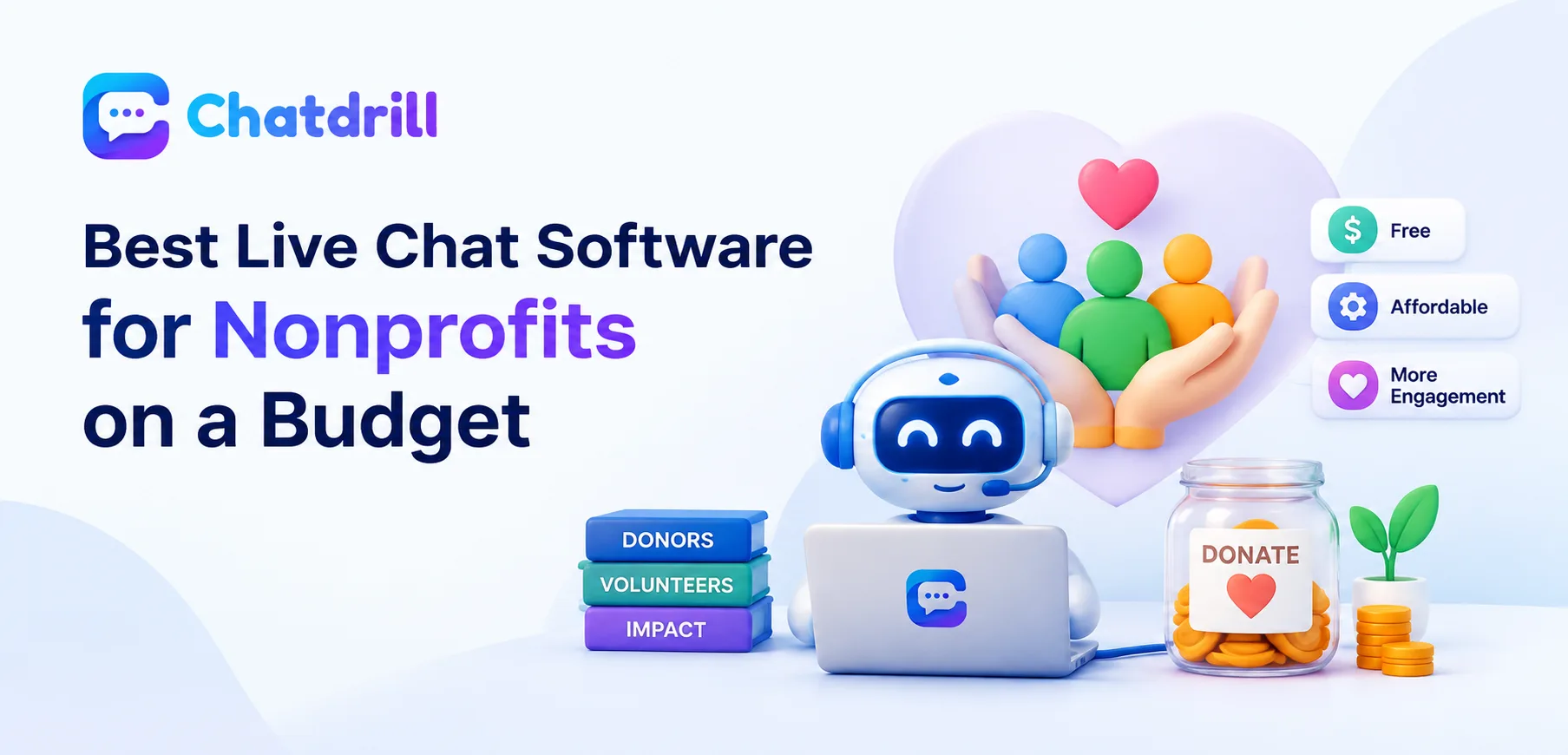
A nonprofit organization typically operates under genuinely tighter budget constraints than a comparable for-profit business, making cost a more heavily weighted evaluation factor than it might be for an organization with more flexible resources.
Quick answer: For nonprofits working with limited budgets, tawk.to stands out as a genuinely free, full-featured option worth evaluating first, while Crisp and Tidio offer accessible paid tiers with more automation capability if a nonprofit's volume genuinely justifies the upgrade, with ChatDrill worth considering once AI-assisted donor and volunteer engagement becomes a meaningful priority.
This constraint doesn't mean sacrificing genuine chat functionality entirely, since several platforms offer meaningfully capable free or low-cost tiers well suited to a nonprofit's typical volume and needs.
Understanding which specific options deliver genuine value at minimal cost, and when it makes sense to eventually upgrade, helps a nonprofit make a financially responsible choice without under-serving its actual donor and volunteer engagement needs.
This guide covers what nonprofits specifically need, genuinely strong budget-friendly options, common evaluation mistakes, key questions to ask, and how ChatDrill fits nonprofit organizations.
What Nonprofits Specifically Need on a Budget
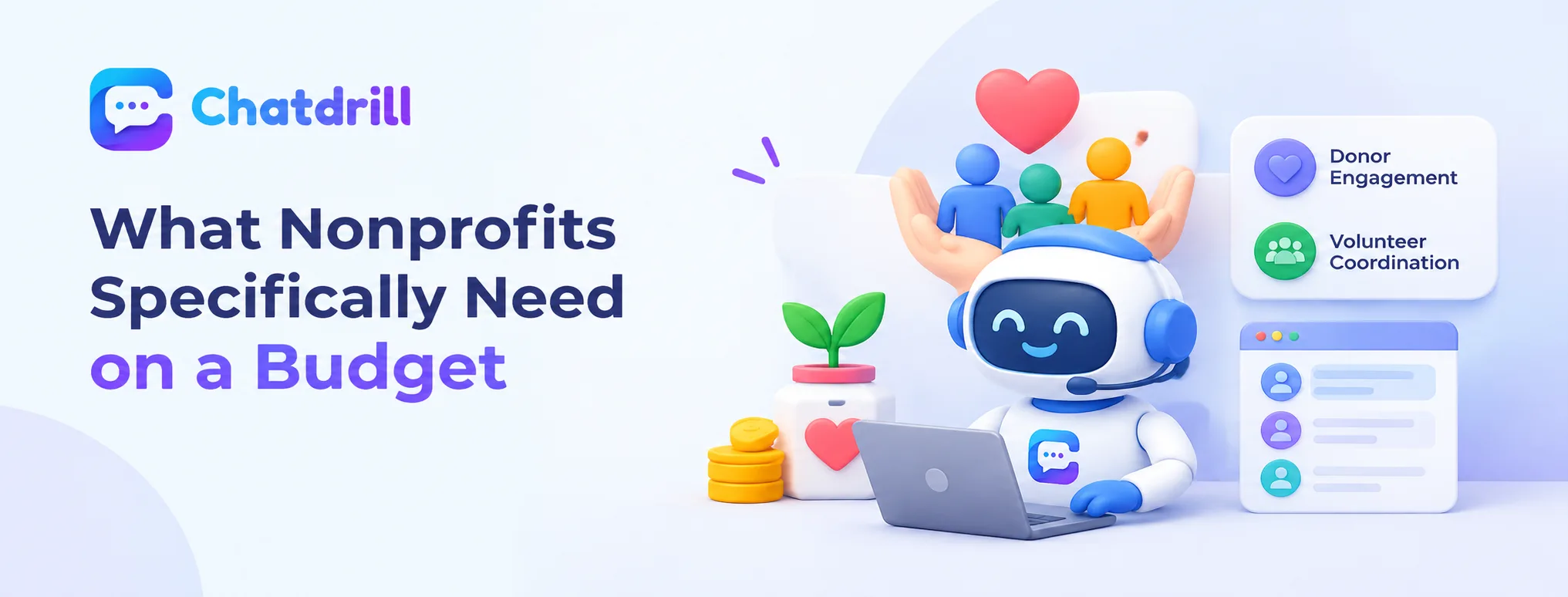
Genuine no-cost or low-cost functionality and support for donor and volunteer-specific engagement matter more here than broad, enterprise-oriented feature depth.
Genuine no-cost or low-cost functionality first
A nonprofit's evaluation should prioritize platforms offering meaningfully capable functionality at zero or minimal cost, since budget constraints are typically more binding here than for a comparable for-profit organization with more flexible resources.
This priority means evaluating specifically what a free or entry-level tier genuinely includes, rather than assuming any "free" option provides comparably useful functionality across every platform.
Support for donor and volunteer-specific engagement
A nonprofit's chat use case often centers on donor questions, volunteer coordination, and program information, distinct from a typical for-profit customer support or sales context, meaning genuine flexibility to configure for these specific interaction types matters.
This distinct use case is worth keeping in mind during evaluation, since a platform built purely around commercial sales conversion may not naturally accommodate these nonprofit-specific interaction patterns as well.
Genuinely Strong Budget-Friendly Options
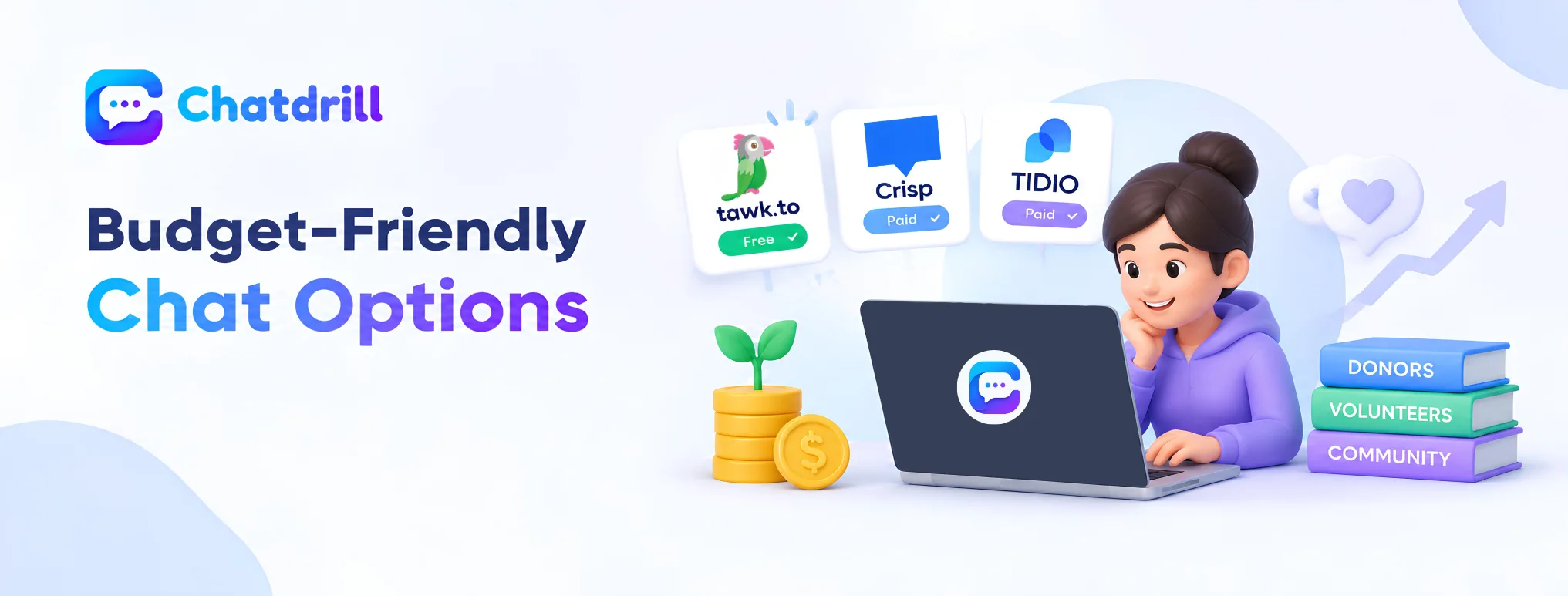
tawk.to's genuinely free core offering makes it a strong starting point, while Crisp and Tidio provide accessible paid tiers if volume justifies an upgrade.
tawk.to as a genuinely free starting point
tawk.to's completely free core chat functionality makes it a genuinely practical starting point for a nonprofit with minimal or no budget allocated specifically for chat software.
This free-tier approach lets a nonprofit test whether chat delivers genuine value for donor and volunteer engagement before considering any paid upgrade as the organization's needs potentially grow.
Crisp and Tidio for accessible paid tiers
Crisp and Tidio both offer meaningfully capable free tiers alongside accessible, reasonably priced paid upgrades, providing a nonprofit a genuine growth path if volume or automation needs eventually exceed what a free tier supports.
This tiered structure lets a nonprofit scale its chat investment gradually alongside genuine organizational growth, rather than requiring a large upfront commitment.
Common Evaluation Mistakes for Nonprofits
Assuming every "free" tier offers comparable functionality, and overlooking the value of donor-specific configuration, are common evaluation mistakes.
Assuming every free tier is comparably capable
Free tiers vary considerably in genuine capability, some offering meaningfully useful core functionality, others severely limiting conversation volume or features to the point of impracticality for genuine organizational use.
Reviewing the specific limitations of a candidate free tier directly, rather than assuming general comparability across platforms, avoids choosing an option that turns out too limited for genuine use.
Overlooking donor-specific configuration value
Choosing a platform purely based on general popularity, without considering whether it genuinely supports the donor and volunteer-specific configuration this guide identifies as valuable, can produce a less well-suited fit despite an otherwise reasonable platform choice.
Considering this nonprofit-specific use case directly during evaluation, rather than treating the decision identically to a typical commercial support scenario, produces a more genuinely appropriate choice.
Key Questions to Ask Before Choosing
Confirming exact free-tier limitations and asking about nonprofit-specific discounts are the most useful evaluation questions here.
What exactly does the free tier include and limit?
Asking specifically about conversation volume caps, feature restrictions, and any other genuine limitations of a candidate free tier avoids discovering an inconvenient constraint only after committing to a platform.
This specific inquiry matters more for a budget-constrained nonprofit than for an organization with more flexibility to simply upgrade if a limitation turns out to matter.
Does this vendor offer nonprofit-specific pricing?
Some software vendors offer specific discounted pricing for verified nonprofit organizations, a genuine cost-saving opportunity worth directly asking about rather than assuming standard pricing applies universally.
This direct question can meaningfully reduce cost even for a platform beyond a basic free tier, worth checking before ruling out an otherwise well-suited option purely on standard pricing.