
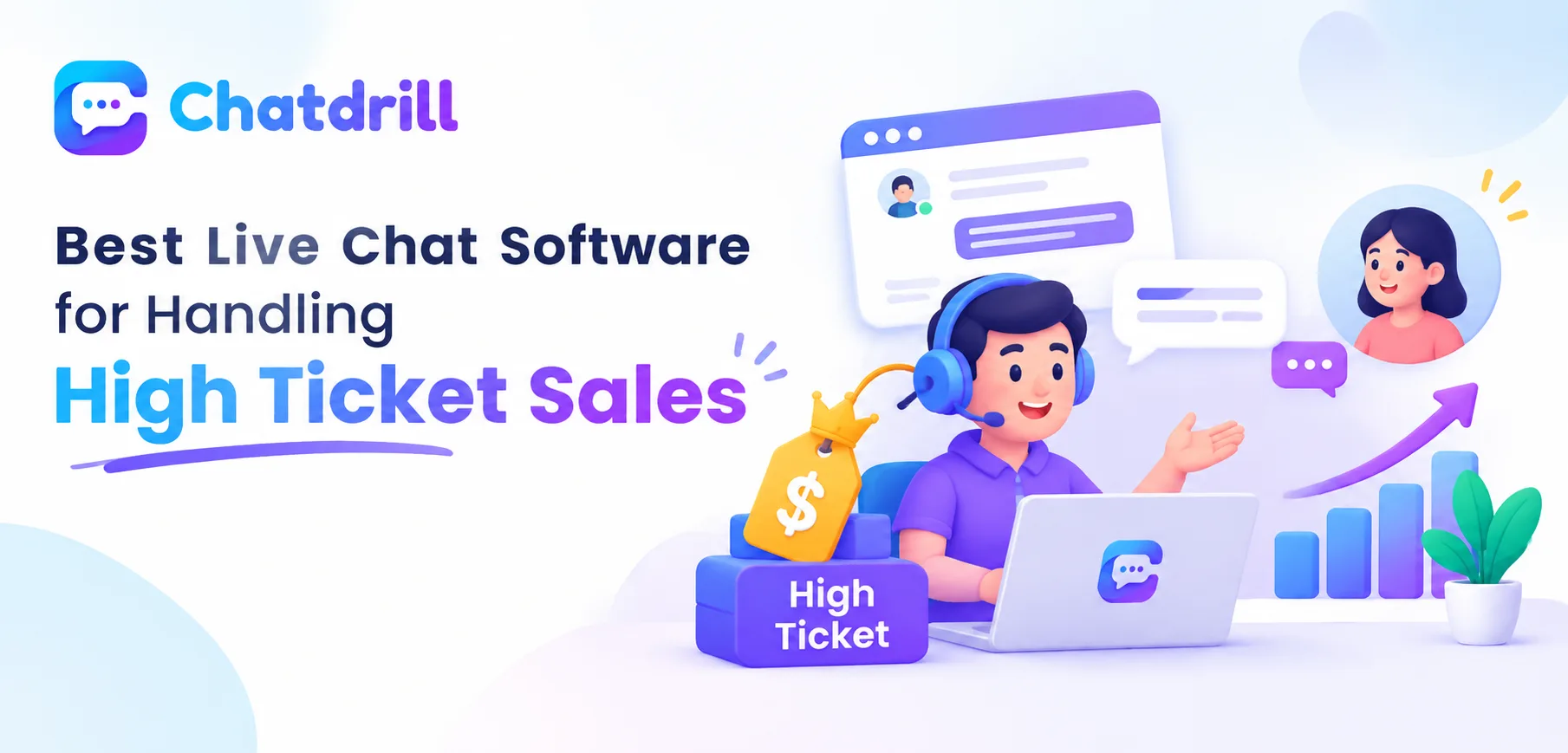
A high ticket sale typically involves a genuinely considered decision process, meaning a prospect's specific, unresolved question or hesitation at the wrong moment can quietly end an otherwise promising deal that a lower-priced, more impulsive purchase would rarely lose in the same way.
Quick answer: For high ticket sales, Drift (now part of Salesloft) stands out for its firmographic-based visitor identification and real-time intent routing that gets high-value accounts to a sales rep instantly, while Intercom offers strong consultative-sales capability at a somewhat more accessible price point, both reflecting the core principle that real-time conversation removes the hesitation that most often kills a high-value, considered purchase decision.
Live chat for this context needs to do more than answer simple questions, it needs to identify a high-value prospect accurately, route them to the right person quickly, and support a genuinely consultative conversation rather than a transactional one.
Understanding which specific platforms and capabilities genuinely serve this higher-stakes sales context helps a business avoid losing a valuable deal to a chat tool built primarily for simpler, lower-value interactions.
This guide covers what high ticket sales specifically need from chat, genuinely strong options for this use case, common evaluation mistakes, key questions to ask, and how ChatDrill fits this specific use case.
What High Ticket Sales Specifically Need From Chat
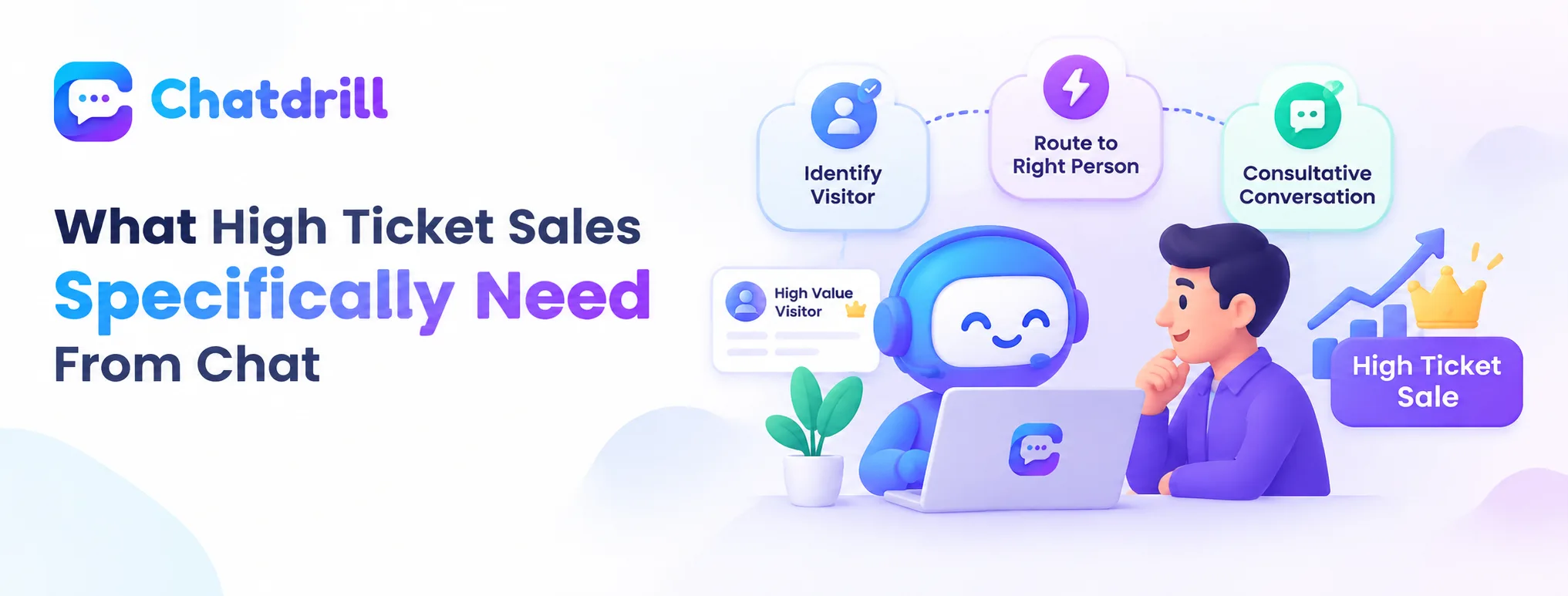
Accurate visitor identification, fast routing to the right person, and genuine consultative conversation support matter more here than simple, transactional chat functionality.
Identifying and prioritizing high-value visitors
A high ticket sales context benefits considerably from a chat system that can recognize when a visitor likely represents a genuinely high-value opportunity, whether through firmographic data, account history, or specific browsing behavior, rather than treating every visitor identically.
This identification capability lets a business allocate its most experienced sales attention to the conversations most likely to represent genuine, significant revenue potential.
Supporting genuinely consultative conversation
A high ticket purchase decision typically involves more nuanced, multi-part questions than a simple transactional purchase, meaning the chat experience should support a genuinely substantive, consultative conversation rather than a narrow, script-limited interaction.
Real-time conversation removes exactly the kind of hesitation that most often derails a considered, high-value decision, provided the conversation itself is substantive enough to genuinely address the prospect's real concerns.
Genuinely Strong Options for High Ticket Sales
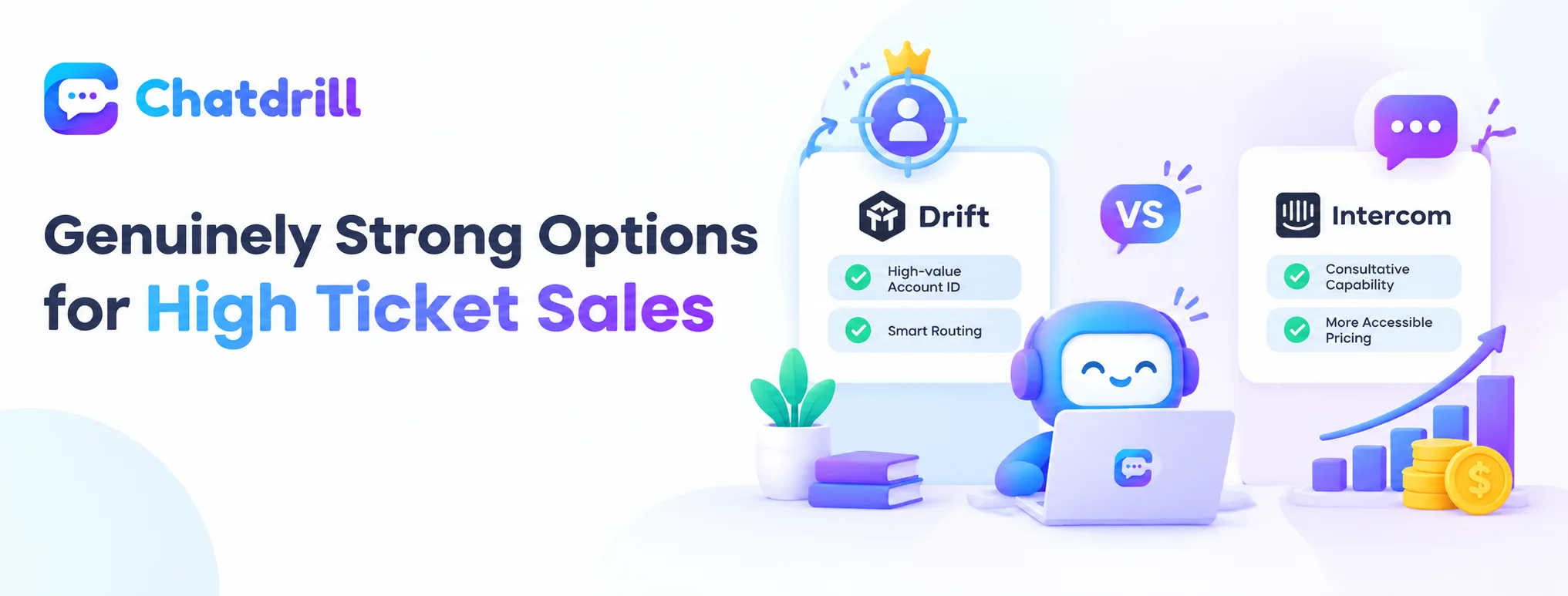
Drift stands out specifically for high-value account identification and routing, while Intercom offers strong consultative capability at a somewhat more accessible price point.
Drift for high-value account identification and routing
Drift, now part of Salesloft, is specifically built for B2B revenue teams rather than general customer support, identifying a visitor from a target company using firmographic data and routing them directly to the right sales rep rather than a generic queue.
This capability, combined with in-chat meeting booking that lets a qualified buyer schedule a demo without leaving the conversation, directly addresses the fast, accurate routing this guide identifies as important, though this depth comes with a correspondingly high price point.
Intercom for consultative capability at a more moderate price
Intercom's combination of live chat, in-product messaging, and AI-assisted deflection suits a business with a genuinely consultative sales process and high per-conversation revenue potential, without Drift's specifically B2B-revenue-team-only focus and pricing.
This makes Intercom a reasonable middle-ground option for a business wanting meaningful sophistication without committing to Drift's specifically premium, enterprise-oriented cost structure.
Common Evaluation Mistakes for High Ticket Sales
Choosing a simple, transactional chat tool that can't support consultative conversation depth, and underestimating routing importance, are common mistakes.
Choosing a tool built for simple, transactional chat
A chat platform designed primarily for quick, simple support interactions may lack the conversational depth and lead-routing sophistication a genuinely high ticket sales context requires, creating a mismatch between tool capability and actual need.
Evaluating specifically against the consultative-conversation and routing capabilities this guide identifies avoids choosing a tool that's a poor fit despite otherwise reasonable general chat functionality.
Underestimating the importance of fast, accurate routing
A high-value prospect landing in a generic queue, rather than being routed quickly to an appropriately experienced sales representative, risks losing momentum on a deal where a knowledgeable, immediate response genuinely matters.
Prioritizing genuine routing capability during evaluation, rather than treating it as a secondary feature, reflects its outsized importance for this specific, higher-stakes use case.
Key Questions to Ask Before Choosing
Confirming genuine visitor identification capability and testing conversation depth directly are the most useful evaluation steps here.
Can this identify and prioritize high-value visitors?
Asking specifically whether a candidate platform can identify a visitor as likely high-value, through firmographic data, account matching, or behavior signals, and route them accordingly, addresses the prioritization capability this guide identifies as important.
This capability check matters more for a high ticket sales context than for a business where every visitor represents roughly comparable value.
Can the AI or agent handle genuinely nuanced questions?
Testing a candidate platform's AI, or reviewing how agent workflows are supported, specifically against the kind of nuanced, multi-part questions a high ticket prospect genuinely asks confirms whether the tool can support the consultative depth this guide identifies as essential.
This direct test matters more than a general feature checklist, since actual conversational capability determines whether the tool genuinely serves this higher-stakes context.