
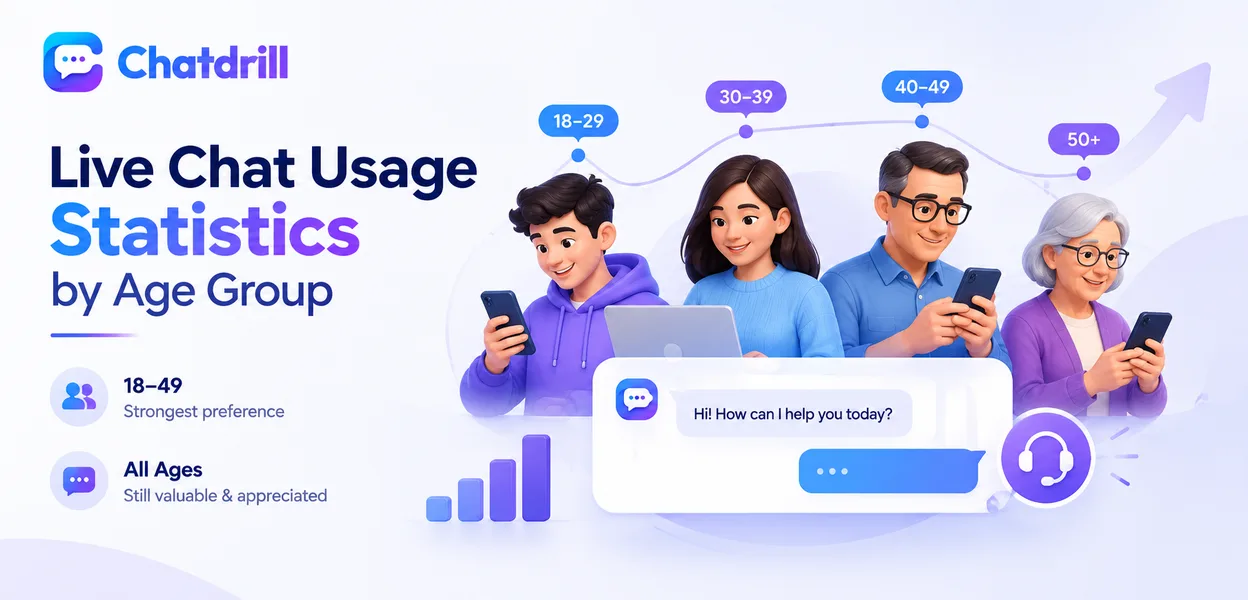
Live chat usage statistics by age group reveal a genuine, if moderate, generational pattern, with younger and middle-aged demographics showing somewhat stronger chat preference, though cited research consistently cautions against treating this as a rigid divide.
Quick answer Cited 2026 research finds shoppers between 18 and 49 showing the strongest preference for live chat over other support channels, according to Freshworks-cited data, though the broader pattern across cited studies suggests chat preference skews toward younger and middle-aged demographics while remaining genuinely usable and appreciated across most age groups.
Understanding the specific cited age-range data, and its limitations, helps a business calibrate its channel strategy sensibly rather than either over-indexing on a narrow demographic assumption or ignoring genuine, real preference variation entirely.
The most useful framing from cited research treats age as one contributing factor among several, alongside the specific urgency and complexity of a given interaction, rather than the primary determinant of channel preference on its own.
This guide covers the cited age-range data, why the pattern isn't a rigid generational divide, how urgency interacts with age-based preference, and how ChatDrill supports serving customers across age groups well.
Cited Age-Range Preference Data
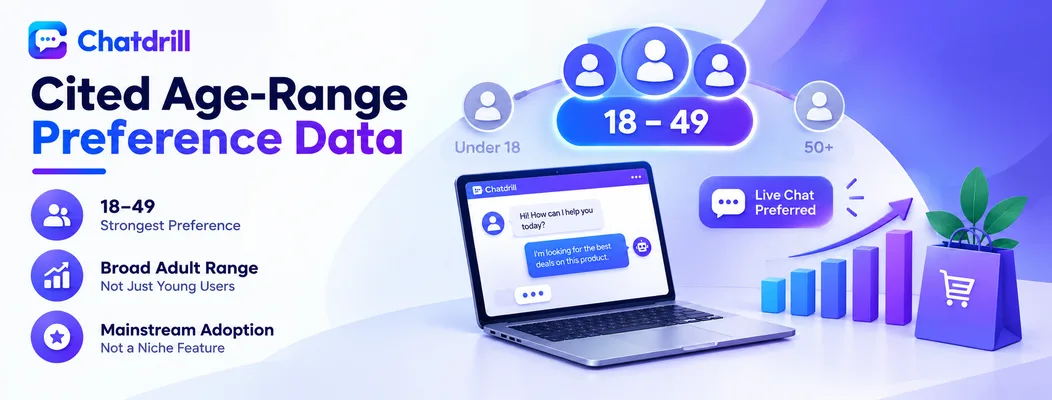
Cited research identifies shoppers between 18 and 49 as showing the strongest live chat preference, a genuinely wide range spanning younger adults through middle age.
The core cited age range
Research citing Freshworks' live chat statistics specifically identifies shoppers between 18 and 49 as preferring live chat over any other support channel, a notably broad range covering multiple traditional generational categories.
This breadth is itself informative, suggesting live chat preference isn't confined to one narrow generational cohort but spans a considerable portion of the adult population actively engaging in online commerce.
What this range suggests about broader adoption
The width of this cited preference range suggests live chat has moved well beyond an early-adopter or youth-specific technology into broader, more mainstream usage across a genuinely wide swath of the adult shopping population.
This broader adoption pattern reinforces why live chat deserves consideration as a mainstream channel investment, not a niche feature aimed narrowly at younger demographics alone.
Why This Isn't a Rigid Generational Divide
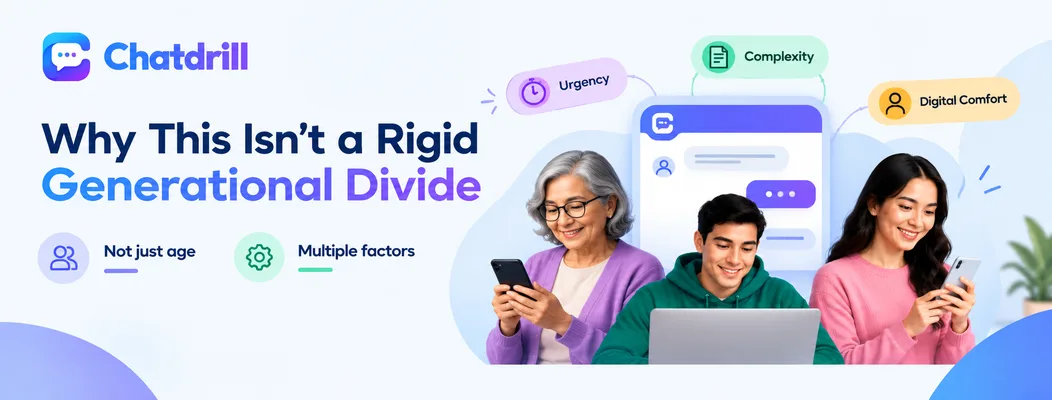
Cited research and broader industry commentary consistently caution against oversimplifying chat preference into a strict age-based divide, since situational factors matter alongside age.
The risk of oversimplified generational assumptions
Treating chat preference as purely generational risks missing that many older customers genuinely appreciate chat's convenience, while some younger customers still prefer other channels for certain situations, a nuance cited research consistently emphasizes.
This caution matters practically, since a business assuming only younger customers want chat might underinvest in a channel that actually serves a meaningfully broader audience well.
Age as one factor among several
Cited research treats age-based preference patterns as genuinely real but partial, existing alongside other factors like urgency, question complexity, and individual comfort with digital communication that also meaningfully shape channel choice.
This layered understanding produces a more accurate picture than assuming age alone determines whether a given customer prefers chat.
How Urgency Interacts With Age-Based Preference

Urgency-driven preference for speed tends to hold across most age groups, even where baseline generational preference intensity might differ somewhat.
Urgency as a cross-generational equalizer
Regardless of a given customer's general channel preference tendency, a genuinely urgent question tends to push most people, across most age groups, toward whichever channel offers the fastest resolution, often chat specifically.
This urgency-driven convergence means even a customer with a general preference for phone or email may still turn to chat when facing a time-sensitive issue, somewhat narrowing the practical impact of baseline generational differences.
Complexity and comfort still shaping the exceptions
For a genuinely complex issue, or for a customer simply less comfortable with digital communication regardless of age, preference for a more traditional channel like phone can persist even under time pressure.
Recognizing these exceptions, rather than assuming urgency alone erases all preference variation, produces a more genuinely accurate picture of real customer behavior.
What This Means for Channel Strategy
Offering chat broadly, rather than assuming it only serves a narrow age demographic, better reflects the genuinely wide cited preference range this guide describes.
Avoiding narrow demographic assumptions in planning
Given the cited 18-to-49 preference range and the broader cautions against rigid generational thinking, a business planning chat investment should reasonably expect meaningful demand across most of its adult customer base, not a narrow slice.
This broader planning assumption tends to produce better resource allocation than assuming chat investment only serves a limited, youth-specific segment.
Still offering channel choice for genuine preference variation
Maintaining other channels alongside chat respects that genuine preference variation persists even within the cited broad age range, ensuring customers who prefer a different channel for their specific situation still have that option available.
This balanced approach avoids both underinvesting in chat and assuming it should become the sole channel for every customer regardless of individual preference.
How ChatDrill Supports Serving Customers Across Age Groups
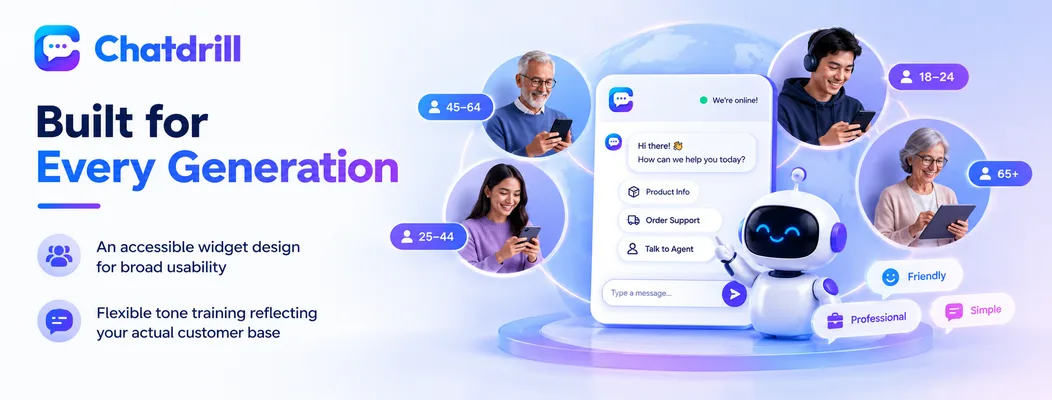
ChatDrill's accessible, well-designed widget and flexible tone training help serve the genuinely wide age range cited research identifies as engaging with chat.
An accessible widget design for broad usability
ChatDrill's widget is built for genuine ease of use, ensuring the wide age range cited research identifies as chat-preferring customers can engage comfortably regardless of individual familiarity with newer digital interfaces.
This accessibility focus reflects the broad adoption pattern this guide describes, rather than assuming only tech-native younger users will genuinely engage with chat.
Flexible tone training reflecting your actual customer base
ChatDrill's AI can be trained to communicate in a tone genuinely appropriate for your specific customer base, rather than assuming one narrow communication style fits every age group equally well.
This flexibility supports genuinely serving the broad, cross-generational customer base cited research suggests actually engages with live chat.