
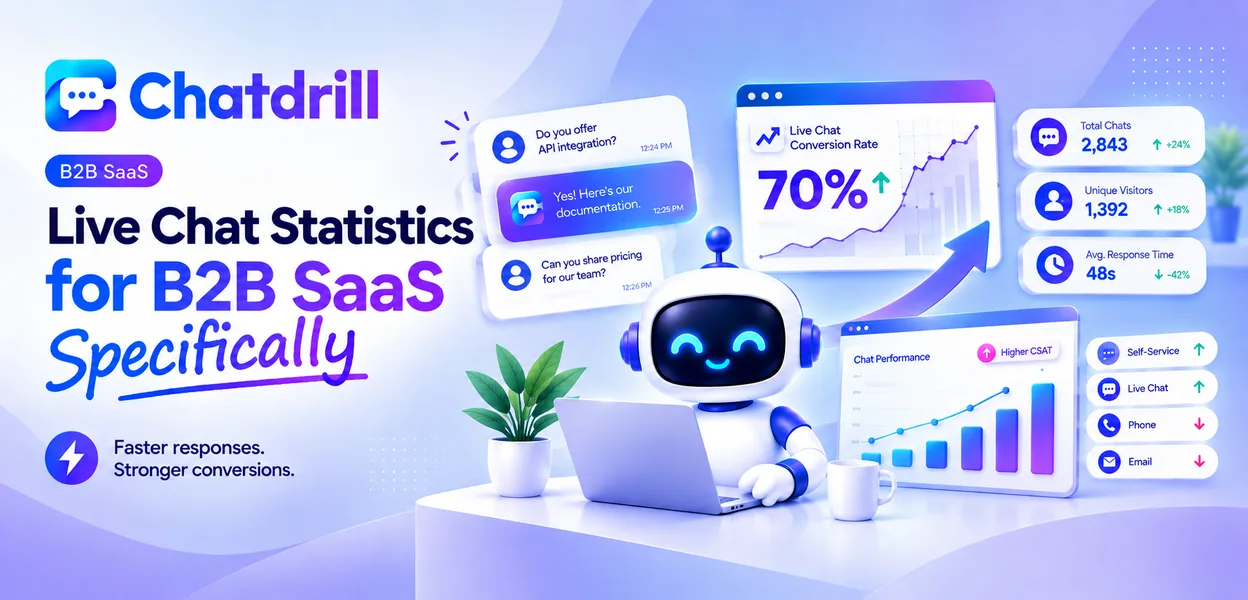
B2B SaaS presents a genuinely distinct live chat context compared to ecommerce, longer, more considered buying cycles and more genuinely complex technical questions shape both the cited benchmark data and how chat should reasonably be deployed.
Quick answer Cited 2026 research finds B2B SaaS customers among the industries with the highest speed expectations, with typical SaaS performance closer to a 70/60 pattern (70% of chats answered within 60 seconds) rather than the tighter benchmarks ecommerce achieves, while Gartner-cited data projects self-service and live chat overtaking phone and email as the most valuable customer service technologies for this sector by 2027.
Cited research places SaaS speed expectations among the highest of any industry, similar to ecommerce, even though actual typical performance and question complexity differ meaningfully from a straightforward online retail context.
Understanding these SaaS-specific patterns helps a software business set genuinely appropriate benchmarks and deploy chat in the ways this cited research suggests deliver the most value for this particular business model.
This guide covers the cited SaaS-specific benchmark data, the sales-cycle-specific chat value, why questions run more complex, and how ChatDrill supports strong B2B SaaS chat performance.
Cited SaaS-Specific Response Time Benchmarks
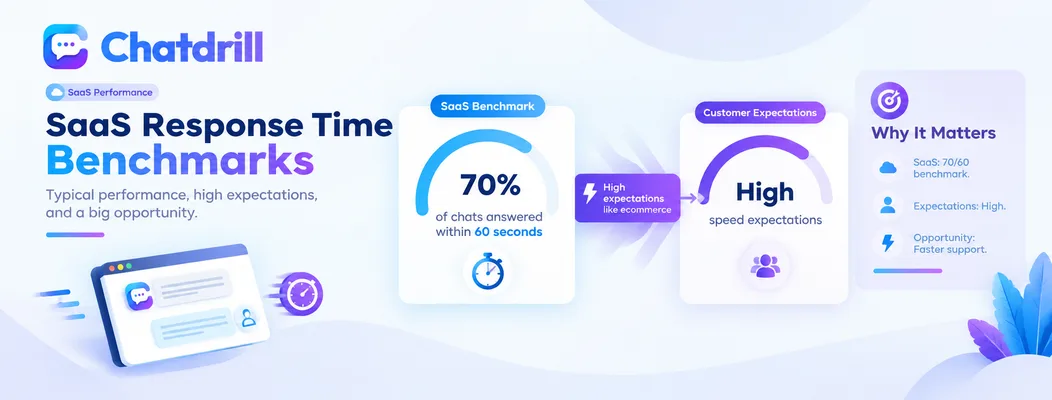
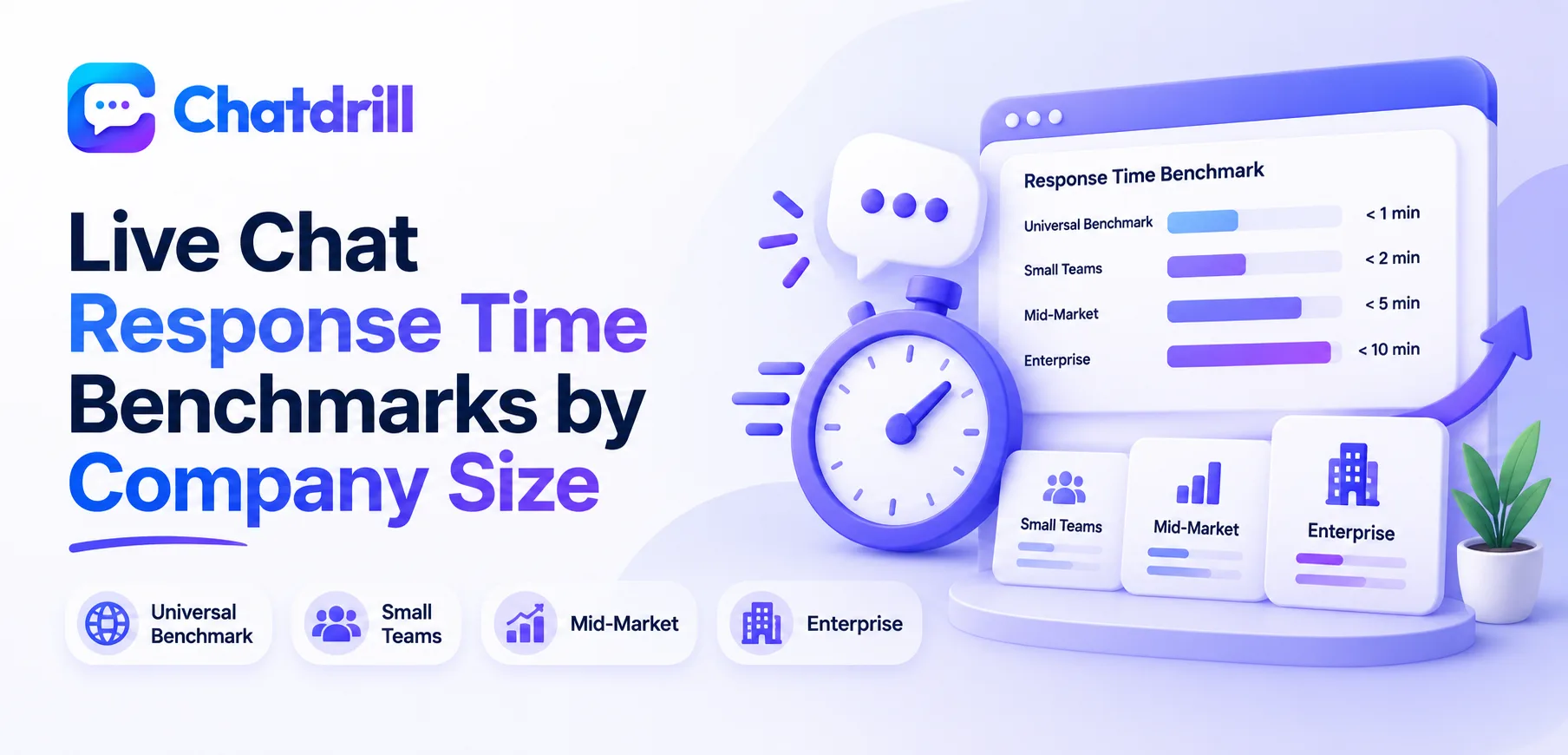
Cited research places typical SaaS performance around a 70/60 pattern, 70% of chats answered within 60 seconds, alongside high customer speed expectations similar to ecommerce.
The 70/60 benchmark pattern
Research citing Helpable's 2026 analysis specifically identifies average SaaS chat performance as closer to 70% of chats answered within 60 seconds, a genuinely more modest benchmark than the tighter figures cited for top ecommerce performers.
This distinction matters for setting realistic SaaS-specific expectations, since directly adopting an ecommerce-derived benchmark could set an unrealistic, poorly calibrated target for a genuinely different business context.
High expectations despite more modest typical performance
Despite this more modest typical performance figure, cited research still places SaaS among the industries with the highest customer speed expectations, alongside ecommerce, reflecting the same broader instant-digital-experience expectation shift.
This combination, high expectation alongside more modest typical achievement, suggests genuine opportunity for a SaaS business investing seriously in chat speed to differentiate meaningfully from typical industry performance.
Chat's Role Across the B2B Sales Cycle
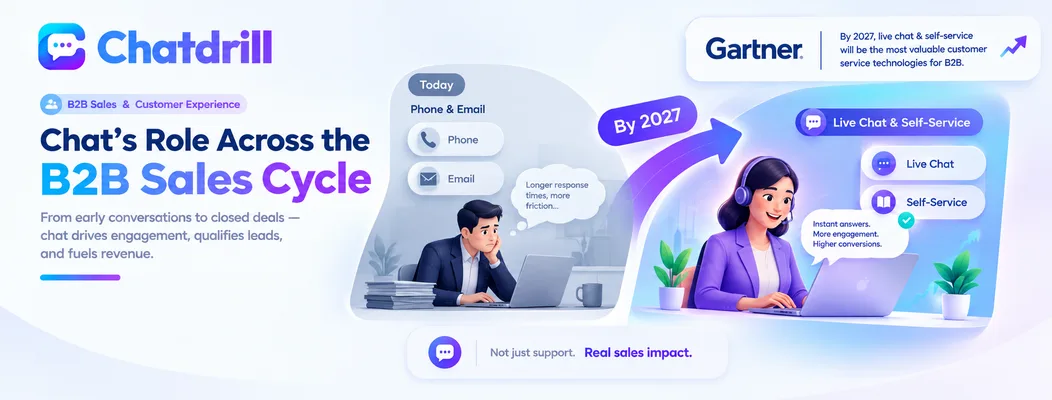
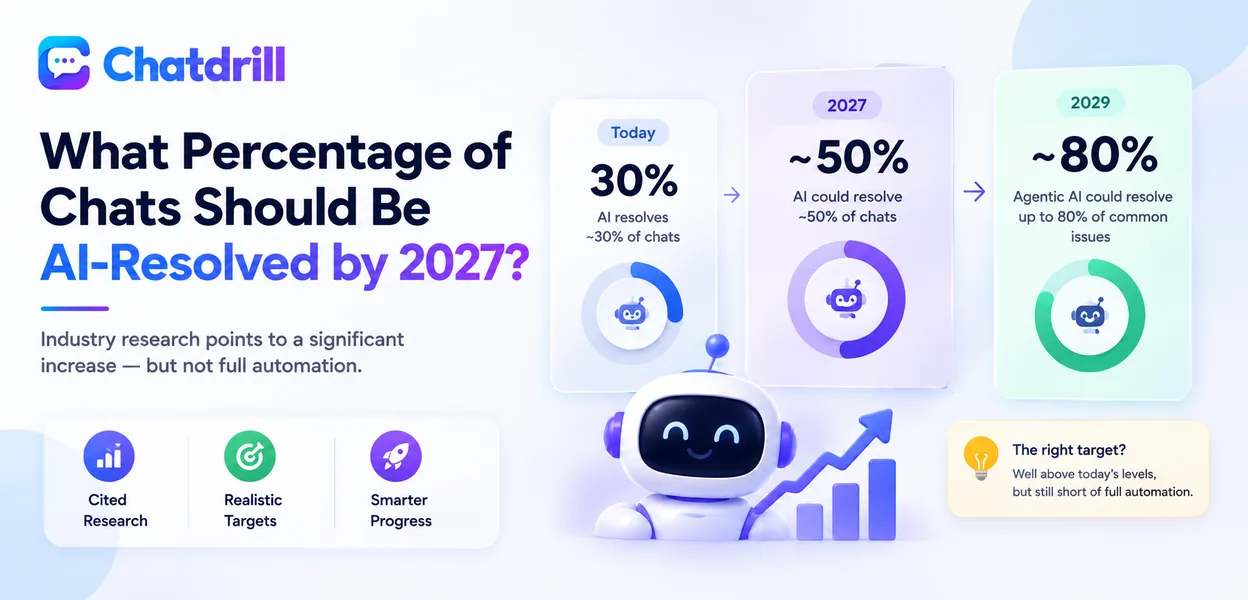
Cited Gartner research projects self-service and live chat overtaking phone and email as the most valuable customer service technologies for this sector by 2027.
The projected shift in valued technology
Cited Gartner-referenced research projects live chat and self-service technologies overtaking traditional phone and email as the most valuable customer service technologies by 2027, a meaningful projected shift specifically relevant to B2B software buyers and users.
This projection reflects growing recognition that B2B software customers increasingly expect the same immediate, digital-first support experience common in consumer contexts, not a more traditional, phone-heavy enterprise support model.
Chat's role beyond pure support
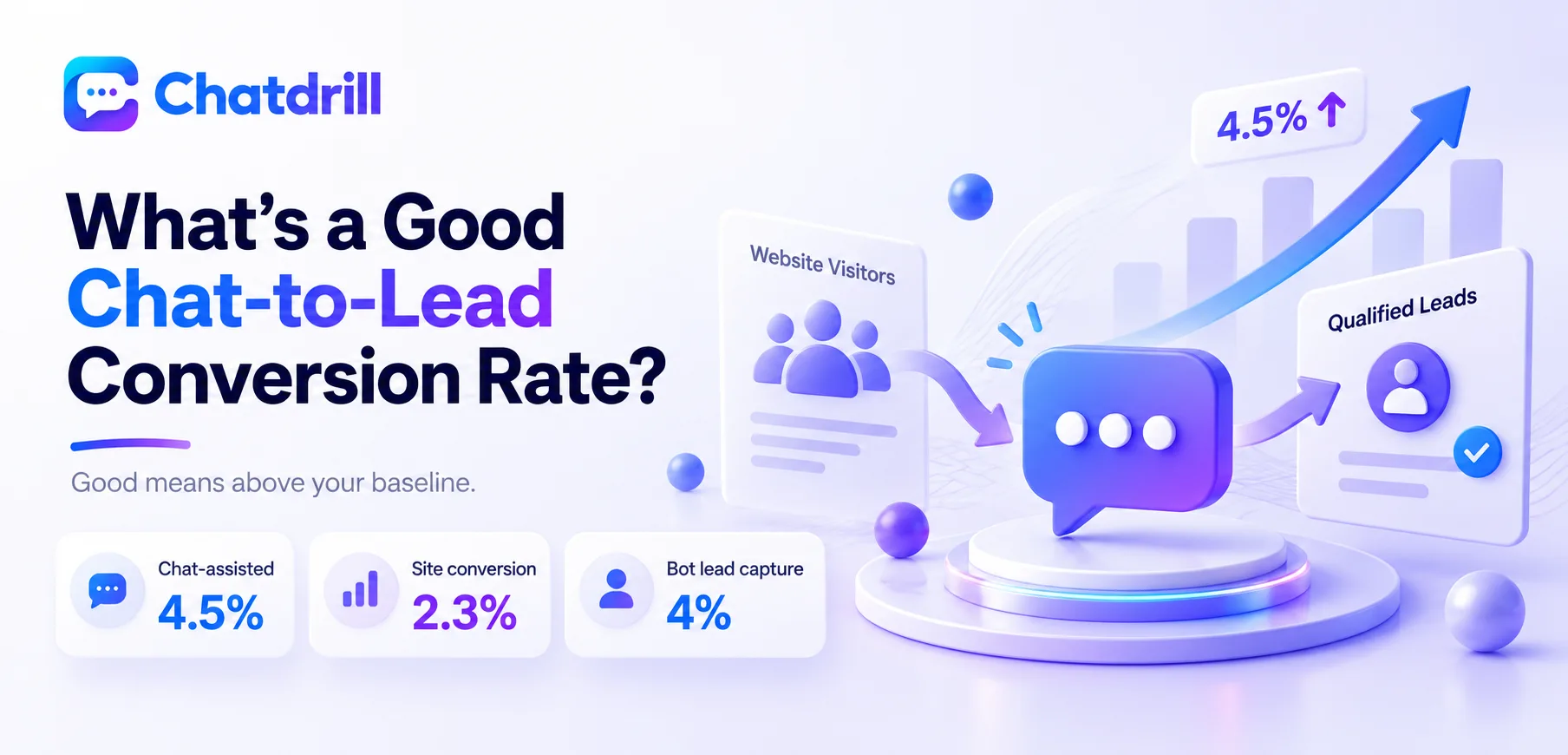
Beyond support specifically, chat plays a genuine role earlier in the B2B sales cycle too, qualifying leads and answering pre-sales questions, a dual support-and-sales function especially relevant given SaaS's typically longer, more considered buying process.
This dual role means chat's genuine value for a SaaS business often extends measurably beyond post-purchase support alone into genuine pipeline and conversion contribution.
Why B2B SaaS Questions Tend to Run More Complex
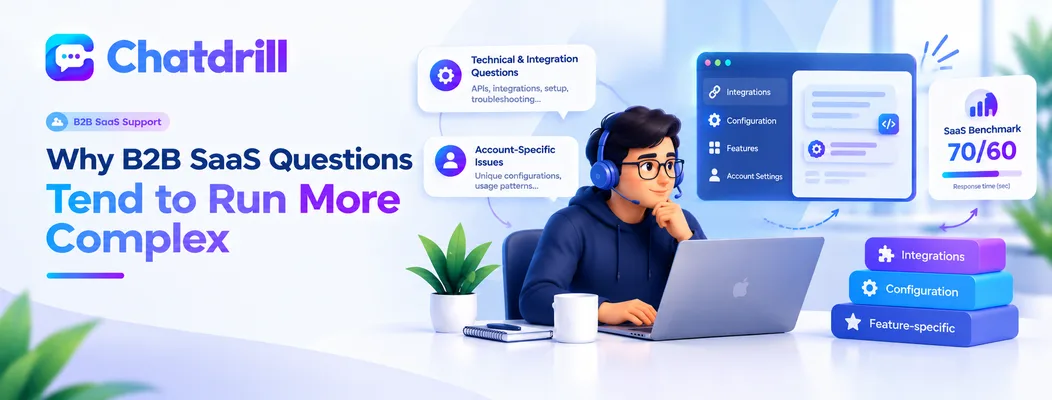
Technical integration questions and account-specific configuration issues make typical B2B SaaS chat questions genuinely more complex than typical ecommerce inquiries.
Technical and integration-related questions
A B2B SaaS customer's typical chat question often involves genuine technical complexity, integration behavior, configuration options, feature-specific troubleshooting, considerably more involved than a typical ecommerce order-status inquiry.
This complexity difference is part of why direct benchmark comparison between ecommerce and SaaS chat performance requires real care, since the underlying question difficulty genuinely differs between these two business contexts.
Account-specific and configuration-dependent issues
Many SaaS support questions depend on a specific customer's particular account configuration or usage pattern, requiring more individualized investigation than the more standardized, universally applicable answers common in ecommerce contexts.
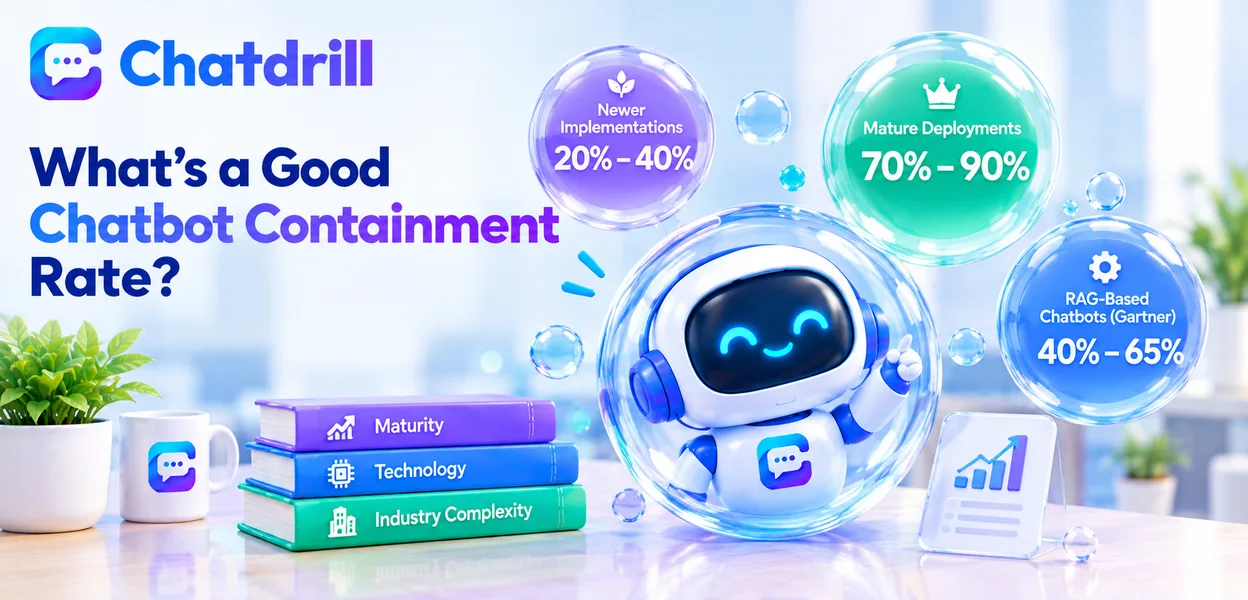
This account-specificity naturally supports somewhat lower deflection or containment rates than a more standardized ecommerce context, without this reflecting weaker chat implementation quality.
Setting Genuinely Appropriate SaaS Chat Benchmarks
Grounding your targets in SaaS-specific cited benchmarks, rather than borrowing ecommerce figures directly, produces more genuinely appropriate goals for your business.
Using the cited 70/60 pattern as a starting reference
Comparing your own SaaS chat response time against the cited 70/60 pattern, rather than a tighter ecommerce-derived figure, provides a more genuinely appropriate starting reference for your specific business context.
This SaaS-specific grounding avoids the unfair comparison that would result from judging your performance against benchmarks reflecting a genuinely different question complexity profile.
Accounting for genuine question complexity in deflection expectations
Given the technical and account-specific complexity common in SaaS support questions, setting deflection or containment expectations somewhat below pure ecommerce benchmarks reflects appropriate, informed calibration rather than lower ambition.
This calibrated approach mirrors the broader principle that industry-appropriate targets, not universal cross-industry figures, produce genuinely meaningful benchmarks.
How ChatDrill Supports Strong B2B SaaS Chat Performance
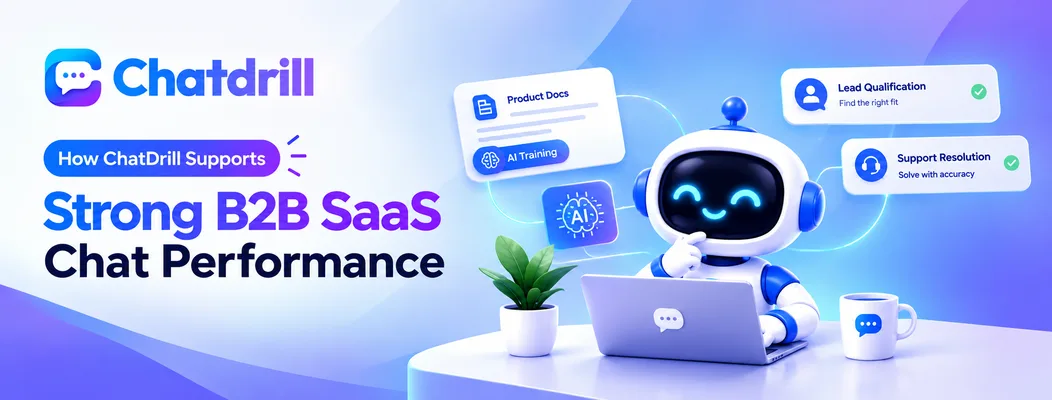
ChatDrill's deep AI training and qualification capability directly support the sales-cycle and technical-complexity realities this guide identifies as distinctive to B2B SaaS chat.
Deep training for genuine technical accuracy
ChatDrill's AI can be trained on your specific product documentation and common technical questions, helping address the genuine complexity this guide identifies as characteristic of typical B2B SaaS chat volume.
This depth of training matters more for SaaS specifically than it might for a more standardized ecommerce context, given the genuinely more varied, technical nature of typical questions.
Supporting chat's dual sales-and-support role
ChatDrill supports both natural lead qualification for pre-sales conversations and accurate support resolution for existing customers, reflecting the dual role this guide identifies as particularly relevant given SaaS's longer, more considered buying cycle.
This dual capability helps a SaaS business capture chat's full documented value, spanning both the sales-cycle contribution and post-purchase support efficiency this guide describes.