
Determining what counts as a genuinely good chat-to-lead conversion rate requires comparing it against your own baseline performance, since cited research consistently frames chat's value in terms of relative lift over non-chat conversion rather than one fixed, universal target number.
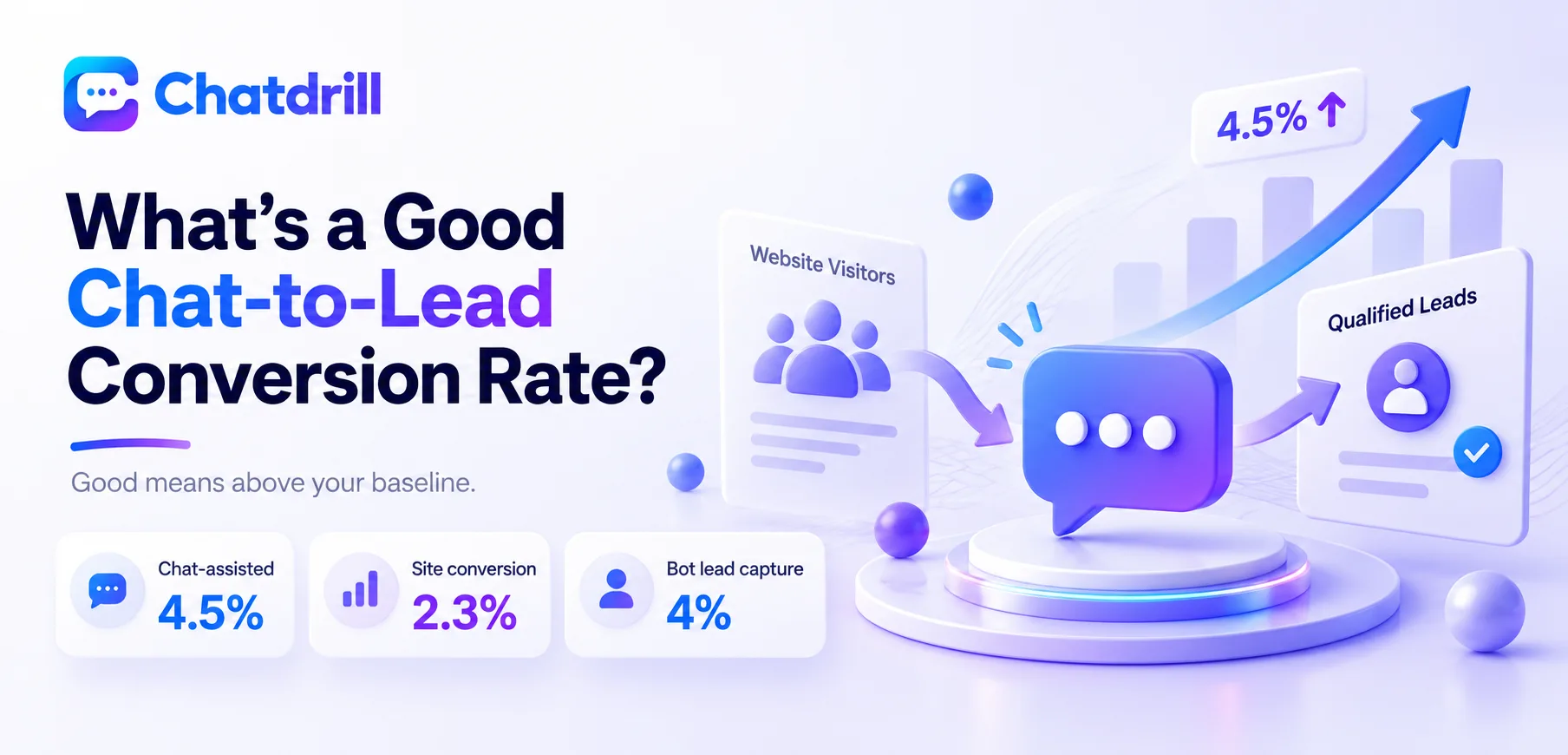
Quick answer Cited 2026 research places chat-assisted conversion rates around 4.5% compared to roughly 2.3% for overall site conversion, with automated chatbot-driven lead capture converting around 4% of engaged visitors, meaning a genuinely good chat-to-lead conversion rate should meaningfully exceed your site's baseline conversion rate rather than being judged against a fixed, universal number.
Multiple independent studies converge on a similar pattern, chat-assisted conversion running meaningfully higher than overall site conversion, even though the specific multiplier varies somewhat between different cited sources.
Understanding both the cited benchmark ranges and the specific mechanisms driving this lift helps a business set a genuinely realistic conversion goal and identify why a specific implementation might be underperforming.
This guide covers the cited benchmark ranges, what drives the chat conversion lift, common measurement mistakes, and how ChatDrill supports strong chat-to-lead conversion.
Cited Chat-to-Lead Conversion Benchmark Ranges
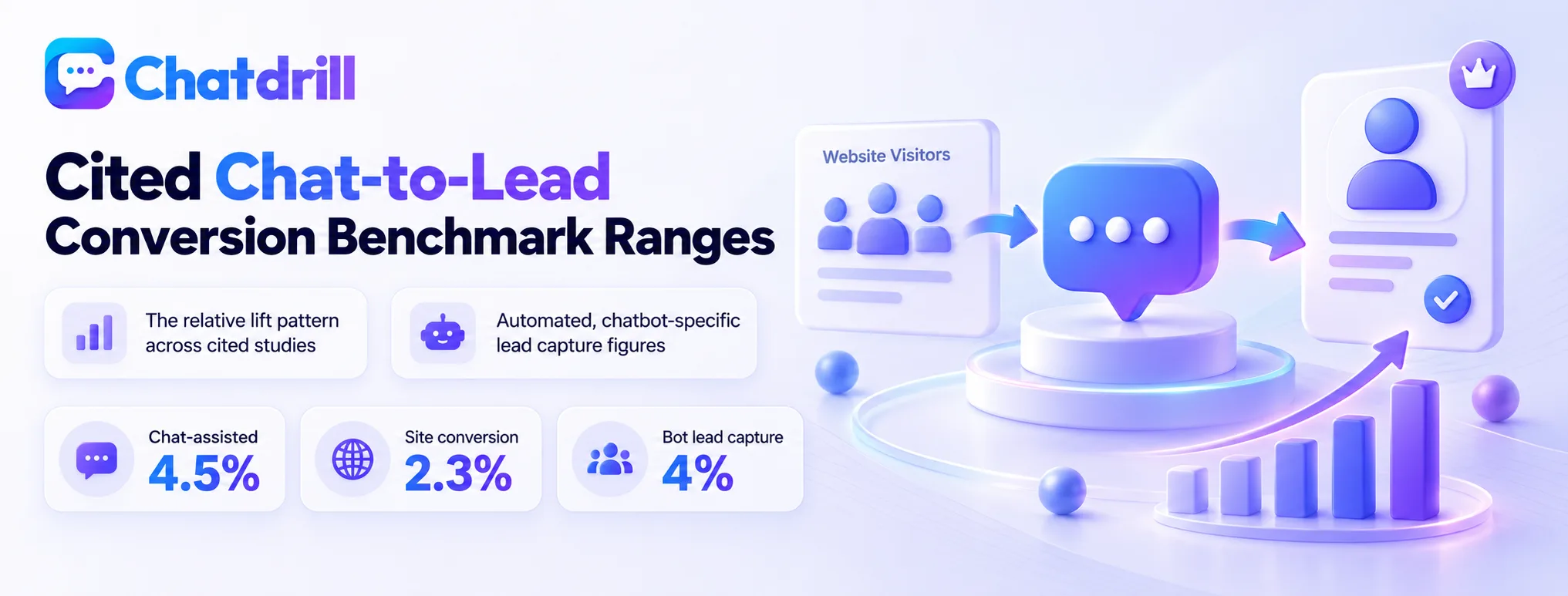
Cited research places chat-assisted conversion around 4.5% against roughly 2.3% overall site conversion, with automated lead capture through chatbots converting around 4% of engaged visitors.
The relative lift pattern across cited studies
Research citing industry benchmark data places chat-assisted conversion at approximately 4.5%, compared to roughly 2.3% for overall site conversion, nearly double the baseline rate according to this specific cited comparison.
Separate research citing broader conversion lift studies finds visitors who engage with live chat converting at multiples ranging from 2.8x to over 5x compared to non-chat visitors, reinforcing the same general pattern of meaningful lift.
Automated, chatbot-specific lead capture figures
Cited research specifically addressing automated welcome messages and chatbot-driven lead capture places conversion around 4% of engaged visitors becoming leads, with pre-chat survey usage reported as pushing this figure higher still.
This automated-specific figure is worth distinguishing from broader chat-assisted conversion, since it isolates the contribution of proactive, automated engagement specifically rather than all chat interactions combined.
What Drives the Chat Conversion Lift
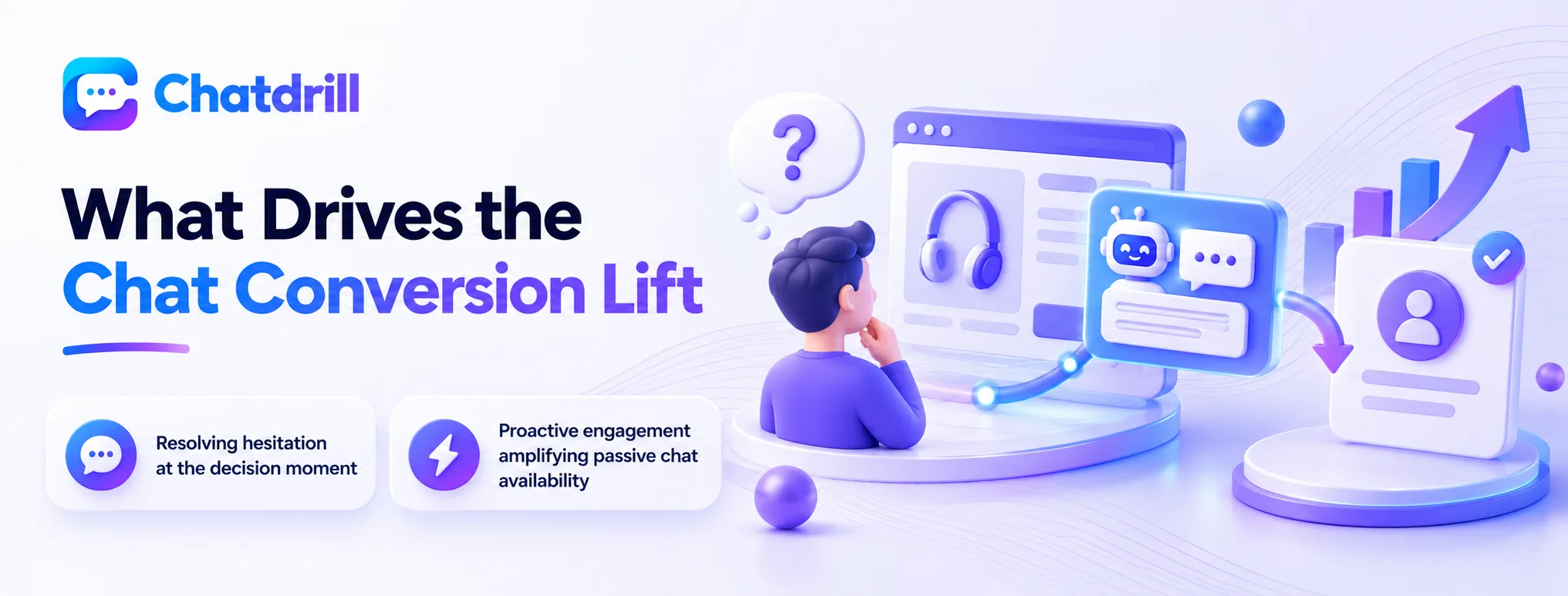
Real-time resolution of pre-purchase hesitation and proactive engagement at high-intent moments together explain most of the conversion lift chat delivers.
Resolving hesitation at the decision moment
Chat's core lead-generation mechanism mirrors its sales-lift mechanism more broadly, resolving a specific, answerable question right when a visitor is deciding whether to engage further, capturing interest before it fades.
This real-time resolution advantage is precisely why chat consistently outperforms slower channels for lead capture specifically, not just for direct sales conversion.
Proactive engagement amplifying passive chat availability
Cited research specifically highlights that proactive chat engagement, actively initiating contact based on visitor behavior rather than waiting passively, drives meaningfully higher conversion than a purely passive, visitor-initiated widget.
This proactive dimension is part of why the specific 4% chatbot lead-capture figure cited above assumes active engagement rather than simple availability alone.
Common Mistakes in Measuring Chat-to-Lead Conversion
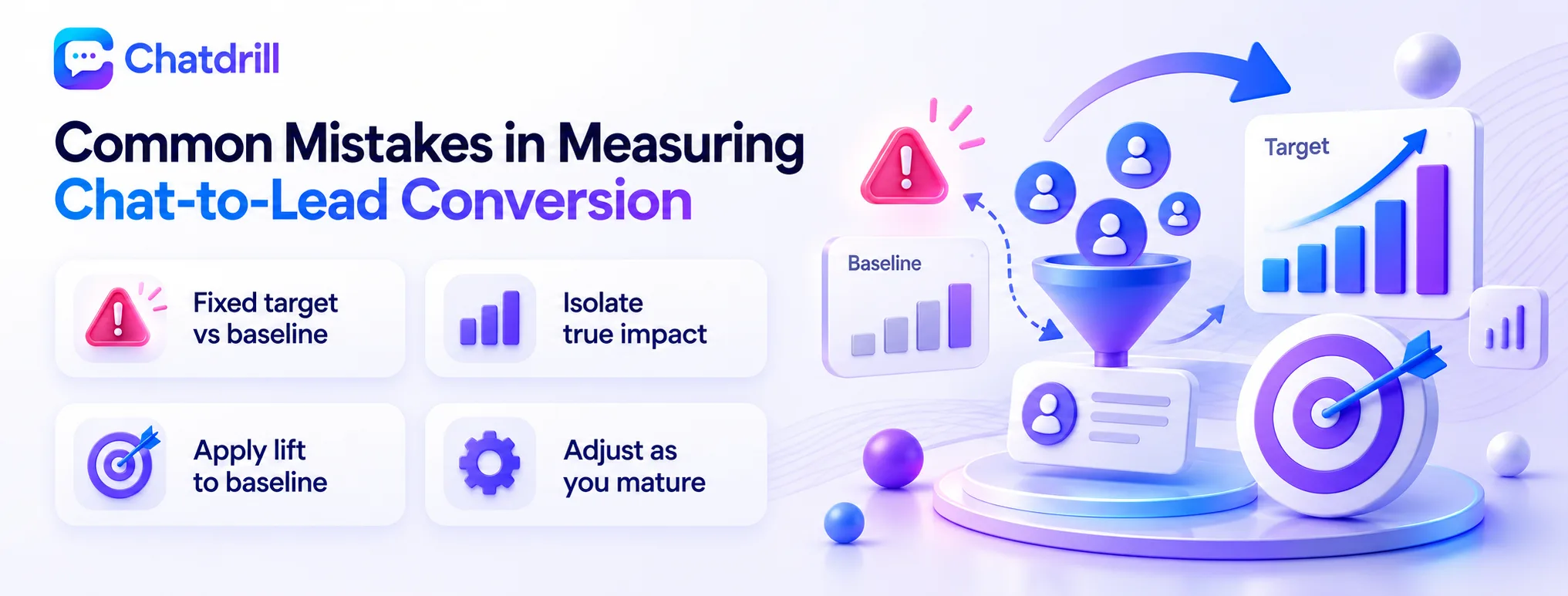
Comparing against a fixed, universal target rather than your own baseline, and failing to isolate chat's genuine incremental effect, are the most common measurement mistakes.
Comparing against a fixed target instead of your own baseline
Judging chat-to-lead conversion against a generic industry figure, rather than your own actual baseline conversion rate, misses the relative-lift framing that cited research consistently uses to evaluate genuine chat value.
A 3% chat-to-lead conversion rate might represent excellent relative performance for one business and disappointing performance for another, depending entirely on that business's own baseline conversion without chat.
Failing to isolate chat's genuine incremental contribution
Attributing every lead from a chat-engaged visitor entirely to chat, without considering that visitor might have converted anyway, overstates chat's genuine incremental impact.
A more rigorous comparison, chat-engaged versus similar non-engaged visitors, isolates chat's actual contribution more accurately than a simple before-and-after look at chat-engaged conversion alone.
Setting a Realistic Chat-to-Lead Target for Your Business
Grounding your target in your own baseline conversion rate and the specific relative-lift ranges cited research reports produces a genuinely realistic goal.
Applying the cited relative-lift range to your own baseline
Multiplying your own current overall conversion rate by the roughly 2x lift cited research associates with chat-assisted conversion produces a reasonable, business-specific target rather than an arbitrary universal number.
This grounded approach respects that your genuine potential depends on your own starting point, not a generic figure that might not reflect your specific traffic and offer.
Adjusting the target as your implementation matures
A newly launched chat implementation reasonably starts below this target, with proactive triggers, AI training, and qualification logic all needing refinement before reaching genuinely mature performance.
Revisiting and raising your target as these elements mature reflects the same maturity-based variation this guide identifies as a factor in deflection and other chat metrics.
How ChatDrill Supports Strong Chat-to-Lead Conversion
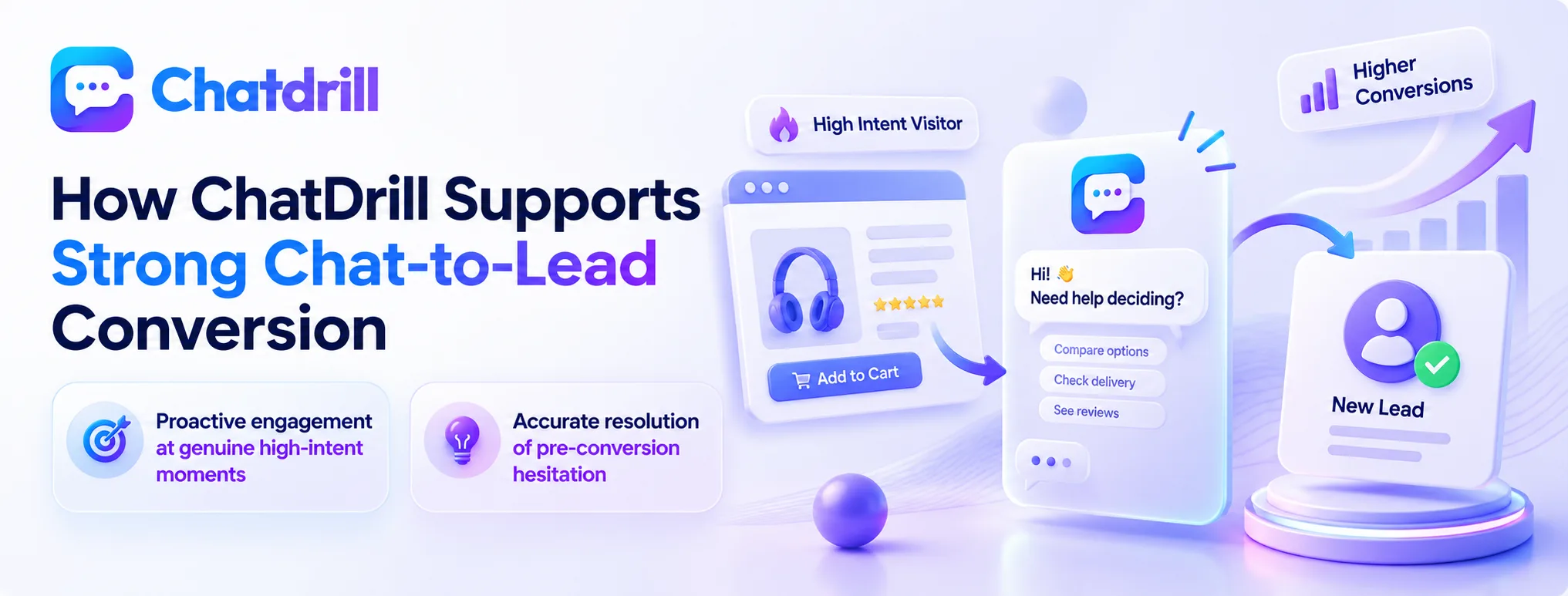
ChatDrill's proactive triggers and accurate, business-trained AI directly target the two mechanisms this guide identifies as driving genuine chat conversion lift.
Proactive engagement at genuine high-intent moments
ChatDrill supports configuring proactive triggers based on genuine visitor behavior, like extended time on a pricing page, reflecting the proactive-engagement mechanism this guide identifies as a key conversion driver.
This capability helps a business move beyond passive chat availability toward the more genuinely effective, proactive engagement pattern cited research associates with stronger lead conversion.
Accurate resolution of pre-conversion hesitation
ChatDrill's AI, trained on your specific business content, resolves genuine visitor questions accurately, directly supporting the hesitation-resolution mechanism this guide identifies as central to chat's conversion lift.
This accuracy, combined with proactive engagement, positions a business using ChatDrill to approach or exceed the cited chat-assisted conversion benchmarks rather than settling for underwhelming, passive-only results.