
Mobile versus desktop live chat usage statistics reveal one of the clearest, most consistent patterns across cited 2026 research, mobile has become the dominant platform for live chat, and the gap over desktop continues widening rather than stabilizing.
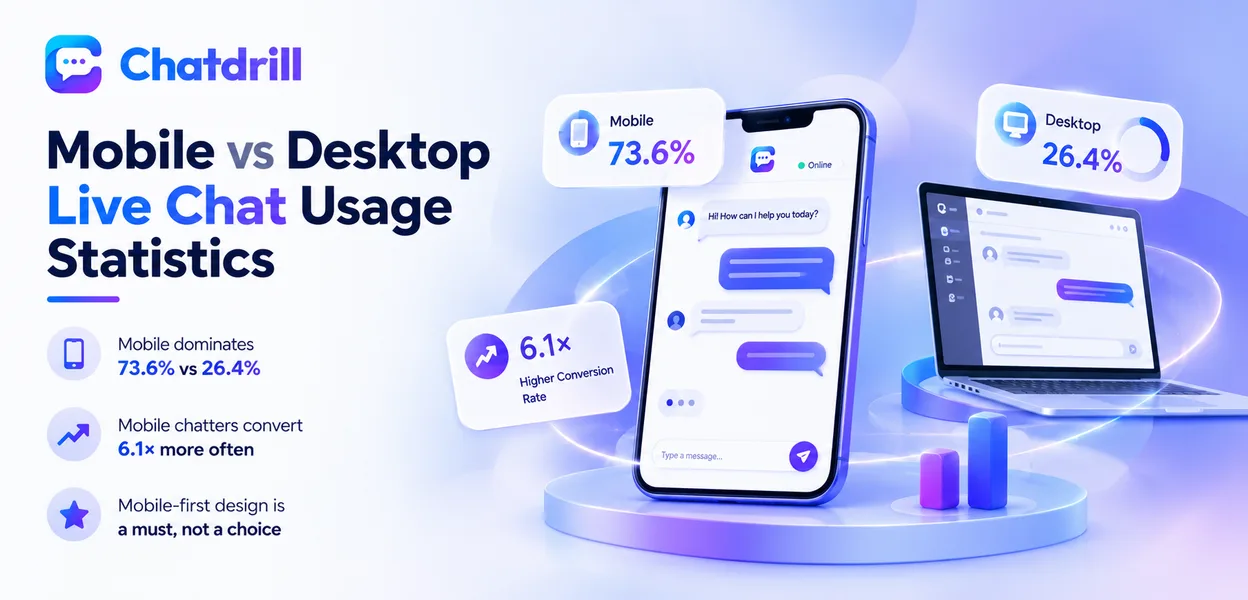
Quick answer Cited 2026 research from LiveChat places mobile at 73.6% of live chat conversations against just 26.4% on desktop, with mobile chatters converting 6.1 times more often than mobile visitors who don't chat, making mobile-first widget design a genuine necessity rather than an optional consideration for any business investing in live chat today.
Multiple independent studies converge on a similar directional finding even when the specific percentages vary somewhat, mobile chat usage sits meaningfully above desktop across essentially every cited source.
Understanding both the scale of this shift and its specific implications, for conversion, satisfaction, and widget design, helps a business prioritize its chat investment appropriately for how customers actually engage today.
This guide covers the cited mobile-versus-desktop data, what mobile chat means for conversion, the specific design implications, and how ChatDrill supports strong mobile chat performance.
Cited Mobile vs Desktop Usage Data
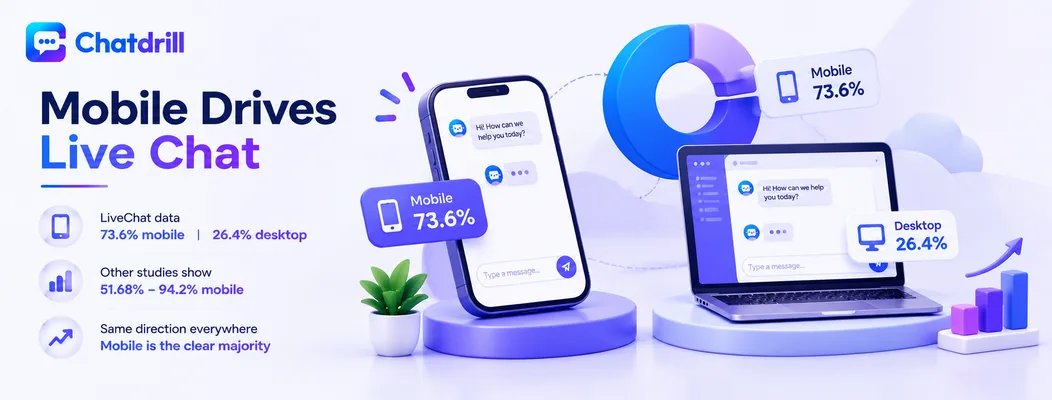
Cited LiveChat research places mobile at 73.6% of conversations against 26.4% desktop, with other cited sources showing figures ranging from roughly 51% to 94% mobile depending on the specific study and time period.
The core cited figures
Research citing LiveChat's own platform data places mobile at 73.6% of live chat conversations, with desktop making up just 26.4%, a figure repeated consistently across multiple citations of this same underlying dataset.
Other cited sources show meaningful variation around this figure, from around 51.68% in one study to as high as 94.2% in another, reflecting genuine differences in the specific customer base and time period each study measured.
The consistent directional trend across sources
Despite this numerical variation, every cited source agrees on the underlying direction, mobile represents a clear majority of live chat usage, and cited commentary specifically notes this shift continuing year over year rather than plateauing.
This directional consistency across otherwise varying studies is what makes the trend itself genuinely reliable, even when the exact percentage a business should expect for its own traffic depends on its specific audience.
What Mobile Chat Means for Conversion and Satisfaction
Do mobile chatters convert better than non-chatting mobile visitors?
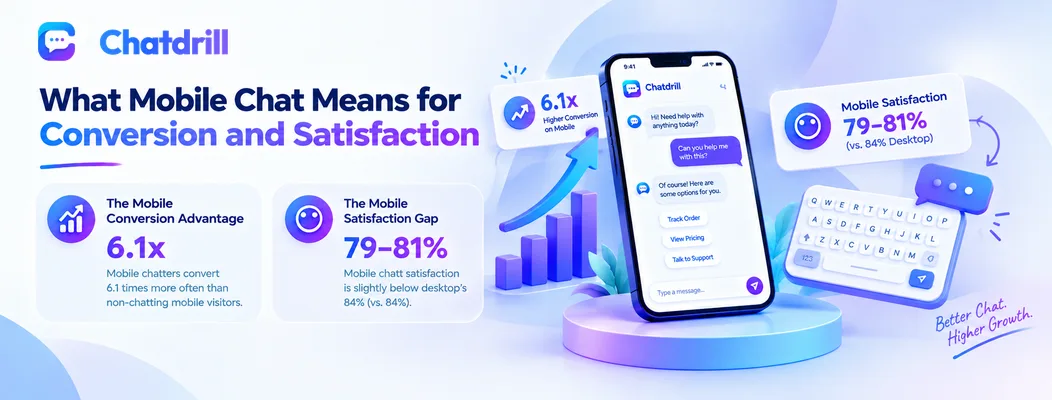
satisfaction runs slightly below desktop due to typing friction.
The mobile conversion advantage
Cited research finds mobile chatters converting 6.1 times more often than mobile visitors who don't engage with chat, a substantial lift that underscores mobile chat's genuine business value beyond simple usage volume.
This conversion advantage reinforces why mobile chat deserves serious investment attention, not just as a usage-volume consideration but as a meaningful driver of actual business outcomes.
The mobile satisfaction gap
Cited research finds mobile chat satisfaction averaging around 79% to 81%, slightly below desktop's 84%, a gap attributed specifically to typing challenges inherent to smaller mobile keyboards and screens.
This modest but consistent satisfaction gap represents a genuine, addressable opportunity, since closing it through better mobile-specific design could meaningfully improve overall chat satisfaction given how much total volume mobile now represents.
Specific Design Implications From This Data
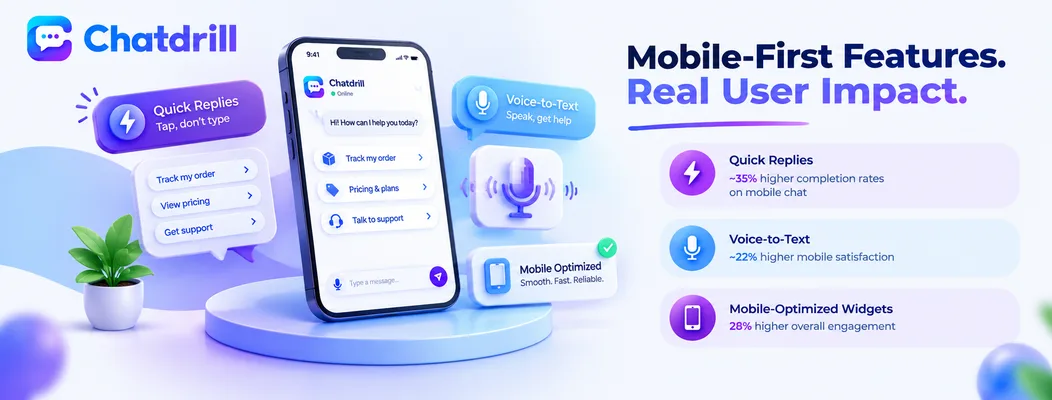
Quick reply options, voice-to-text support, and mobile-optimized widget performance directly address the specific friction points cited research identifies.
Reducing typing friction with quick replies
Cited research finds quick reply buttons reducing mobile chat friction and increasing completion rates by roughly 35%, directly addressing the typing-challenge factor behind mobile's modest satisfaction gap.
This kind of targeted, mobile-specific design feature reflects genuine attention to the particular friction mobile users experience, rather than simply shrinking a desktop-designed interface onto a smaller screen.
Voice-to-text and mobile-optimized performance
Cited research also finds voice-to-text integration increasing mobile chat satisfaction by around 22%, another targeted response to the same underlying typing-friction challenge.
Beyond these specific features, cited research finds companies with genuinely mobile-optimized chat widgets seeing 28% higher engagement overall, reinforcing that comprehensive mobile design attention pays off broadly, not just through individual feature additions.
Why This Data Should Shape Platform Evaluation
Given mobile's clear majority share and specific friction points, evaluating a chat platform specifically for mobile performance deserves priority over assuming desktop-first design suffices.
Testing mobile experience directly during evaluation
Given that mobile represents the clear majority of actual usage according to cited data, testing a candidate platform's chat widget specifically on a mobile device, not just briefly checking that it technically works, should be a priority evaluation step.
This mobile-first evaluation approach reflects the genuine, current usage reality this guide describes, rather than treating mobile compatibility as a secondary checkbox after desktop design is finalized.
Prioritizing mobile-specific features in platform selection
Given the cited data on quick replies and voice-to-text specifically improving mobile satisfaction, favoring a platform that offers these mobile-specific capabilities delivers more genuine value than one offering only a generic, non-optimized mobile experience.
This feature-level prioritization reflects the specific, actionable design implications this guide draws directly from cited research.
How ChatDrill Supports Strong Mobile Chat Performance
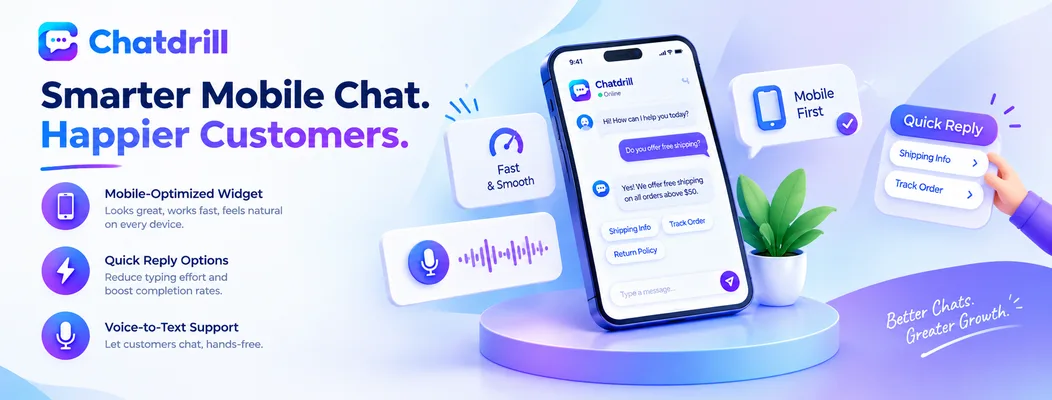
ChatDrill's mobile-optimized widget and responsive design directly address the specific friction points cited research identifies as limiting mobile chat satisfaction.
A widget genuinely built for mobile performance
ChatDrill's widget is designed with mobile performance specifically in mind, reflecting the priority this guide identifies as necessary given mobile's clear majority share of actual chat usage.
This mobile-first design consideration helps close the satisfaction gap cited research identifies between mobile and desktop, rather than treating mobile as an afterthought to a desktop-first design.
Supporting the specific features that improve mobile satisfaction
ChatDrill supports features like quick reply options that directly address the typing-friction factor cited research identifies as the primary driver behind mobile's modest satisfaction gap.
This targeted feature support reflects the specific, evidence-based design implications this guide draws from cited mobile usage research, not a generic mobile compatibility claim alone.