
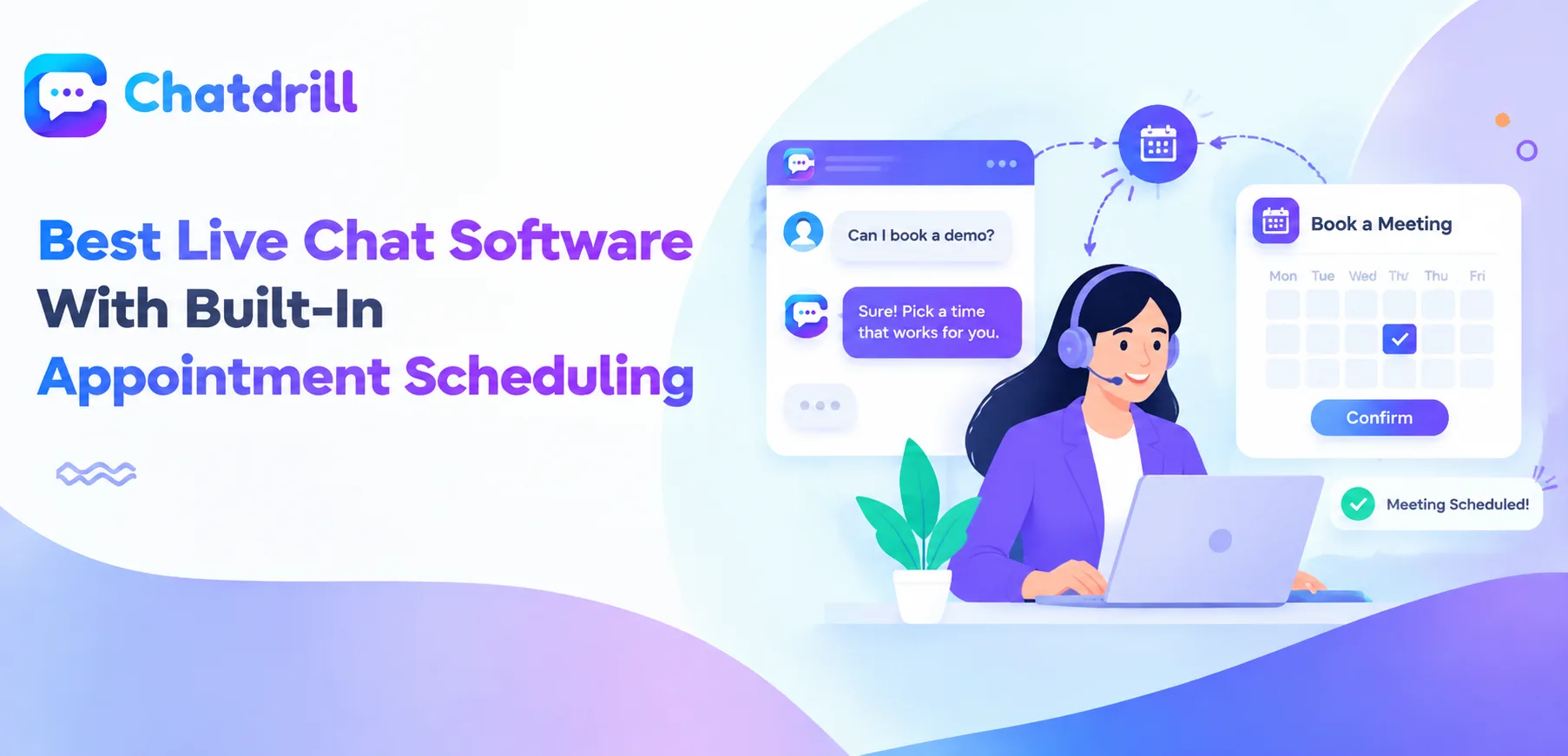
A chat conversation that resolves toward wanting to book a meeting, a sales call, a consultation, a service appointment, ideally lets that booking happen without redirecting the visitor to an entirely separate calendar tool, since this redirect introduces genuine friction and drop-off risk.
Quick answer: For businesses wanting to book meetings directly from a chat conversation without redirecting to a separate calendar tool, Pipedrive's LeadBooster and Intercom's meeting-booking capability are commonly cited for genuinely built-in scheduling, letting a visitor go from question to confirmed appointment within the same conversation, with ChatDrill also supporting direct scheduling integration for businesses wanting this seamless flow.
A chat platform with genuinely built-in scheduling capability keeps this transition seamless, letting a visitor move from conversation to confirmed appointment within the same interface and momentum.
Understanding which platforms genuinely offer this integrated capability, versus simply linking out to an external calendar, helps a business choose a platform that delivers the seamless booking experience this feature is meant to provide.
This guide covers why built-in scheduling genuinely matters, platforms commonly cited for this capability, common evaluation mistakes, key questions to ask, and how ChatDrill approaches scheduling integration.
Why Built-In Scheduling Genuinely Matters
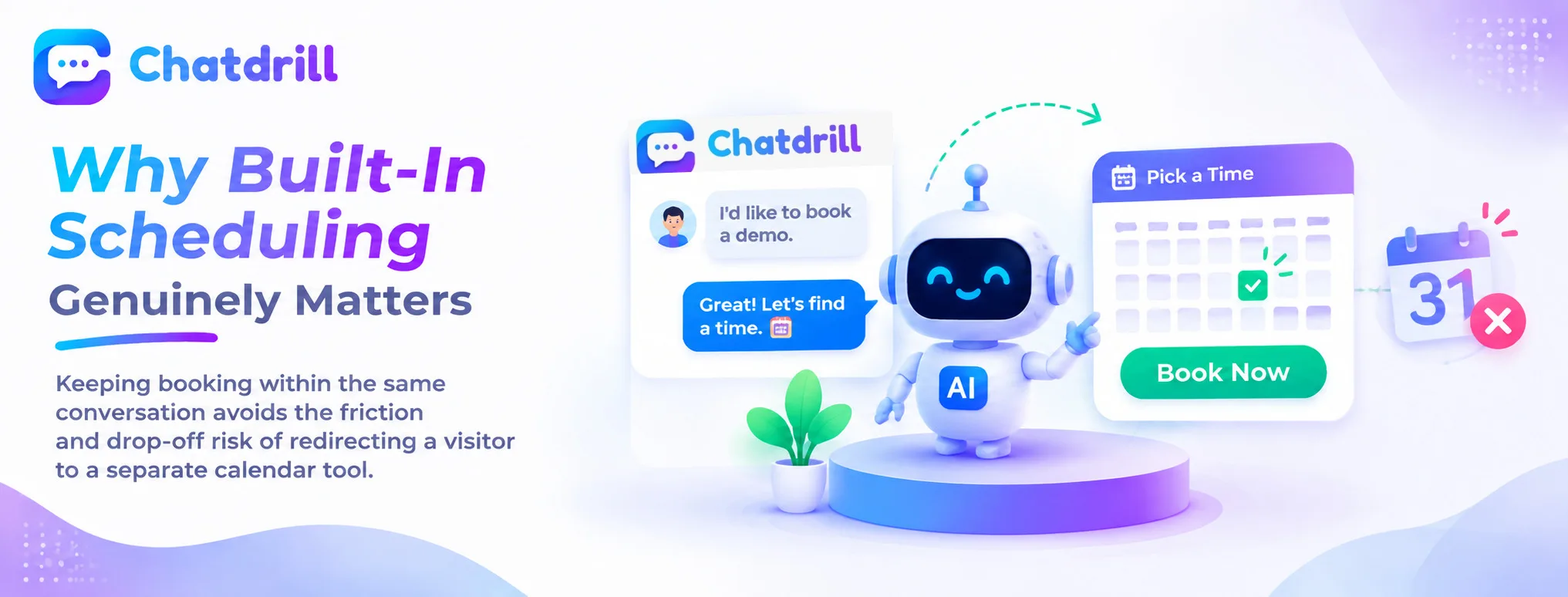
Keeping booking within the same conversation avoids the friction and drop-off risk of redirecting a visitor to a separate calendar tool.
The friction cost of redirecting to a separate tool
Asking a visitor to leave an active chat conversation and navigate to a separate calendar or booking page introduces a genuine friction point where momentum and interest can be lost before the booking actually completes.
This friction cost matters directly for conversion, since even a small amount of added complexity at this specific moment can meaningfully reduce how often a genuinely interested visitor actually completes a booking.
The advantage of maintaining conversational momentum
A visitor who can confirm a meeting time directly within the same chat window, without any redirect, maintains the genuine engagement momentum built up through the conversation, improving the likelihood of actually completing the booking.
This seamlessness reflects the same friction-reduction principle relevant across many chat-based conversion contexts, applied here specifically to the scheduling moment.
Platforms Commonly Cited for This Capability
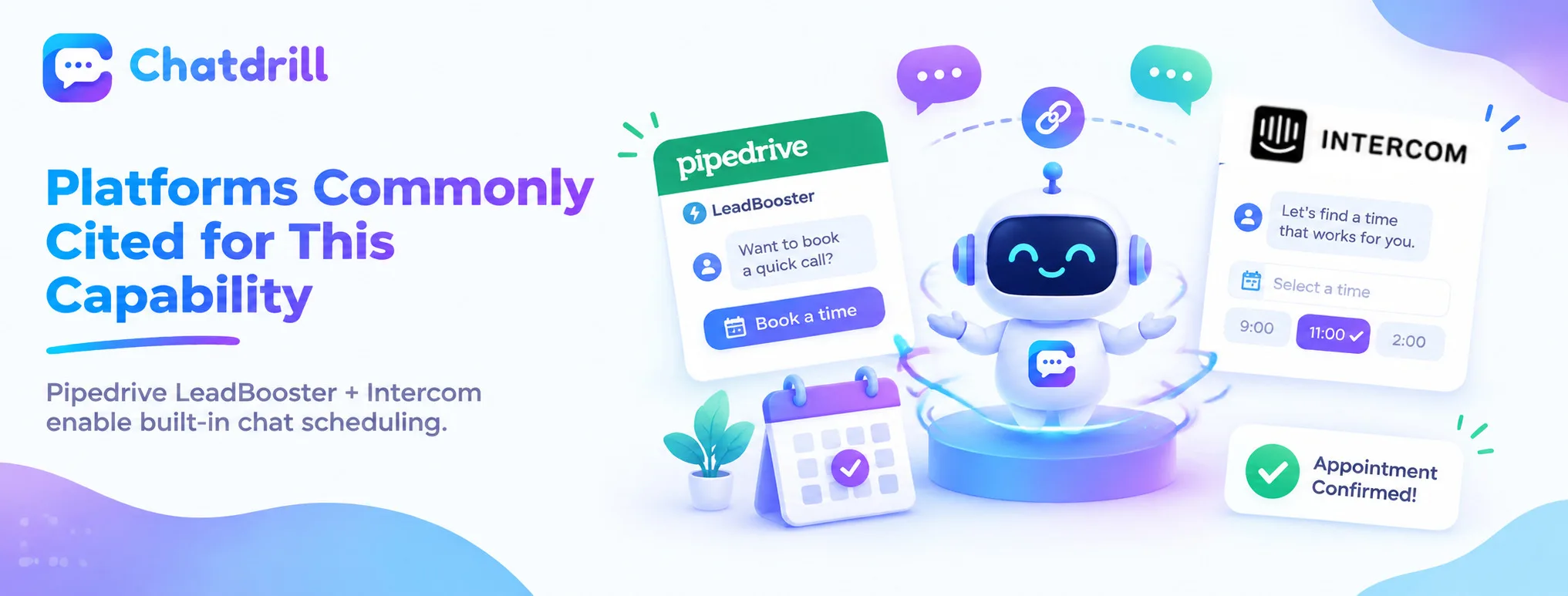
Pipedrive's LeadBooster and Intercom's meeting-booking capability are commonly cited for genuinely built-in scheduling within the chat conversation itself.
Pipedrive's LeadBooster for direct calendar syncing
Pipedrive's LeadBooster add-on lets a business send calendar links and schedule meetings directly through the chat platform, with meetings syncing automatically to the relevant representative's calendar.
This direct calendar syncing reflects the seamless booking experience this guide identifies as valuable, particularly for a sales-focused use case already using Pipedrive's broader CRM capability.
Intercom's meeting-booking within custom bot flows
Intercom supports building custom bot flows that can book meetings directly as part of an automated conversation, letting a visitor schedule a consultation or demo without human intervention or redirect to a separate tool.
This automated booking capability suits a business wanting to fully automate the scheduling step for qualified leads identified through the chat conversation itself.
Common Mistakes in Evaluating This Feature
Assuming any scheduling mention is genuinely built in
calendar sync reliability importance, are common mistakes.
Assuming any scheduling mention is genuinely built in Some platforms only link out to an external calendar tool rather than offering genuinely integrated, in-conversation booking, an important distinction to verify directly before assuming seamless integration exists.
Testing this specifically, rather than relying on marketing language alone, confirms whether a platform genuinely delivers the seamless booking experience this guide identifies as the core value of this feature.
Underestimating calendar sync reliability importance
A scheduling feature that doesn't reliably sync with your actual calendar system risks genuine double-bookings or missed appointments, a serious practical problem beyond the feature simply existing on paper.
Testing the actual sync reliability directly, rather than assuming it works flawlessly, protects against this genuinely consequential risk.
Key Questions to Ask Before Choosing
Confirming genuinely in-conversation booking and testing calendar sync reliability directly are the most useful evaluation steps here.
Does booking happen genuinely within the conversation?
Testing the actual booking flow directly confirms whether scheduling happens within the same chat interface or redirects to a separate tool, revealing whether the seamlessness this guide identifies as valuable is genuinely present.
This distinction matters considerably for actual conversion rates, given how much friction a redirect to a separate tool can introduce compared to a truly integrated experience.
How reliably does this sync with my actual calendar?
Testing the calendar sync directly, confirming a booked meeting genuinely and reliably appears on the correct representative's actual calendar, protects against the double-booking risk this guide identifies as a genuine, practical concern.
This hands-on verification matters more than a general feature claim, since sync reliability issues often only become apparent through genuine, sustained use.