
An AI chatbot that confidently tells a customer something inaccurate about a policy, a price, or a legal right isn't just an embarrassing error, in some contexts it can create a genuine, binding representation the business may be held to.
Beyond incorrect statements, how AI handles sensitive personal data, financial details, health information, anything covered by privacy regulation, carries its own distinct compliance exposure separate from the accuracy question.
A growing number of jurisdictions are also introducing specific disclosure requirements around AI interaction, meaning a business needs to actively track evolving regulation rather than assuming yesterday's compliant setup remains compliant indefinitely.
This guide covers the main compliance risk categories, what a genuinely compliant setup requires, a practical risk-reduction approach, and mistakes worth avoiding.
Quick answer: The main compliance risks of AI in customer conversations are the AI making a commitment or representation the business can't honor, mishandling sensitive personal data, and operating without clear disclosure that the customer is talking to AI rather than a human, each of which can create real legal or regulatory exposure.
The Main Compliance Risk Categories
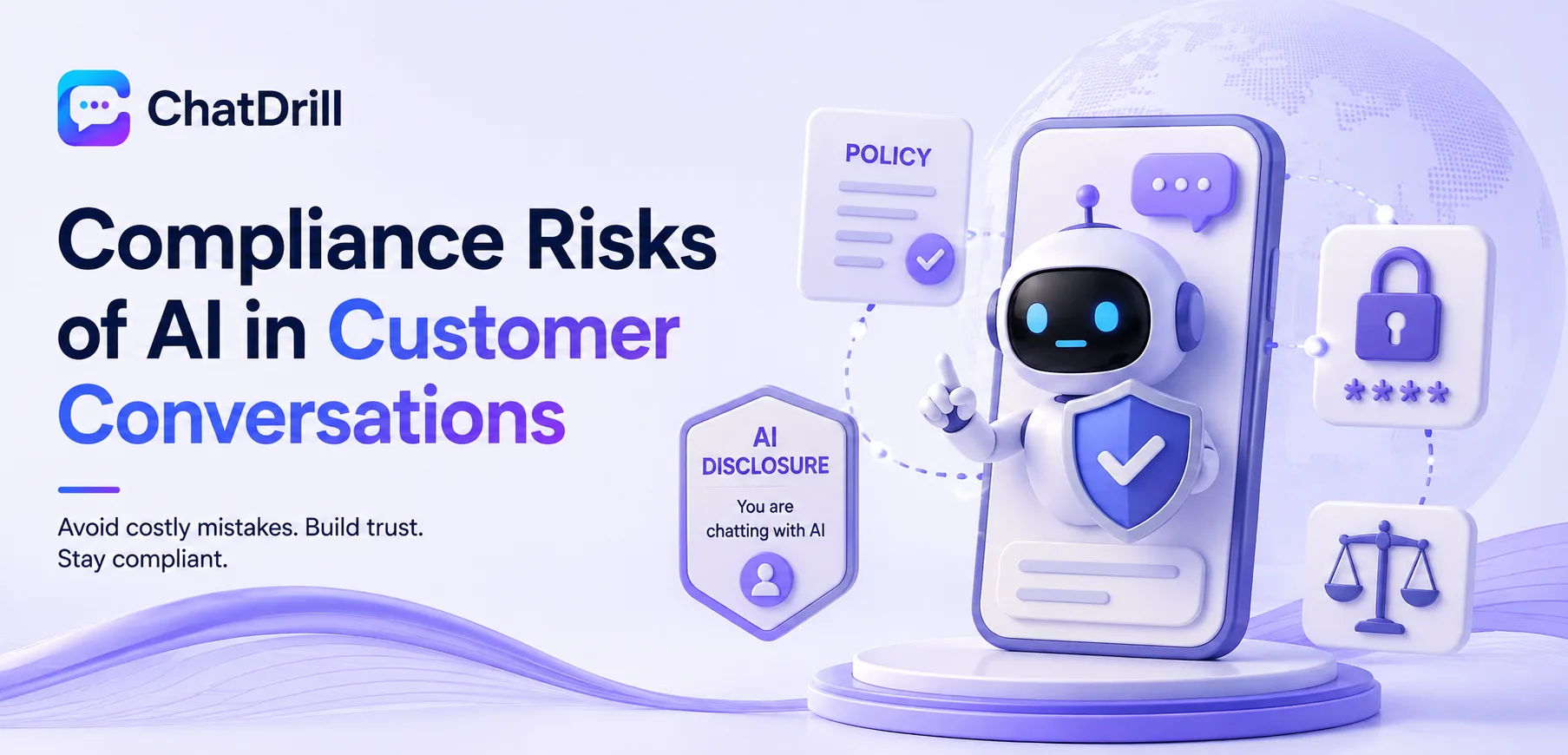
AI in customer conversations carries compliance risk across three main categories, binding but inaccurate representations, mishandling of sensitive personal data, and inadequate disclosure that the customer is interacting with AI.
Binding but inaccurate representations
An AI that confidently states something inaccurate about pricing, policy terms, or a customer's rights can, in some contexts, be treated as a genuine representation the business is expected to honor.
This risk is highest in regulated industries, financial services, healthcare, insurance, where a specific inaccurate statement can carry direct legal weight.
Mishandling sensitive personal data
How AI collects, stores, and processes sensitive personal data, financial account details, health information, government identification, needs to comply with relevant privacy regulation independent of whether the AI's actual answers were accurate.
This risk exists even when the AI's substantive response is genuinely helpful and correct, since the compliance issue is about data handling, not answer quality.
Inadequate AI disclosure
A growing number of jurisdictions require clear disclosure that a customer is interacting with AI rather than a human, and failing to provide this disclosure creates its own distinct compliance exposure.
This requirement varies by jurisdiction and continues to evolve, making it worth tracking actively rather than assuming a single disclosure approach remains sufficient everywhere indefinitely.
What a Genuinely Compliant Setup Requires
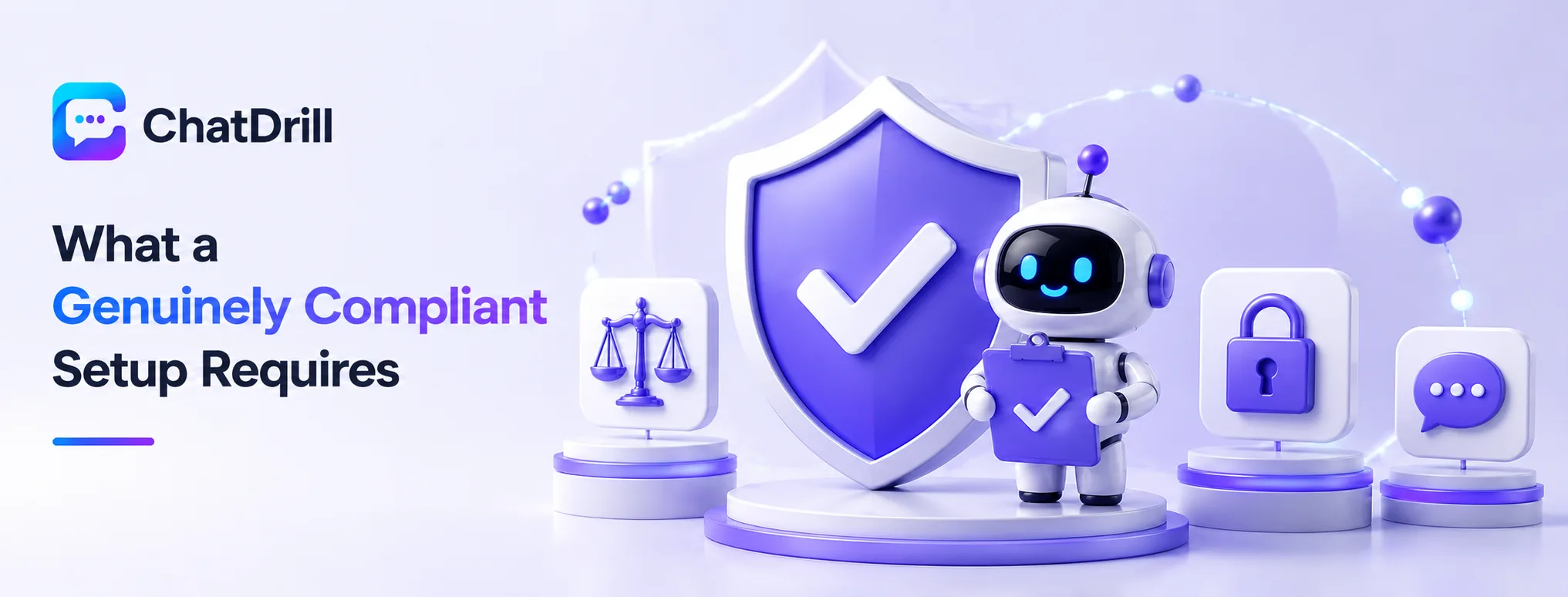
A compliant setup requires conservative escalation boundaries around anything with real legal or financial weight, deliberate data handling practices aligned with relevant privacy regulation, and clear, current AI disclosure.
Conservative escalation on high-stakes statements
Configuring AI to escalate rather than confidently answer anything touching binding commitments, specific legal rights, or regulated financial or health guidance reduces the risk of a costly inaccurate representation.
This conservative approach costs some automation efficiency but meaningfully reduces the most serious category of compliance exposure.
Deliberate, regulation-aligned data handling
Designing how AI collects, stores, and processes sensitive data specifically with your relevant privacy regulations in mind, rather than as an afterthought, reduces this distinct category of risk.
This deserves involvement from whoever owns privacy compliance at your organization, not just the team building the chat experience itself.
Clear, current AI disclosure
Providing clear, easily noticed disclosure that a customer is interacting with AI, kept current with evolving regulatory requirements across your operating jurisdictions, addresses this specific compliance category directly.
This disclosure practice is worth reviewing periodically given how actively this specific regulatory area continues to develop.
A Practical Risk-Reduction Approach
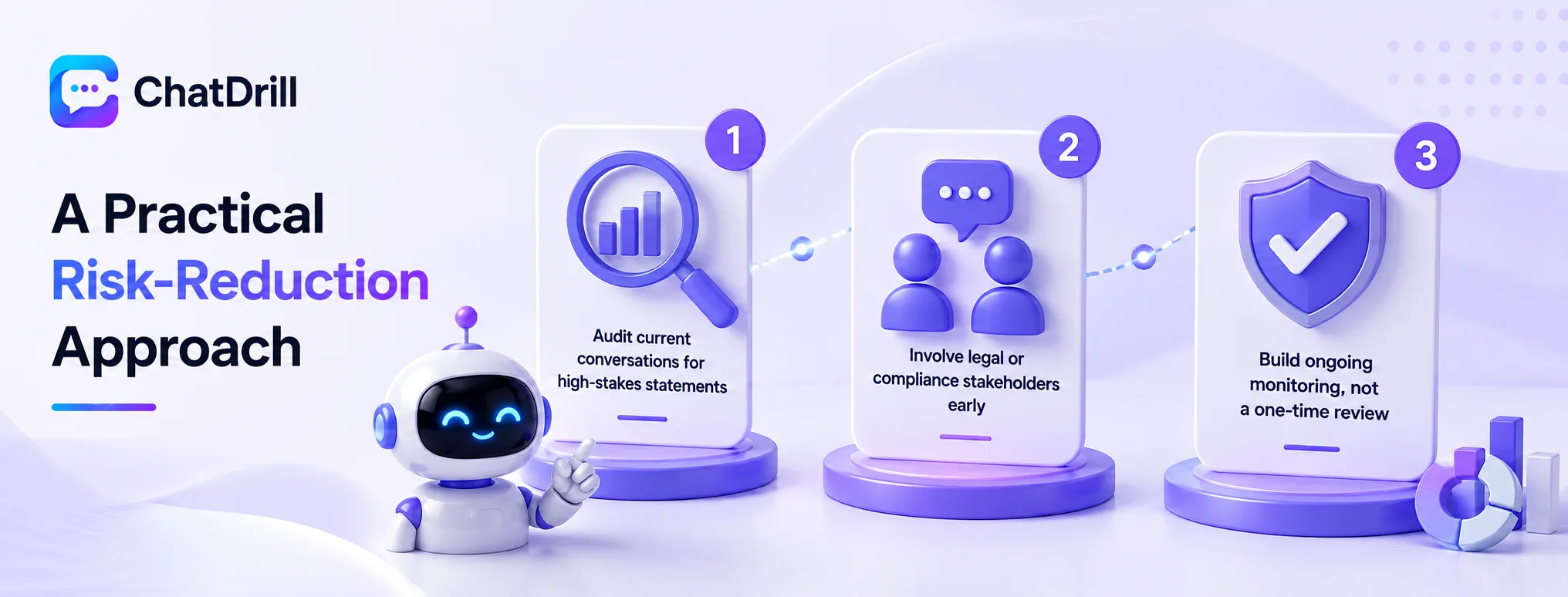
Reducing compliance risk practically means auditing your current AI conversations for high-stakes statements, involving legal or compliance stakeholders early, and building ongoing monitoring rather than a one-time review.
Audit current conversations for high-stakes statements
Reviewing a sample of real AI conversations specifically for instances where the AI made a definitive statement about pricing, policy, or legal matters reveals your current actual exposure.
This audit is a valuable starting point regardless of how confident you feel about your current setup, since real conversation patterns often reveal gaps a design review alone would miss.
Involve legal or compliance stakeholders early
Bringing in whoever owns legal or regulatory compliance at your organization during AI conversation design, rather than after a problem surfaces, catches issues while they're still easy and low-cost to fix.
This involvement is worth treating as standard practice for any customer-facing AI deployment, not just in obviously regulated industries.
Build ongoing monitoring, not a one-time review
Compliance risk isn't a problem solved once and forgotten, given how AI behavior can drift and how regulation continues to evolve, making ongoing monitoring a genuine, continuing responsibility.
Establishing a regular review cadence, rather than treating initial setup as sufficient indefinitely, keeps this risk genuinely managed over time.
Common Mistakes in AI Compliance
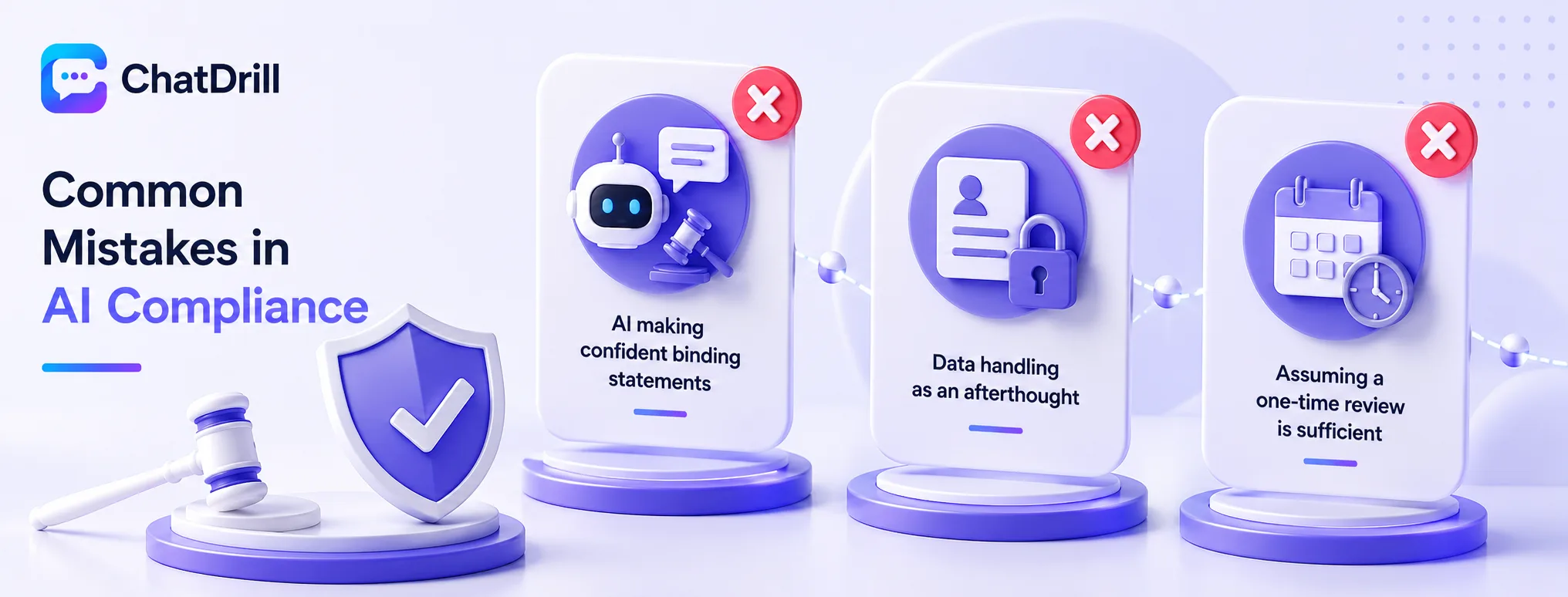
The most common mistakes are allowing AI to make confident statements about legally binding matters, treating data handling as a technical afterthought, and assuming an initial compliance review remains sufficient indefinitely.
AI making confident binding statements
Allowing AI to answer definitively on pricing exceptions, legal rights, or regulated financial guidance without appropriate escalation creates real exposure if that statement turns out to be inaccurate or non-binding.
This is worth treating as a strict boundary rather than a judgment call that could vary by conversation.
Data handling as an afterthought
Designing the conversational experience first and considering data compliance only afterward tends to produce gaps that are more costly to fix retroactively than if compliance had been considered from the start.
Involving privacy and compliance stakeholders during initial design avoids this costly sequencing mistake.
Assuming a one-time review is sufficient
Treating an initial compliance review as permanently sufficient, without ongoing monitoring, misses how both AI behavior and relevant regulation continue to evolve over time.
Building a regular review cadence into your compliance process keeps this risk genuinely managed rather than assumed away after initial setup.