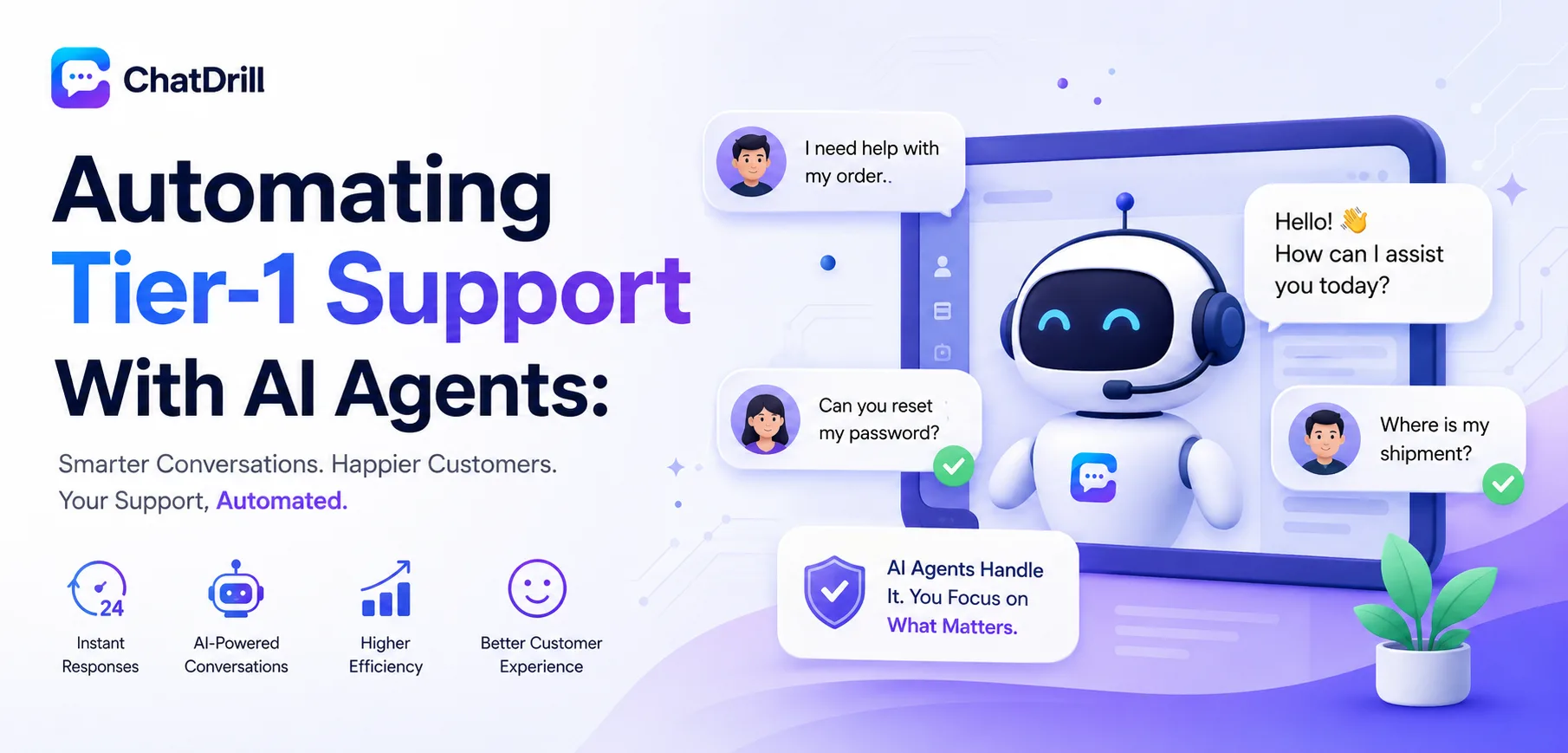

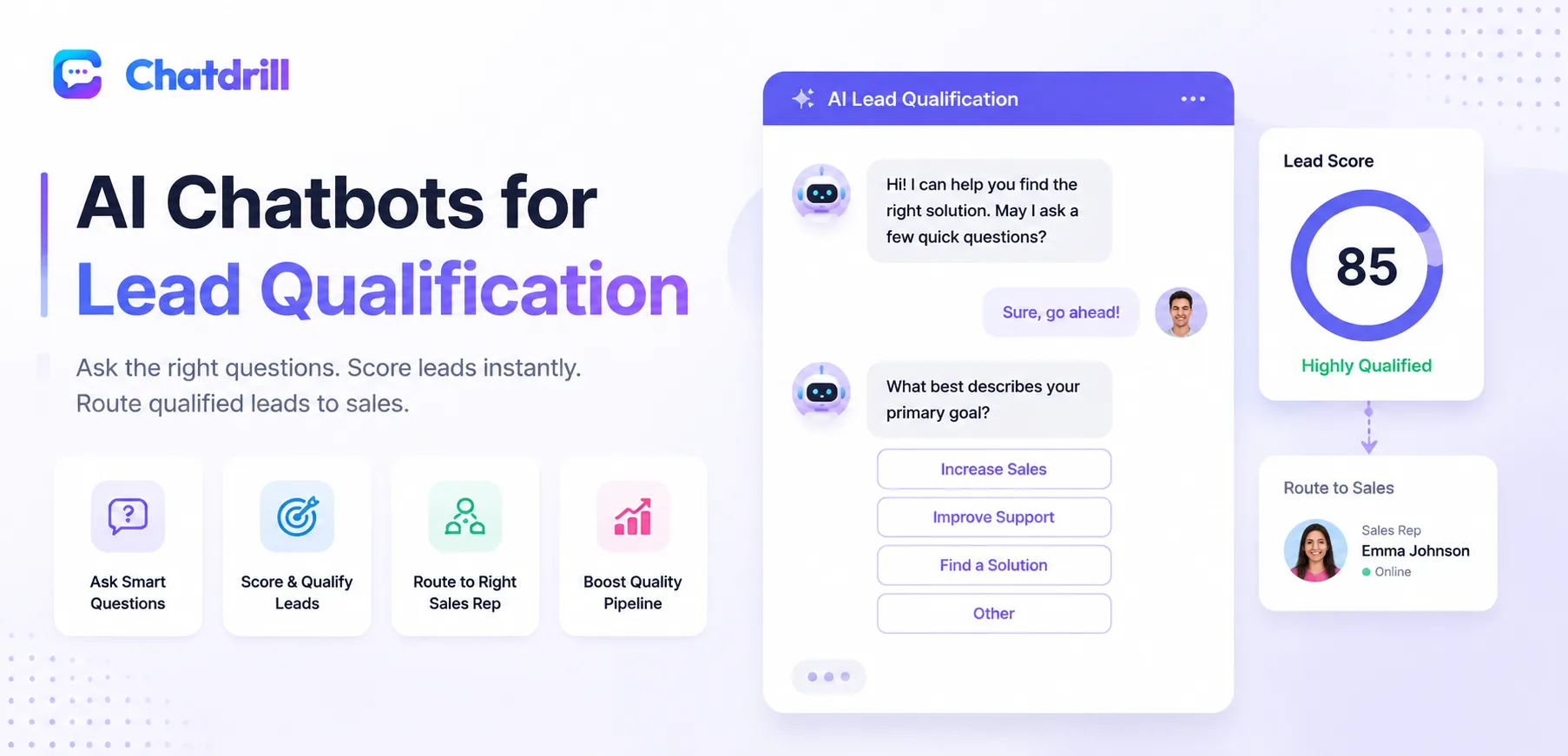
Content AI chatbots for lead qualification ask a website visitor targeted questions in real time, score their responses to assess genuine fit and intent, and route qualified leads directly to sales, all without requiring a human to manually triage every incoming conversation first.
This capability turns a website chat widget from a purely reactive support tool into an active contributor to pipeline generation, catching and qualifying interested visitors at the exact moment they're engaged rather than relying solely on a static contact form.
The value compounds specifically for businesses with meaningful website traffic and a sales process that benefits from early qualification, filtering out clearly unqualified inquiries before they consume valuable sales team time.
Getting genuine value from this capability requires more than enabling a generic feature, it means designing qualification questions that actually reflect your specific ideal customer profile and building sensible scoring and routing logic around those answers.
This guide covers what AI-driven lead qualification means, how to design an effective qualification flow, how scoring and routing work, common mistakes to avoid, how to measure success, and how ChatDrill approaches AI lead qualification specifically.
What AI-Driven Lead Qualification Means
AI-driven lead qualification means a chatbot independently asks relevant questions during a conversation, interprets the visitor's answers, and determines whether that conversation represents a genuinely qualified sales opportunity worth immediate follow-up.
Simple definition
Rather than every website chat conversation requiring a human to manually assess sales fit, AI handles this qualification step directly, asking questions and scoring responses in real time as the conversation happens.
This automation doesn't replace human judgment for genuinely qualified leads, it filters and prioritizes, ensuring sales time focuses on conversations already shown to be worth pursuing.
The qualification happens conversationally, within the natural flow of a chat interaction, rather than through a separate, more rigid intake form the visitor must complete first.
Why this matters for pipeline generation specifically
A visitor engaging with website chat is often at a genuine moment of active interest, and AI qualification captures and acts on that interest immediately, rather than losing momentum to a delayed manual follow-up process.
This immediacy is what makes chat-based AI qualification genuinely valuable for pipeline generation, beyond simply being a support cost-saving measure.
Designing an Effective Qualification Flow
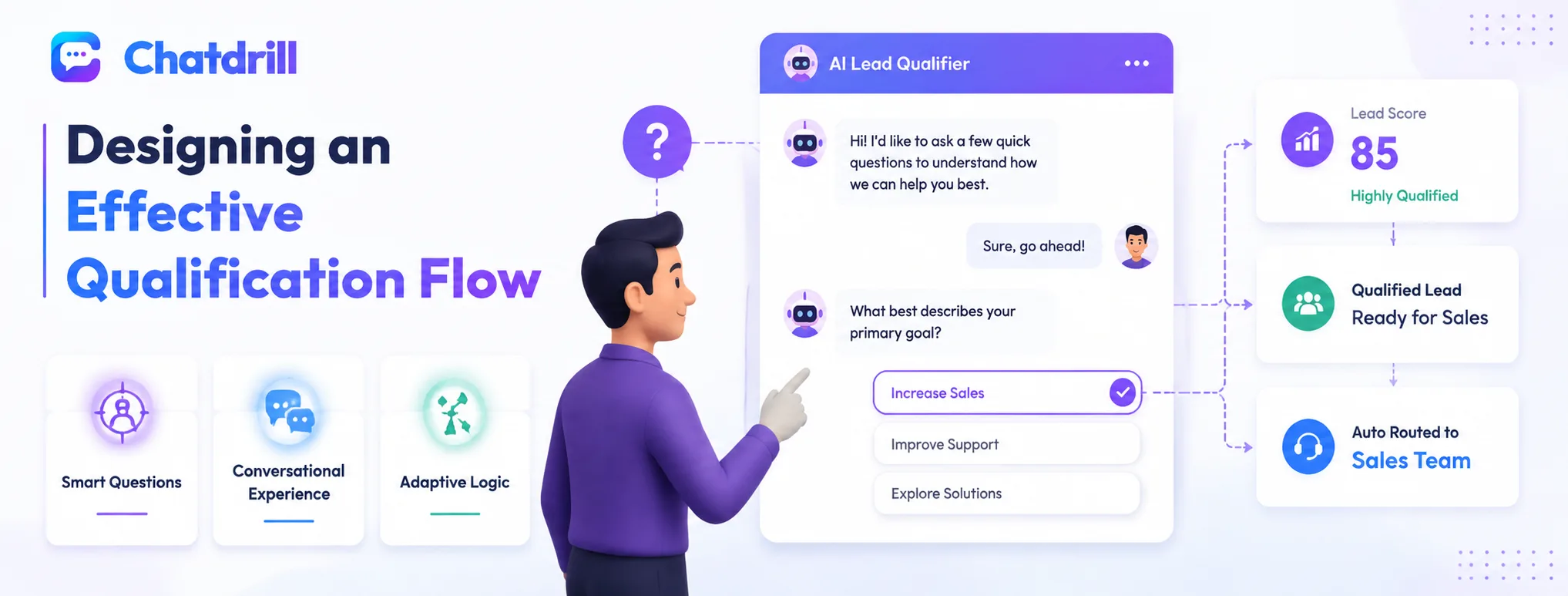
Content An effective qualification flow asks two to three focused questions revealing genuine fit and intent, feels conversational rather than like a rigid form, and adapts its follow-up questions based on what the visitor has already revealed.
Choosing questions that reveal genuine signal
The strongest qualification questions target specifics that genuinely predict fit, company size, current tooling, timeline, budget range, rather than generic questions that don't meaningfully differentiate a qualified lead.
Reviewing what your sales team actually asks during a discovery call provides a useful, grounded starting point for identifying which specific questions genuinely matter for your qualification criteria.
Keeping the flow conversational
Presenting questions one at a time in natural language, rather than all at once in a rigid, form-style sequence, feels considerably less intrusive and tends to produce higher completion rates.
This conversational framing also lets the AI react naturally to a specific answer, asking a relevant follow-up rather than mechanically proceeding through a fixed script regardless of context.
Building in adaptive logic
A well-designed flow adapts based on earlier answers, skipping irrelevant questions or asking a targeted follow-up depending on what's already been revealed, rather than asking every visitor the identical fixed sequence.
This adaptiveness is what separates a genuinely intelligent qualification flow from a static form merely disguised as a conversation.
Scoring and Routing Qualified Leads
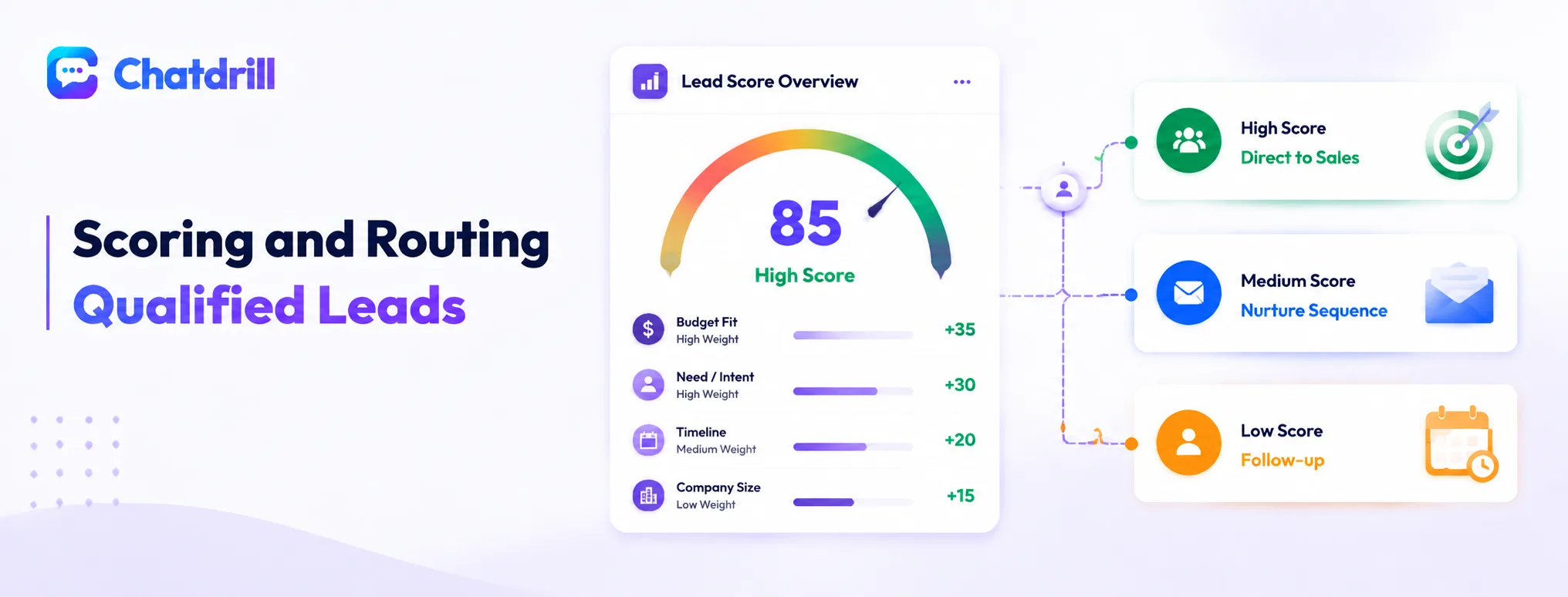
Effective scoring weights each answer by how strongly it predicts genuine fit, with routing sending high-scoring leads directly and immediately to sales while lower-scoring leads flow into an appropriate nurture sequence rather than being discarded.
Weighting answers by predictive strength
Not every qualifying question carries equal weight, a specific budget confirmation typically predicts genuine intent more strongly than a vague general interest statement, and scoring should reflect that difference.
Refining these weights based on which specific answers actually correlated with eventual closed deals, once enough data exists, improves scoring accuracy considerably over time.
Setting a sensible routing threshold
The score threshold triggering immediate sales routing should reflect a genuine confidence level, calibrated based on real conversion data rather than an arbitrarily chosen initial number.
Setting this threshold too low floods sales with low-quality leads, while setting it too high risks missing genuinely qualified leads that scored just below an overly conservative cutoff.
Nurturing rather than discarding lower scores
A lead that doesn't clear the immediate-routing threshold isn't necessarily worthless, flowing into an automated nurture sequence captures value from leads that may become genuinely qualified once their situation evolves.
This nurture path is worth building deliberately, rather than simply dropping any lead that doesn't immediately clear the qualification bar.
Common Qualification Mistakes to Avoid
The most common mistakes are asking too many questions upfront and losing visitor completion, using generic questions that don't genuinely differentiate qualified leads, and never revisiting scoring weights based on real conversion outcomes.
Asking too many questions upfront
A long qualification sequence measurably drops completion rates, two to three focused questions consistently outperform a longer, more exhaustive intake process.
The better approach asks the minimum needed for an initial score, then gathers additional detail conversationally as the relationship develops further, rather than front-loading everything.
Using generic, non-differentiating questions
A question that every visitor answers similarly, regardless of actual fit, wastes a valuable qualification opportunity without providing genuinely useful signal for scoring purposes.
Reviewing whether each question in your flow actually differentiates qualified from unqualified leads, based on real outcome data, catches this specific gap.
Never revisiting scoring weights
Scoring weights set once at initial launch and never revisited against actual conversion outcomes tend to drift out of alignment with what genuinely predicts a qualified lead as your business evolves.
A periodic review comparing scored leads against their eventual outcomes keeps the scoring model accurate and genuinely useful over time.
Measuring Qualification Success
Measuring success means tracking what percentage of AI-scored qualified leads actually convert into real sales pipeline, gathering direct feedback from sales on lead quality, and comparing speed to reach sales against whatever manual process previously existed.
Tracking conversion of scored leads to pipeline
The clearest measure of qualification success is whether leads scored as qualified actually convert into genuine sales opportunities at a meaningfully higher rate than unscored or lower-scored leads.
This data, tracked over time, also feeds directly back into refining scoring weights toward greater predictive accuracy going forward.
Getting direct sales feedback
Beyond the raw conversion numbers, directly asking the sales team whether lead quality genuinely feels improved provides a qualitative check the numbers alone might not fully capture.
This feedback loop, done regularly, catches a scoring model that's technically converting well but still frustrating sales in some specific, addressable way.
Comparing speed to reach sales
Measuring how much faster a qualified lead reaches sales under AI-driven qualification, compared to a manual triage process, quantifies one of the clearest, most concrete benefits of the investment.
This speed improvement is often the easiest benefit to demonstrate concretely when justifying continued investment in the qualification system internally.
How ChatDrill Handles AI Lead Qualification
ChatDrill's AI asks natural, adaptive qualifying questions, scores responses automatically, and routes qualified leads directly to sales with full conversation context, combining the core components of effective AI-driven qualification in one platform.
Conversational, adaptive qualification
ChatDrill's AI is designed to ask qualifying questions naturally within a conversation, adapting based on visitor responses rather than following a rigid, predetermined script regardless of context.
This conversational approach directly supports the flow design principles covered earlier, aiming to feel like a genuine conversation rather than a disguised form.
Automatic scoring and routing
Qualified leads route directly to sales with full conversation context automatically included, addressing both the qualification and the handoff quality covered in a related guide on this topic.
This combination, genuine qualification paired with clean handoff, is what actually delivers on the full promise of AI-driven lead qualification for a business's sales pipeline.