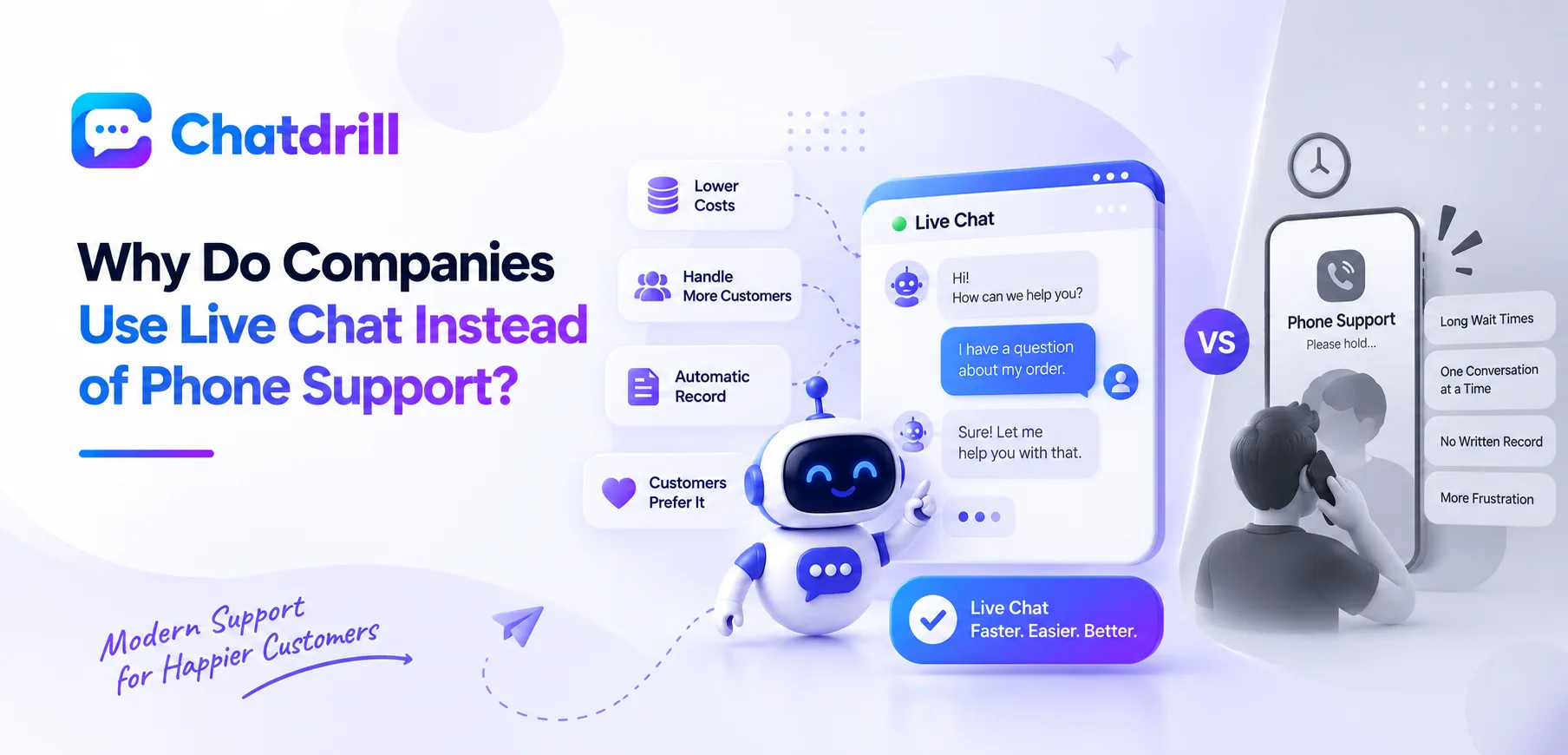


A call center overflow situation, more calls arriving than available agents can handle, forces an uncomfortable choice between longer hold times, abandoned calls, or the ongoing cost of staffing for peak volume that sits idle most of the time.
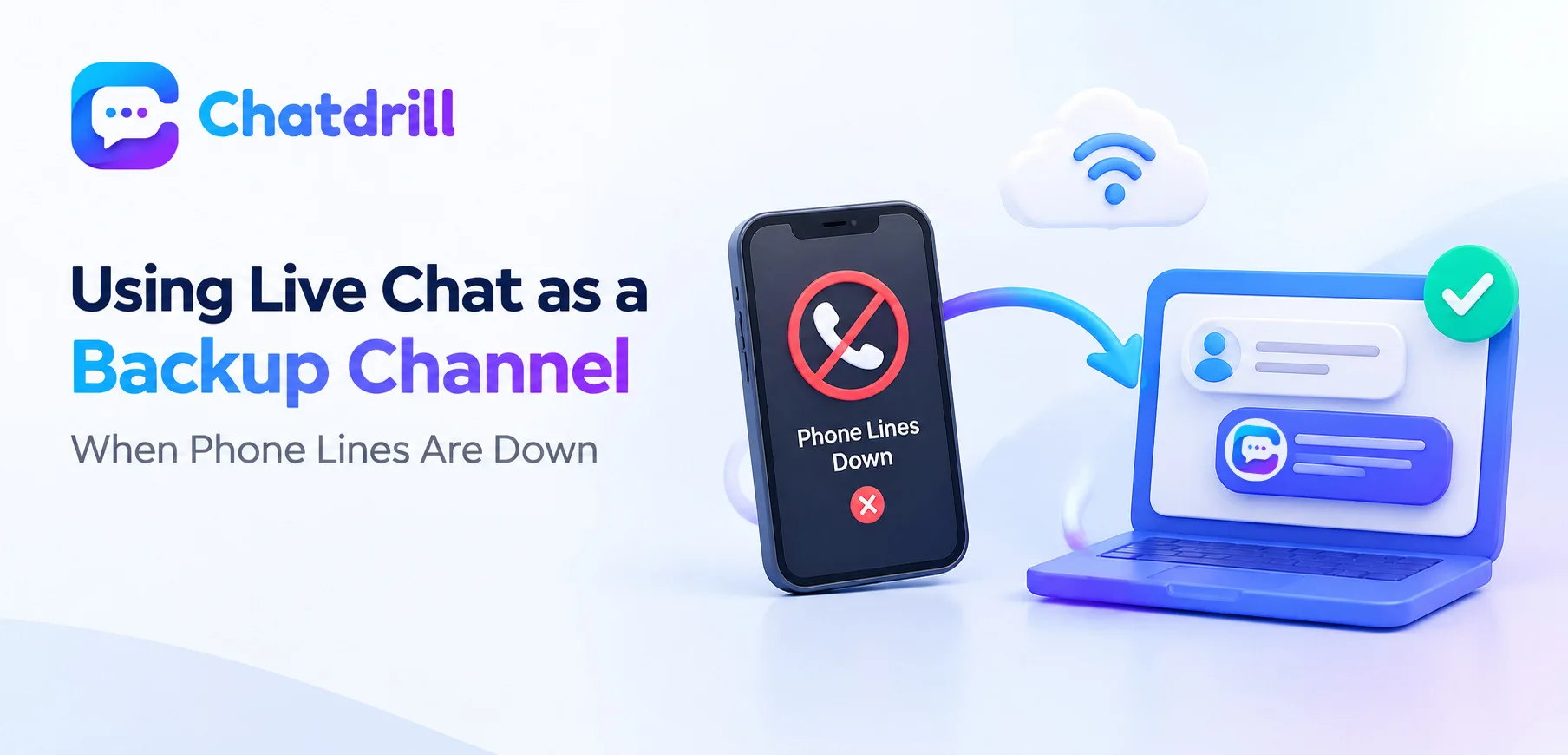
Quick answer: Live chat handles call center overflow by absorbing calls a phone team can't get to during a genuine volume spike, since chat's concurrency and AI assistance let it scale to meet a sudden surge in a way a phone team, limited to one call per agent at a time, structurally cannot.
Live chat offers a genuinely different structural option for this overflow specifically, since its concurrency capability and AI assistance let it absorb a volume spike without the same one-call-at-a-time capacity ceiling phone support faces.
Understanding exactly how and when to route overflow to chat, rather than treating it as a lesser fallback, helps a business genuinely reduce hold times and abandoned contacts during peak periods without a costly, permanent staffing increase.
This guide covers the mechanism behind chat-based overflow handling, specific implementation tactics, common mistakes, measuring the actual impact, and how ChatDrill supports call center overflow.
The Mechanism Behind Chat-Based Overflow Handling
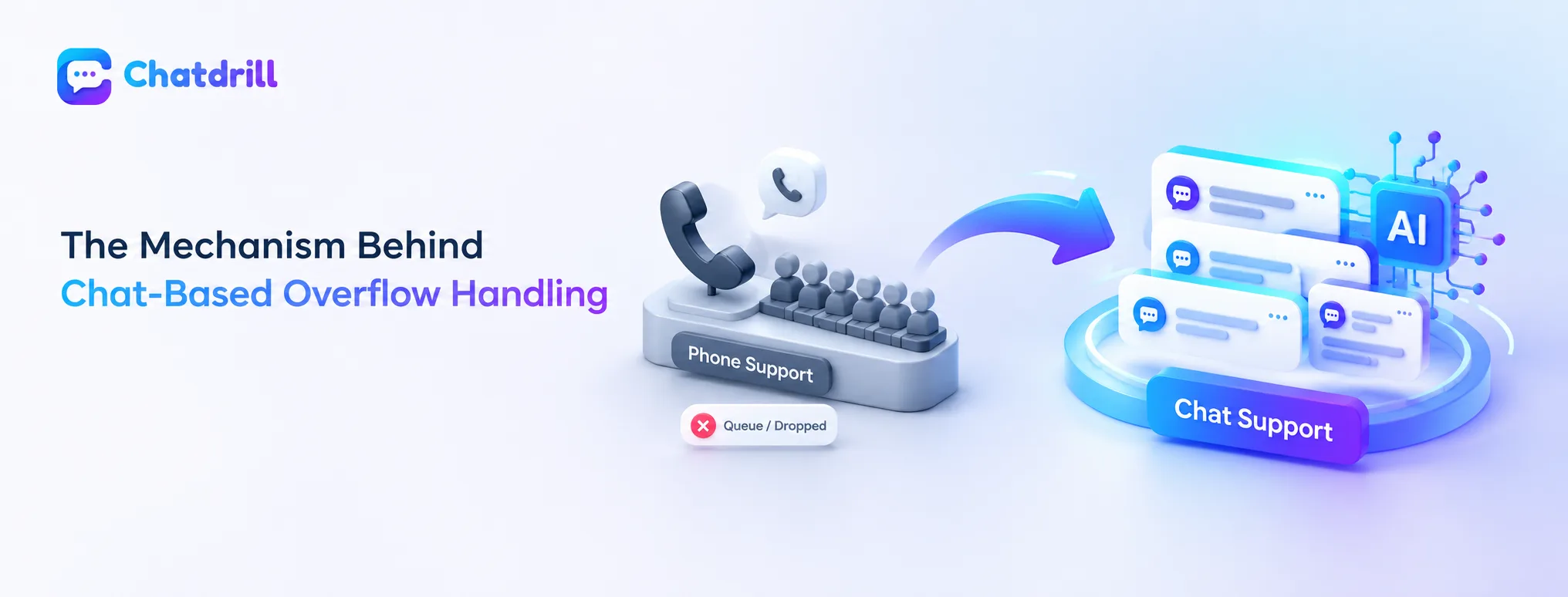
Chat absorbs overflow because its concurrency and AI capability scale in a way phone support's one-call-at-a-time structure fundamentally cannot.
Why phone support hits a hard capacity ceiling
A phone agent can only handle one call at a time, meaning phone support capacity scales strictly linearly with headcount, a genuine structural limit that creates a hard ceiling during any volume spike beyond current staffing.
This hard ceiling is precisely why overflow calls end up in a queue or get dropped entirely, since there's no way to absorb additional volume beyond what current phone agents can literally handle one at a time.
How chat's concurrency and AI break through this ceiling
A single chat agent can typically handle three to five simultaneous conversations, and AI can handle a considerably larger volume beyond that, meaning chat's effective capacity scales in a way phone support's structure simply doesn't allow.
Routing a customer to chat during a phone overflow moment gives them access to this genuinely more elastic capacity, resolving their need without requiring them to wait through a queue with no clear resolution timeline.
Specific Tactics for Implementing Chat Overflow Handling
When should chat be proactively offered as a phone alternative?
Training AI on your most common phone-inquiry types
capture.
Offering chat proactively at a wait-time threshold
Configuring your phone system to proactively suggest chat as an alternative once hold time exceeds a defined threshold, rather than requiring the caller to discover this option themselves, captures more of the overflow opportunity.
This proactive offer respects that a caller experiencing a long hold is often receptive to a faster alternative, provided it's actually offered rather than assumed to be known.
Training AI on your most common phone-inquiry types Reviewing your phone support's most common call reasons and ensuring your chat AI is specifically trained to handle these same inquiries accurately means overflow-routed customers genuinely get resolved, not just moved to a different queue.
This alignment between phone-call content and chat AI training ensures the overflow solution genuinely resolves the customer's need rather than just changing which channel they're waiting in.
Common Mistakes in Overflow Implementation
Treating chat as a lesser, catch-all option without genuine capability, and failing to proactively offer it during actual overflow moments, both limit effectiveness.
Treating chat as a lesser option without genuine capability
Routing overflow to a chat option that isn't genuinely staffed or trained to resolve the same range of questions phone support handles creates a frustrating experience that undermines trust in the overflow solution entirely.
Ensuring chat genuinely can resolve the common overflow-inquiry types, as this guide's tactics recommend, is what makes this option a genuine alternative rather than a token gesture.
Not proactively offering chat during actual overflow
Leaving chat available but not actively surfacing it specifically when phone wait times are genuinely elevated wastes the overflow capacity chat could otherwise absorb during exactly the moments it matters most.
Building the proactive offer this guide recommends into your phone system directly addresses this gap.
Measuring the Actual Overflow Handling Impact
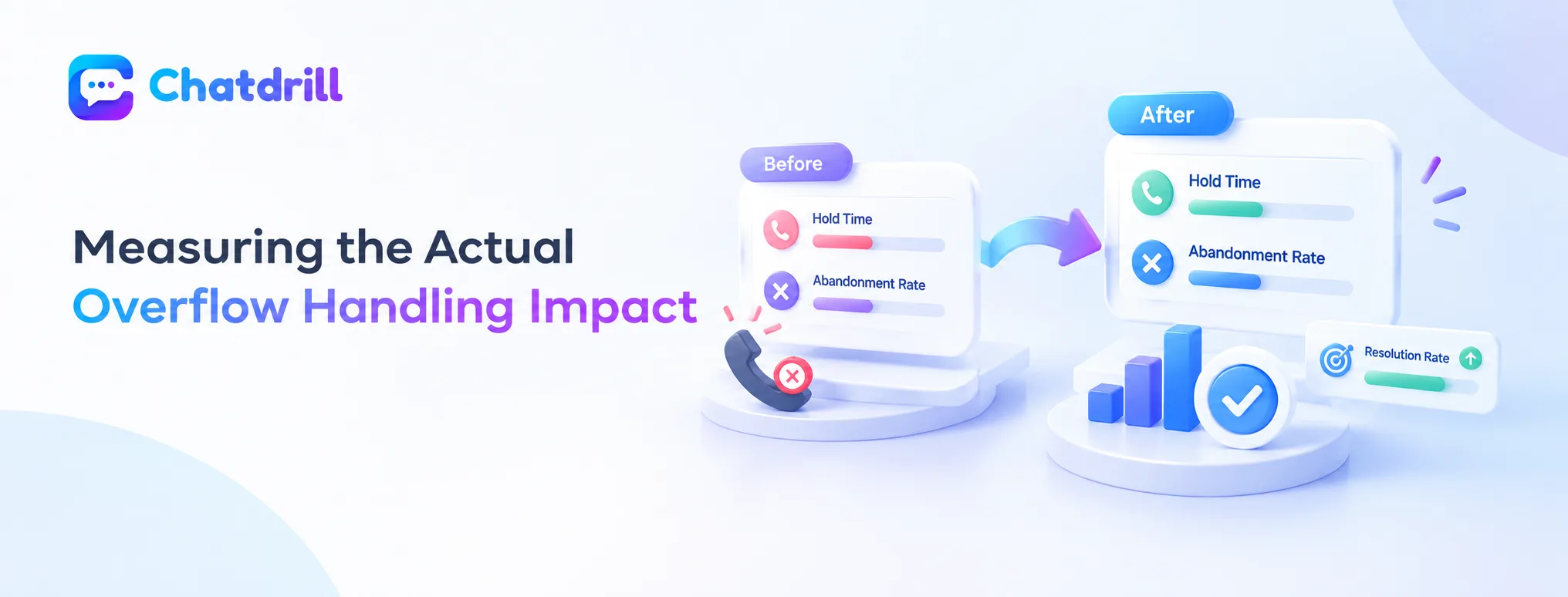
Comparing phone hold time and abandonment before and after
overflow routing reveals the genuine, direct impact.
Comparing phone hold time and abandonment before and after Tracking your phone system's average hold time and call abandonment rate before and after implementing proactive chat overflow routing provides direct evidence of whether the approach genuinely reduced these specific pain points.
This comparison should specifically account for any concurrent changes in overall call volume, ensuring the observed change reflects chat's genuine contribution rather than an unrelated volume shift.
Tracking resolution quality for overflow-routed conversations
Reviewing whether conversations routed to chat during overflow moments achieve comparable resolution rates to a typical phone call confirms the overflow solution is genuinely resolving needs, not just relocating unresolved ones to a different channel.
This quality check protects against the specific risk of a technically successful overflow reduction that doesn't actually reflect genuine customer value.
How ChatDrill Supports Call Center Overflow
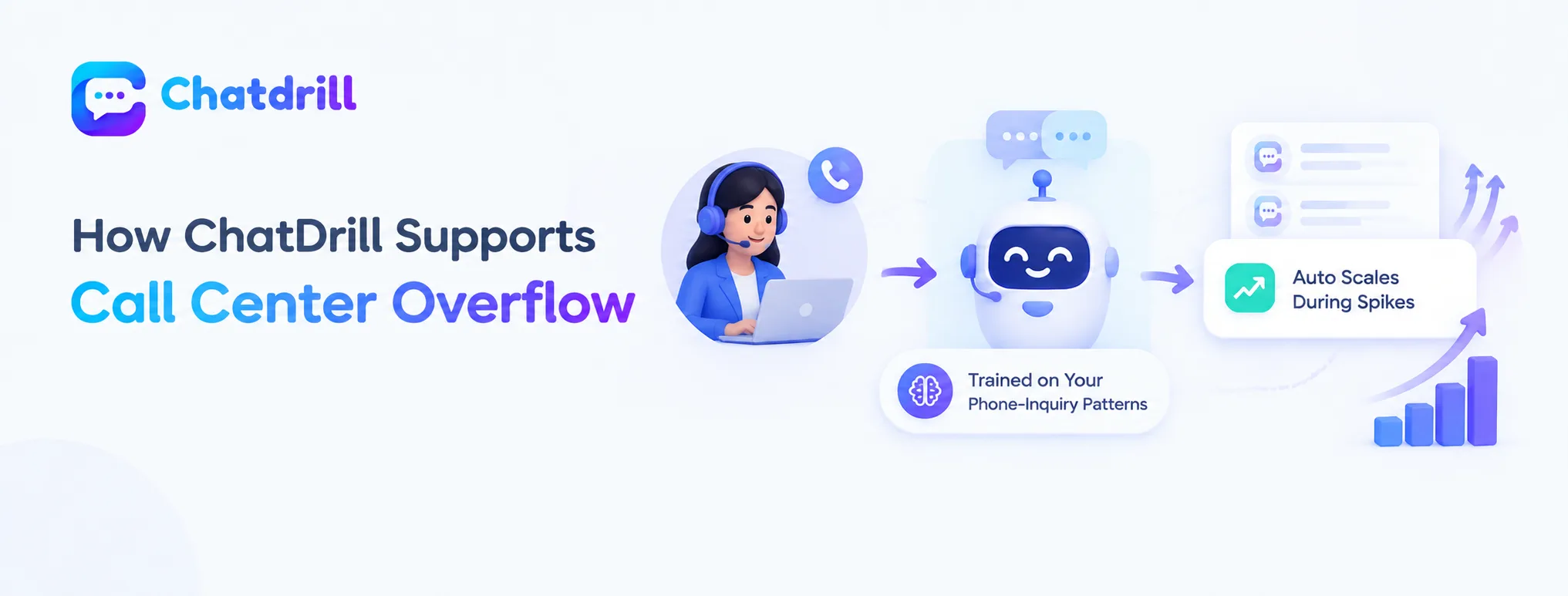
ChatDrill's AI can be trained on your common phone-inquiry types and scales automatically to absorb a genuine volume spike, reflecting the tactics this guide identifies as most effective.
AI trained on your genuine phone-inquiry patterns
ChatDrill's AI can be trained specifically on the same common inquiry types your phone support team handles, ensuring overflow-routed customers receive genuine, accurate resolution rather than a lesser alternative.
This alignment directly supports the quality-parity this guide identifies as essential for overflow handling to genuinely succeed rather than merely relocating unresolved calls.
Capacity that scales automatically during a spike
ChatDrill's AI capacity scales automatically to absorb a sudden volume increase, directly addressing the structural capacity ceiling this guide identifies as phone support's core overflow limitation.
This automatic scaling means a business doesn't need to predict overflow moments precisely in advance, since the capacity is genuinely available whenever a spike actually occurs.