
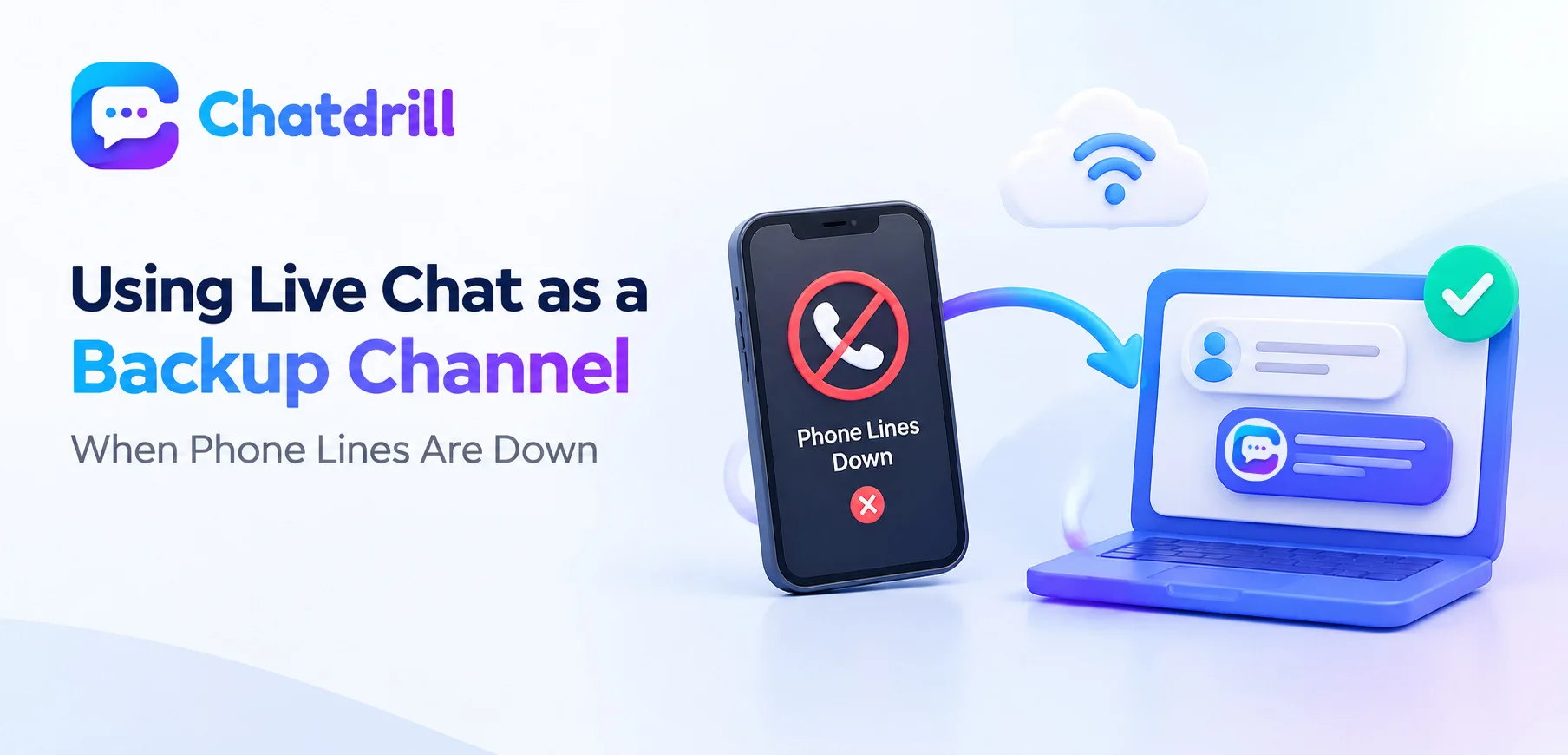
Are Down A phone system outage, whether from a carrier issue, hardware failure, or a broader infrastructure problem, creates a genuinely urgent communication gap, since customers with an active need suddenly have no way to reach a usually-reliable channel.
Quick answer: Live chat serves as an effective backup channel when phone lines go down because it runs on separate internet-based infrastructure rather than the traditional telephony systems a phone outage typically affects, letting a business maintain genuine customer contact even during an outage that would otherwise leave customers with no way to reach support at all.
Live chat's fundamentally different underlying infrastructure, internet-based rather than traditional telephony, means a phone outage typically doesn't affect chat at all, making it a genuinely reliable backup rather than one likely to fail for the same underlying reason.
Understanding how to prepare chat specifically for this backup role, including clear customer communication during an actual outage, helps a business maintain genuine customer contact through a disruption that would otherwise leave customers stranded.
This guide covers why chat serves as reliable backup infrastructure, specific preparation tactics, common mistakes, measuring backup effectiveness, and how ChatDrill supports this contingency role.
Why Chat Serves as Reliable Backup Infrastructure
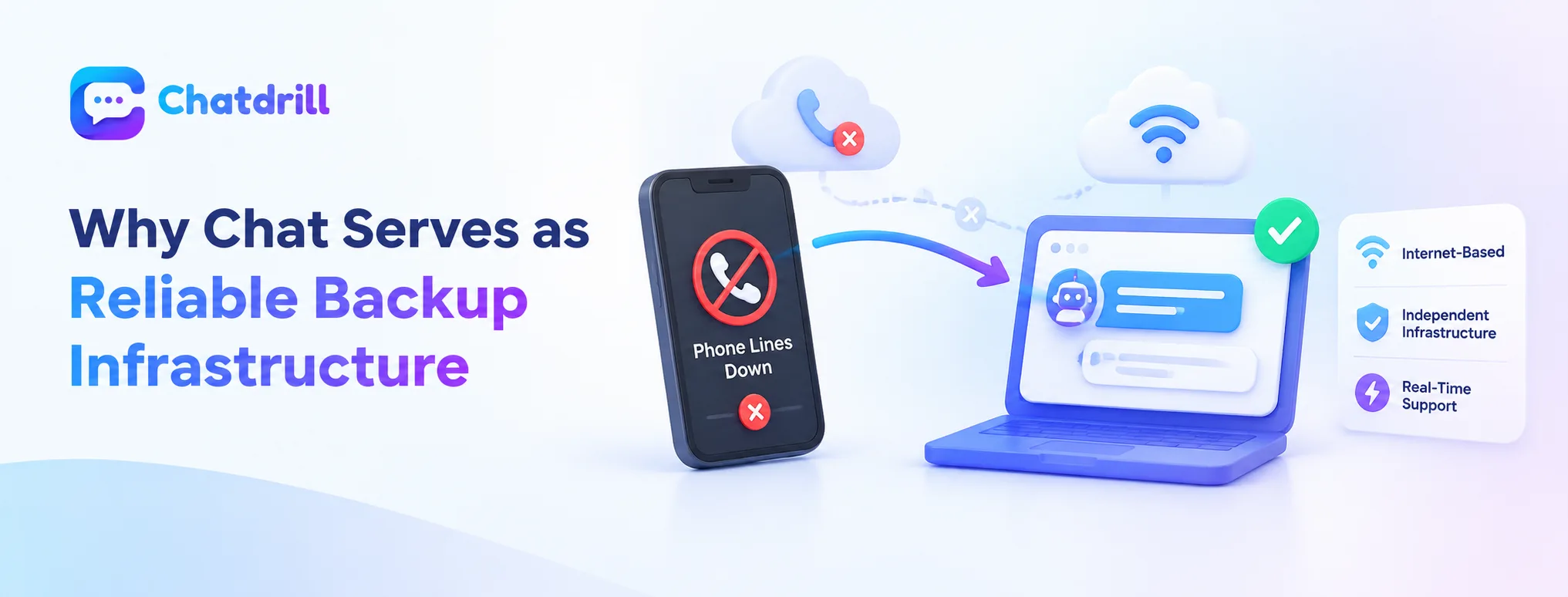
Reliable infrastructure independent from telephony systems
systems a phone outage typically affects, making it a genuinely reliable backup channel.
The infrastructure independence that makes this work
A phone system outage typically stems from a carrier issue, a hardware failure, or a telephony-specific infrastructure problem, none of which affects chat's separate, internet-based infrastructure, meaning the two channels genuinely don't share the same failure points.
This independence is precisely what makes chat a genuinely reliable backup rather than simply another channel that might coincidentally also be affected by the same underlying outage cause.
Why this matters more than other potential backup options
Compared to alternatives like email, which lacks chat's real-time immediacy, or social media messaging, which may not be monitored as closely, chat offers a genuinely comparable real-time experience to the phone channel it's temporarily replacing.
This comparability means customers experience less of a genuine service degradation during the outage than they would with a less immediate backup alternative.
Specific Preparation Tactics for This Contingency Role
Having a clear, pre-planned communication message ready and ensuring chat staffing can absorb redirected phone volume both prepare a business for this scenario.
Having pre-planned outage communication ready
Preparing clear, ready-to-use messaging in advance, for your website, social media, and any automated phone message, directing customers to chat during a phone outage ensures customers can find this backup option quickly rather than being left uncertain how to reach you.
This advance preparation matters given how time-sensitive an actual outage moment is, there's rarely time to draft genuinely clear communication from scratch while the outage itself is actively happening.
Ensuring chat staffing can absorb redirected volume
Having a plan for temporarily increasing chat staffing or relying more heavily on AI assistance during an outage ensures the backup channel can genuinely absorb the phone volume being redirected to it, rather than becoming its own overwhelmed bottleneck.
This capacity planning reflects the same overflow-handling principles relevant to planned volume spikes, applied here to the specific, unplanned context of an outage.
Common Mistakes in Backup Channel Preparation
Failing to prepare outage communication in advance, and assuming existing chat staffing will automatically absorb the full redirected phone volume, are common mistakes.
Not preparing communication in advance
Scrambling to draft outage communication only once an outage is already happening wastes precious time customers spend genuinely uncertain how to reach support, undermining the entire value of having a backup channel ready.
Advance preparation, as this guide's tactics recommend, ensures this communication can go out immediately once an outage is identified.
Assuming existing staffing will simply absorb volume
Underestimating how much phone volume might redirect to chat during a genuine outage risks the backup channel itself becoming overwhelmed, undermining customer confidence in the very contingency meant to help them.
Planning for temporary capacity adjustment, as this guide recommends, protects against this specific, undermining risk.
Measuring Backup Channel Effectiveness
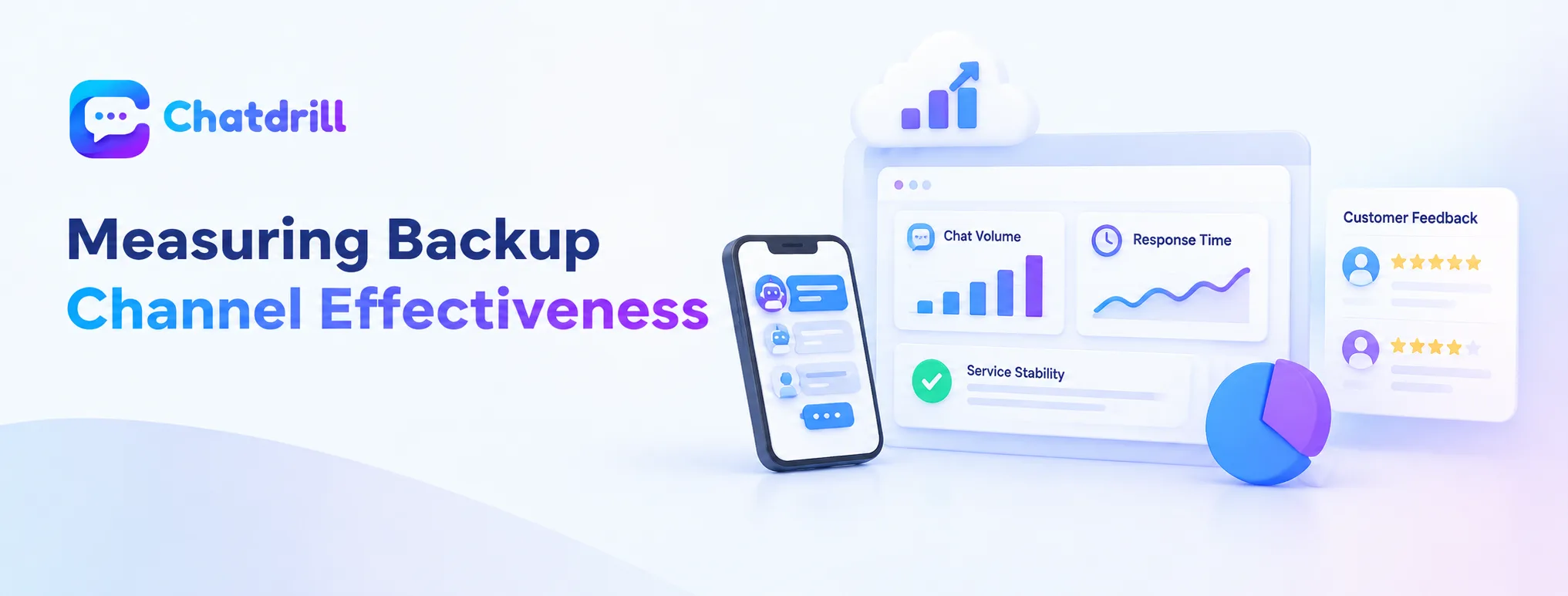
Reviewing chat volume and response quality during an outage
typical baselines reveals whether the backup preparation genuinely held up.
Reviewing chat volume and response quality during an outage Comparing chat volume and response time specifically during a past outage period against typical, non-outage baselines reveals whether the backup channel genuinely absorbed the redirected demand without meaningful quality degradation.
This retrospective review, conducted after any actual outage occurs, provides genuine evidence for refining preparation ahead of any future incident.
Gathering customer feedback specifically about the outage experience
Following up with customers who used chat as backup during an outage, asking specifically about their experience, reveals qualitative insight beyond pure response-time metrics about whether the contingency plan genuinely served them well.
This feedback loop helps refine both the communication and capacity aspects of outage preparation for future incidents.
How ChatDrill Supports This Contingency Role
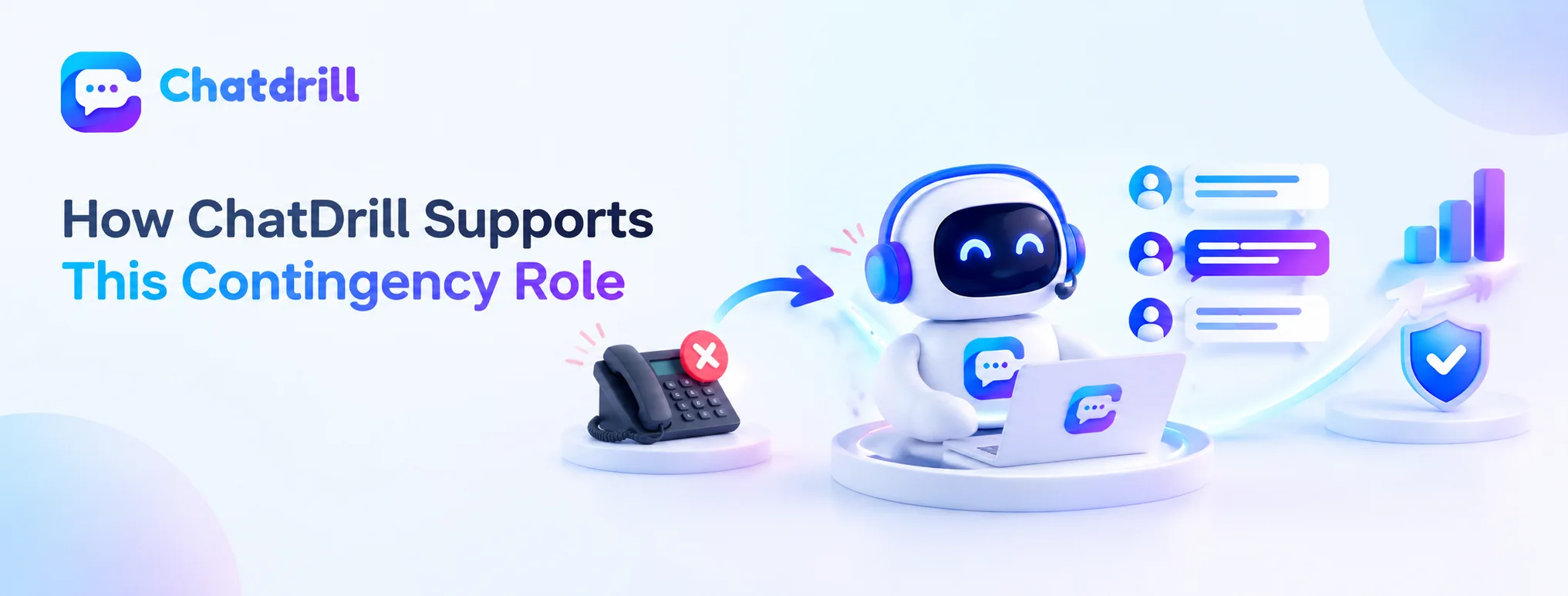
ChatDrill's AI-assisted capacity can absorb redirected phone volume during an outage, reflecting the reliable backup role this guide identifies as chat's genuine advantage.
AI capacity that scales to absorb redirected volume
ChatDrill's AI can handle a substantial share of incoming volume automatically, helping absorb phone volume redirected during an outage without requiring immediate, difficult-to-arrange additional human staffing.
This automatic capacity directly addresses the staffing-adequacy concern this guide identifies as a common risk during an actual, unplanned outage scenario.
Reliable infrastructure independent from telephony systems ChatDrill operates on infrastructure genuinely independent from traditional phone systems, reflecting the core reliability principle this guide identifies as what makes chat a genuinely trustworthy backup during a phone-specific outage.
This independence gives a business confidence that ChatDrill will remain available precisely when a phone-specific issue would otherwise leave customers without any way to reach support.