
Average order value is one of the more overlooked places live chat delivers genuine business value, since most conversations about chat focus on support efficiency rather than its direct effect on how much a customer actually spends.
Quick answer: Live chat increases average order value by proactively suggesting genuinely relevant add-ons or upgrades at the right moment in a purchase decision, and by resolving hesitation about a higher-priced option that a visitor might otherwise abandon in favor of a cheaper, safer choice.
The underlying mechanism connects directly to chat's real-time nature: a well-timed, relevant suggestion or a resolved hesitation about a pricier option can shift a purchase decision in the moment it's actually being made.
Understanding which specific moments and tactics genuinely move average order value, rather than assuming any chat interaction automatically increases spend, helps focus effort where it delivers real results.
This guide covers the mechanism behind AOV lift, specific tactics for suggesting relevant upgrades, common mistakes, measuring the actual impact, refining the strategy, and how ChatDrill supports AOV-focused chat.
The Mechanism Behind AOV Lift From Chat
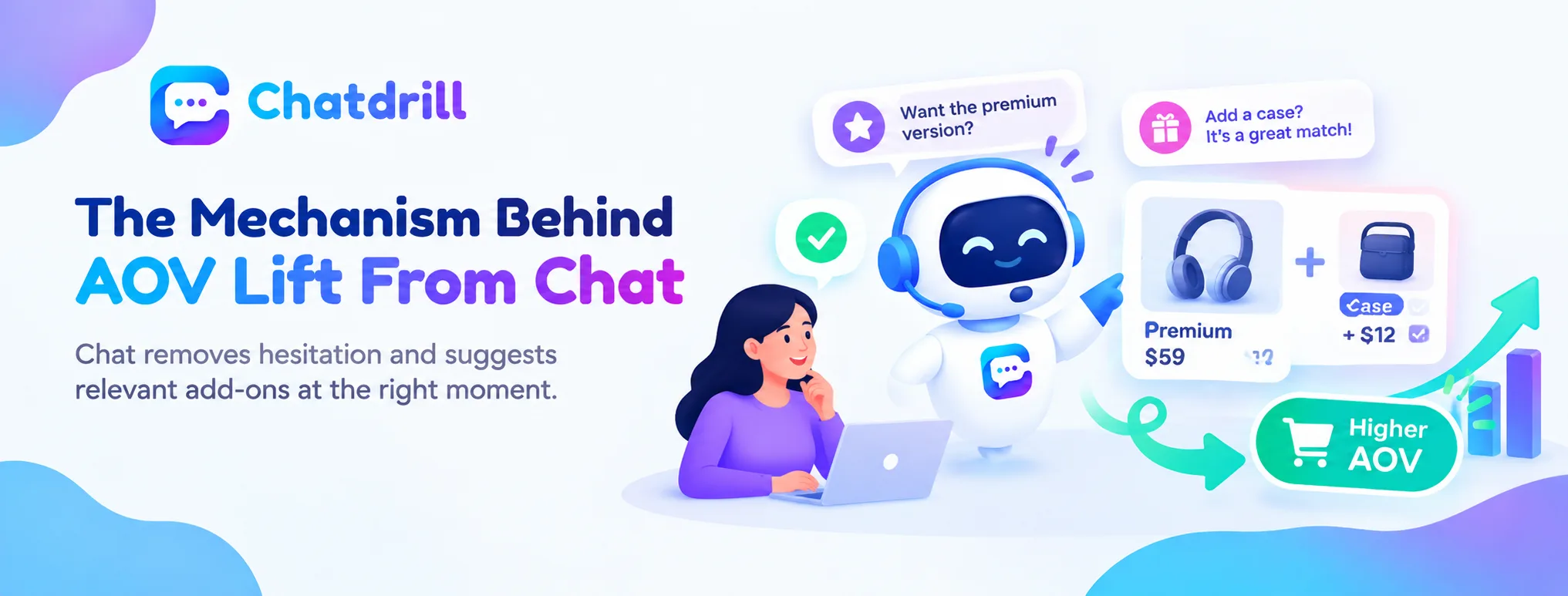
Chat increases average order value by resolving hesitation about a higher-priced option and by proactively suggesting genuinely relevant add-ons at the right decision moment.
Resolving hesitation about a higher-priced option
A visitor considering a premium version of a product, but uncertain whether the extra cost is genuinely worth it, often just needs one specific clarifying question answered to feel confident moving forward with the higher-priced choice.
Chat's real-time nature lets this clarification happen at exactly the moment of hesitation, rather than the visitor defaulting to the cheaper, safer option simply because no one was available to answer in time.
This hesitation-resolution mechanism mirrors the broader sales-lift mechanism chat provides, applied specifically to the moment of choosing between price tiers rather than choosing to buy at all.
Proactive, relevant add-on suggestions
A chat agent or AI noticing a visitor has added a specific item to their cart can proactively suggest a genuinely complementary add-on, a case for a phone, an extended warranty for an appliance, at the exact moment it's most relevant.
This proactive suggestion timing matters considerably, since the same suggestion made too early or too late in the browsing journey tends to feel less relevant and converts at a meaningfully lower rate.
Specific Tactics for Suggesting Relevant Upgrades
Triggering suggestions based on genuine cart contents or browsing behavior, and training AI on your actual complementary product relationships, both improve suggestion relevance and conversion.
Triggering suggestions based on cart contents
Configuring chat to proactively suggest a specific, genuinely complementary item once a particular product is added to cart ensures the suggestion feels relevant and helpful, rather than a generic, unrelated upsell attempt.
This cart-based triggering produces considerably higher relevance than a blanket, site-wide upsell message shown regardless of what a visitor is actually purchasing.
Training AI on genuine product relationships
Providing your chat AI with accurate information about which products genuinely complement each other, based on actual purchase pattern data where available, ensures its suggestions reflect real, relevant relationships rather than arbitrary or poorly matched pairings.
This accuracy matters directly for conversion, since an irrelevant or poorly matched suggestion can actually damage trust rather than increase order value.
Common Mistakes That Undermine AOV Efforts
Suggesting too aggressively or too frequently
genuinely irrelevant add-ons, both undermine trust and reduce overall AOV impact.
Suggesting too aggressively or too frequently Repeatedly pushing upgrade or add-on suggestions throughout a single conversation risks feeling pushy, potentially damaging the overall purchase experience and undermining the trust needed for a visitor to complete even their original, intended purchase.
Limiting suggestions to one well-timed, genuinely relevant moment per conversation tends to produce better overall results than a more aggressive, repeated approach.
Recommending genuinely irrelevant add-ons
A suggestion that doesn't genuinely relate to what a visitor is actually purchasing feels like generic, automated upselling rather than helpful, personalized guidance, reducing both immediate conversion and overall trust in future recommendations.
Ensuring suggestions are grounded in genuine, accurate product relationships, as covered in this guide's tactics section, directly prevents this specific, trust-damaging mistake.
Measuring the Actual AOV Impact of Chat
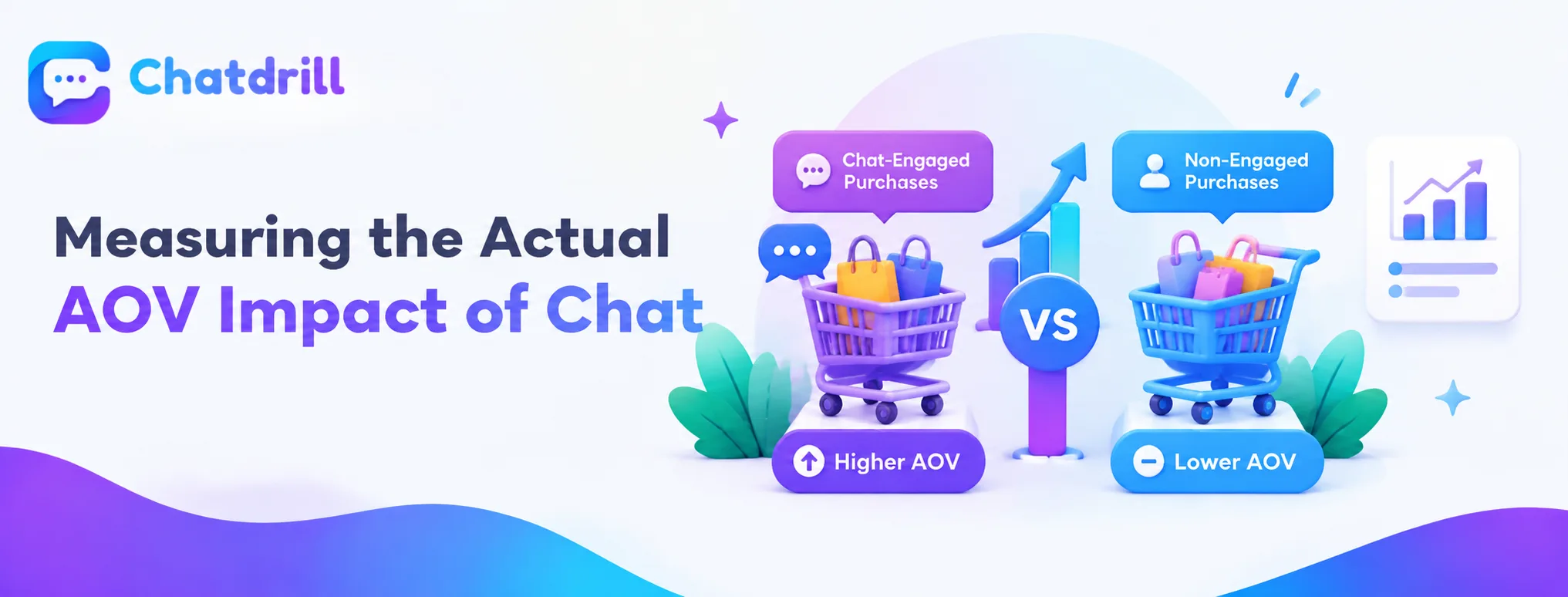
Comparing chat-engaged versus non-engaged order values
while accounting for genuine visitor intent differences, reveals chat's real contribution.
Comparing chat-engaged versus non-engaged order values Tracking average order value separately for purchases that involved a chat interaction versus those that didn't provides the direct comparison needed to assess chat's genuine AOV contribution.
This comparison should account for the possibility that visitors already inclined toward a larger purchase might also be more likely to engage with chat, a genuine measurement nuance worth keeping in mind.
Isolating the specific effect of proactive suggestions
Tracking order value specifically for conversations where a proactive suggestion was made, compared against conversations without one, isolates the suggestion tactic's specific contribution beyond chat's broader hesitation-resolution effect.
This isolated view helps confirm whether the specific tactics covered in this guide are genuinely working, rather than assuming any AOV lift automatically validates every individual tactic in use.
Refining Your AOV Strategy Over Time
Reviewing which specific suggestions convert well and refining both timing and product pairings based on real data keeps the AOV strategy genuinely improving.
Identifying your highest-converting suggestion pairings
Reviewing which specific product-pairing suggestions convert at the highest rate reveals where your genuine strength lies, informing where to expand similar, well-matched suggestions across your broader catalog.
This data-driven refinement produces better results over time than a static, unreviewed set of suggestions that never adapts to genuine, observed performance.
Testing suggestion timing variations
Experimenting with slightly different timing for when a suggestion appears within the conversation flow often reveals a meaningfully more effective moment than an initial, untested default assumption.
This ongoing timing refinement reflects the same evidence-based improvement principle worth applying across any conversion-focused chat tactic, not just AOV specifically.