
Live chat reduces cart abandonment by catching a hesitating shopper at exactly the moment they're reconsidering a purchase, addressing whatever specific concern, shipping cost, return policy, sizing uncertainty, is holding them back before they close the tab and leave for good.
Cart abandonment is one of the most persistent problems in ecommerce, and most of it isn't caused by a lack of interest, it's caused by an unresolved question or hesitation that a static checkout page simply can't address in the moment it actually matters.
Chat is uniquely positioned to solve this specific problem because it can engage proactively, right at the moment a shopper shows hesitation, and resolve the concern conversationally rather than requiring the shopper to dig through an FAQ page or abandon the purchase to find an answer elsewhere.
Getting this right requires more than just having a chat widget available, it means proactively triggering at the right moment, addressing the actual common reasons shoppers abandon carts, and training AI or agents to resolve these specific concerns quickly.
This guide covers why cart abandonment happens, how live chat specifically addresses it, a step-by-step setup for cart recovery chat, scripts for common abandonment reasons, how to measure recovery success, and common mistakes to avoid.
Why Cart Abandonment Happens
Cart abandonment typically happens because of unexpected costs revealed at checkout, uncertainty about shipping or return policies, a need to compare options further, or a simple, unresolved question that a static page can't answer in the moment.
Unexpected costs at checkout
A shopper who reaches checkout and discovers shipping costs or taxes higher than expected often abandons the purchase on the spot, a well-documented and extremely common cause of cart abandonment.
This specific reason is highly addressable through chat, since a proactive message explaining the cost breakdown or offering a shipping threshold incentive can directly resolve the hesitation.
Uncertainty about policies
Ambiguity around return policy, warranty coverage, or delivery timelines creates hesitation that a shopper may not resolve by searching the site further, leading them to simply abandon the purchase instead.
This uncertainty is exactly the kind of concern chat can resolve quickly and directly, often faster than a shopper would find the same answer buried in an FAQ page.
Wanting to compare or research further
Some shoppers abandon a cart specifically to research alternatives or compare pricing elsewhere, a reason chat can partially address by proactively highlighting differentiation or offering an incentive to complete the purchase now.
This category is harder to fully resolve through chat alone, since some genuine comparison shopping is a legitimate part of the buying process regardless of intervention.
How Live Chat Addresses Cart Abandonment
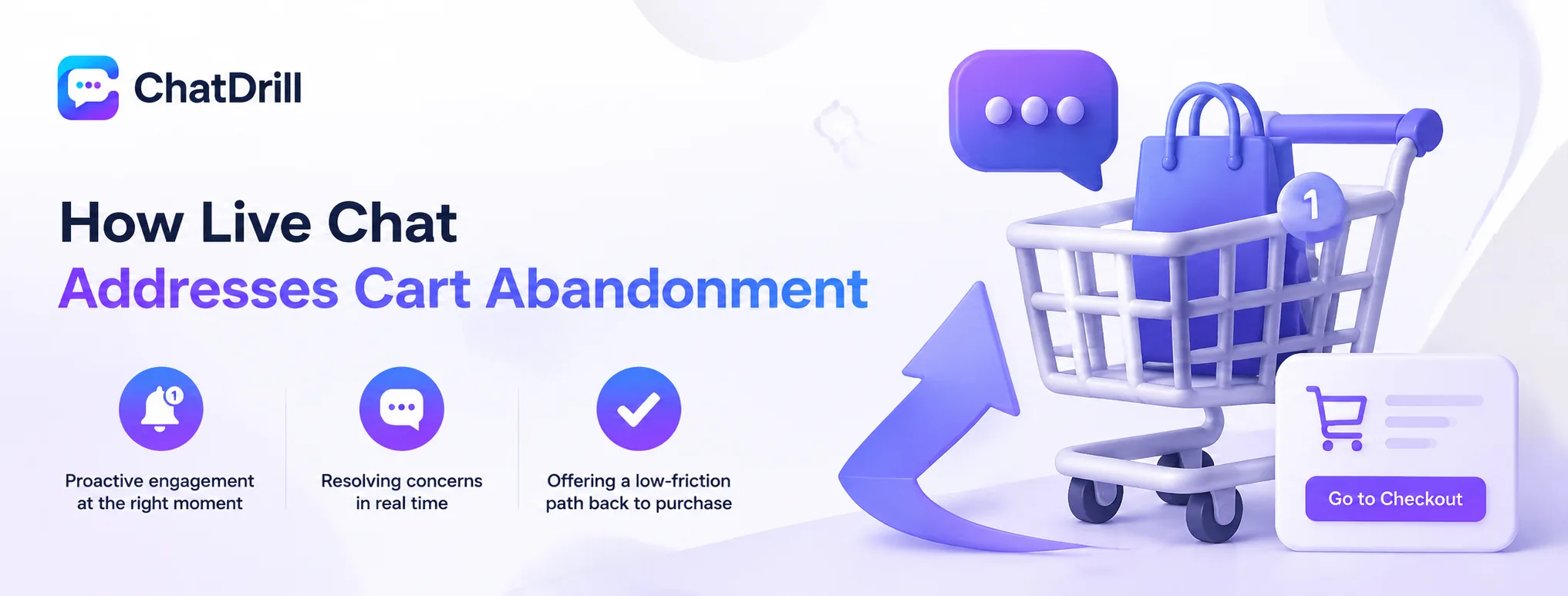
Live chat addresses cart abandonment by proactively engaging a hesitating shopper at the cart or checkout stage, resolving specific concerns conversationally in real time, and offering a low-friction path back to completing the purchase.
Proactive engagement at the right moment
A trigger firing specifically when a shopper lingers on the cart page without proceeding, or shows exit-intent signals while on checkout, catches the exact moment hesitation is occurring.
This timing is what makes chat uniquely effective for this specific problem, engaging right when the hesitation is happening rather than after the shopper has already left.
Resolving concerns in real time
Unlike a static FAQ page a shopper might not think to check, chat allows a specific concern to be raised and resolved conversationally, often faster than the shopper would find the same answer on their own.
This real-time resolution is especially valuable for concerns that vary shopper to shopper, since a single FAQ page can't anticipate and pre-answer every individual's specific hesitation.
Offering a low-friction path back to purchase
Once a concern is resolved, chat can offer a direct link back to the cart or checkout, sometimes with a small incentive attached, removing any remaining friction to completing the purchase.
This combination of resolution and a frictionless path forward is what actually converts a recovered conversation into a completed sale, not just a pleasant but ultimately fruitless interaction.
Step-by-Step: Setting Up Cart Recovery Chat
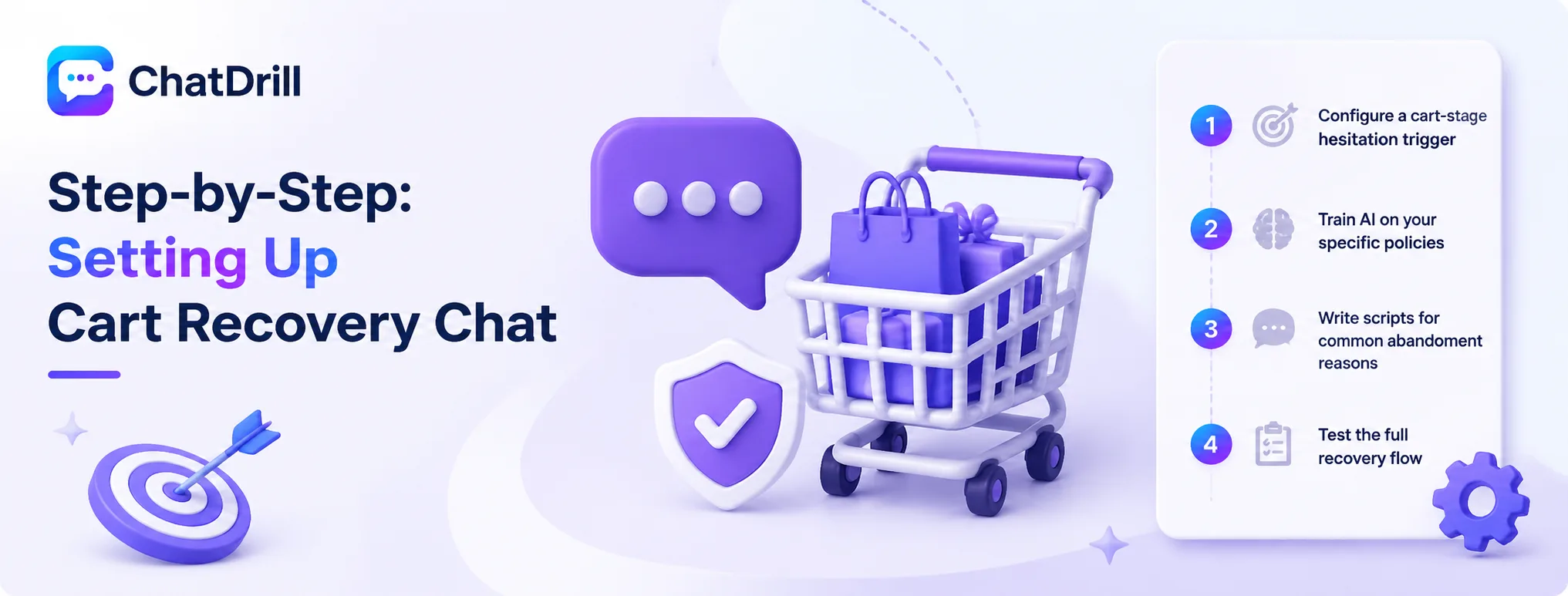
Setting up cart recovery chat involves configuring a trigger for cart-stage hesitation, training AI on your specific shipping and return policies, writing scripts for common abandonment reasons, and testing the full flow before relying on it in production.
Step 1: Configure a cart-stage hesitation trigger
Set a proactive trigger to fire when a shopper has items in their cart but shows signs of hesitation, extended time without proceeding to checkout, or exit-intent behavior while on the cart page.
This trigger timing is worth tuning carefully, firing too early feels premature, while firing too late may miss the shopper before they've already left.
Step 2: Train AI on your specific policies
Feed the AI your actual shipping costs, return policy, and delivery timelines, so it can answer these common concerns accurately and specifically rather than giving a vague, generic response.
This training investment directly determines how well the AI can actually resolve the specific concerns causing abandonment in your particular store.
Step 3: Write scripts for common abandonment reasons
Prepare specific, ready responses for the most common reasons shoppers abandon carts in your store, unexpected shipping cost, sizing uncertainty, return policy questions, so both AI and human agents can respond quickly and consistently.
Reviewing actual past abandoned-cart chat conversations, once you have some data, helps refine which specific reasons are most common for your particular customer base.
Step 4: Test the full recovery flow
Test the trigger, the AI's responses to common concerns, and the path back to completing checkout, confirming the whole flow works smoothly before relying on it with real shoppers.
This testing phase catches any gap, an unanswered question, a broken link back to checkout, before it affects a real recovery opportunity.
AI Scripts for Common Cart Abandonment Reasons
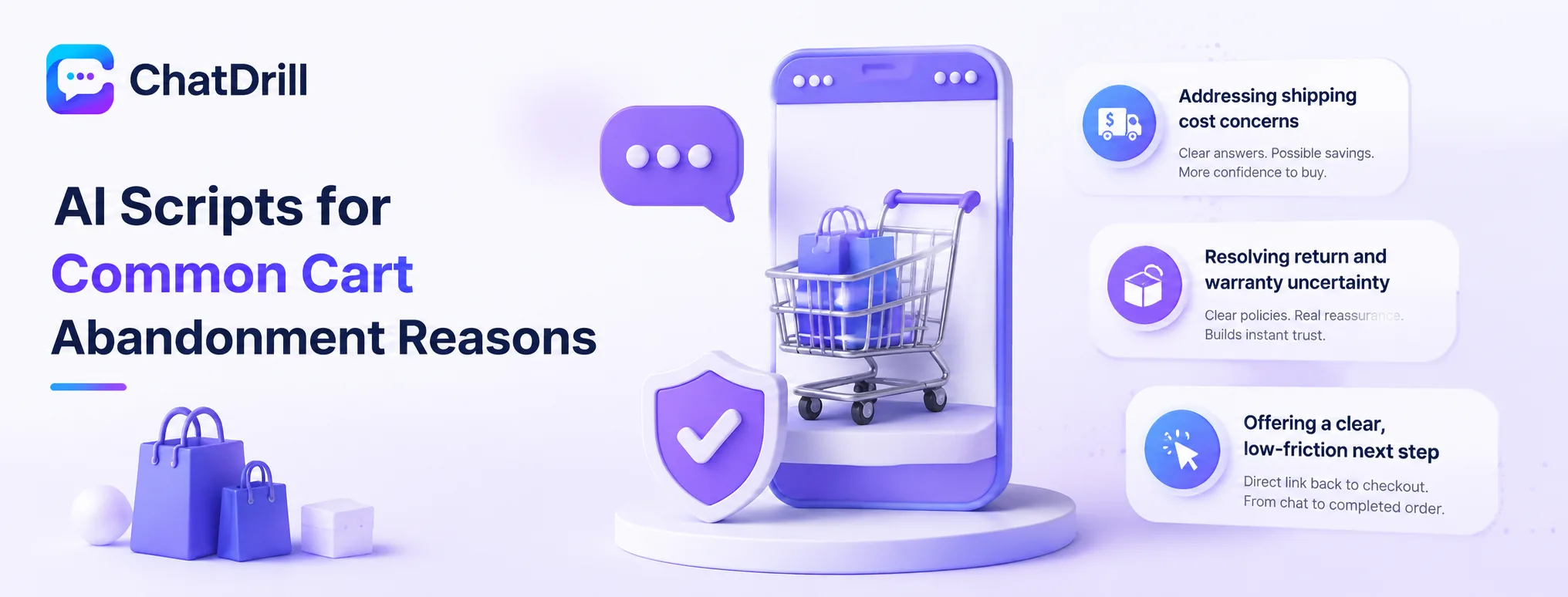
Effective cart recovery scripts directly address shipping cost concerns with transparency, resolve return and warranty uncertainty clearly, and offer a specific, low-friction next step rather than a generic "let us know if you have questions" close.
Addressing shipping cost concerns
A script like "looks like you have [items] in your cart, happy to clarify shipping costs or let you know if there's a way to reduce them" directly addresses one of the most common abandonment triggers.
If a shipping threshold discount exists, proactively mentioning it, "you're just $12 away from free shipping", can be a genuinely persuasive, specific incentive to complete the purchase.
Resolving return and warranty uncertainty
A script like "just so you know, we offer a 30-day return window on all items, let me know if you have any other questions" resolves this common hesitation directly and proactively.
Being specific with actual policy details, rather than a vague reassurance, is what genuinely resolves the concern rather than just gesturing at an answer without providing it.
Offering a clear, low-friction next step
Ending the conversation with a direct link back to checkout, rather than leaving the shopper to navigate there themselves, removes unnecessary friction from completing the recovered purchase.
A closing line like "ready to complete your order? Here's a direct link back to checkout" keeps momentum from the resolved conversation carrying through to an actual completed sale.
Measuring Cart Recovery Success
Measuring cart recovery success means tracking what percentage of triggered cart-recovery conversations result in a completed purchase, comparing recovery rate against overall cart abandonment rate, and reviewing which specific concerns come up most often.
Tracking conversation-to-purchase recovery rate
The clearest measure is what percentage of shoppers who engage with a cart-recovery chat trigger go on to complete their purchase, directly quantifying the tactic's actual impact.
This number, tracked over time, also reveals whether script or trigger adjustments are genuinely improving recovery effectiveness.
Comparing against overall abandonment rate
Reviewing how cart recovery chat has affected your store's overall abandonment rate, not just the recovery rate for engaged conversations, gives a fuller picture of the tactic's broader business impact.
This comparison also helps justify continued investment in the tactic by connecting it to a metric leadership already tracks and cares about.
Reviewing which concerns come up most often
Regularly reviewing which specific concerns shoppers raise during cart-recovery conversations reveals patterns worth addressing more broadly, on the product page or checkout flow itself, not just reactively through chat.
This review sometimes surfaces a fixable root cause, a confusing shipping cost display, worth addressing directly rather than only patching reactively through chat conversations.
Common Mistakes in Cart Recovery Chat
The most common mistakes are triggering too aggressively or too early, giving vague rather than specific answers to policy questions, and never following up on abandoned carts that didn't engage with the chat trigger at all.
Triggering too aggressively or too early
A trigger firing the instant a shopper adds an item to cart, before any genuine hesitation has occurred, tends to feel intrusive rather than helpful.
Tuning the trigger to fire specifically on genuine hesitation signals, rather than immediately, respects the shopper's browsing experience while still catching real moments of uncertainty.
Giving vague answers to policy questions
A generic response to a specific shipping or return question fails to actually resolve the hesitation, since the shopper needed a specific, concrete answer, not a vague reassurance.
This is why training AI on your actual, specific policies matters so much, generic responses simply don't do the job a shopper's specific question requires.
Never following up on unengaged abandoned carts
A shopper who doesn't engage with the chat trigger at all still represents a recovery opportunity, worth pairing chat with a complementary email or retargeting follow-up rather than relying on chat as the sole recovery mechanism.
This combination of chat for engaged shoppers and other channels for unengaged ones produces a more complete cart recovery strategy than chat alone.