
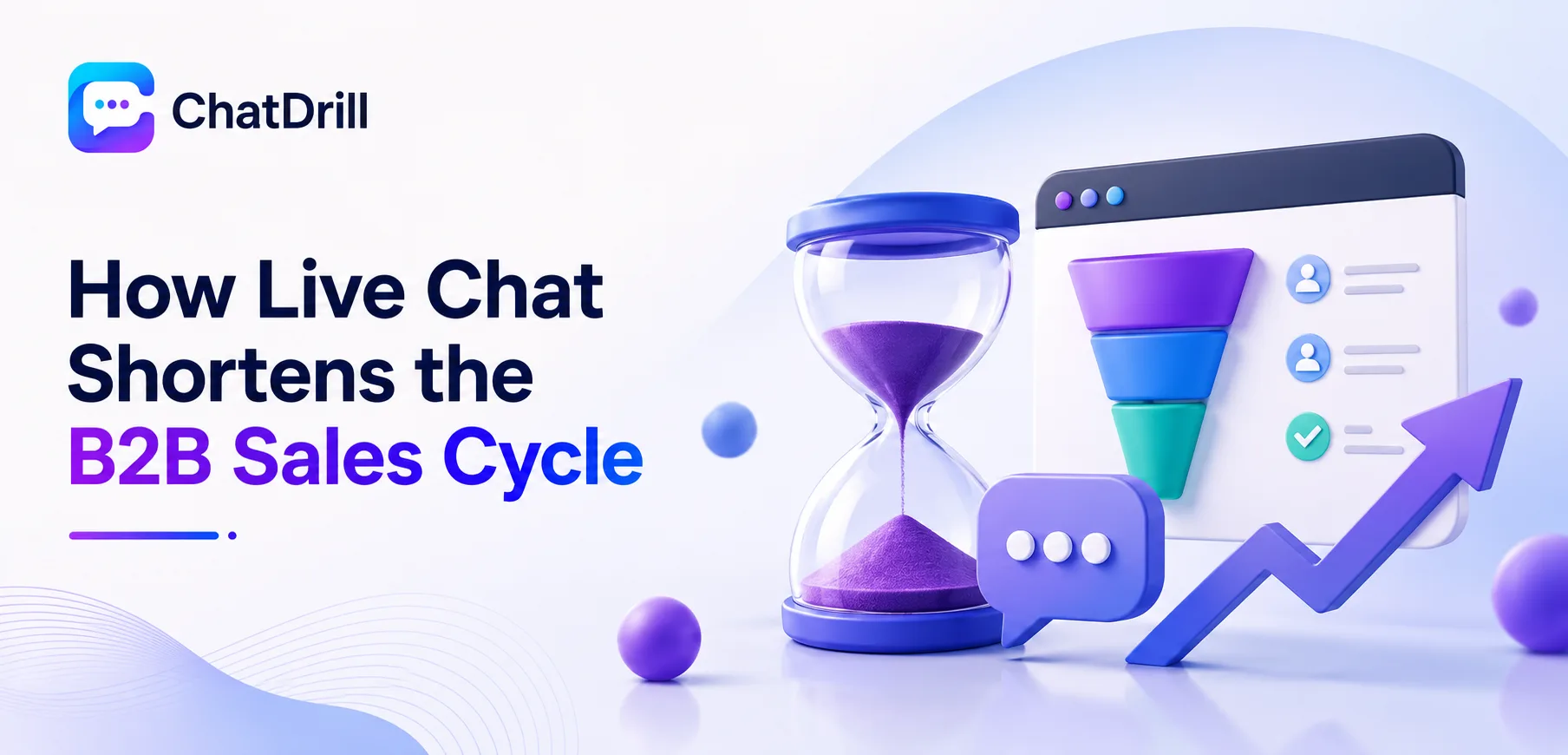
A B2B sales cycle's length is often driven less by genuine decision complexity and more by the accumulated delay of back-and-forth email exchanges, each one adding days to a process that a real-time conversation could resolve in minutes.
Live chat compresses this specifically at the early stages, initial product questions, basic qualification, scheduling a first call, where speed matters disproportionately relative to the actual complexity of what's being resolved.
The businesses seeing the clearest sales cycle reduction from chat aren't just adding a support widget, they're using chat deliberately to accelerate the specific early-stage friction points that otherwise stretch a B2B cycle unnecessarily.
This guide covers where chat delivers the clearest cycle-shortening impact, how to implement it for this purpose, a practical approach, and mistakes worth avoiding.
Quick answer: Live chat shortens the B2B sales cycle by resolving early-stage questions instantly instead of through a delayed email exchange, qualifying leads in real time so sales talks to genuinely ready prospects sooner, and reducing the number of back-and-forth touches needed before a first substantive sales conversation.
Where Chat Delivers the Clearest Cycle-Shortening Impact
Chat shortens the sales cycle most clearly at early-stage friction points, initial questions, basic qualification, and scheduling a first call, where speed matters more than the underlying complexity of what's being resolved.
Early-stage question resolution
A basic product or pricing question that would otherwise require an email exchange spanning a day or more can often be resolved instantly through chat, removing that specific delay from the overall cycle.
This speed matters disproportionately at this stage since the question itself is usually straightforward, the delay was really about the communication channel, not genuine complexity.
Real-time qualification
Qualifying a prospect's fit and interest through a real-time chat conversation, rather than a delayed email back-and-forth, gets a genuinely qualified lead to sales faster than the traditional sequential process.
This immediate qualification also means sales spends less time on leads that wouldn't have qualified anyway, since the disqualification happens quickly rather than after several delayed exchanges.
Faster path to a first substantive call
Embedding scheduling directly within a qualified chat conversation removes the typical back-and-forth of finding a mutually available time, compressing what's often several days into a same-conversation booking.
This immediate scheduling capitalizes on a prospect's interest while it's genuinely at its peak, rather than losing momentum during a delayed follow-up process.
Implementing Chat Specifically to Shorten the Cycle
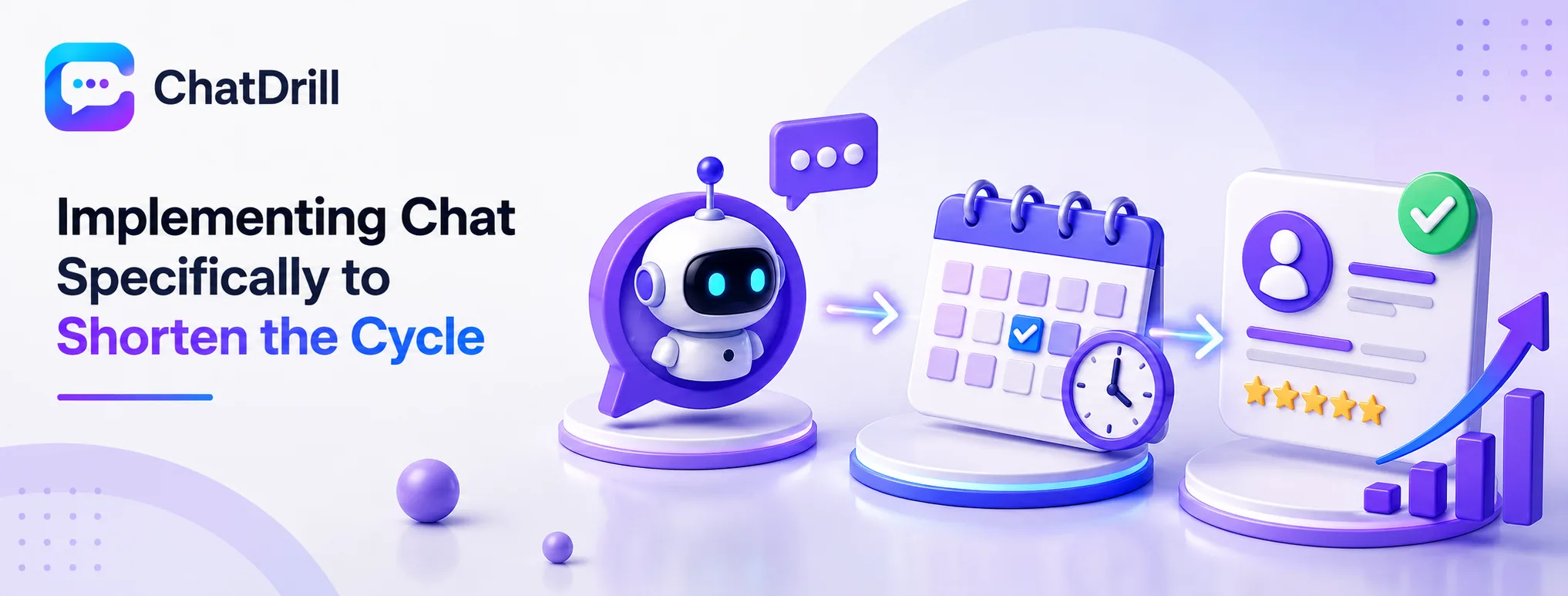
Implementing chat for cycle reduction means training AI on genuine early-stage
Embedding direct scheduling for qualified leads
routing qualified leads to sales with full context immediately.
Training AI on genuine qualification criteria
Feeding AI your actual, specific qualification questions, budget range, team size, timeline, lets it assess fit in real time rather than deferring this assessment to a later, slower sales conversation.
This qualification depth should reflect your genuine sales process's real criteria, not a generic BANT-style checklist that might not match how your team actually evaluates fit.
Embedding direct scheduling for qualified leads Letting a qualified prospect book a call directly within the chat conversation, rather than requiring a separate follow-up email to find a time, captures interest immediately rather than after a delay.
This immediate booking capability is one of the most direct, measurable ways chat contributes to actual cycle length reduction.
Routing with full context immediately
Ensuring a qualified lead reaches the right sales rep with complete conversation context, immediately rather than through a delayed handoff process, means the first sales conversation can start substantively rather than repeating basic qualification.
This immediate, context-rich handoff is what actually converts the earlier chat efficiency into genuine cycle time saved rather than just moving the delay to a different point in the process.
A Practical Approach to Measuring Cycle Impact
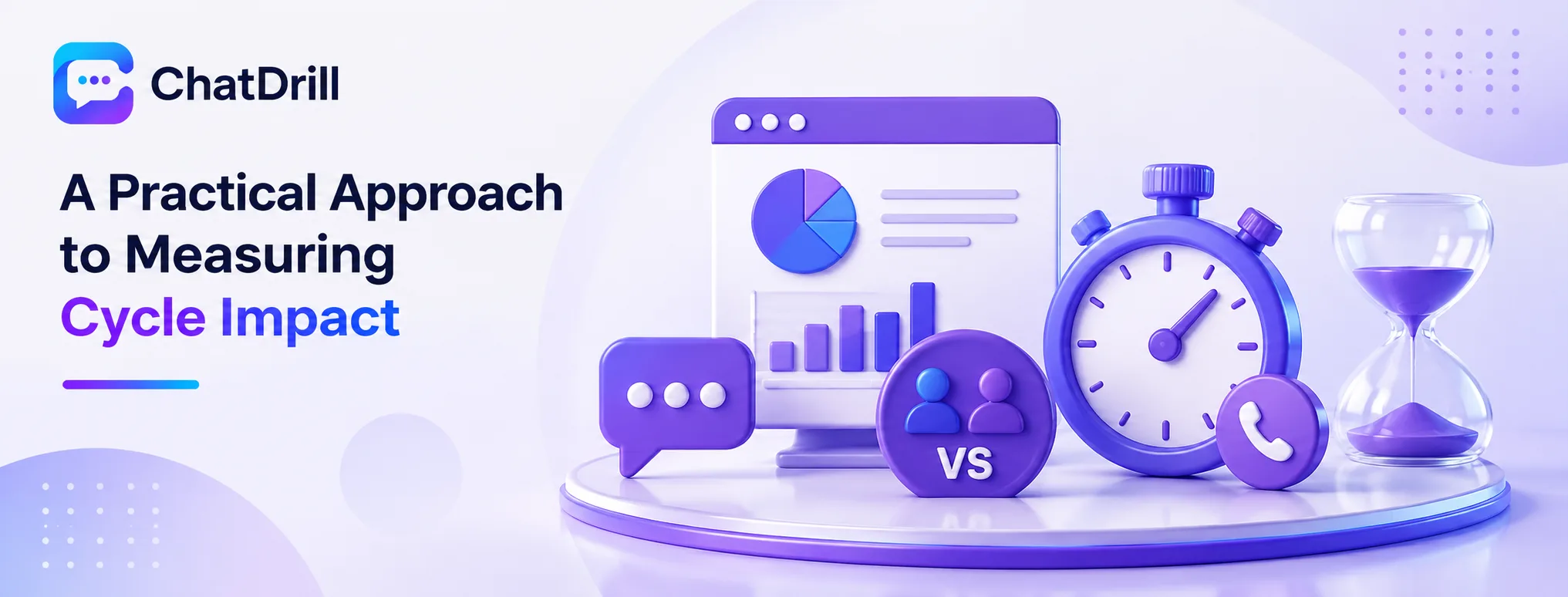
How should I measure chat's impact on sales cycle length?
for chat-originated leads against other lead sources, and tracking time-to-first-substantive-call specifically.
Comparing cycle length by lead source
Tracking average sales cycle duration for chat-originated leads against leads from other sources reveals whether chat is genuinely delivering the compression this tactic is meant to provide.
This comparison should account for any underlying differences in lead quality between sources, ensuring the comparison reflects chat's genuine contribution rather than a confound.
Tracking time to first substantive call
Measuring specifically how long it takes a chat-qualified lead to reach a genuine, substantive sales conversation quantifies the early-stage acceleration chat is meant to deliver most directly.
This metric isolates the specific stage where chat's speed advantage matters most, rather than diluting it within the full, longer sales cycle measurement.
Common Mistakes When Using Chat to Shorten the Cycle
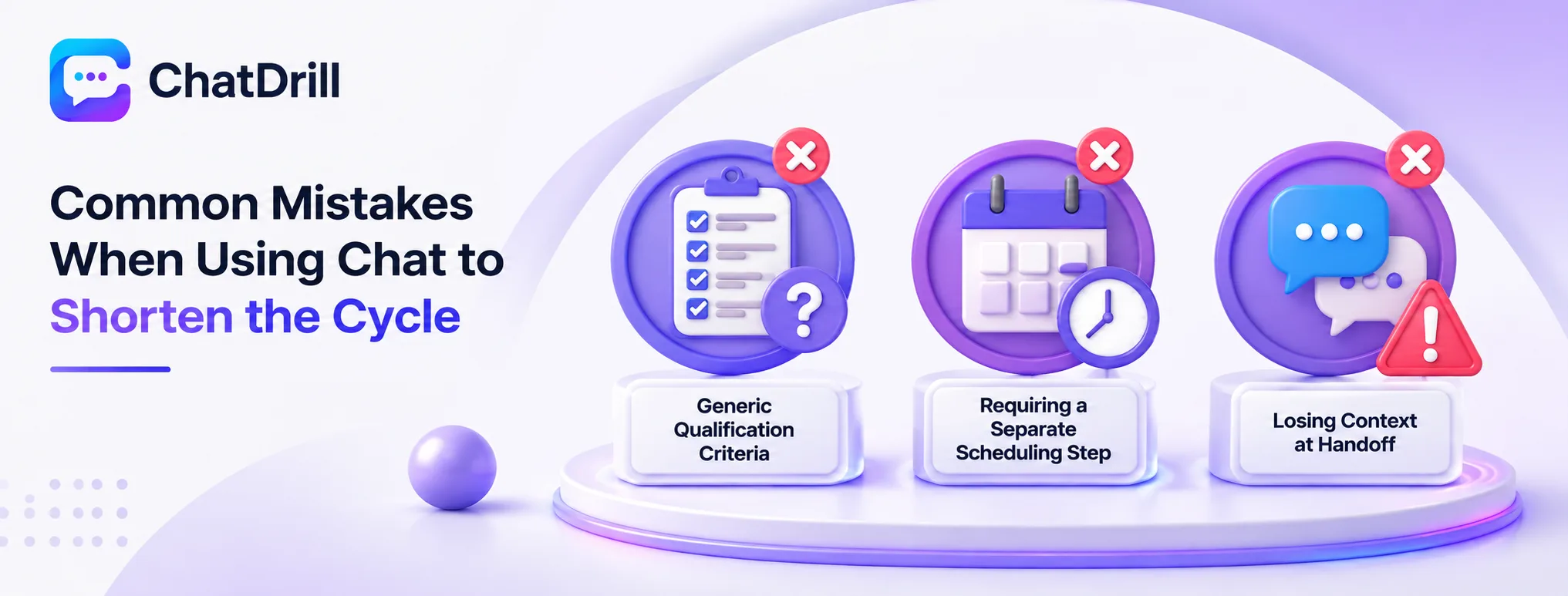
The most common mistakes are using generic rather than genuinely tailored qualification criteria, requiring a separate scheduling step outside chat, and losing conversation context during handoff to sales.
Generic qualification criteria
Training AI on a generic qualification framework rather than your actual sales process's specific criteria produces qualification that doesn't genuinely match how your team evaluates real fit.
This mismatch can lead to either over-qualifying unsuitable leads or under-qualifying genuinely promising ones, undermining the speed benefit chat is meant to provide.
Requiring a separate scheduling step
Sending a qualified prospect to a separate scheduling tool, rather than embedding booking directly in chat, reintroduces exactly the delay this tactic is meant to eliminate.
This friction reduction is worth prioritizing given how directly it affects whether chat's speed advantage genuinely translates into overall cycle time reduction.
Losing context at handoff
A qualified lead whose sales rep doesn't receive the full chat conversation context has to start the first call with basic qualification questions already answered in chat, wasting the earlier efficiency gained.
Ensuring genuine context transfer at handoff preserves the cycle-time benefit chat generated in the earlier stage.