


A genuinely hot lead sitting in a queue waiting for manual review represents a real risk, the urgency and interest that made them hot in the first place can fade during even a short delay before a rep actually engages.
Instant routing solves this by having AI recognize the buying signals that indicate genuine sales readiness the moment they appear in conversation, then immediately connecting that prospect to an available rep rather than queuing for later review.
Getting this right requires both accurate real-time signal detection and a reliable, tested routing mechanism, since a system that identifies a hot lead correctly but fails to actually connect them quickly delivers little practical benefit over manual review.
This guide covers what makes a lead genuinely hot, how instant routing actually works, a practical implementation approach, and mistakes worth avoiding.
Quick answer: Instantly routing hot leads means AI recognizes genuine buying signals in a live chat conversation and immediately notifies or transfers the conversation to the right available sales rep in real time, rather than waiting for a lead to be reviewed and assigned later.
What Makes a Lead Genuinely Hot in Real Time
A genuinely hot lead shows specific, real-time buying signals, a stated budget, an explicit timeline, or comparison-shopping language, rather than generic engagement or simply asking a routine question.
Distinguishing genuine signals from routine engagement
A prospect asking a general product question is meaningfully different from one stating a specific budget, a defined timeline, or direct comparison against a competitor, and treating both as equally "hot" dilutes the value of routing at all.
Defining your own genuine hot-lead criteria, based on what's actually predicted conversion in your business historically, produces more reliable identification than a generic buying-signal checklist.
Why real-time detection matters specifically here
A signal that would clearly indicate a hot lead if reviewed manually the next day still represents lost opportunity if the actual connection to a rep happens with that same delay.
The entire value of this tactic depends on detection and routing happening in the moment, not just accurate identification that then still waits for manual processing.
How Instant Routing Actually Works
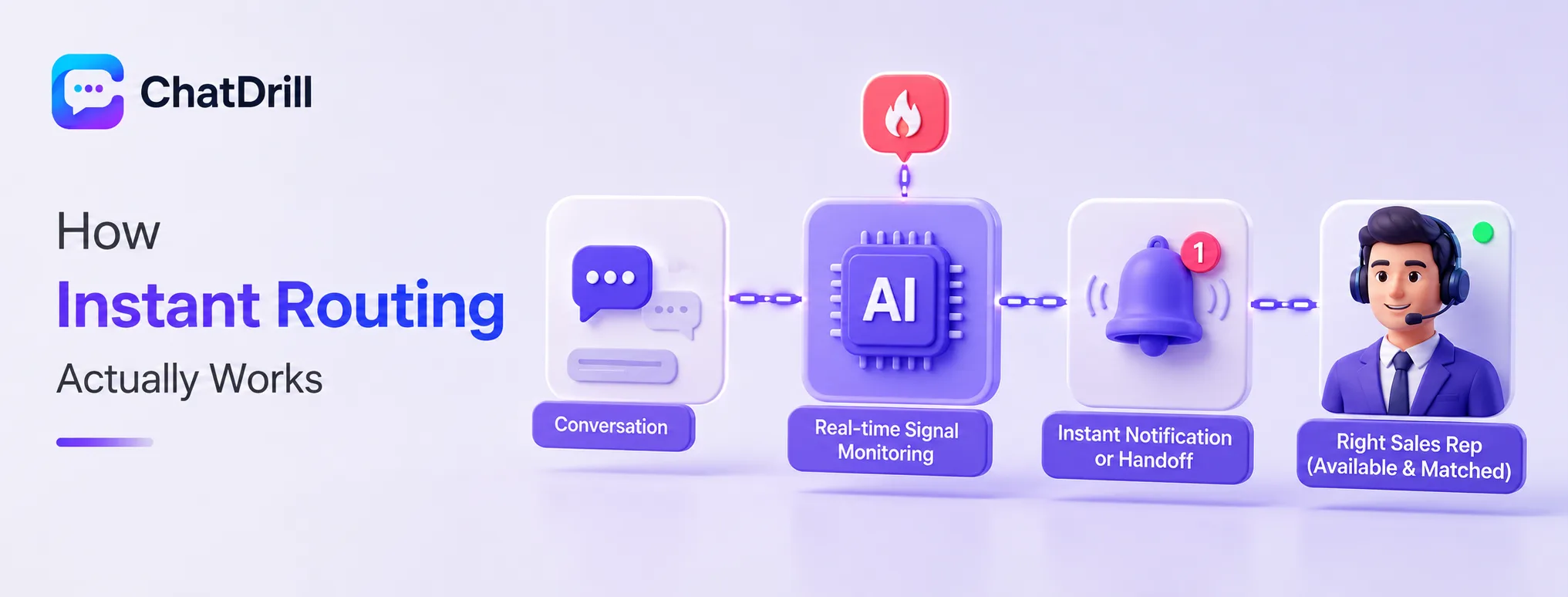
Instant routing works by having AI monitor conversation content for defined hot-lead signals, then immediately triggering a notification or live handoff to an available, appropriately matched sales rep.
Real-time signal monitoring
AI continuously evaluates conversation content against your defined hot-lead criteria as the conversation unfolds, rather than only assessing the conversation after it ends.
This ongoing evaluation is what enables genuinely immediate routing, catching the qualifying moment as it happens rather than in a later review.
Immediate notification or handoff
Once a hot-lead signal is detected, the system can either immediately notify an available rep to jump into the conversation or transfer the conversation directly, depending on your specific setup and rep availability.
This immediacy is what actually delivers the value, a fast notification that still takes a rep several minutes to see and act on undermines much of the benefit.
Matching to the right available rep
Routing logic should consider not just availability but appropriate matching, territory, product specialization, or account ownership, ensuring the connection is genuinely useful rather than just fast.
This matching logic needs to be configured explicitly based on how your sales team is actually structured, rather than assuming any available rep is an equally good match.
Implementation Approach for Instant Hot Lead Routing
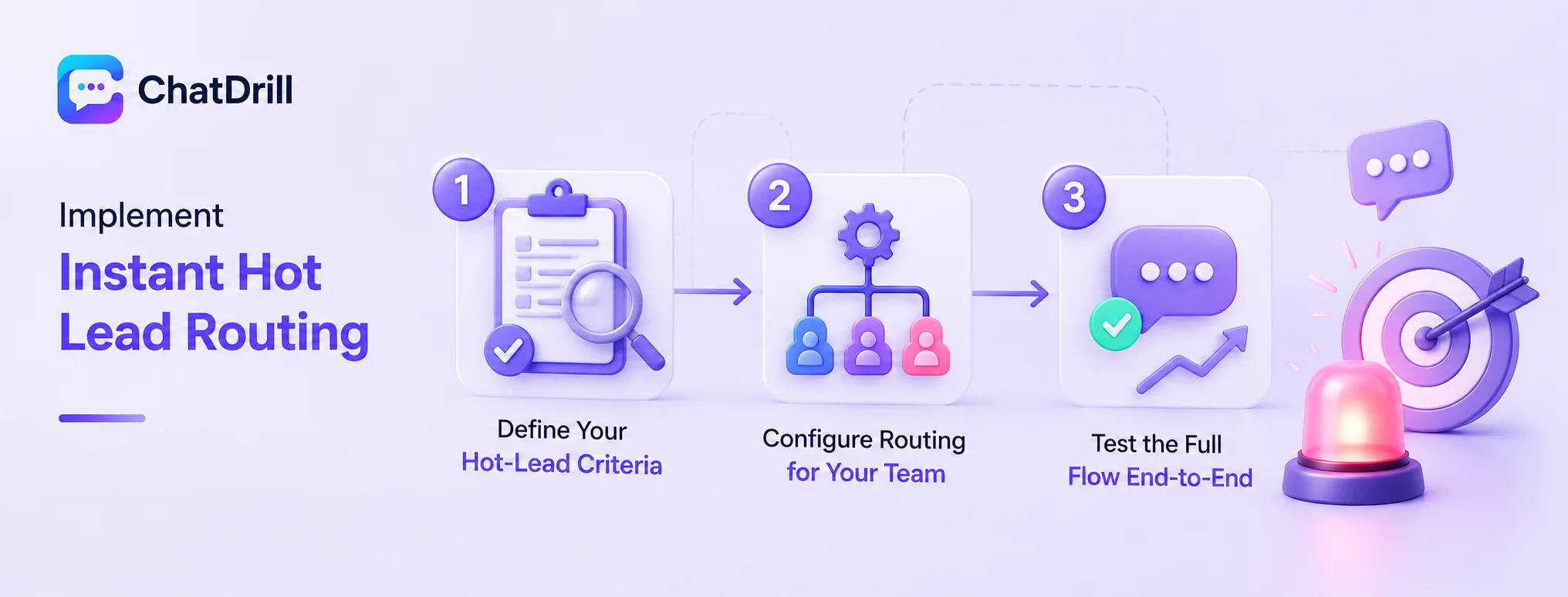
A practical implementation defines your specific hot-lead criteria from real conversion data, configures routing logic matched to your sales team structure, and tests the full detection-to-connection flow before relying on it.
Step 1: Define your specific hot-lead criteria
Reviewing past chat conversations that led to closed deals, identifying the specific language and signals that appeared before conversion, grounds your criteria in real, validated patterns rather than assumption.
This analysis should involve your sales team directly, given their firsthand pattern recognition of what a genuinely promising conversation actually looks like.
Step 2: Configure routing logic for your team structure
Setting up routing rules that reflect your actual sales team's territory, specialization, or account-ownership structure ensures a detected hot lead reaches someone genuinely well-positioned to help.
This configuration should be reviewed by sales operations to confirm it aligns with existing lead-routing rules used for other lead sources.
Step 3: Test the full detection-to-connection flow
Running a realistic test conversation containing your defined hot-lead signals, then confirming the routing and notification actually happen quickly and correctly, verifies the system works end to end.
This test should measure actual time from signal detection to rep engagement, not just confirm the technical trigger fired correctly.
Common Mistakes With Instant Hot Lead Routing
The most common mistakes are using overly broad or generic hot-lead criteria, routing to reps without considering actual availability or fit, and never testing the true end-to-end speed of the detection-to-connection process.
Overly broad hot-lead criteria
Defining criteria so broad that many routine conversations trigger "hot lead" routing dilutes the system's value and can overwhelm sales reps with notifications that don't represent genuine urgency.
Grounding criteria in real, validated conversion patterns, rather than an overly inclusive definition, keeps the routing genuinely meaningful.
Ignoring rep availability and fit
Routing every hot lead to the same rep regardless of their current availability or actual territory fit creates bottlenecks and mismatches that undermine the speed advantage this tactic is meant to provide.
Building genuine availability and matching logic into the routing configuration avoids this common gap.
Never testing true end-to-end speed
Confirming only that the technical trigger fires correctly, without measuring actual time to genuine rep engagement, can miss a real-world delay that undermines the entire premise of instant routing.
Testing and measuring the complete flow, from signal detection to a rep actually engaging, confirms the system delivers genuine speed, not just technical correctness.