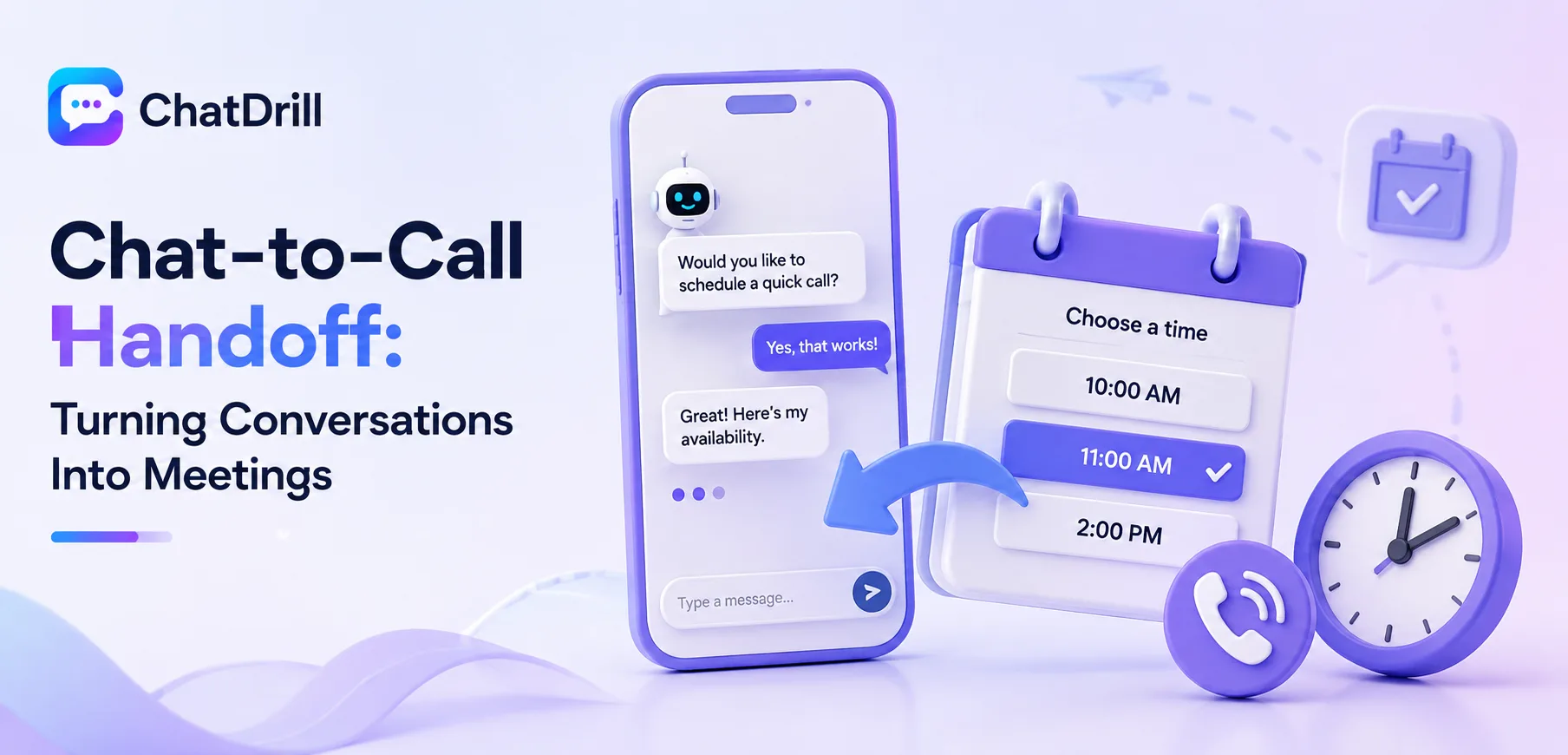

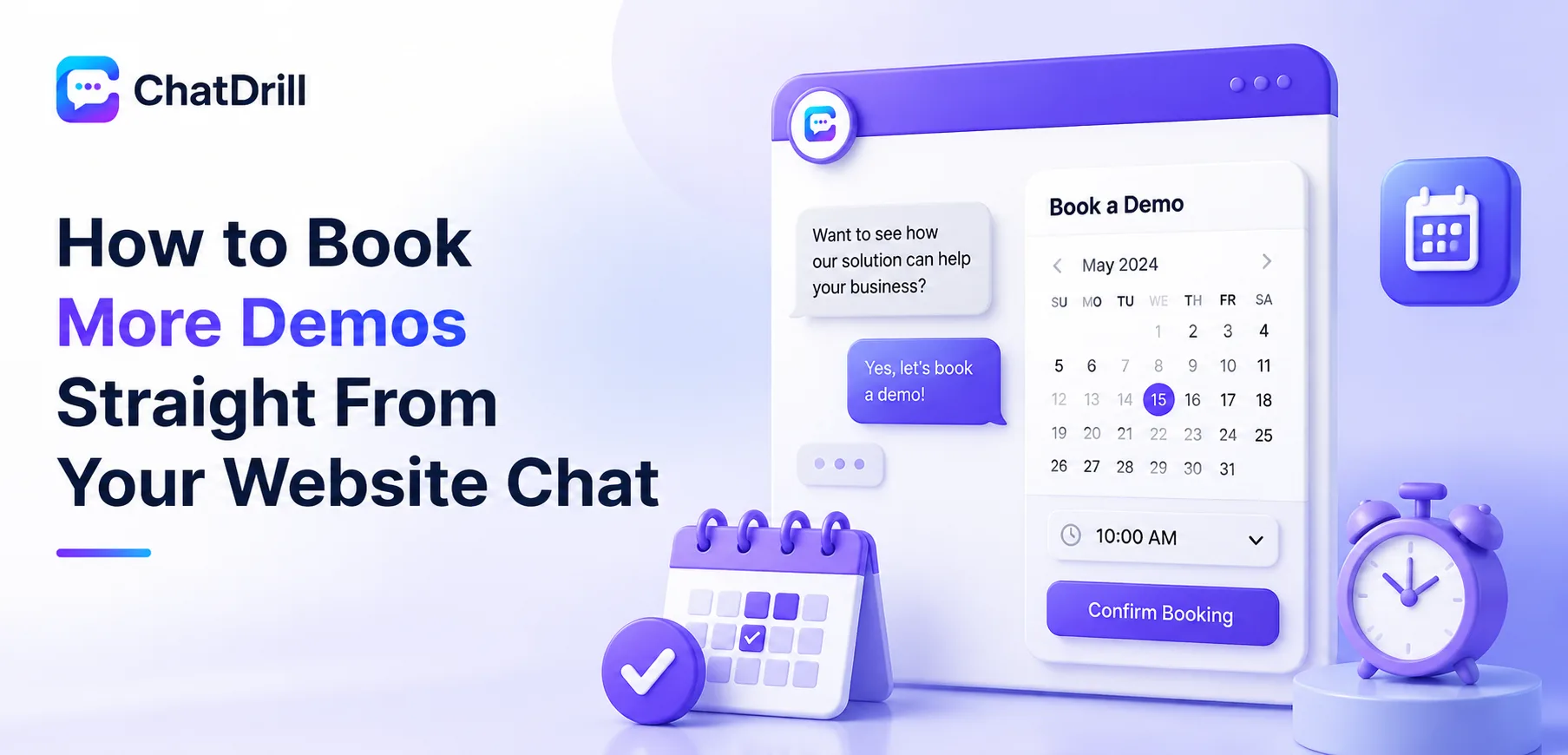
Booking demos directly from website chat means embedding a calendar right inside the conversation, so a qualified visitor can schedule a meeting in the same window they're already chatting in, without clicking away to a separate booking page that introduces friction and drop-off risk.
This matters because every extra step between a visitor's interest and an actual booked meeting is an opportunity for that interest to fade, and a visitor who has to navigate to a different page to find a calendar is measurably less likely to complete the booking than one who can do it inline.
Beyond just convenience, chat-based demo booking also allows the qualification and booking to happen in one continuous flow, a visitor's answers to a few quick questions can determine which specific rep's calendar to show, rather than a generic, one-size-fits-all booking link.
Getting this right requires more than embedding a calendar widget, it means designing the qualification-to-booking flow thoughtfully, choosing the right moment to offer booking, and removing every unnecessary step between interest and a confirmed meeting.
This guide covers why booking through chat outperforms a separate form, what makes a chat-to-demo flow convert well, a step-by-step process for building one, how to qualify before booking, common mistakes that hurt booking rates, and how to measure and improve the flow over time.
Why Book Demos Through Chat Instead of a Form?
Booking demos through chat outperforms a separate contact form because it removes the extra step of navigating away, allows real-time qualification before booking, and catches a visitor at the exact moment their interest is highest.
The friction cost of a separate booking page
Every additional click or page navigation between a visitor's interest and an actual booking introduces a real opportunity for that interest to fade or the visitor to get distracted and never return.
Chat-based booking eliminates this specific friction point, keeping the entire journey from initial conversation to confirmed meeting within one continuous, uninterrupted interaction.
Real-time qualification before booking
Unlike a generic booking link available to anyone, chat allows a few quick qualifying questions before offering the calendar, ensuring the booked meeting is genuinely relevant to both the visitor and the sales team.
This qualification step also allows routing to a specific rep's calendar based on the visitor's answers, rather than a one-size-fits-all booking link regardless of fit.
Catching interest at its peak
A visitor actively engaged in a chat conversation is at a moment of genuinely high interest, and offering booking in that exact moment captures intent that might otherwise fade by the time they'd navigate to a separate scheduling page.
This timing advantage is one of the clearest, most concrete reasons chat-based booking tends to outperform a standalone contact or scheduling form.
What Makes a Chat-to-Demo Flow Convert Well
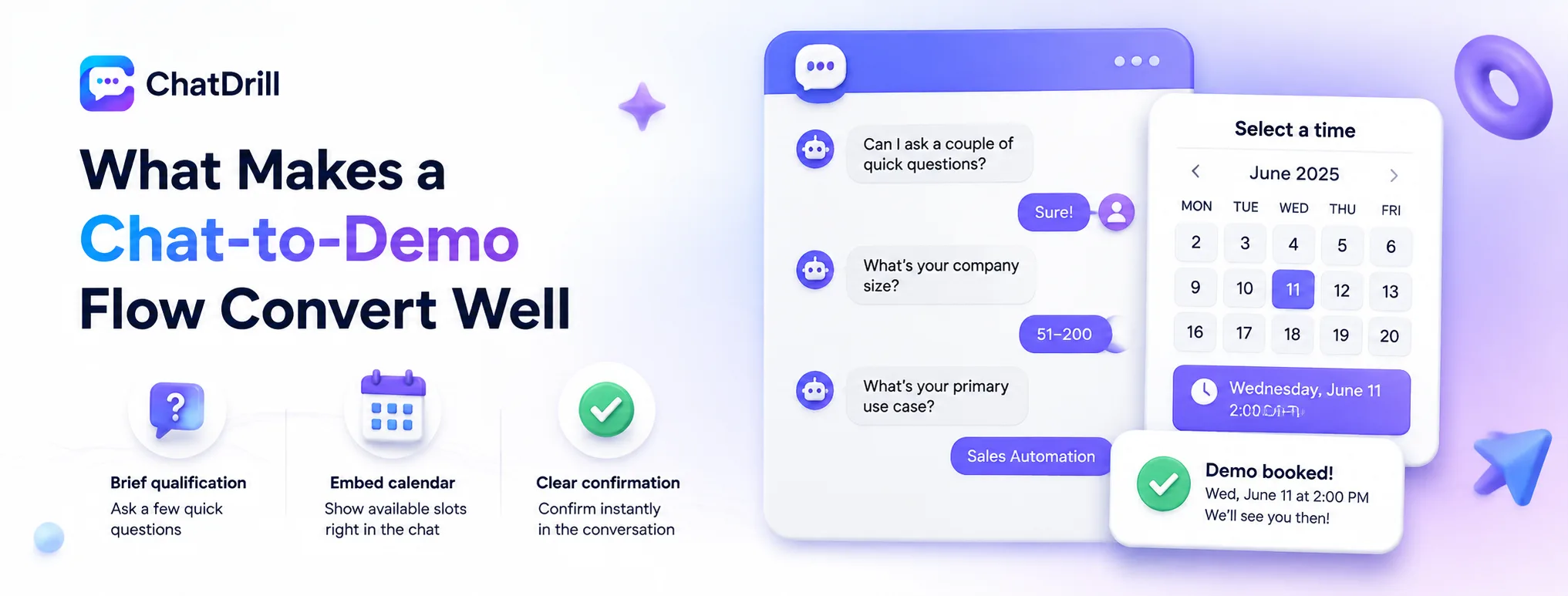
A high-converting chat-to-demo flow qualifies briefly before offering booking, embeds the calendar directly in the chat window rather than linking out, and confirms the booking clearly within the same conversation.
Brief qualification before the booking offer
A couple of quick questions, company size, use case, ensures the booking offer goes to genuinely fit visitors, rather than offering a calendar slot to every single chat participant regardless of relevance.
This qualification also gives the eventual meeting more context, letting whoever takes the call walk in already knowing something relevant about the prospect.
Embedding the calendar directly in chat
Showing available time slots directly inside the chat window, rather than linking to an external scheduling page, keeps the booking process within the same continuous interaction, avoiding the friction of an extra navigation step.
This inline embedding is one of the more technically involved parts of building a strong chat-to-demo flow, but consistently produces a meaningfully higher completion rate than an external link.
Clear confirmation within the conversation
Confirming the booked time directly within the chat, rather than relying solely on a separate confirmation email the visitor might miss, reduces ambiguity about whether the booking actually went through.
This immediate confirmation also gives the visitor a clean, satisfying end to the interaction, reinforcing that the process was successfully completed.
Step-by-Step: Building a Chat-to-Demo Booking Flow
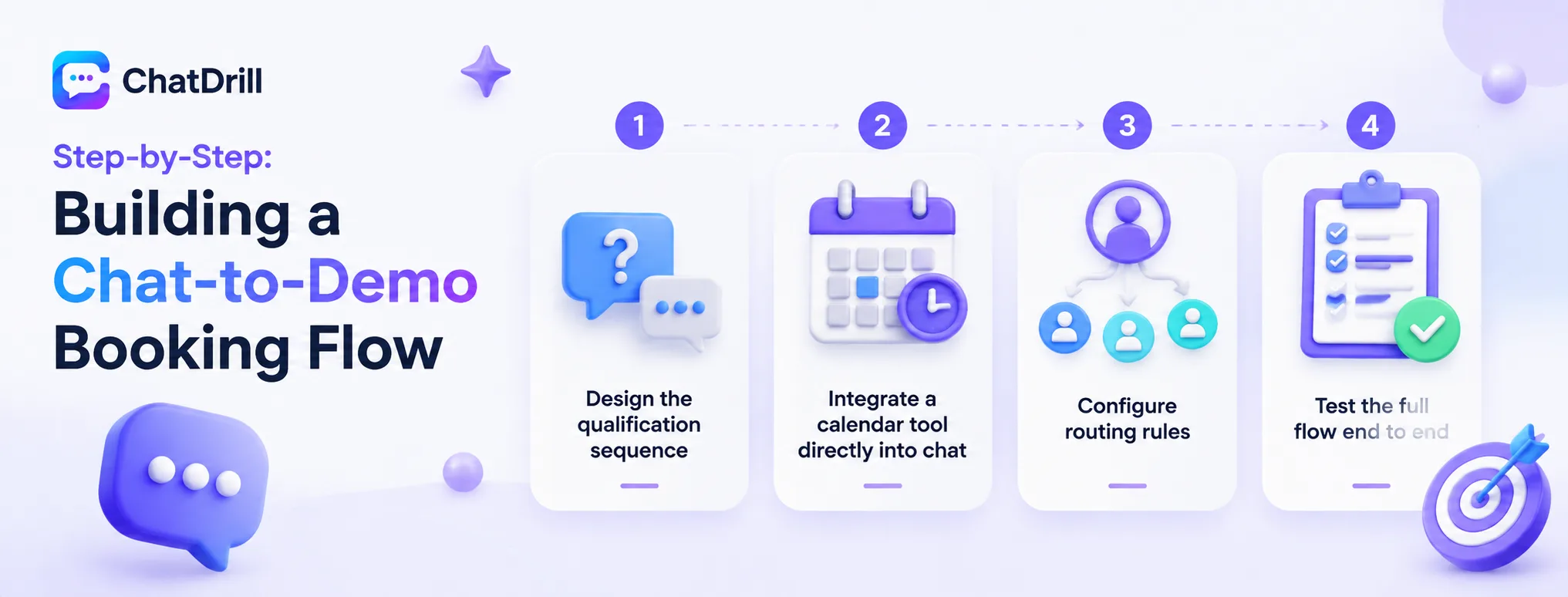
Building a chat-to-demo flow involves designing a brief qualification sequence, integrating a calendar tool directly into the chat interface, configuring routing rules for which rep's calendar to show, and testing the full flow end to end before launch.
Step 1: Design the qualification sequence
Define two or three quick questions that determine genuine fit and, if relevant, which specific rep or team should take the meeting, keeping the sequence short to avoid friction before the booking offer.
This design should mirror the same principles as any chat qualification flow, focused, conversational questions rather than an exhaustive intake process.
Step 2: Integrate a calendar tool directly into chat
Connect your scheduling tool, whether a dedicated calendar app or a native chat platform feature, so available time slots render directly inside the chat conversation itself.
This integration is worth testing thoroughly, confirming time zones display correctly and available slots accurately reflect real rep availability before relying on it with real visitors.
Step 3: Configure routing rules
If different reps handle different segments, company size, region, use case, configure routing so the qualification answers determine which specific calendar gets shown to a given visitor.
This routing logic ensures a booked meeting lands with the right rep from the start, rather than requiring a reschedule once a mismatch is discovered later.
Step 4: Test the full flow end to end
Walk through the entire flow as a test visitor, qualification questions, calendar display, booking confirmation, confirming every step works smoothly before exposing it to real prospects.
This testing catches any gap, an incorrect time zone display, a broken calendar sync, before it costs a real, genuinely interested prospect a frustrating booking experience.
Qualifying Before Booking
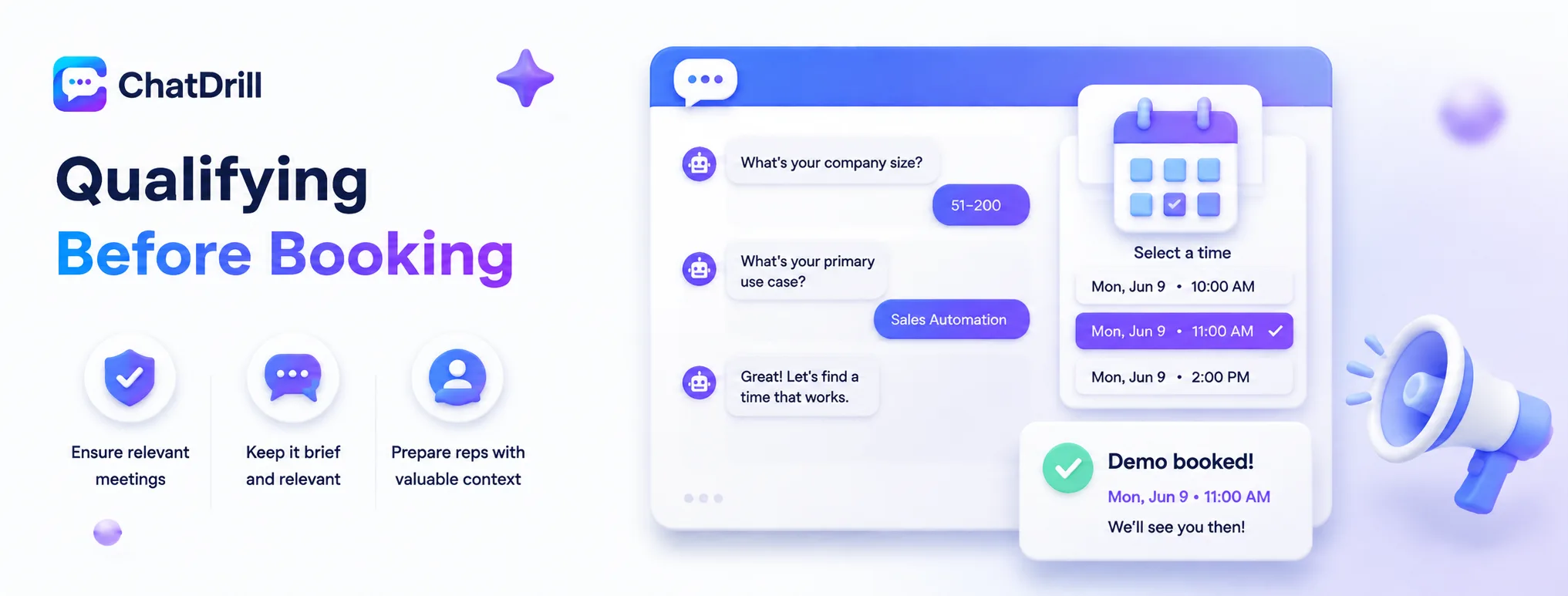
Qualifying before offering a demo booking ensures the meeting is genuinely relevant, prevents sales reps from spending time on poor-fit meetings, and gives the eventual call useful context to start from.
Why qualification still matters even with easy booking
Making booking easy shouldn't mean removing qualification entirely, an unqualified meeting wastes a rep's time just as much whether it was booked through a frictionless chat flow or a clunky separate form.
The goal is removing friction from the booking mechanics specifically, not from the judgment about whether a meeting is actually warranted in the first place.
Keeping qualification brief and relevant
Two or three focused questions, enough to confirm genuine fit without adding meaningful friction, strikes the right balance between qualification rigor and a smooth booking experience.
This balance is worth protecting carefully, since over-qualifying defeats much of the friction-reduction benefit chat-based booking is meant to provide in the first place.
Using qualification data to prepare the rep
Passing qualification answers directly to whoever takes the booked meeting gives them useful starting context, letting the actual call begin more productively than a completely cold introduction would.
This context-sharing is a genuine added benefit of chat-based qualification and booking, beyond just filtering for fit, that a purely form-based booking flow often doesn't provide as naturally.
Common Mistakes That Hurt Demo Booking Rates
The most common mistakes are offering booking too early before any qualification, linking out to an external calendar instead of embedding it, and failing to confirm the booking clearly within the chat itself.
Offering booking too early
Presenting a calendar before establishing any genuine qualification or interest can result in low-fit meetings that waste sales time, undermining the value of the entire flow.
A brief qualification step first, even just one or two questions, meaningfully improves the quality of meetings that actually get booked.
Linking out instead of embedding
Sending a visitor to an external scheduling page, rather than embedding the calendar directly in chat, reintroduces the exact friction chat-based booking is meant to eliminate.
This is worth prioritizing as a technical investment even if it takes more setup effort, since the resulting completion rate improvement is usually well worth it.
Failing to confirm clearly
A booking flow that doesn't clearly confirm the scheduled time within the conversation itself can leave a visitor uncertain whether the booking actually succeeded, sometimes leading them to abandon or duplicate the attempt.
A simple, explicit confirmation message within the chat closes this gap and gives the visitor confidence the process genuinely completed.
Measuring and Improving Booking Rate
Measuring booking rate means tracking what percentage of qualified chat conversations result in an actual booked demo, reviewing where in the flow visitors drop off, and testing changes to qualification questions or calendar presentation over time.
Tracking qualified-conversation-to-booking rate
The core metric is what percentage of conversations that clear your qualification bar actually result in a completed booking, revealing how well the booking mechanics themselves are working.
A low rate here, even with strong qualification, points to friction somewhere in the booking flow itself worth investigating directly.
Identifying where visitors drop off
Reviewing the flow step by step, qualification questions, calendar display, confirmation, reveals exactly where visitors most commonly abandon the process before completing a booking.
This step-level visibility is what actually allows targeted improvement, rather than a vague sense that the overall booking rate could be better.
Testing incremental changes
Testing one change at a time, a shorter qualification sequence, a different calendar display format, against your current baseline reveals what actually moves the booking rate for your specific audience.
This iterative approach, informed by real data rather than assumption, tends to produce steady, compounding improvement over time.