
A genuinely engaged prospect in a chat conversation represents a narrow window of peak interest, and every extra step between that interest and an actual scheduled call, a separate booking page, a follow-up email, a phone tag, gives that interest a chance to fade before it converts.
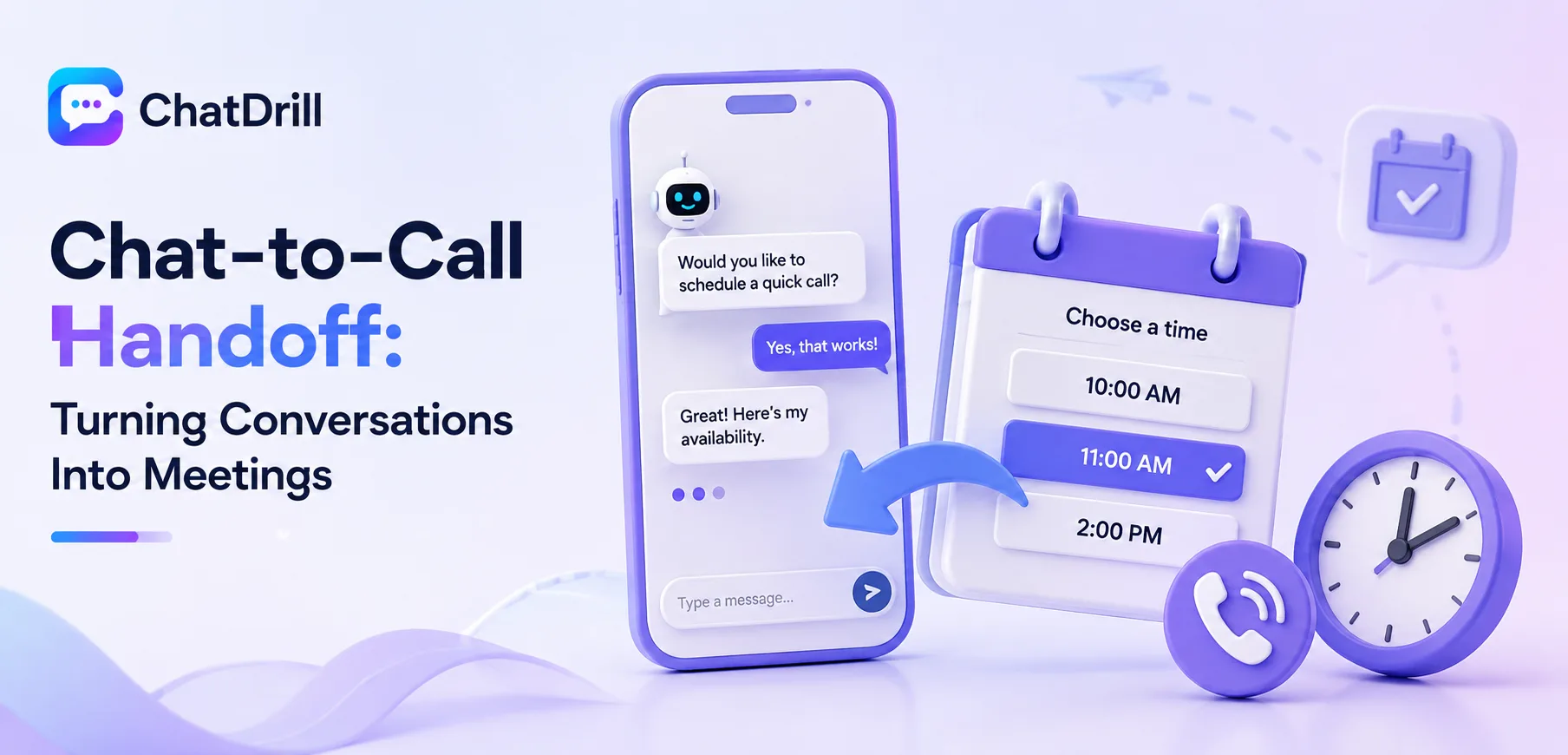
A well-built chat-to-call handoff collapses this gap entirely, letting the prospect see real availability and book a specific time directly within the same conversation, capturing intent at its highest point rather than after a delay.
This matters most for sales-qualified conversations specifically, a routine support question rarely needs a call, but a prospect asking detailed, buying-stage questions is exactly the moment a fast path to a real conversation pays off.
This guide covers why the handoff moment matters so much, what a strong chat-to-call setup needs, a practical implementation approach, and mistakes worth avoiding.
Quick answer: A chat-to-call handoff lets a promising chat conversation convert directly into a scheduled call or meeting without the prospect leaving the chat window, by embedding real calendar availability and booking directly into the conversation at the exact moment their interest peaks.
Why the Handoff Moment Matters So Much
A prospect's interest in a chat conversation is often at its peak in that exact moment, and every additional step required to schedule a call gives that interest a real chance to fade before it converts.
The narrow window of peak interest
A prospect asking genuinely engaged, buying-stage questions in chat is in a specific, time-limited state of interest that a delayed follow-up process risks losing entirely.
Capturing this moment directly, rather than routing it through a separate scheduling step, respects how quickly genuine interest can fade once a conversation ends.
Why recognizing sales-qualified moments matters
Not every chat conversation warrants a call, but recognizing when a conversation has shifted into genuinely sales-qualified territory, specific pricing questions, a clear buying timeline, lets you offer the handoff at exactly the right moment.
Offering a call too early, before genuine interest is established, or too late, after interest has already faded, both reduce the effectiveness of this specific tactic.
What a Strong Chat-to-Call Setup Needs
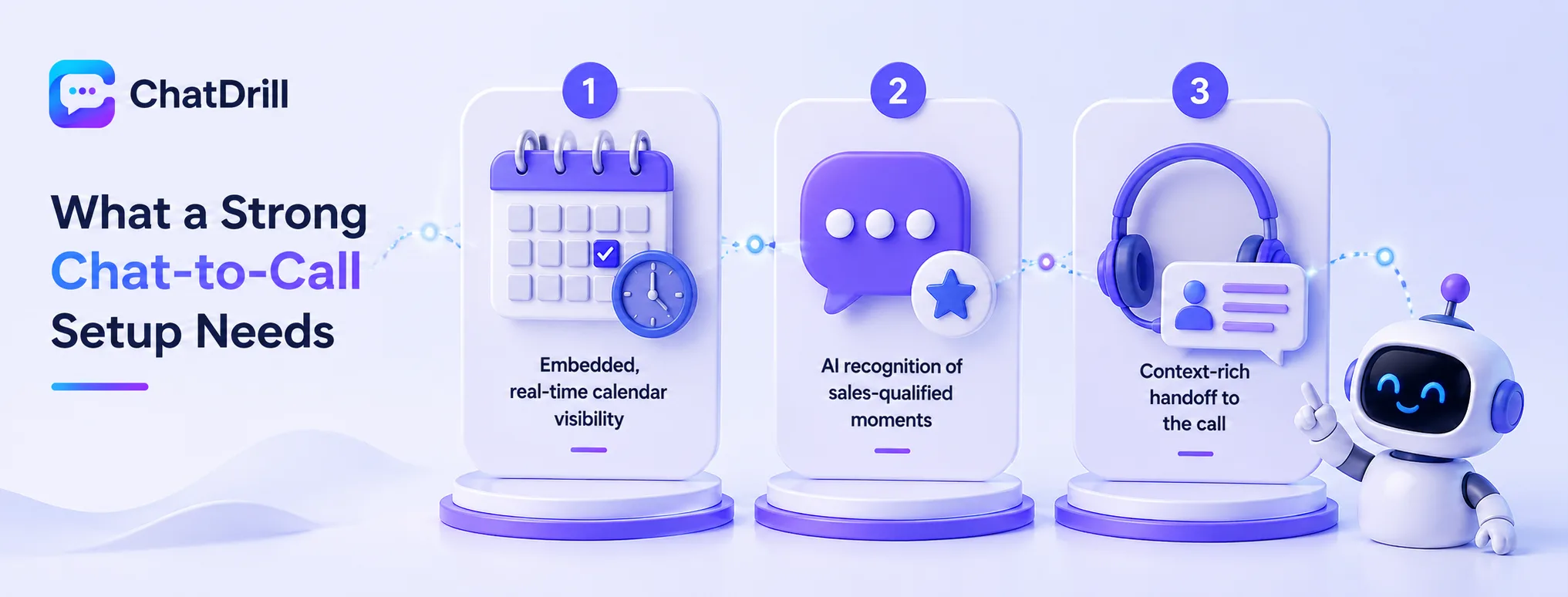
A genuinely effective setup needs real-time calendar visibility embedded in chat, AI that recognizes sales-qualified conversation moments, and a smooth handoff that carries full conversation context to whoever takes the call.
Embedded, real-time calendar visibility
Letting a prospect see actual available time slots and book directly within the chat conversation removes the friction of navigating to a separate scheduling page or waiting for a follow-up email.
This embedded booking is what actually converts the moment of interest into a scheduled meeting rather than just expressing intent to schedule one later.
AI recognition of sales-qualified moments
Training AI to recognize genuine buying signals, specific pricing questions, a stated timeline, comparison against competitors, lets it offer the call-scheduling option at the right moment rather than either too early or too late.
This recognition should be tuned to your specific sales process, since what counts as a genuinely qualified moment varies by business and typical sales cycle.
Context-rich handoff to the call
Ensuring whoever takes the scheduled call receives the full chat conversation history beforehand means the prospect doesn't have to repeat everything they already discussed in chat.
This continuity meaningfully improves the call experience, letting the conversation continue naturally rather than restarting from the beginning.
Implementation Approach for Chat-to-Call Handoff
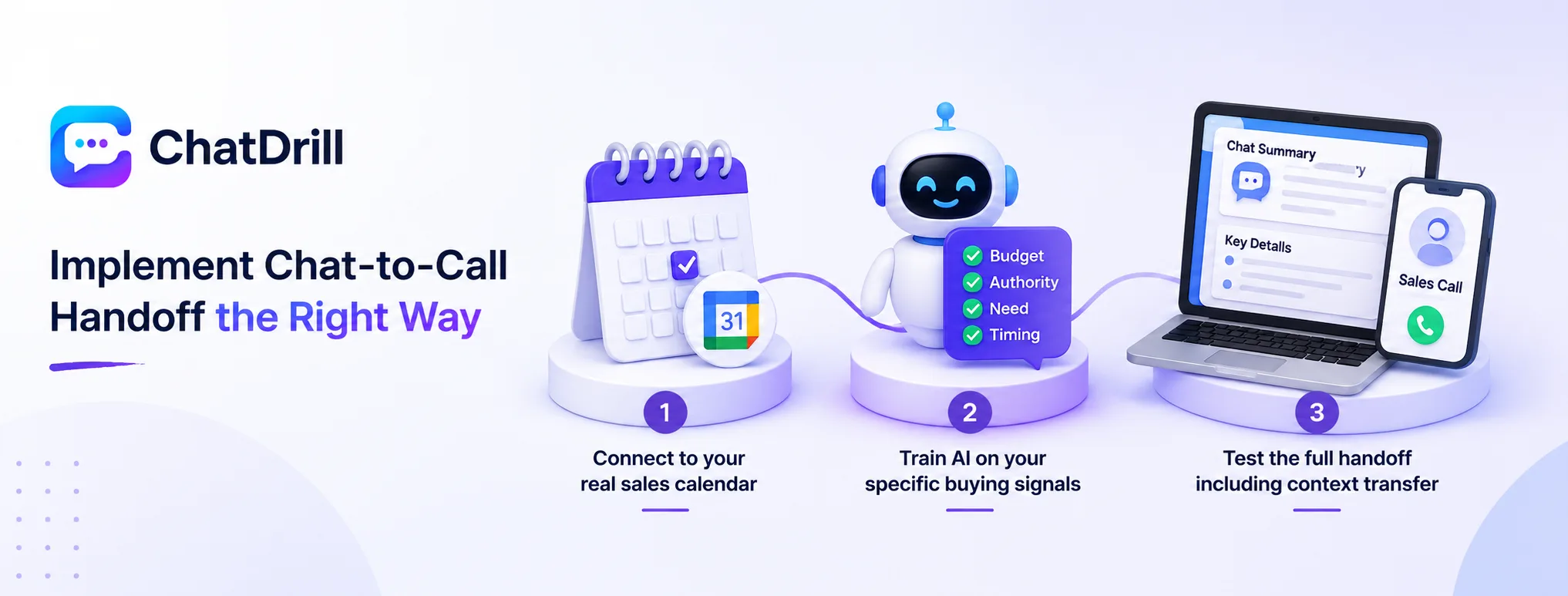
A practical implementation connects chat to your real sales calendar, trains AI on
Step 3: Test the full handoff including context transfer
before relying on it for real prospects.
Step 1: Connect to your real sales calendar
Integrating chat with the actual calendar of whoever takes sales calls, rather than a generic scheduling link, ensures the availability shown is genuinely accurate and bookable.
This connection should be tested directly, booking a real test call and confirming it appears correctly on the actual calendar, before wider reliance on the system.
Step 2: Train AI on your specific buying signals
Feeding AI examples of what a genuinely sales-qualified conversation looks like in your specific business, rather than generic buying-signal patterns, produces more accurate timing for offering the call option.
This training benefits from direct input from your sales team on what signals they've found genuinely predictive of a good call outcome.
Step 3: Test the full handoff including context transfer Running through a complete test scenario, from initial chat through booking to the actual call, confirms conversation context genuinely carries through rather than being lost at the handoff point.
This end-to-end testing catches gaps that testing each piece in isolation might miss.
Common Mistakes With Chat-to-Call Handoff
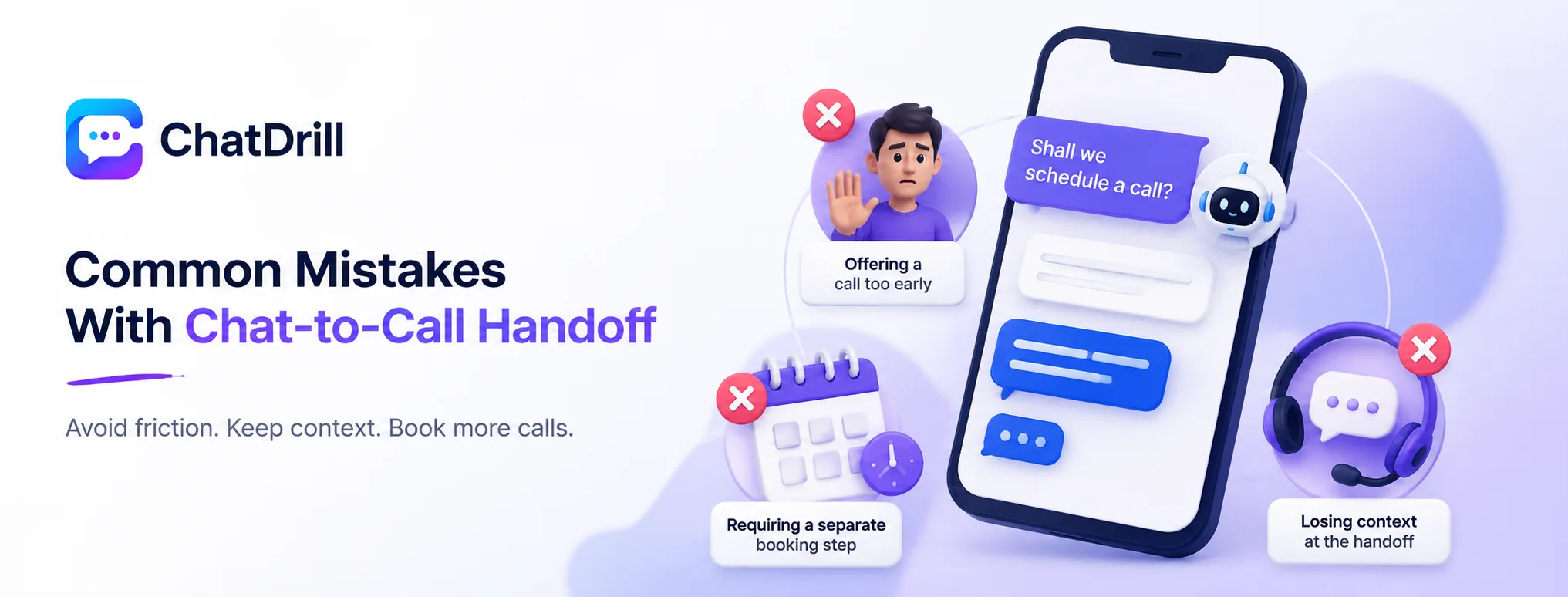
The most common mistakes are offering a call before genuine interest is established, requiring a separate step outside chat to actually book, and losing conversation context between the chat and the eventual call.
Offering a call too early
Suggesting a sales call before a prospect has shown genuine, qualified interest can feel pushy and premature, potentially damaging the relationship before it has a chance to develop naturally.
Tuning AI's recognition of genuinely qualified moments, rather than offering this option to every visitor, avoids this specific mistake.
Requiring a separate booking step
Sending an interested prospect to a separate scheduling page, rather than embedding booking directly in chat, introduces friction at exactly the moment their interest is highest and most likely to fade.
This friction reduction is worth prioritizing given how directly it affects whether genuine interest actually converts into a scheduled call.
Losing context at the handoff
A prospect who has to repeat everything they already explained in chat once the call begins experiences a frustrating, disjointed interaction that undermines the value of the earlier conversation.
Ensuring conversation context carries through to whoever takes the call preserves the continuity that made the earlier chat conversation valuable in the first place.