
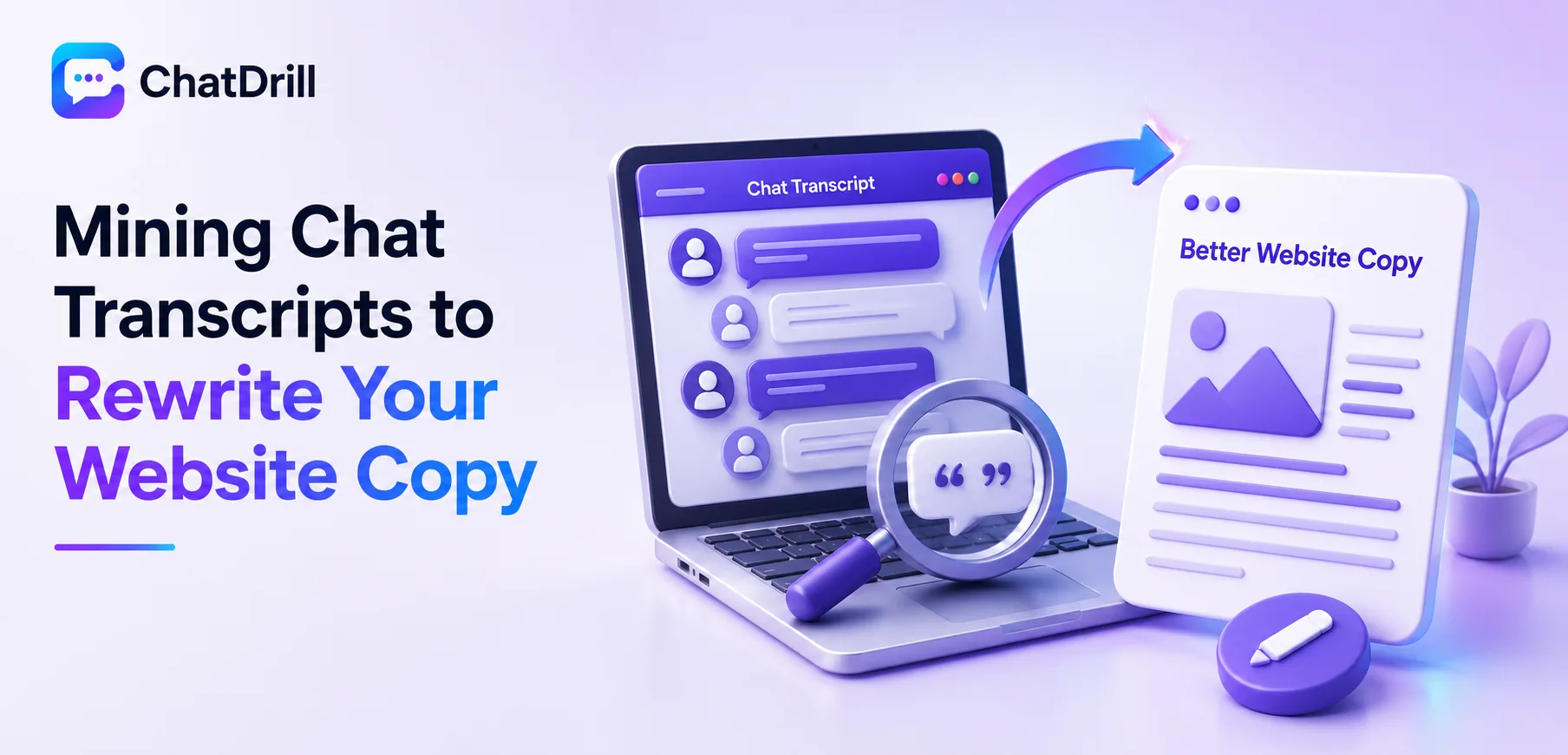
Website copy written by a marketing team, however well-intentioned, often drifts toward internal terminology and assumptions about customer language that don't quite match how customers actually describe their own problems and questions.
Chat transcripts are a genuinely rich, underused source correcting this drift, capturing customers' real, unfiltered language, exactly the words they use to describe their needs, confusions, and objections in their own voice.
The businesses getting real value from this practice treat transcript mining as an ongoing input to copywriting, not a one-time audit, since customer language and common questions naturally shift as your product and market evolve.
This guide covers what to look for in transcripts, how to translate findings into better copy, a practical implementation approach, and mistakes worth avoiding.
Quick answer: Mining chat transcripts for website copy means reviewing real customer conversations for the exact words, questions, and objections customers actually use, then rewriting your website content around that genuine language instead of internal marketing terminology that doesn't match how customers actually think or speak.
What to Look for in Chat Transcripts
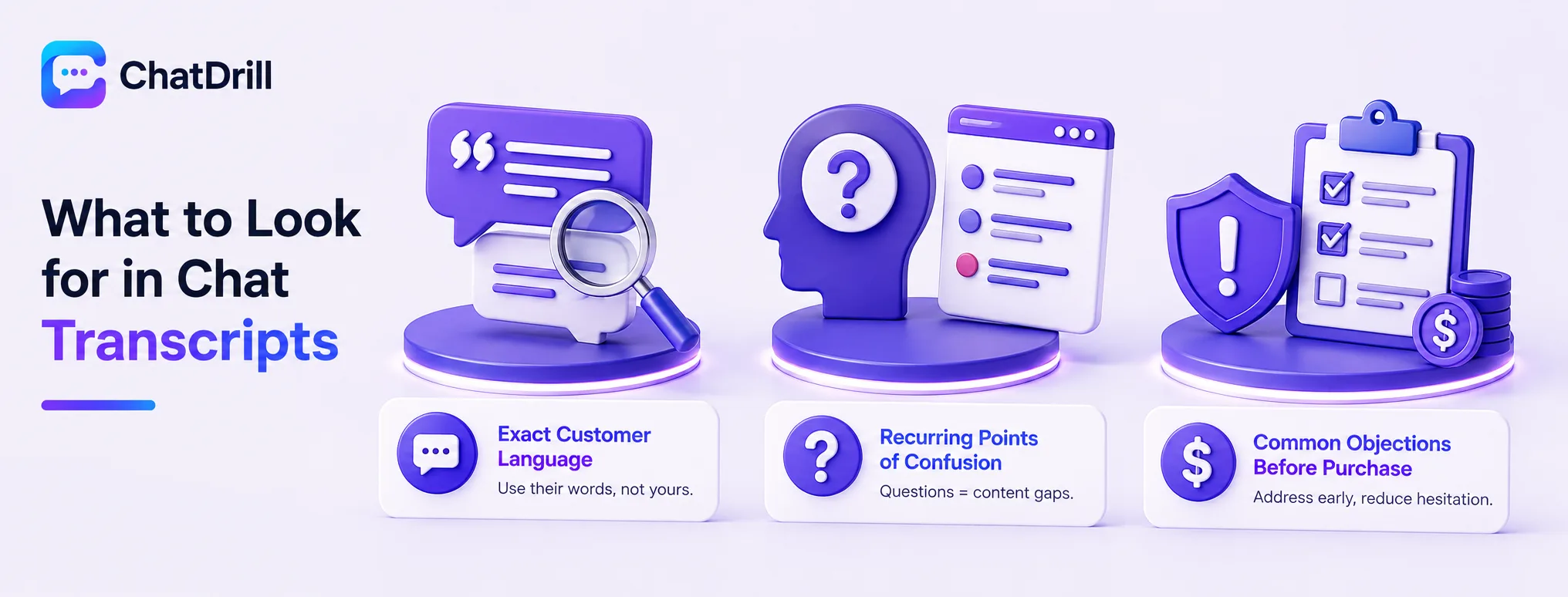
Valuable transcript signals include the exact phrases customers use to describe their problem, recurring points of confusion about your product, and objections that come up repeatedly before a purchase decision.
Exact customer language
Noting the specific words and phrases customers actually use to describe their need, often different from your internal product terminology, reveals language worth adopting directly in your copy.
This exact language tends to resonate more immediately with future visitors than a more polished but genuinely less relatable internal phrasing.
Collecting these phrases across many conversations, rather than relying on a single example, reveals genuine patterns rather than an isolated anecdote.
Recurring points of confusion
A question that comes up repeatedly in chat often signals that your existing website copy isn't clearly answering it, representing a genuine content gap worth addressing directly.
This confusion is worth taking seriously even when it seems like the answer should already be obvious from existing page content, since if customers keep asking, the copy isn't working as intended.
Addressing these gaps directly in updated copy can meaningfully reduce the volume of the same repeated question in future chat conversations.
Common objections before purchase
Objections that arise consistently in chat, around pricing, a specific feature limitation, or a competitor comparison, reveal exactly what your website copy should be proactively addressing before a visitor even needs to ask.
Getting ahead of these objections directly in your copy can reduce hesitation earlier in the visitor's journey, before they even reach the point of needing chat to resolve it.
Translating Findings Into Better Copy
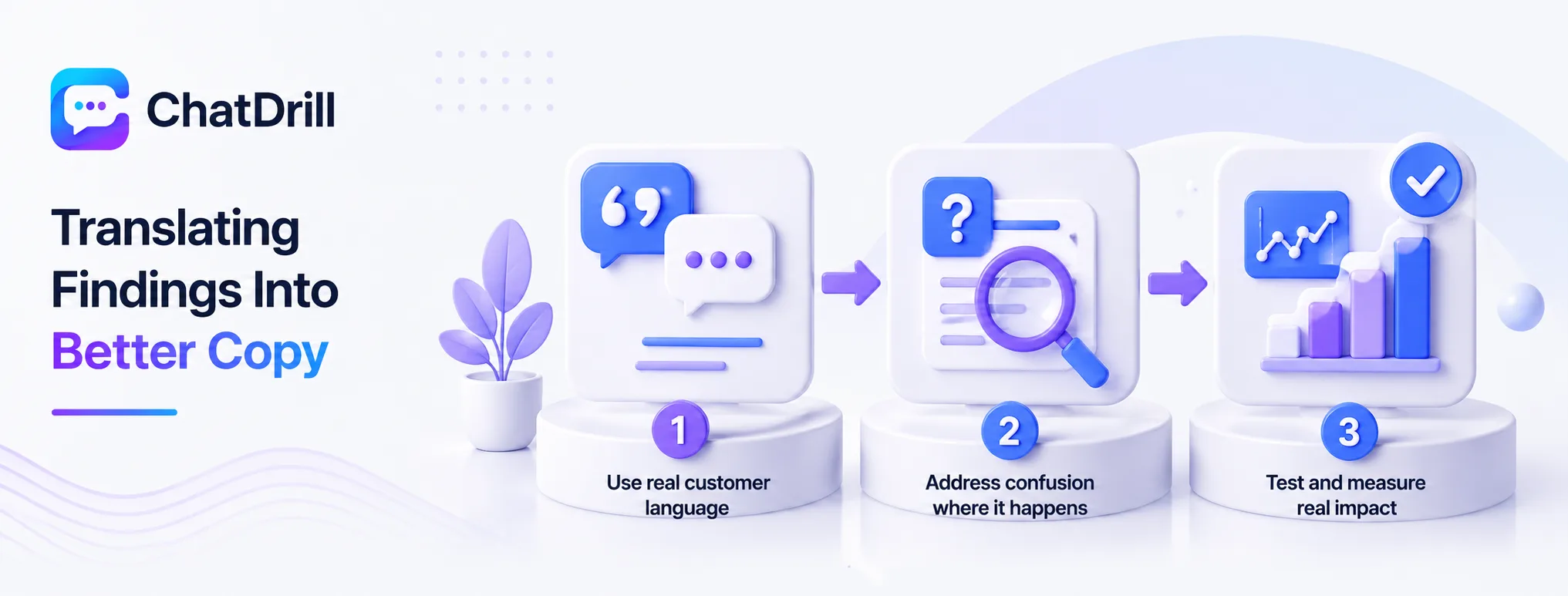
Translating transcript findings into copy means directly incorporating genuine customer phrases, proactively addressing recurring confusion in relevant page sections, and testing updated copy against actual conversion impact.
Incorporating genuine customer phrases
Directly weaving customers' actual language into headlines, feature descriptions, and FAQ sections tends to produce copy that feels more immediately relatable than internally generated phrasing.
This doesn't mean simply copying informal chat language verbatim, it means understanding and adapting the underlying way customers naturally frame their needs.
Proactively addressing recurring confusion
Updating the specific page section where a recurring point of confusion should logically be addressed, rather than adding a generic FAQ entry disconnected from context, resolves the issue where a visitor would actually encounter it.
This targeted approach tends to be more effective than a general FAQ page addition, since it meets the confusion at the exact point in the visitor's journey where it naturally arises.
Testing updated copy against real impact
Measuring whether updated copy actually reduces the volume of the related chat question, and whether it improves conversion on that specific page, confirms the changes are genuinely working.
This measurement closes the loop, turning transcript mining into a genuinely data-informed copywriting practice rather than a one-time creative exercise.
Implementation Approach for Transcript Mining
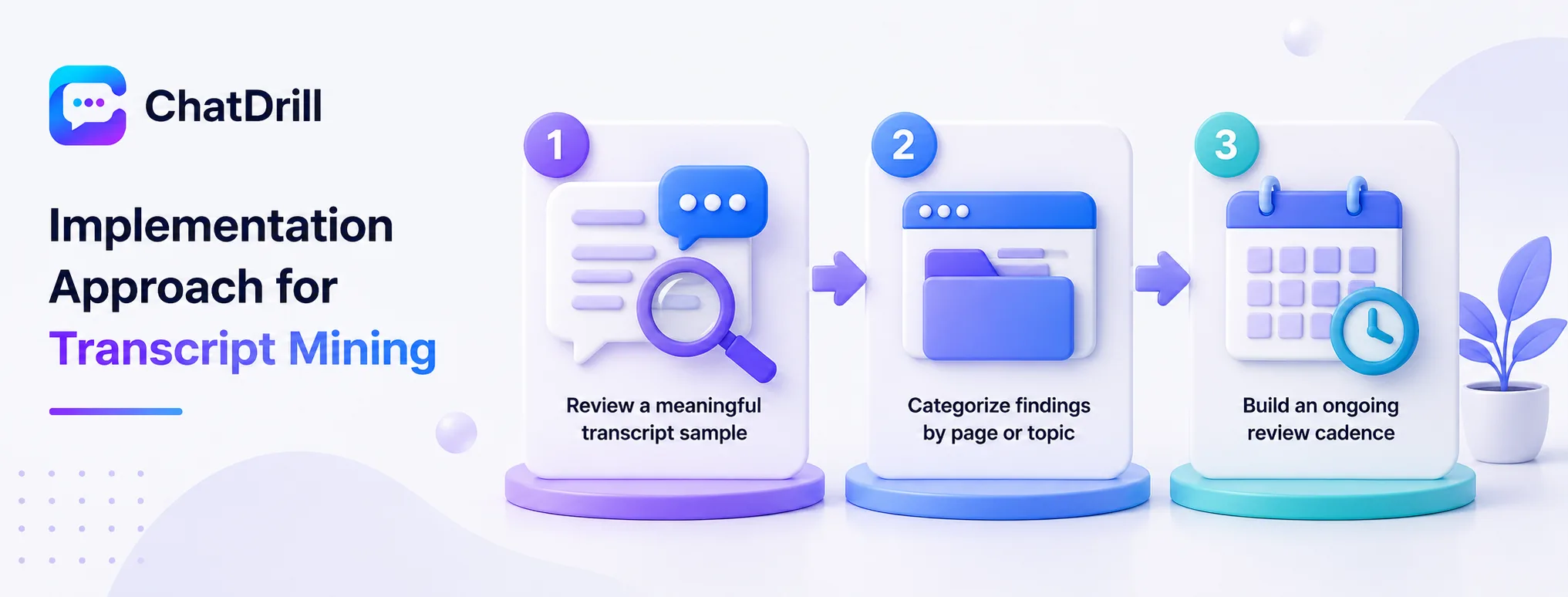
A practical implementation reviews a meaningful sample of recent transcripts regularly, categorizes findings by page or topic, and builds this review into an ongoing content update cadence.
Step 1: Review a meaningful transcript sample
Reading through a genuinely representative sample of recent chat conversations, rather than a handful of memorable but potentially unrepresentative examples, ensures findings reflect real, common patterns.
This review is worth doing systematically, with notes captured consistently, rather than relying on memory of standout conversations alone.
Step 2: Categorize findings by page or topic
Organizing identified language, confusion points, and objections by which specific page or product area they relate to makes the findings directly actionable for copy updates.
This categorization turns a general sense of "customers seem confused sometimes" into a specific, prioritized list of concrete copy improvements.
Step 3: Build an ongoing review cadence
Scheduling a regular, recurring transcript review, monthly or quarterly, rather than treating this as a one-time audit, keeps your copy aligned with how customer language and common questions naturally evolve.
This ongoing practice tends to compound in value over time, continually refining copy based on genuine, current customer language rather than an increasingly outdated one-time snapshot.
Common Mistakes in Transcript Mining
The most common mistakes are drawing conclusions from too small a sample, treating this as a one-time exercise rather than ongoing practice, and updating copy without measuring whether the changes actually helped.
Drawing conclusions from too small a sample
Basing a copy change on a handful of memorable but potentially unrepresentative conversations risks optimizing for an outlier rather than a genuine, common pattern.
Reviewing a genuinely representative volume of transcripts before drawing conclusions produces more reliable, actionable findings.
Treating this as a one-time exercise
Conducting a single transcript review and then never revisiting it misses how customer language and common questions naturally shift as your product, market, and messaging evolve.
Building this into a regular, ongoing cadence keeps your copy genuinely aligned with current customer reality rather than an aging snapshot.
Not measuring the impact of changes
Updating copy based on transcript findings without later checking whether the related chat question volume decreased, or conversion improved, misses the chance to confirm whether the change genuinely helped.
This measurement step closes the loop, turning transcript mining into a genuinely accountable, data-informed practice.