

A chat CTA that fires the moment someone lands on a page, before they've shown any real interest, tends to feel like an interruption rather than an offer, training visitors to dismiss chat prompts reflexively rather than engage with them.
The difference between a CTA that converts and one that gets ignored or actively resented usually comes down to timing and framing, offering something genuinely useful at a moment that matches the visitor's actual behavior, rather than a generic prompt on a fixed timer.
Getting this right also means making it genuinely easy to decline, a CTA that's hard to dismiss or that reappears aggressively after being closed creates exactly the pushy feeling worth avoiding.
This guide covers what makes a CTA feel pushy versus helpful, how to time and frame CTAs well, a practical implementation approach, and mistakes worth avoiding.
Quick answer: A chat CTA avoids feeling pushy when it's timed to a genuine signal of interest, framed as a helpful next step rather than a sales ask, and easy to decline without friction, since the goal is offering value at the right moment, not maximizing how often the CTA appears.
What Actually Makes a CTA Feel Pushy
A CTA feels pushy when it fires before genuine interest is shown, when it's framed around what you want rather than what helps the visitor, and when it's difficult to dismiss without friction.
Premature timing
A chat prompt appearing the instant someone lands on a page, before they've had a chance to explore or show any real engagement, feels like an interruption rather than a genuinely timed offer.
This premature timing is one of the most common reasons visitors develop a reflexive habit of dismissing chat prompts without reading them.
Waiting for a genuine behavioral signal, meaningful time on page, scrolling to a specific section, before triggering a CTA respects the visitor's actual engagement level.
Self-focused rather than visitor-focused framing
A CTA framed around "Talk to sales now" centers what the business wants, while one framed around "Have a question about pricing? I can help" centers what the visitor might actually need.
This framing shift, from a sales ask to a genuinely helpful offer, changes how the same underlying action is perceived even when the eventual outcome is similar.
Testing both framings directly against real visitor response rates reveals which approach genuinely performs better for your specific audience.
Friction in dismissing the prompt
A CTA that's hard to close, or that reappears immediately and aggressively after being dismissed, creates exactly the pushy feeling worth avoiding, regardless of how well-timed the initial trigger was.
Making the dismiss action clear, easy, and genuinely respected, not reappearing again within the same session, preserves goodwill even when a visitor declines.
How to Time and Frame CTAs Well
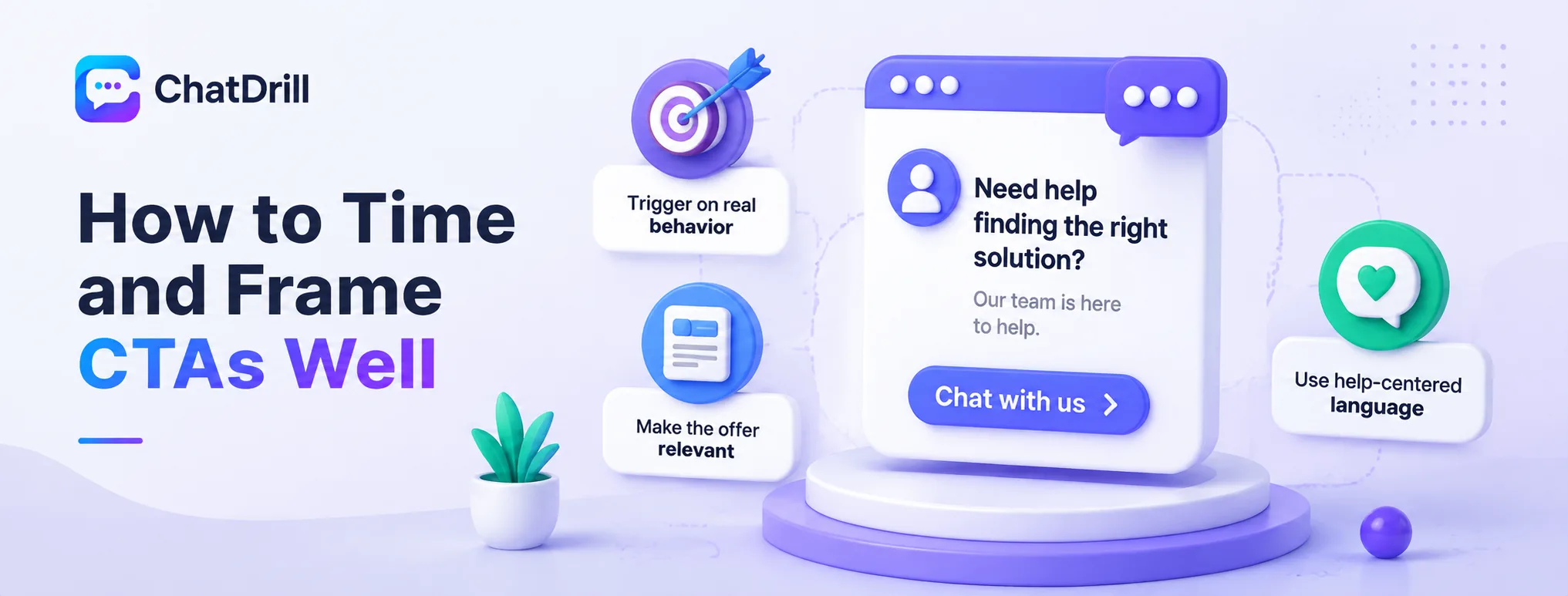
Well-timed, well-framed CTAs trigger based on genuine behavioral signals, offer something specifically relevant to what the visitor is doing, and use language that centers help over sales.
Triggering on genuine behavioral signals
Configuring a CTA to appear based on meaningful engagement, time spent on a pricing page, scrolling through a specific section, rather than a fixed timer applied uniformly, matches the offer to actual visitor behavior.
This behavioral targeting produces meaningfully better response rates than a one-size-fits-all timer approach applied across every page.
Different pages likely warrant different trigger logic, a pricing page's hesitation signal looks different from a blog post's engagement pattern.
Making the offer specifically relevant
A CTA that references what the visitor is actually looking at, "Questions about this feature?"
on a specific product page, feels more genuinely helpful than a generic "Need help?" prompt everywhere.
This specificity signals that the offer is actually connected to the visitor's current context, rather than a generic script running regardless of what page they're on.
Using help-centered language
Framing the CTA's language around assistance and answering questions, rather than around scheduling a call or talking to sales, tends to feel less like a sales interruption and more like a genuine offer.
This framing doesn't need to hide the eventual sales outcome, it just leads with the value to the visitor rather than the value to the business.
Implementation Approach for Non-Pushy Chat CTAs
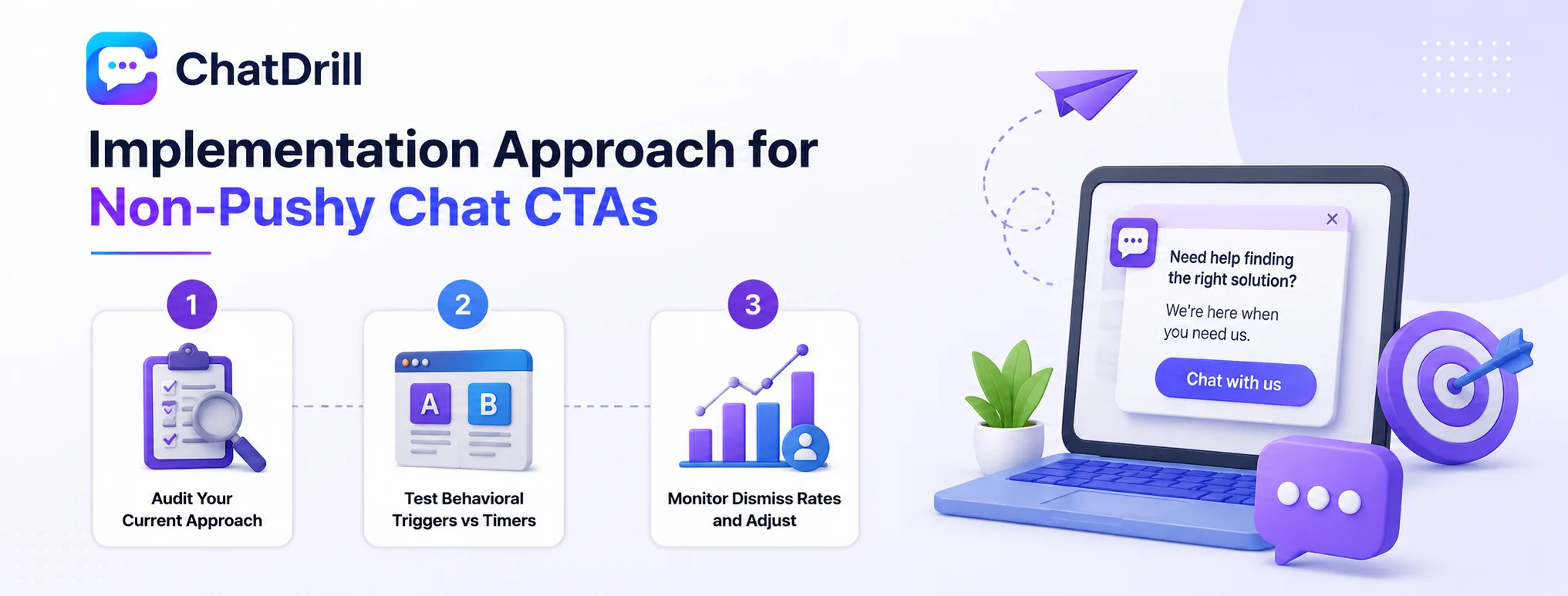
A practical implementation starts by reviewing your current CTA timing and language, tests behavioral triggers against fixed timers, and monitors dismiss rates as a signal of whether the approach is landing well.
Step 1: Audit your current CTA approach
Reviewing when and how your current chat CTAs trigger, and what language they use, reveals whether premature timing or self-focused framing might be undermining their effectiveness.
This audit is worth doing honestly, since it's easy to have set up a CTA once and never revisited whether its actual behavior still matches best practice.
Step 2: Test behavioral triggers against timers
Running a direct comparison between your current timer-based trigger and a genuine behavioral trigger, on the same page, reveals which approach your specific visitors respond to better.
This testing is worth doing with real traffic and a meaningful sample size, rather than relying on assumption about which approach should perform better.
Step 3: Monitor dismiss rates and adjust
Tracking how often visitors dismiss the CTA without engaging, and specifically at what point in the visit this happens, reveals whether your timing and framing are genuinely landing well.
A high dismiss rate concentrated right after the trigger fires often signals the timing itself needs adjustment, worth investigating directly rather than assuming the messaging is the issue.
Common Mistakes With Chat CTAs
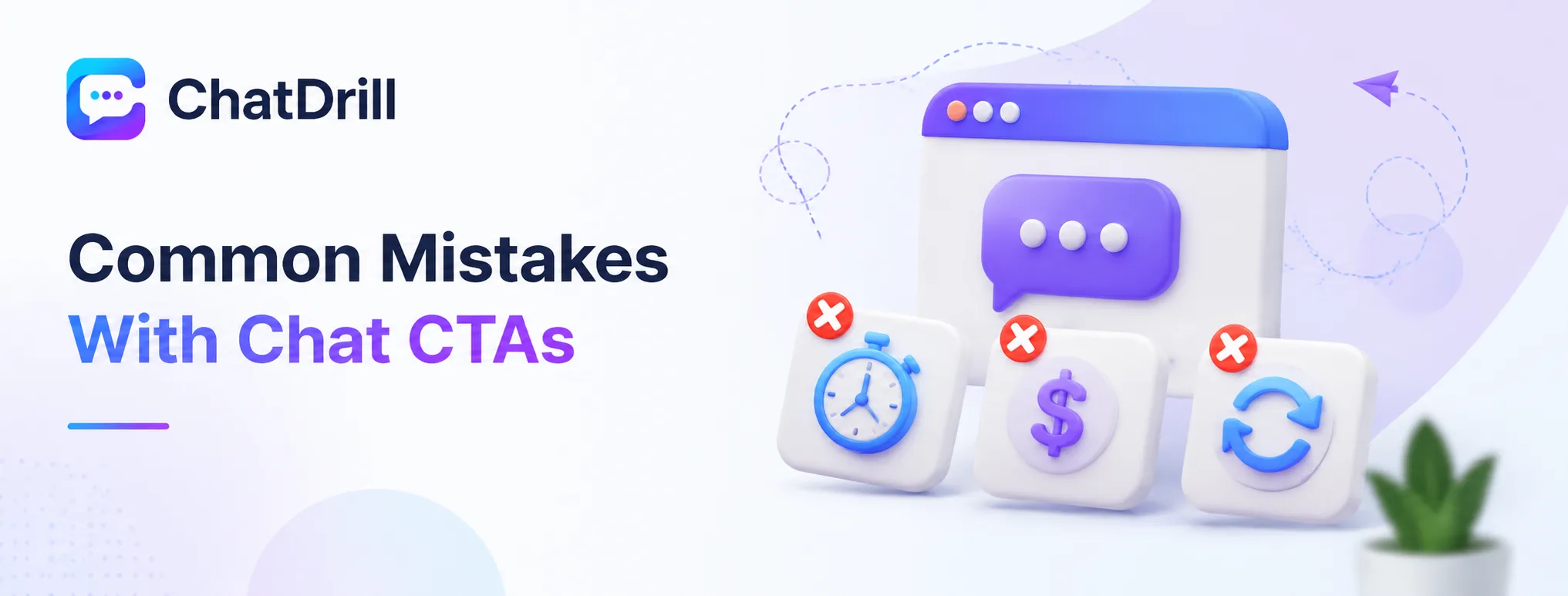
The most common mistakes are using a fixed timer regardless of actual visitor behavior, framing every CTA around a sales ask, and making the CTA reappear aggressively after being dismissed.
Fixed timers regardless of behavior
A CTA that fires at exactly the same number of seconds on every page, regardless of what the visitor is actually doing, misses the chance to time the offer to genuine engagement.
Moving to behavioral triggers, even simple ones like scroll depth, tends to meaningfully improve how the CTA is received.
Sales-first framing on every CTA
Using the same "talk to sales" framing across every page and context misses the opportunity to tailor the offer to what would actually feel helpful in that specific moment.
Varying framing based on page context, more sales-direct on a pricing page, more help-oriented on a blog post, respects the visitor's actual position in their journey.
Aggressive reappearance after dismissal
A CTA that reappears again shortly after being closed, or that becomes harder to dismiss on a second attempt, creates exactly the pushy feeling that damages trust in the chat experience overall.
Respecting a dismissal for the remainder of that session, at minimum, preserves goodwill even among visitors who aren't ready to engage right now.