
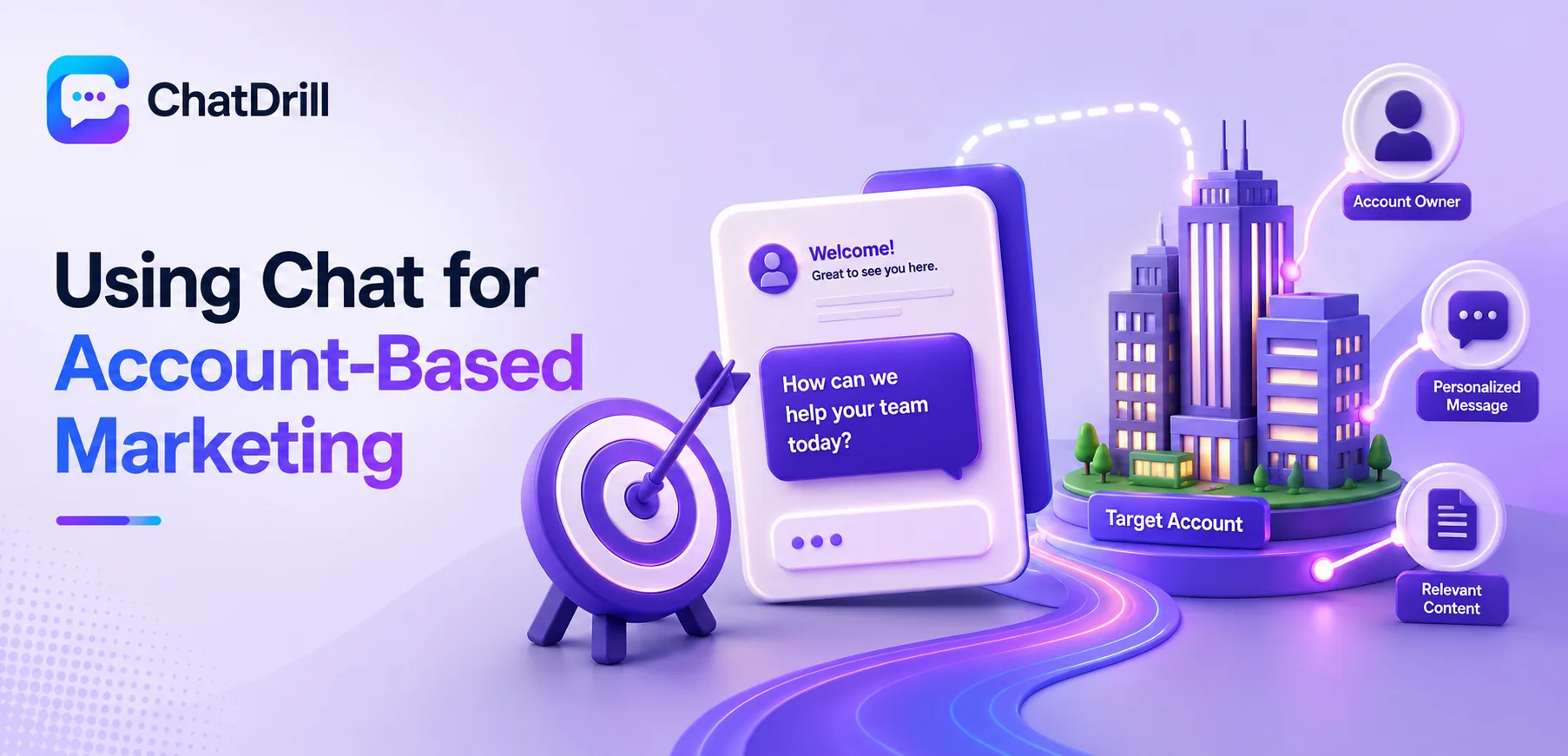
Account-based marketing is built on the premise that a small number of high-value target accounts deserve a genuinely personalized experience, yet most chat setups treat every visitor identically regardless of whether they're a random browser or someone from a company your sales team has been actively pursuing for months.
Connecting chat to your ABM strategy closes this gap, recognizing a visitor from a target account and adjusting the chat experience, personalized greeting, direct routing to the account owner, account-specific content, to match the level of attention that account already receives elsewhere in your ABM motion.
Done well, this turns chat into a genuine extension of your ABM program rather than a generic, disconnected support tool that happens to also serve your highest-value prospects.
This guide covers why chat fits ABM naturally, what a strong ABM chat setup needs, a practical implementation approach, and mistakes worth avoiding.
Quick answer: Using chat for account-based marketing means recognizing when a visitor from a target account is on your site, ideally through IP or firmographic matching, and delivering a personalized greeting or routing that reflects their specific account rather than treating them like an anonymous visitor.
Why Chat Fits Account-Based Marketing Naturally
ABM is about treating a defined set of high-value accounts with genuine personalization, and chat is one of the few channels that can recognize and respond to an account in real time, right as they're browsing.
The real-time recognition advantage
Unlike email or paid ads that reach a target account asynchronously, chat can recognize and respond to a target account visitor the moment they're actually on your site, engaging at their exact moment of interest.
This immediacy is a genuine advantage over other ABM channels, which typically involve some delay between a target account's action and your response to it.
Capturing this moment well can meaningfully shape a target account's overall impression of how much your company genuinely understands and prioritizes them.
Matching chat sophistication to account value
Given how much investment typically goes into researching and pursuing ABM target accounts elsewhere, letting chat treat these same visitors generically wastes an opportunity that's relatively straightforward to close.
This mismatch, sophisticated targeting everywhere else but generic chat treatment, is often simply an oversight rather than a deliberate choice, worth correcting once recognized.
What a Strong ABM Chat Setup Needs
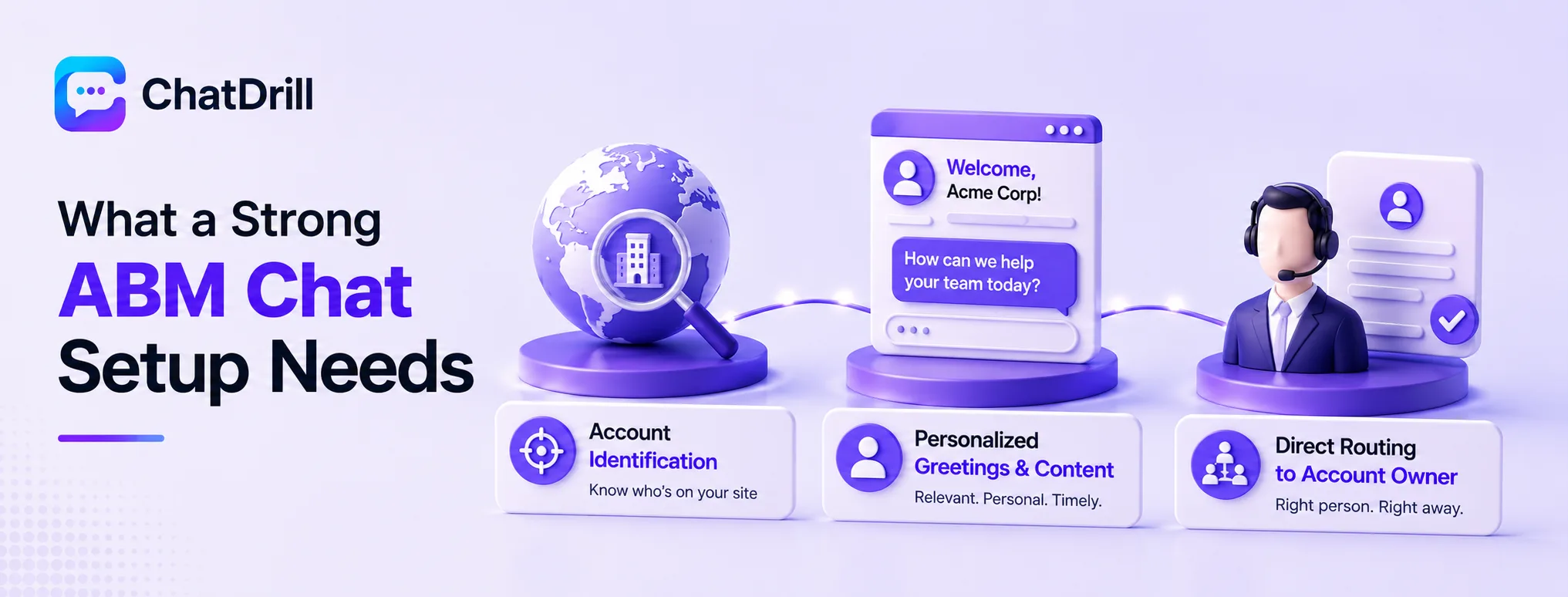
A genuinely effective ABM chat setup needs account identification through IP or firmographic matching, personalized greetings and content for recognized accounts, and direct routing to the account's actual owner.
Account identification technology
Connecting chat to an IP-to-company matching tool, or your existing ABM platform's account identification data, lets you recognize when a visitor is likely from a specific target account.
This identification isn't perfect, IP matching has real limitations, especially for remote or distributed teams, but it's accurate enough to meaningfully improve targeting for many B2B businesses.
Integrating this data directly into your chat platform's configuration, rather than as a separate, disconnected system, is what makes real-time personalization actually possible.
Personalized greetings and content
Configuring a distinct greeting for recognized target accounts, referencing their company or industry specifically, feels meaningfully more attentive than a generic message applied to every visitor.
This personalization can extend beyond the greeting too, surfacing account-specific case studies or content relevant to their industry directly within the conversation.
This level of tailoring is worth reserving specifically for your defined target account list, rather than attempting it for every visitor, given the effort involved in building genuinely relevant personalization.
Direct routing to the account owner
Ensuring a recognized target account's chat conversation routes directly to whoever owns that account relationship, rather than a general support queue, keeps the experience consistent with how that account is treated elsewhere.
This routing logic needs to be configured explicitly, connecting your chat platform to your CRM's account ownership data.
Testing this routing with a real target account scenario confirms it correctly identifies and routes to the right person before relying on it broadly.
Implementation Approach for ABM Chat
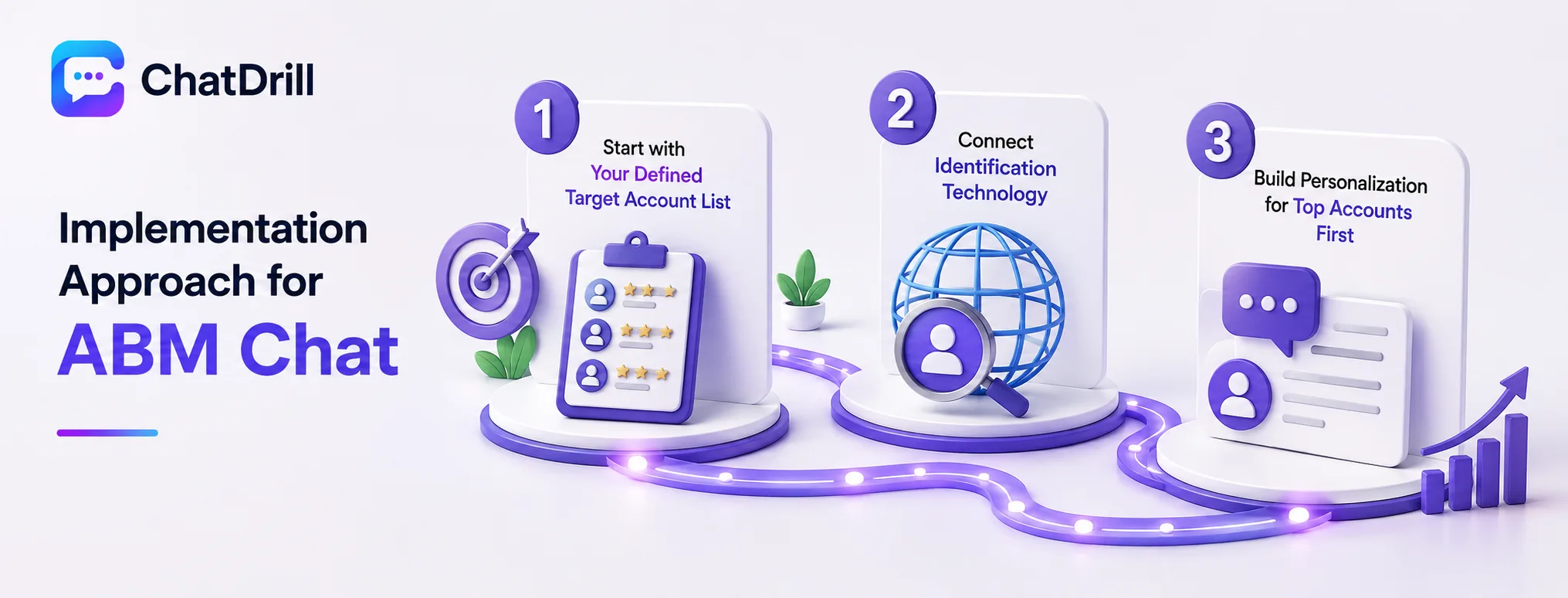
A practical implementation starts with your defined target account list, connects identification technology to your chat platform, and builds personalized experiences for your highest-priority accounts first.
Step 1: Start with your defined target account list
Working from your existing ABM target account list, rather than trying to personalize for every possible visitor, focuses initial effort where it will deliver the most concentrated value.
This list should already exist if you're running an ABM program, making this step primarily about connecting existing data rather than building something entirely new.
Step 2: Connect identification technology
Integrating an account identification tool with your chat platform, testing the connection against known target accounts to confirm accurate matching before relying on it broadly.
This technical connection is the foundation everything else in ABM chat personalization depends on, worth getting right before investing in more elaborate personalization content.
Step 3: Build personalization for top accounts first
Starting with genuinely tailored content and routing for your highest-priority target accounts, rather than attempting broad personalization across your entire list at once, keeps the initial effort manageable.
Expanding this personalization to more accounts over time, once the initial approach is validated, avoids overextending before confirming the tactic delivers real value.
Common Mistakes With ABM Chat
The most common mistakes are treating every visitor as a potential target account without genuine identification, over-investing in personalization before validating the approach, and failing to route recognized accounts to the right owner.
No genuine account identification
Attempting personalized messaging without actual account identification technology means guessing rather than genuinely recognizing a target account visitor, undermining the entire premise of this tactic.
Investing in real identification technology first, before building personalization content, ensures the effort is actually targeted correctly.
Over-investing before validation
Building elaborate, highly customized content for every account on a long target list before confirming the basic approach works risks significant wasted effort if the tactic doesn't deliver the expected value.
Starting with a smaller pilot on your highest-priority accounts validates the approach before scaling the investment further.
Poor routing to account owners
A recognized target account conversation that routes to a general queue rather than the actual account owner undermines the personalized experience the earlier recognition was meant to enable.
Testing this routing explicitly, rather than assuming it works correctly, catches this gap before it affects a real, high-value prospect conversation.
Measuring ABM Chat Success
Tracking engagement rate among recognized target accounts, conversion to meeting or opportunity, and account owner satisfaction with the quality of routed conversations reveals whether ABM chat is delivering real value.
Target account engagement rate
Tracking what share of identified target account visits result in a genuine chat engagement reveals whether your personalization is actually resonating with this specific, high-value audience.
This is worth comparing against general site engagement rates, revealing whether the additional personalization investment is producing a meaningfully different response.
Conversion to meeting or opportunity
Tracking how many ABM chat engagements convert into an actual sales meeting or pipeline opportunity quantifies this tactic's direct contribution to your ABM program's core goals.
This metric ties the chat investment directly to the business outcomes your broader ABM strategy is ultimately measured against.