
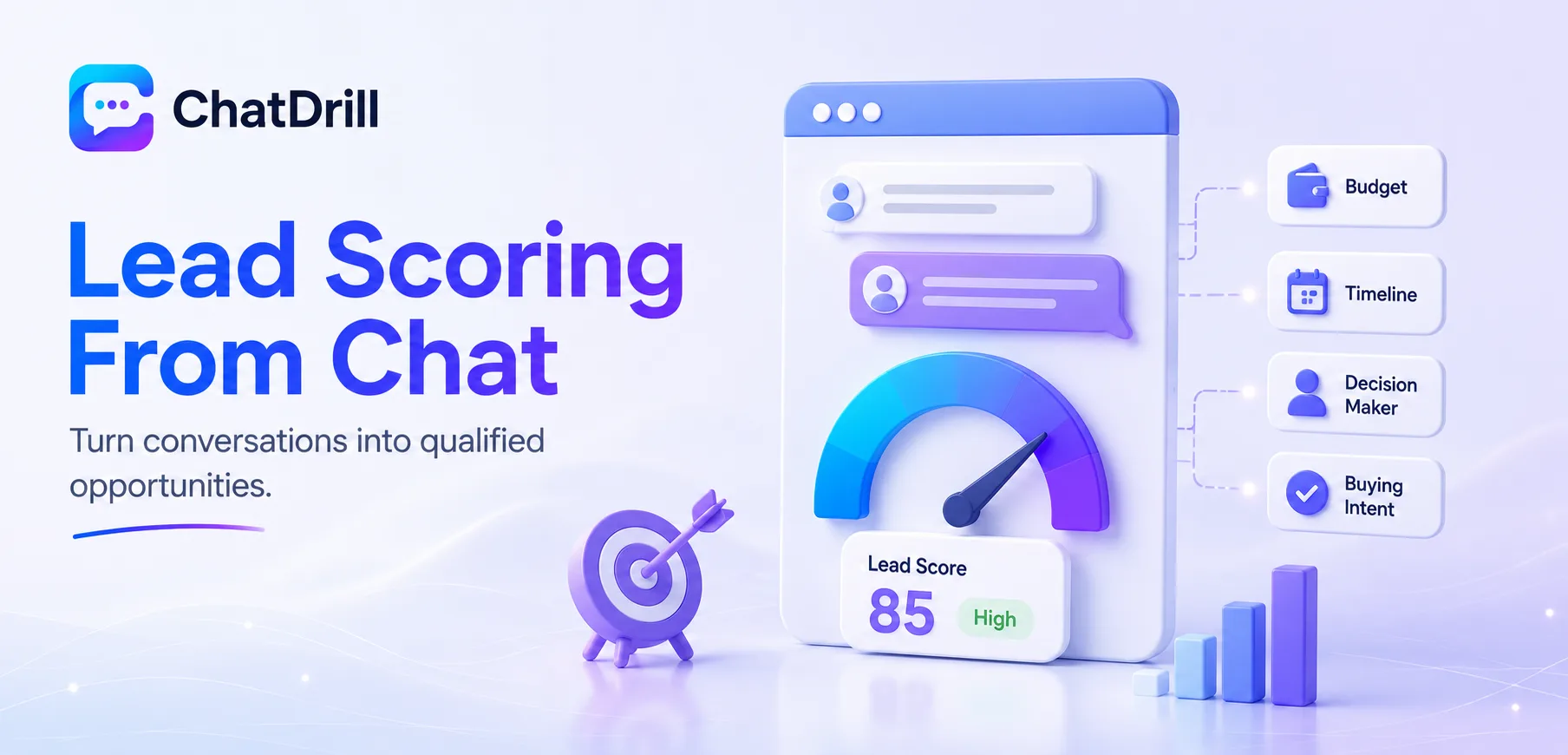
Not every chat conversation represents the same sales opportunity, a visitor asking a general pricing question is in a genuinely different stage than one describing a specific budget, timeline, and internal approval process, yet without scoring, both often reach sales with equal apparent priority.
Lead scoring from chat solves this by having AI recognize genuine buying signals within the conversation itself and translate them into a score your sales team can use to prioritize who to follow up with first.
Done well, this scoring should reflect your actual sales process's real predictors of conversion, not a generic template, since what counts as a strong signal varies meaningfully between a high-volume SMB sale and a longer, more considered enterprise sales cycle.
This guide covers what makes a chat-based lead score genuinely useful, how to build one, a practical implementation approach, and mistakes worth avoiding.
Quick answer: Lead scoring from chat conversations means having AI assign a numeric or tiered score based on genuine buying signals in the conversation, budget mentioned, timeline stated, decision-maker language, so sales can prioritize follow-up on the chats most likely to convert rather than treating every conversation equally.
What Makes a Chat-Based Lead Score Genuinely Useful
A genuinely useful lead score reflects specific, real buying signals from your own sales process, gets validated against actual conversion outcomes, and feeds directly into how sales prioritizes their follow-up work.
Signal specificity over generic templates
A score based on your actual sales team's real predictors of conversion, budget mentioned, specific timeline stated, multiple stakeholders referenced, performs meaningfully better than a generic scoring template borrowed from elsewhere.
This specificity requires genuine input from your sales team on what signals they've found actually predictive, rather than assuming universal buying signals apply equally to every business.
Building this from real, observed patterns in your own past conversions tends to produce a more accurate score than starting from an abstract framework.
Validation against real outcomes
Regularly checking whether your highest-scored chat leads actually convert at meaningfully higher rates than lower-scored ones confirms the scoring model is genuinely working, not just producing plausible-looking numbers.
This validation loop is what separates a scoring system that actually improves sales efficiency from one that adds a number without real predictive value.
Building a Genuine Chat-Based Scoring Model
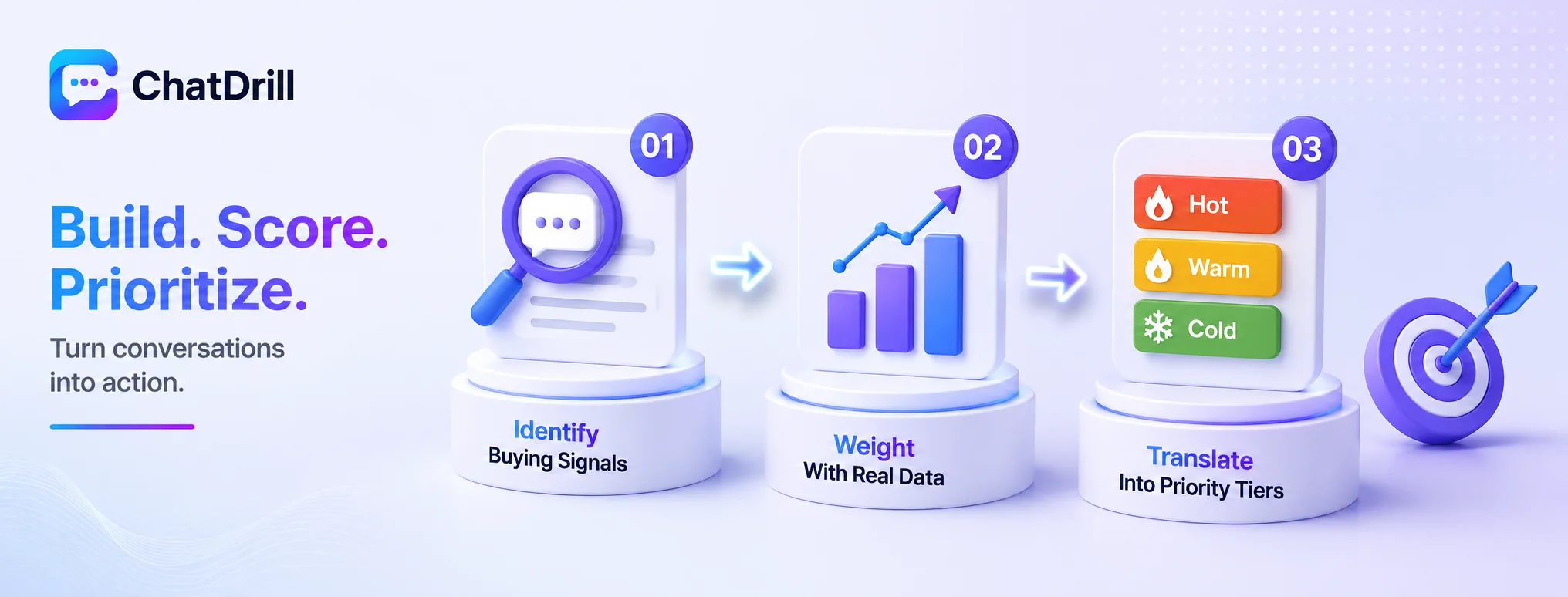
Building a genuine scoring model means identifying your actual buying signals, weighting them based on real historical conversion data, and translating the resulting score into clear, actionable sales priority tiers.
Identifying your actual buying signals
Reviewing past chat conversations that led to closed deals, specifically looking for common language patterns and details mentioned, reveals what genuinely predicts conversion in your specific business.
This review often surfaces signals more specific and more useful than generic buying-signal lists, tailored to how your actual prospects talk about their needs.
Involving your sales team directly in this review adds pattern recognition a purely data-driven analysis alone might miss.
Weighting signals based on real data
Not every signal should carry equal weight, a specific stated budget might correlate more strongly with conversion than simply asking a pricing question, and your scoring model should reflect that difference.
Building these weights from actual historical conversion data, rather than intuition alone, produces a more genuinely predictive scoring model over time.
This weighting is worth revisiting periodically as you accumulate more data on which signals actually predicted conversion versus which didn't.
Translating scores into sales priority tiers
Converting a raw numeric score into clear tiers, hot, warm, cold, makes the scoring genuinely actionable for a sales team who needs to quickly decide where to focus first.
This tiering should map to clear, specific follow-up expectations, a hot lead getting contacted within minutes, for instance, rather than just an abstract label.
Implementation Approach for Chat Lead Scoring
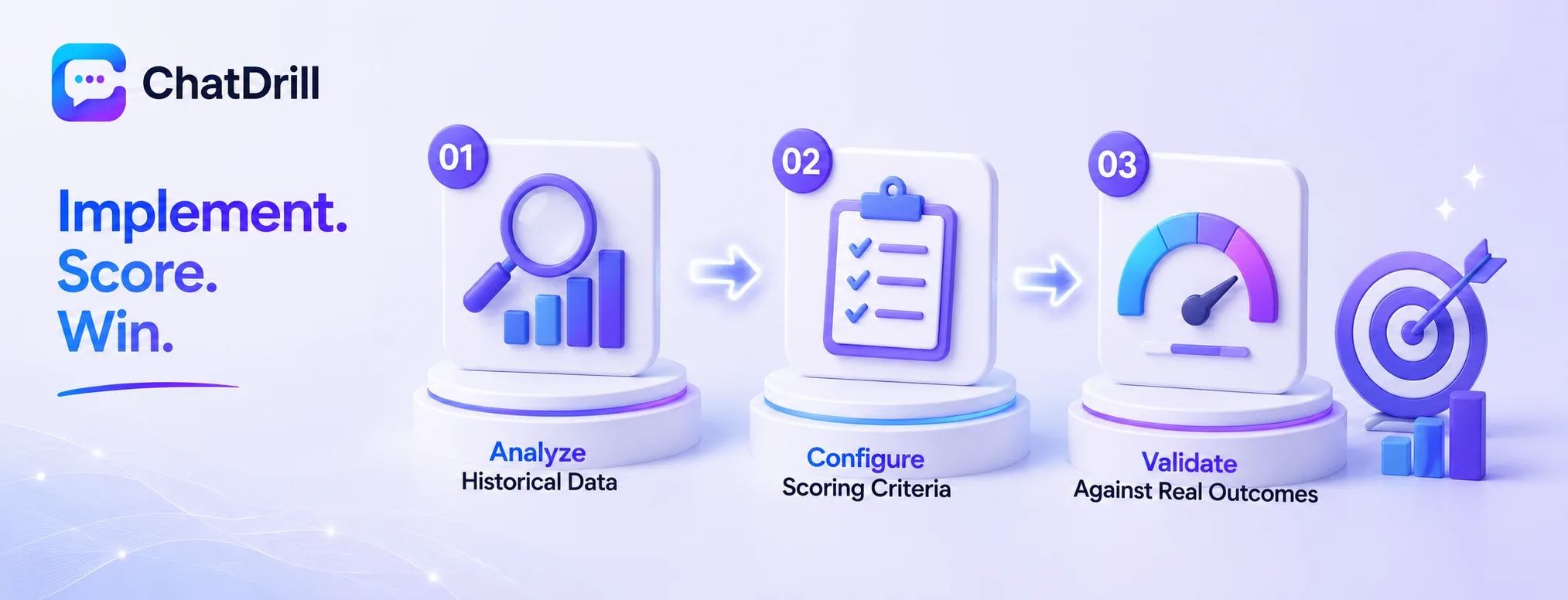
A practical implementation starts by analyzing historical conversion data, configures scoring criteria within your chat platform, and validates the model against real outcomes before relying on it to drive sales prioritization.
Step 1: Analyze historical conversion data
Reviewing chat conversations tied to your actual closed-won and closed-lost outcomes reveals genuine patterns worth building your scoring model around.
This analysis is worth doing thoroughly before configuring anything, since a scoring model built on assumption rather than real data tends to underperform.
Step 2: Configure scoring criteria
Translating your identified signals and weights into your chat platform's actual scoring configuration, wherever it supports this capability, makes the model operational.
This configuration should be reviewed by whoever manages your sales process, confirming the resulting tiers and thresholds align with how your team actually wants to prioritize.
Step 3: Validate against real outcomes
Running the scoring model for a defined period, then checking whether higher-scored leads genuinely converted at higher rates, confirms the model is working as intended.
Adjusting weights or criteria based on this validation, rather than treating the initial configuration as permanent, keeps the model improving over time.
Common Mistakes With Chat Lead Scoring
The most common mistakes are using a generic scoring template instead of signals validated against your own data, never checking whether the score actually predicts conversion, and failing to translate scores into clear sales action.
Generic, unvalidated scoring templates
Adopting a scoring model from a generic framework without validating it against your own actual conversion data risks building a system that produces plausible-looking but ultimately unreliable scores.
Grounding your scoring criteria in your own historical data from the start avoids building on an unproven foundation.
No validation against real outcomes
Deploying a scoring model and never checking whether it actually predicts conversion means you could be running an unreliable system indefinitely without realizing it.
Building in a regular validation check, comparing scored tiers against actual conversion rates, catches this before it undermines trust in the entire scoring system.
No clear action tied to scores
Generating a lead score that doesn't translate into specific, different sales behavior, faster follow-up for hot leads, for instance, wastes much of the scoring system's potential value.
Building clear, specific action expectations tied to each score tier ensures the scoring actually changes sales behavior rather than just adding a number to a record.
Refining Your Scoring Model Over Time
A scoring model should be revisited regularly, incorporating new conversion data and adjusting for changes in your product, market, or typical customer profile as your business evolves.
Regular model review
Scheduling a periodic review of scoring accuracy against actual outcomes, rather than treating the initial model as permanent, keeps the scoring genuinely reflective of what currently predicts conversion.
This review is especially important after any significant change to your product, pricing, or target customer profile, since past patterns may not hold as reliably going forward.
Incorporating sales team feedback
Regularly asking your sales team whether scored leads feel genuinely accurate in practice provides a qualitative check the raw conversion numbers alone might not fully capture.
This feedback loop helps catch scoring drift or emerging patterns before they show up clearly in aggregate conversion data.