
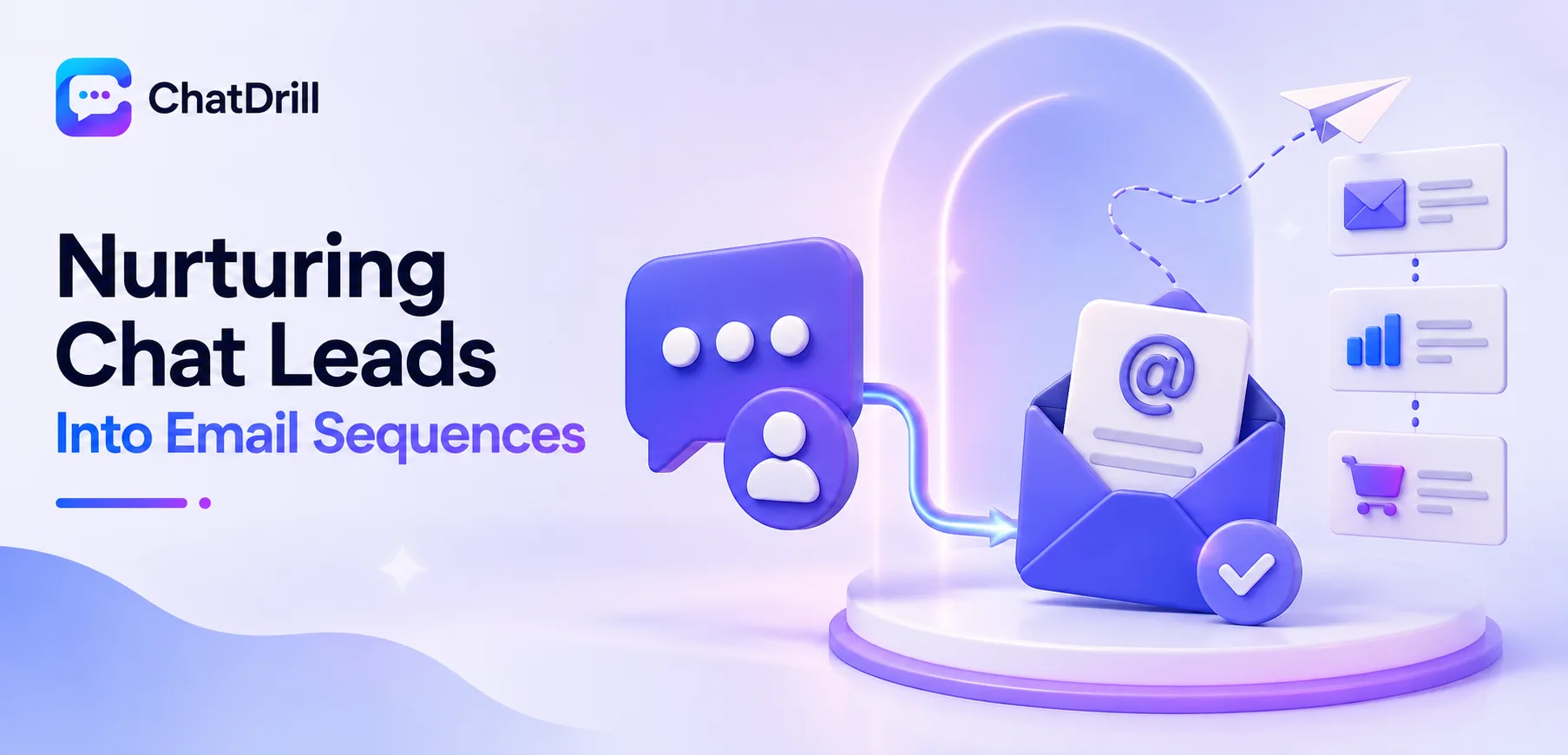
A chat conversation that doesn't convert immediately isn't necessarily a lost opportunity, but only if what was discussed feeds into a genuinely relevant follow-up rather than the lead disappearing into a generic newsletter list disconnected from their actual interest.
The value of connecting chat to email nurture comes specifically from continuity, a lead who asked about a specific feature in chat should receive email content about that feature, not a generic welcome sequence unrelated to what they actually cared about.
This requires genuine data connection between your chat platform and email tool, tagging or segmenting leads based on actual conversation content rather than treating every chat-captured lead identically.
This guide covers why continuity matters for chat-to-email nurture, how to build genuinely relevant sequences, a practical implementation approach, and mistakes worth avoiding.
Quick answer: Nurturing chat leads into email sequences means automatically enrolling a chat-qualified lead into an email flow tailored to what they actually discussed in chat, rather than a generic newsletter, so the nurture continues the specific conversation rather than starting over with unrelated content.
Why Continuity Matters for Chat-to-Email Nurture
A lead who provided real context in a chat conversation expects follow-up that reflects that context, and a generic, disconnected email sequence wastes the specificity chat already captured.
The expectation gap without continuity
A lead who discussed a specific use case or objection in chat, then receives a completely generic welcome email series, experiences a jarring disconnect that can undermine the trust built during the chat conversation.
This gap is easy to create accidentally when chat and email systems aren't genuinely connected, even if both individually work well.
What genuine continuity delivers
A nurture sequence that references or builds on what was actually discussed in chat feels like a continued conversation rather than a fresh, disconnected sales pitch.
This continuity meaningfully improves engagement with the nurture sequence itself, since the content genuinely matches what the lead has already expressed interest in.
Building Genuinely Relevant Nurture Sequences
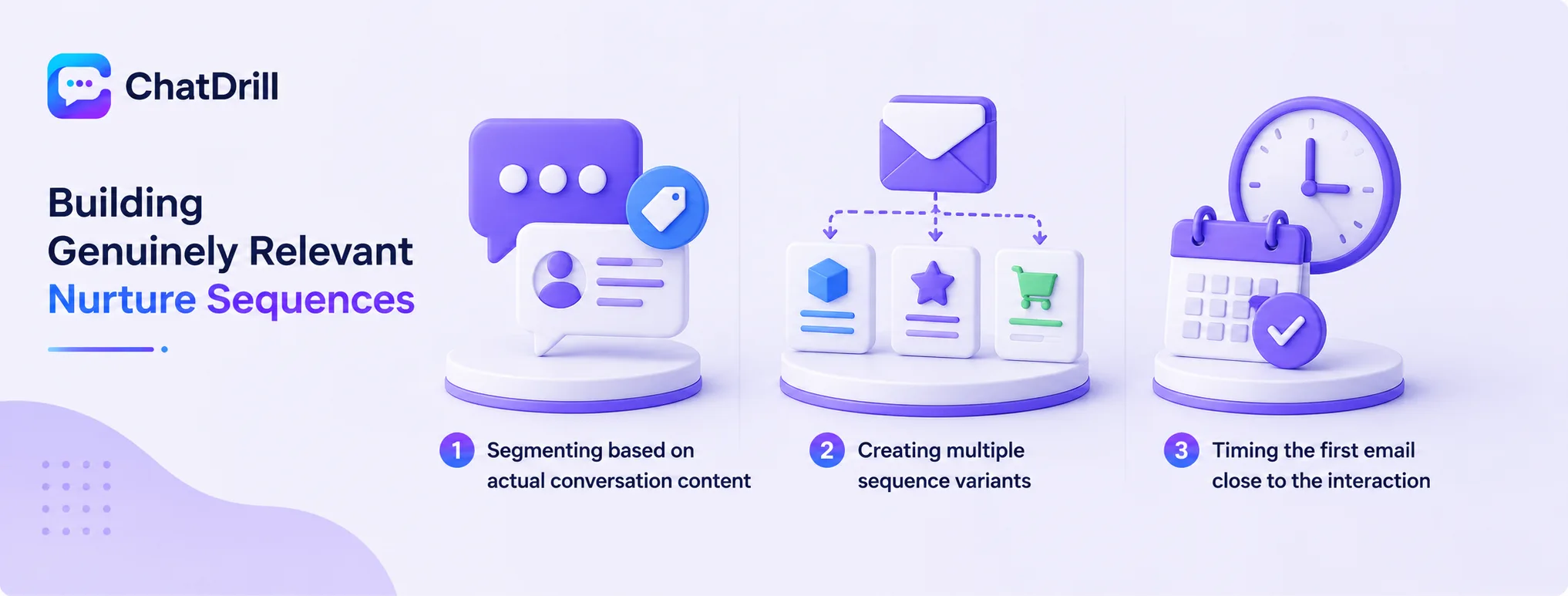
Building relevant sequences means segmenting leads based on actual chat conversation content, creating multiple sequence variants for different interest categories, and timing the first email close to the chat interaction.
Segmenting based on actual conversation content
Rather than one generic nurture sequence for every chat lead, segmenting based on what was actually discussed, a specific feature, pricing tier, or use case, enables genuinely tailored follow-up.
This segmentation requires your chat platform to pass along enough conversation context or tags to your email tool to enable this differentiation.
Creating multiple sequence variants
Building a small number of distinct nurture sequences, each tailored to a common conversation category rather than one universal flow, better matches the genuine variety of chat lead interests.
This doesn't require an unlimited number of variants, even three or four well-differentiated sequences covering your most common conversation categories delivers meaningful improvement over one generic flow.
Timing the first email close to the interaction
How soon after a chat conversation should the first nurture email send?
interaction is still fresh in the lead's mind, tends to see stronger engagement than a delayed follow-up.
This timing should still feel natural rather than instantaneous, a same-day or next-day follow-up generally strikes the right balance.
Implementation Approach for Chat-to-Email Nurture
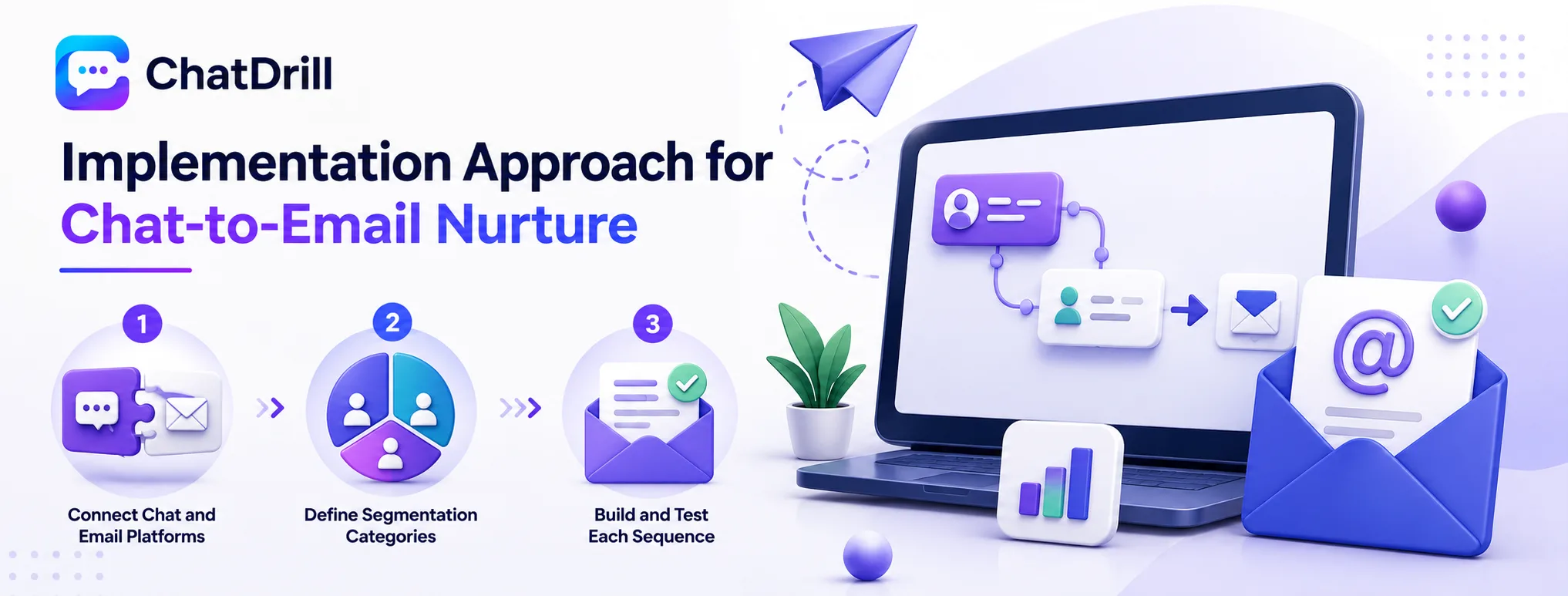
A practical implementation connects your chat and email platforms, defines your key segmentation categories based on real conversation patterns, and builds and tests sequences for each before scaling.
Step 1: Connect chat and email platforms
Integrating your chat platform with your email tool, directly or through a connecting CRM, establishes the technical foundation for passing lead data and context between systems.
This connection should be tested directly with a real test conversation, confirming the resulting email enrollment and any passed context works correctly.
Step 2: Define segmentation categories
Reviewing your actual chat conversation history to identify a manageable number of common interest categories, rather than an overly granular or overly broad segmentation, sets up practical, buildable sequences.
This step benefits from involving whoever manages your email marketing, ensuring the segmentation aligns with what's practical to build and maintain.
Step 3: Build and test each sequence
Writing genuinely tailored content for each segment, referencing the kind of conversation that would have triggered enrollment, and testing the full flow end to end before wider launch.
This testing should confirm both the enrollment logic and the actual email content feel genuinely relevant to someone who had that specific kind of chat conversation.
Common Mistakes With Chat-to-Email Nurture
The most common mistakes are enrolling every chat lead into one generic sequence, over-segmenting into too many narrow categories to maintain, and never testing whether the connected data actually passes through correctly.
One generic sequence for every lead
Enrolling every chat-captured lead into the same nurture flow regardless of what was actually discussed wastes the specificity chat already provided, missing the core value of this connection.
Even a modest, well-differentiated segmentation into a few categories delivers meaningful improvement over one universal sequence.
Over-segmenting into unmanageable categories
Creating too many narrow segmentation categories can result in a maintenance burden that's hard to sustain, with content quality suffering as the number of distinct sequences grows unwieldy.
Starting with a smaller number of well-differentiated categories, then expanding only if genuinely warranted, keeps the system maintainable.
Untested data passthrough
Assuming conversation context and segmentation data passes correctly from chat to email without testing risks leads landing in the wrong sequence or a generic default without anyone noticing.
Testing this connection directly with real test conversations before relying on it broadly catches this issue while it's still low-stakes to fix.