
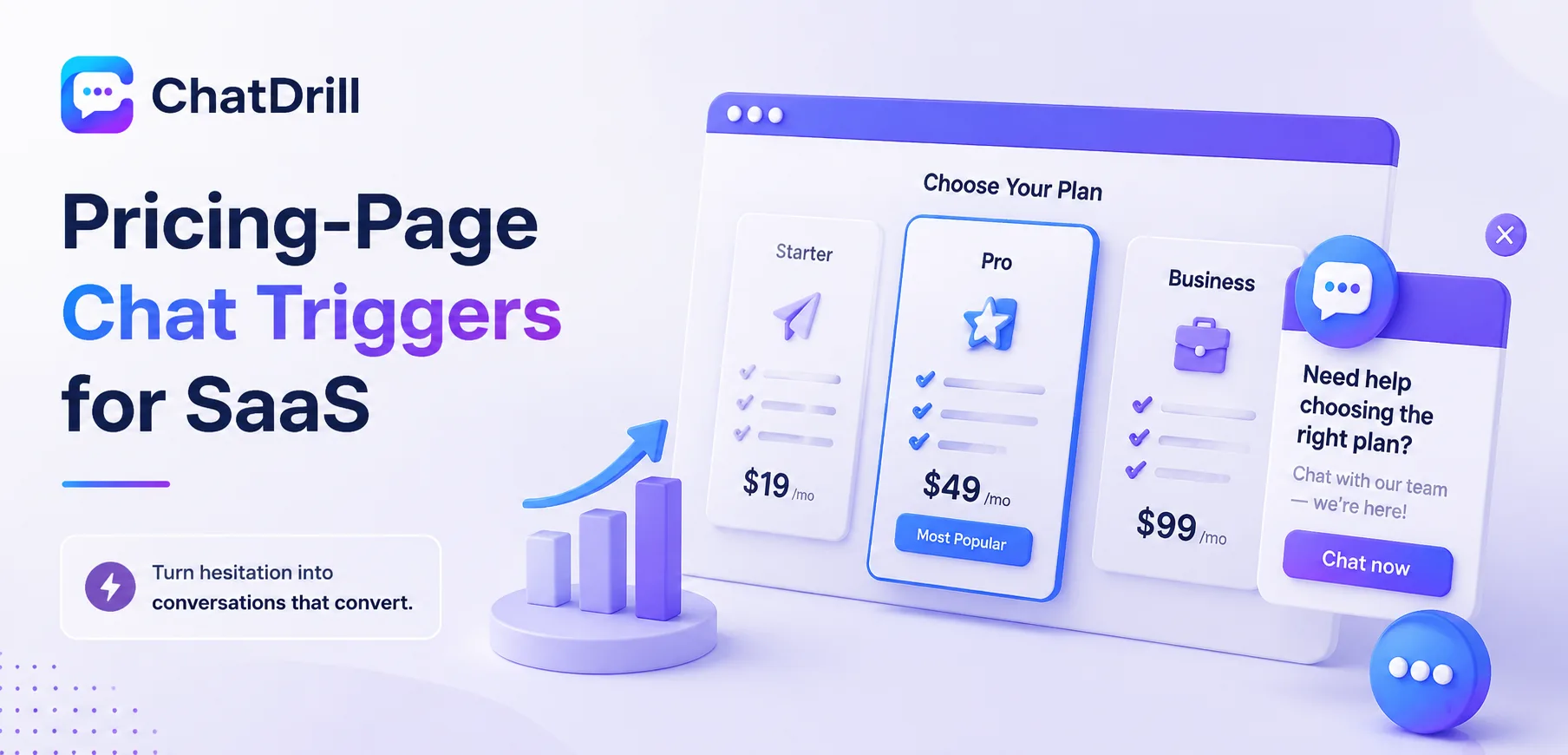
A SaaS pricing page is where genuine purchase intent concentrates more than almost anywhere else on the site, making it one of the highest-leverage places to get chat triggers right, and one of the costliest places to get them wrong.
A poorly timed or generically worded trigger on this specific page risks interrupting a prospect mid-evaluation, while a well-timed one addressing a real hesitation can be the difference between an abandoned comparison and a started trial.
Getting this right means understanding what actually causes hesitation on a pricing page specifically, unclear plan differences, an unstated but relevant limit, uncertainty about which tier fits, rather than assuming generic support questions apply here the same way they would elsewhere.
This guide covers what makes pricing-page hesitation different, how to design triggers that address it, a practical implementation approach, and mistakes worth avoiding.
Quick answer: Effective pricing-page chat triggers for SaaS fire based on genuine hesitation signals, time spent comparing plans, scrolling back and forth between tiers, rather than a fixed timer, and offer specific help with plan comparison or a common objection rather than a generic greeting.
Why Pricing-Page Hesitation Is Different
A visitor on a pricing page is typically deciding, not browsing, meaning their hesitation usually centers on specific comparison questions rather than the general product curiosity that drives visits elsewhere on the site.
The decision-stage nature of this page
A prospect on a pricing page has typically already decided the product category is relevant to them, now working through specifically which plan or tier fits their actual needs.
This decision-stage focus means triggers here should address plan-comparison specifics rather than the more general "how can I help" framing that suits an earlier-stage page.
Common, specific hesitation patterns
Uncertainty about which tier fits a specific team size, confusion about what a particular feature limit actually means in practice, and hidden costs not obvious from the pricing table itself are common, recurring hesitation patterns on SaaS pricing pages specifically.
Recognizing these as the actual, specific causes of hesitation, rather than assuming generic uncertainty, shapes more effective trigger design.
Designing Triggers That Address Real Hesitation
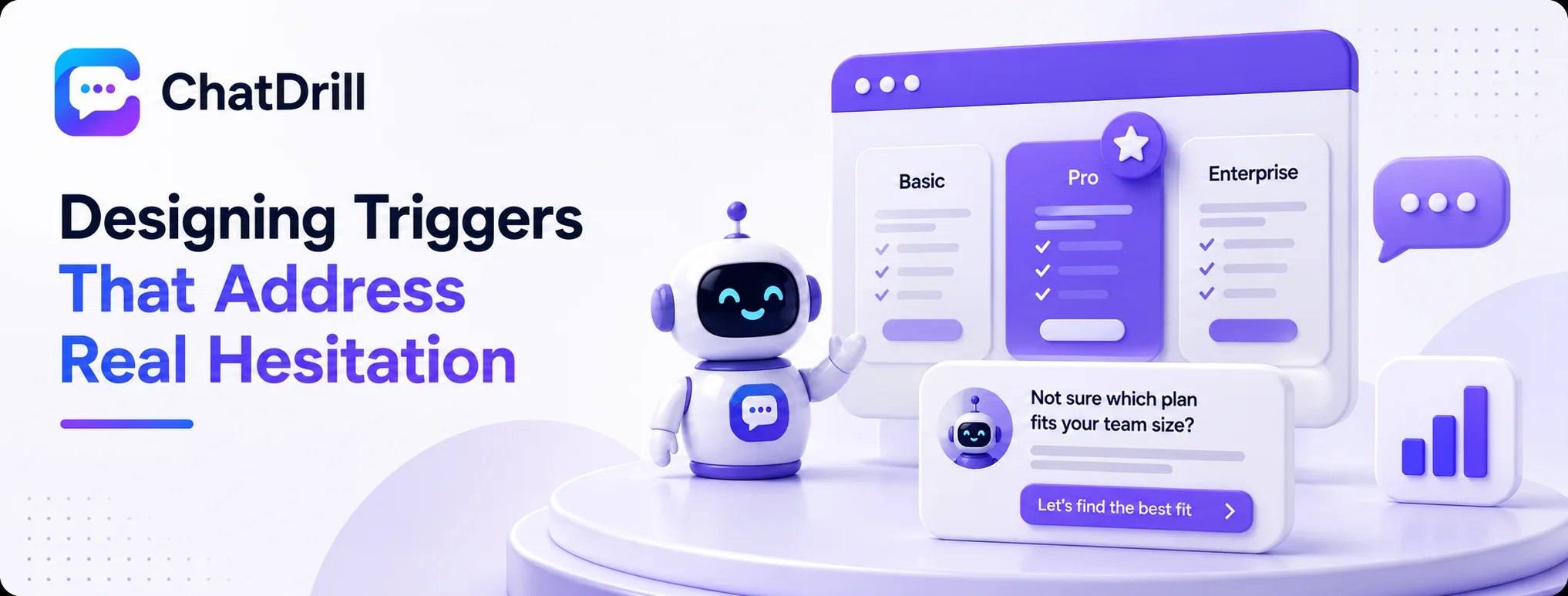
Effective pricing-page triggers fire based on genuine comparison behavior, offer help with the specific hesitation pattern most likely at play, and make it easy to get a direct, specific answer rather than a generic response.
Firing on genuine comparison behavior
Configuring a trigger to fire when a visitor scrolls back and forth between plan tiers, or spends meaningfully longer than average on the page, targets the actual behavioral signal of active comparison.
This behavioral targeting produces a more relevant, better-timed trigger than a fixed timer applied without regard to what the visitor is actually doing.
Addressing specific hesitation patterns directly
A trigger message referencing plan comparison specifically, "Not sure which plan fits your team size?", addresses a genuine hesitation more directly than a generic "Need help?"
prompt.
This specificity signals the offer is actually relevant to what the visitor is doing, rather than a generic script running regardless of page context.
Enabling a direct, specific answer
Training AI on your actual plan differences, feature limits, and common tier-selection questions ensures the trigger leads to a genuinely useful conversation, not just an engagement without real resolution.
This training investment is what actually converts the trigger's initial engagement into resolved hesitation and, ideally, a started trial or purchase.
Implementation Approach for Pricing-Page Triggers
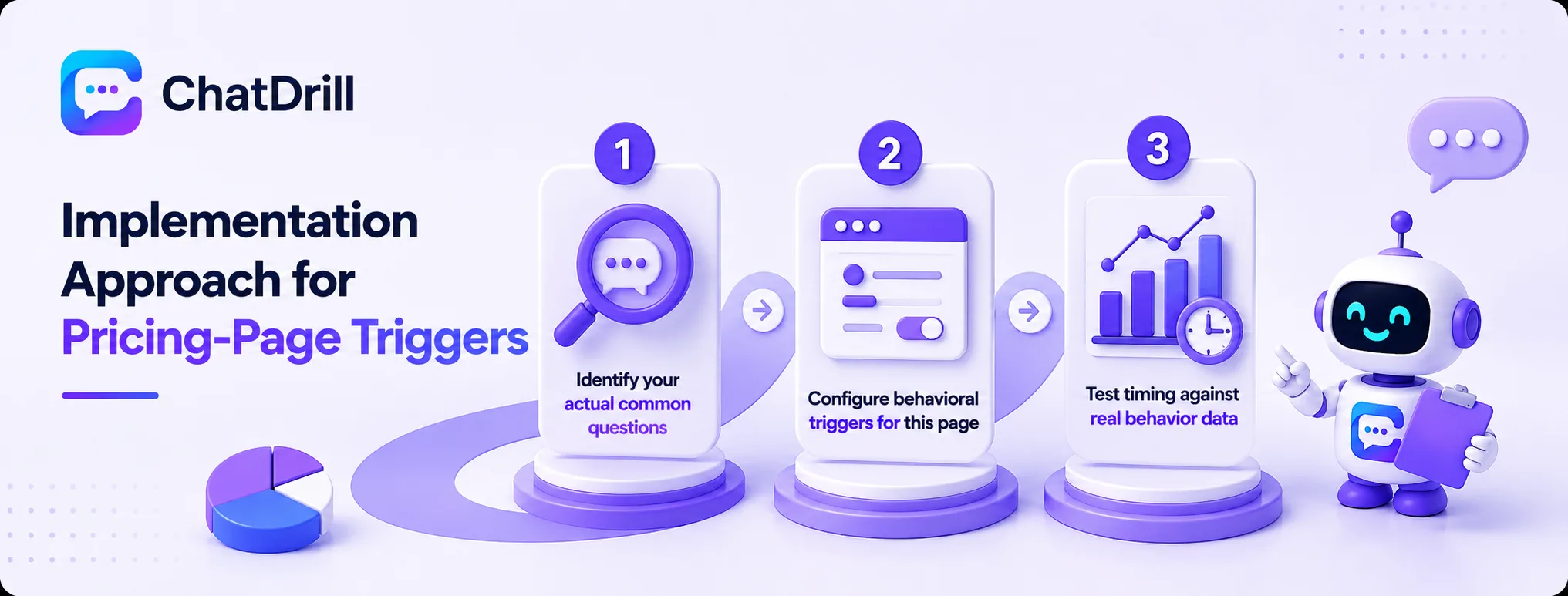
A practical implementation starts by identifying your actual common pricing-page questions, configures behavioral triggers specifically for this page, and tests trigger timing against your real visitor behavior data.
Step 1: Identify your actual common questions
Reviewing past chat conversations and support tickets specifically related to pricing reveals the genuine, recurring questions worth addressing proactively through a trigger.
This grounding in real data produces more relevant trigger messaging than assuming generic SaaS pricing hesitations apply universally to your specific product.
Step 2: Configure behavioral triggers for this page
Setting up a trigger specifically for the pricing page, distinct from your site's general trigger logic, based on time spent and scroll behavior particular to plan comparison, targets this page's specific dynamics.
This page-specific configuration is worth the extra setup effort given how much value concentrates on this particular page for a SaaS business.
Step 3: Test timing against real behavior data
Reviewing actual visitor behavior data for your pricing page, typical time spent, scroll patterns, before finalizing trigger timing ensures the configuration matches real visitor behavior rather than a generic assumption.
Adjusting trigger timing based on genuine engagement patterns, rather than a one-size-fits-all default, improves how naturally the trigger lands.
Common Mistakes With Pricing-Page Triggers
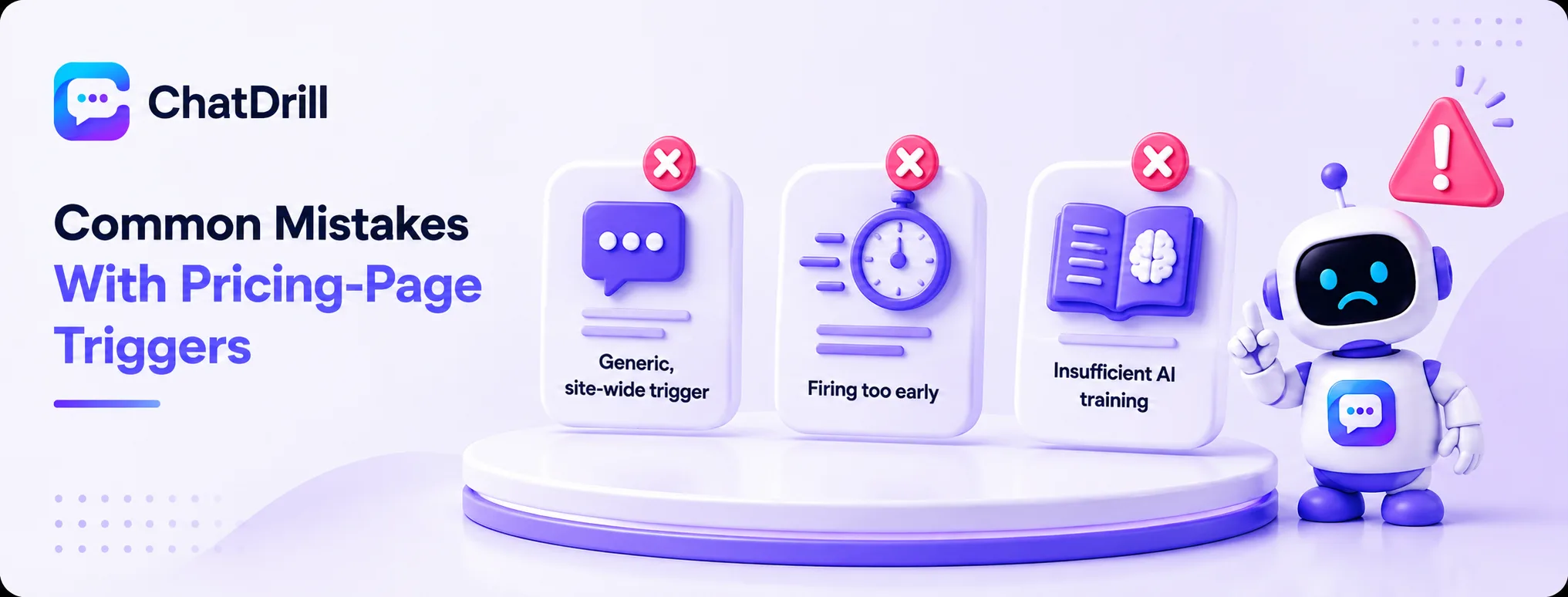
The most common mistakes are using the same generic trigger as the rest of the site, firing too early before genuine comparison behavior, and failing to train AI on the specific plan details needed to actually resolve hesitation.
Using a generic, site-wide trigger
Applying the same trigger logic and messaging used elsewhere on the site to the pricing page misses the opportunity to address this page's genuinely distinct, higher-stakes hesitation patterns.
A pricing-page-specific trigger, configured separately from general site behavior, tends to perform meaningfully better given how different this page's visitor intent typically is.
Firing before genuine comparison behavior
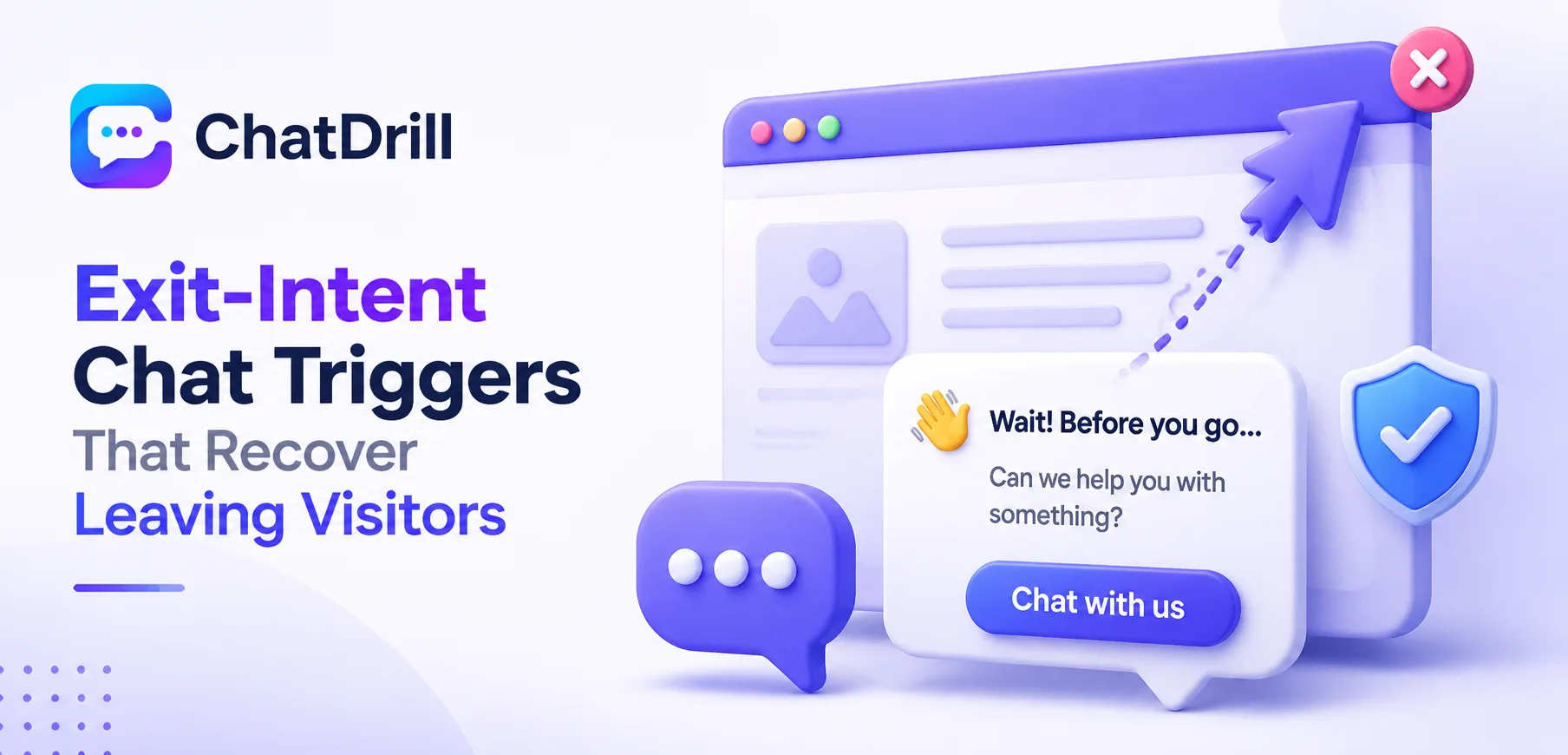
A trigger that fires the instant someone lands on the pricing page, before they've had a chance to actually compare tiers, interrupts the evaluation process rather than supporting it at a genuinely useful moment.
Waiting for a real behavioral signal, meaningful time or scroll pattern, respects the visitor's actual evaluation process better than an immediate, generic prompt.
Insufficient AI training on plan details
A trigger that successfully engages a hesitating visitor, only for AI to give a vague or generic answer about plan differences, wastes the value of good trigger timing entirely.
Investing in genuinely detailed, accurate plan-comparison training content ensures the engagement actually resolves hesitation rather than just starting an unhelpful conversation.
Measuring Pricing-Page Chat Performance
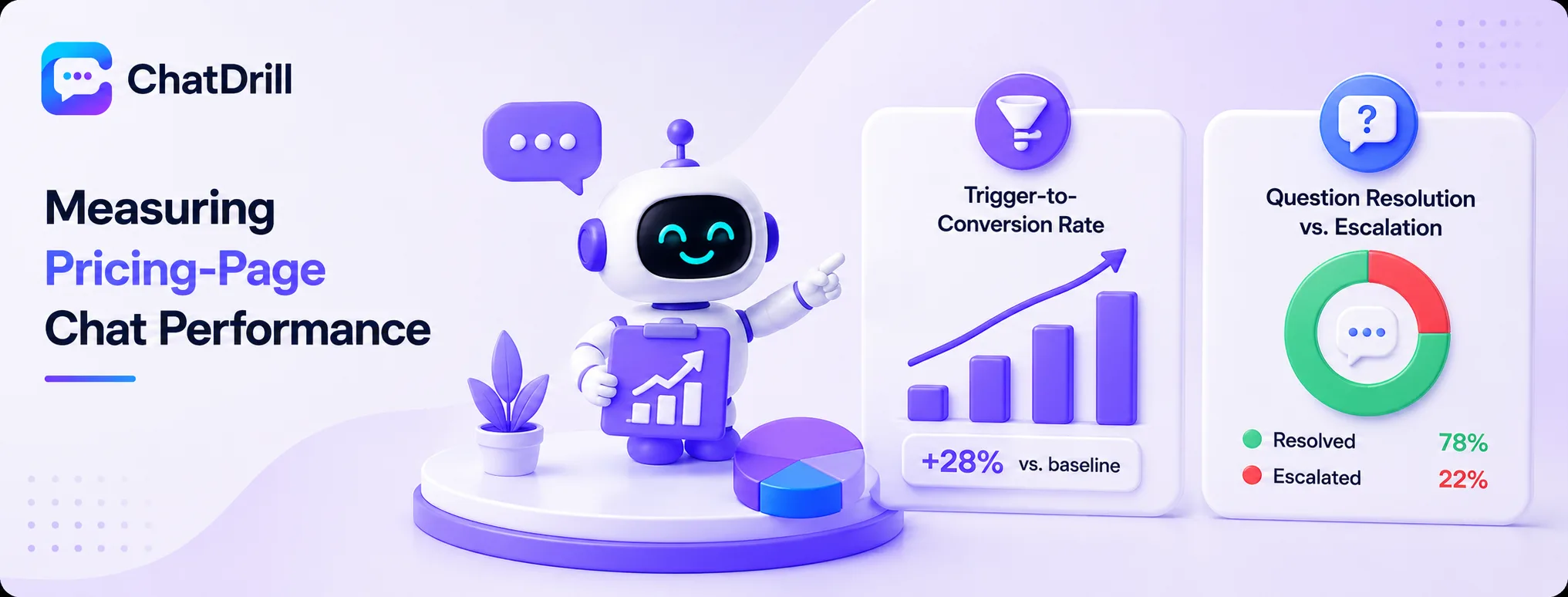
Tracking trigger-to-trial or trigger-to-purchase conversion, alongside the specific questions AI resolves versus escalates, reveals whether your pricing-page setup is genuinely reducing hesitation.
Trigger-to-conversion rate
Tracking what share of triggered pricing-page conversations result in an actual trial signup or purchase quantifies this trigger's direct contribution to your SaaS conversion funnel.
Comparing this against your baseline pricing-page conversion rate without chat engagement reveals the genuine incremental value the trigger is providing.
Question resolution versus escalation
Tracking which specific plan-comparison questions AI resolves confidently versus escalates to a human reveals gaps in your current training content worth addressing.
A consistently high escalation rate on a specific, recurring question signals a training gap worth closing directly rather than continuing to route that question to a human indefinitely.