
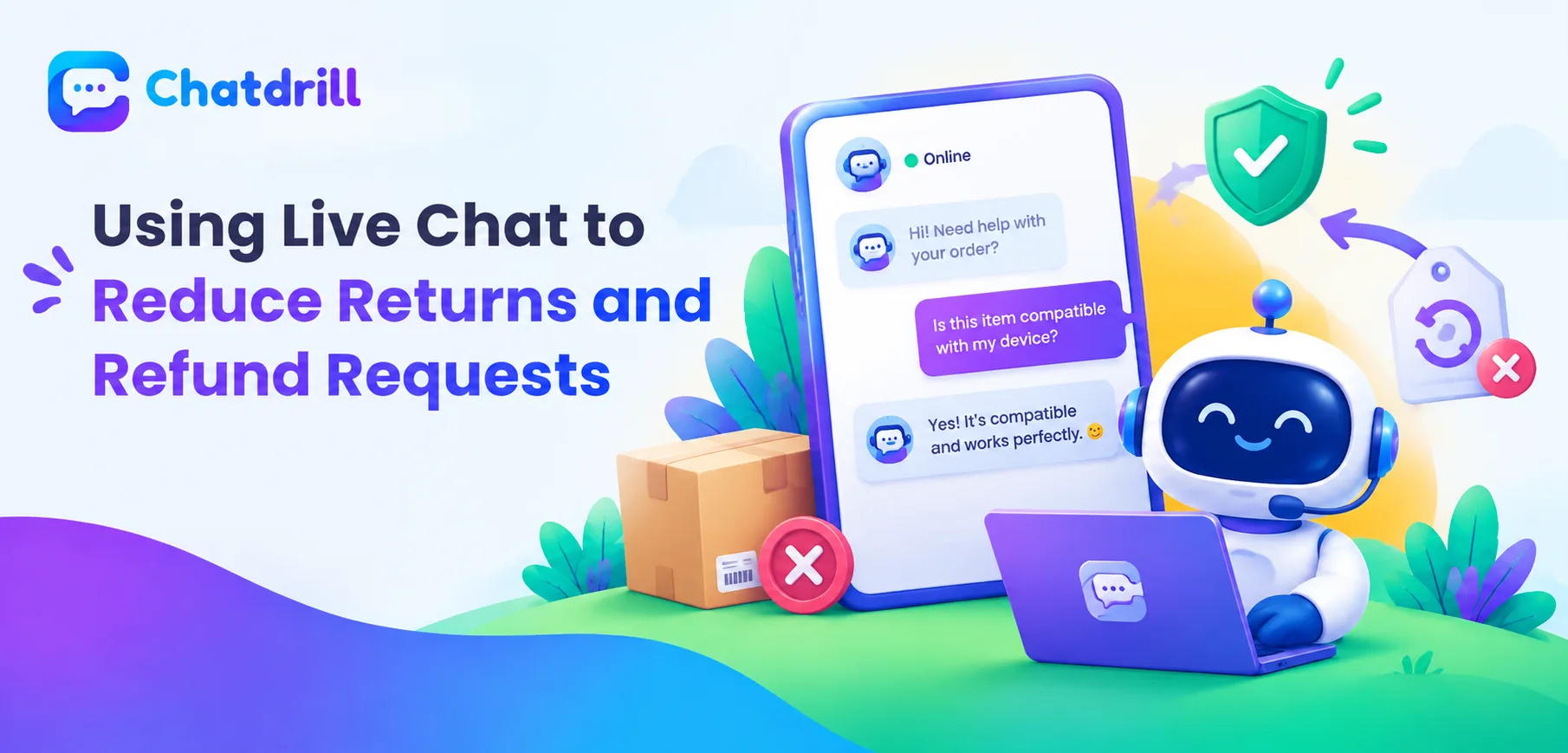
A meaningful share of returns and refund requests trace back to a preventable mismatch between expectation and reality, a size that ran differently than expected, a feature that wasn't fully understood, gaps live chat is specifically well positioned to close.
Quick answer: Live chat reduces returns and refund requests by answering genuine pre-purchase questions that prevent a mismatched expectation in the first place, and by offering a troubleshooting or exchange alternative at the moment a customer initiates a return, since many returns stem from a solvable issue rather than a genuinely unwanted product.
The opportunity works at two distinct points: preventing the mismatch before purchase through better pre-purchase answers, and offering a genuine alternative at the moment a return is being considered rather than immediately processing it.
Understanding both intervention points, and the specific tactics that work at each, helps a business meaningfully reduce return volume without creating a frustrating, restrictive return experience for customers who genuinely need one.
This guide covers the two-point reduction mechanism, specific tactics for each, common mistakes, measuring the actual impact, and how ChatDrill supports return reduction efforts.
The Two-Point Reduction Mechanism
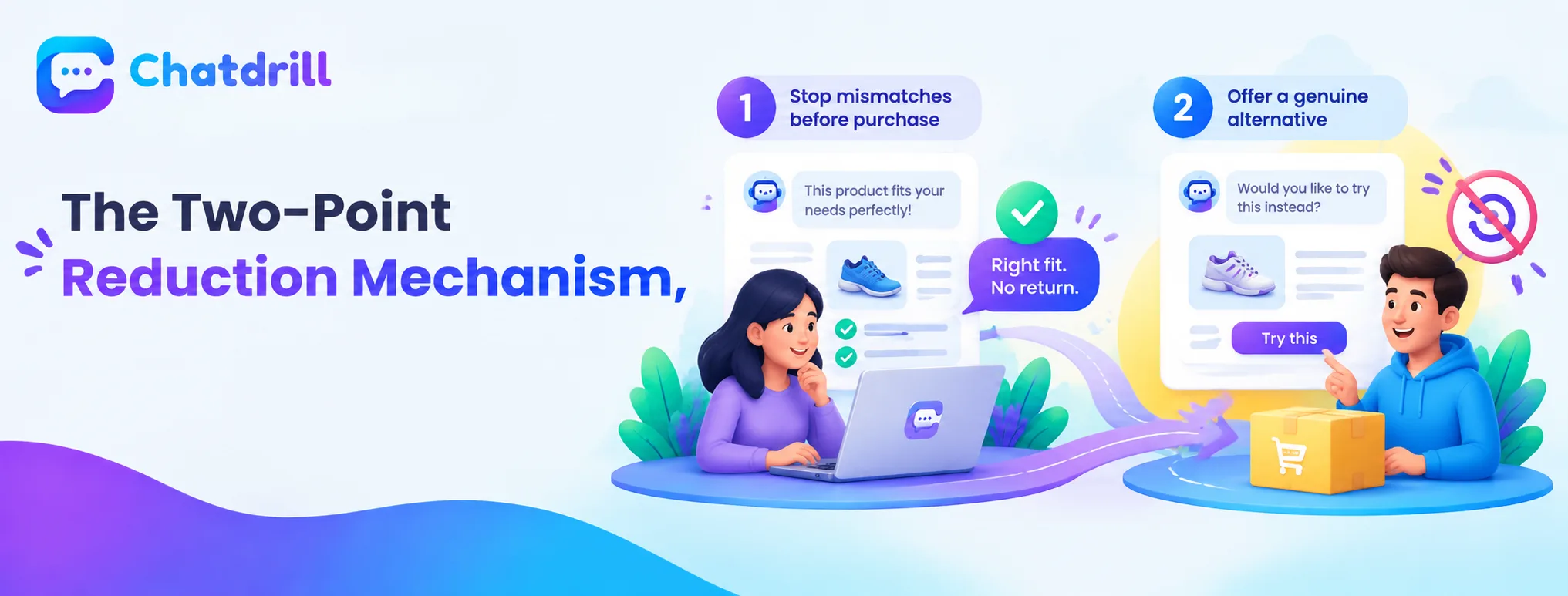
Chat reduces returns by preventing expectation mismatches before purchase and by offering a genuine alternative at the moment a return is being considered.
Preventing mismatches before purchase
A visitor with a genuine pre-purchase question about sizing, material, or compatibility who gets an accurate, specific answer is considerably less likely to receive a product that doesn't match their actual expectation, directly reducing the resulting return likelihood.
This preventive mechanism connects directly to chat's broader pre-purchase hesitation-resolution role, applied specifically to the questions most likely to prevent a genuine future return.
AI trained accurately on product specifications and sizing details can catch this preventive opportunity consistently, at scale, rather than depending on whether a knowledgeable human happens to be available at that exact moment.
Offering an alternative at the return-initiation moment
A customer initiating what looks like a straightforward return often has a specific, solvable problem, a sizing issue solvable through exchange, a usage question solvable through troubleshooting, that chat can surface and address before defaulting straight to a refund.
This intervention respects that not every return is genuinely final, some represent a solvable problem the customer simply hasn't had a chance to raise yet.
Specific Tactics for Each Intervention Point
Accurate, detailed pre-purchase AI training and a genuine troubleshooting offer before processing a return both meaningfully reduce return volume.
Accurate, detailed pre-purchase information
Training your chat AI with genuinely detailed, accurate product information, exact measurements, material composition, compatibility specifics, directly reduces the informational gaps that lead to a mismatched purchase and eventual return.
This investment in detailed accuracy pays off disproportionately for products with historically higher return rates, where a specific, correctable information gap likely explains much of that elevated rate.
A genuine troubleshooting offer before processing a return
Configuring the return-initiation chat flow to first offer a brief troubleshooting conversation, "before we process this, is there a specific issue we might be able to help resolve?", surfaces the solvable-problem returns this guide identifies as a genuine reduction opportunity.
This offer should feel genuinely helpful rather than an obstacle to processing a return the customer has already decided they want, a distinction covered further in this guide's common-mistakes section.
Common Mistakes That Undermine Return Reduction
Making the troubleshooting offer feel like an obstacle rather than genuine help, and
Providing inaccurate information to avoid losing a sale
this effort.
Making troubleshooting feel like an obstacle
If the troubleshooting offer feels like a delay tactic designed to avoid processing a legitimate return, rather than genuine help, it damages trust and can push an otherwise satisfied customer toward frustration.
Framing the offer genuinely, and processing the return promptly and without friction if the customer isn't interested in troubleshooting, preserves the positive experience even when the specific reduction tactic doesn't succeed.
Providing inaccurate information to avoid losing a sale Downplaying a genuine product limitation or providing an overly optimistic answer to close a sale in the moment directly increases the likelihood of an eventual return once the customer discovers the actual reality.
Honest, accurate pre-purchase information, even when it means a visitor decides not to purchase, produces a better long-term outcome than a sale secured through information that doesn't hold up.
Measuring the Actual Return Reduction Impact
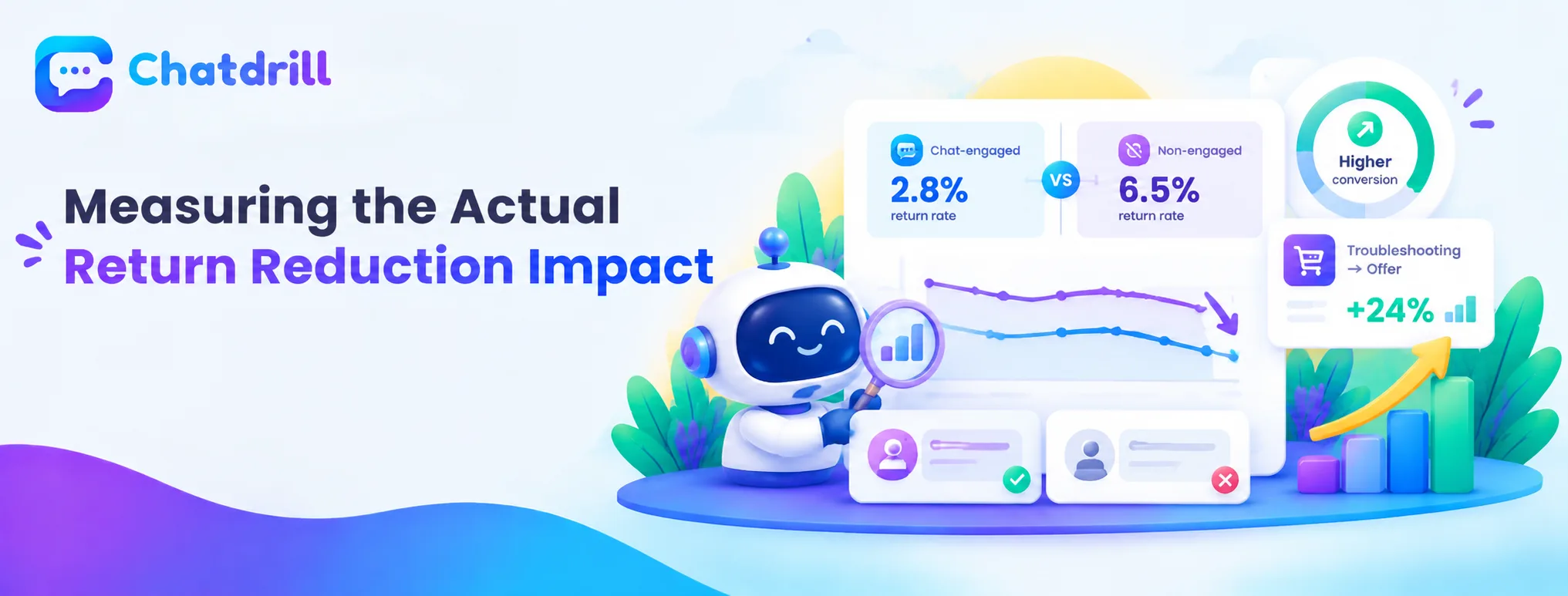
Comparing chat-engaged versus non-engaged return rates
tracking troubleshooting-offer conversion, reveals the genuine impact of these tactics.
Comparing chat-engaged versus non-engaged return rates Tracking whether purchases involving a genuine pre-purchase chat interaction show a lower eventual return rate than purchases without one provides direct evidence of the preventive mechanism's real effect.
This comparison should specifically isolate genuine informational chat interactions from unrelated ones, ensuring the measurement reflects the actual mechanism this guide describes.
Tracking troubleshooting-offer conversion specifically
Measuring what percentage of customers who receive a troubleshooting offer end up not needing the return after all reveals the genuine, direct effectiveness of this specific intervention.
This targeted tracking helps refine the troubleshooting approach itself, informing whether the current offer and process are genuinely working or need further adjustment.