
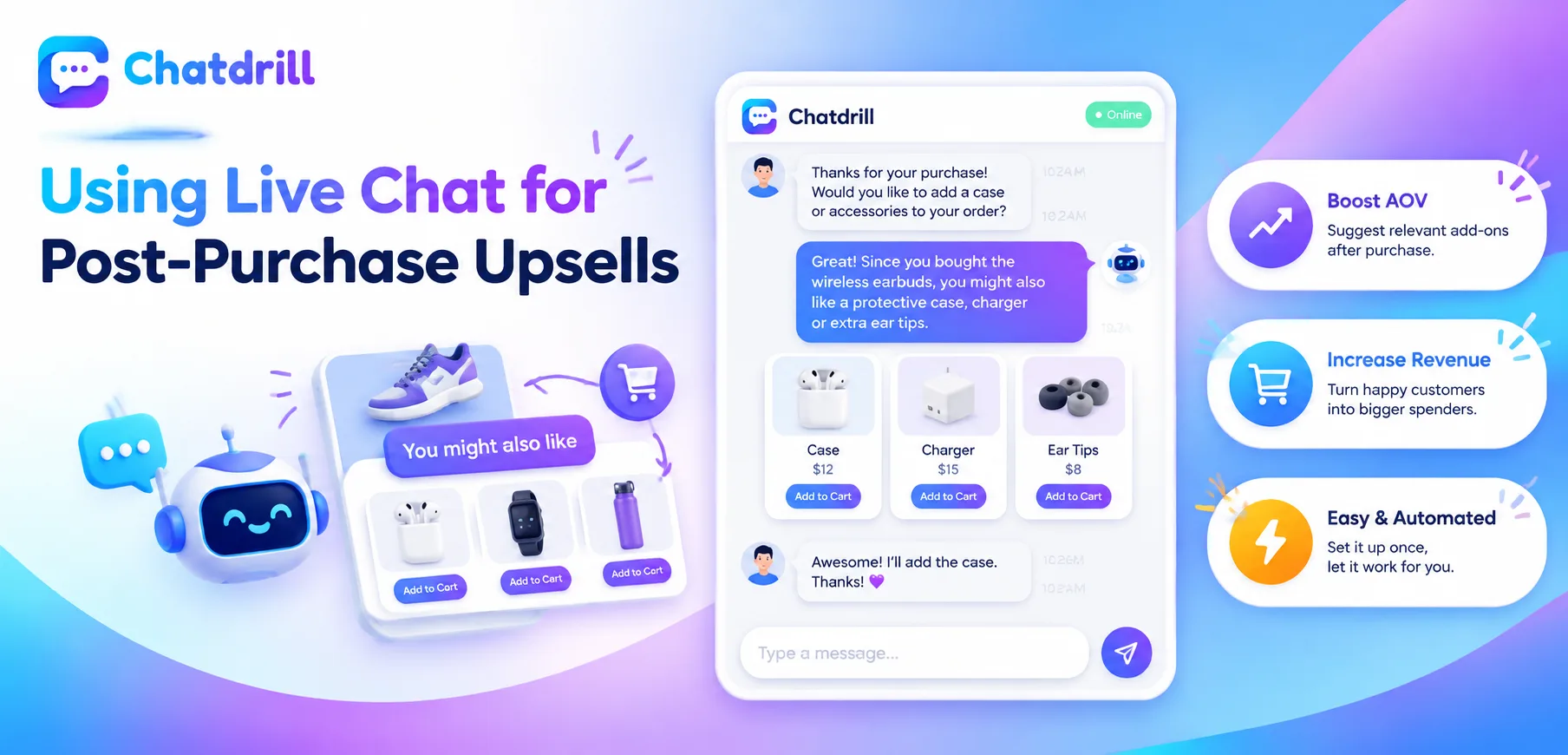
A customer who has just completed a purchase represents a genuinely distinct upsell opportunity from one still deciding whether to buy at all, already committed and often receptive to a relevant complementary suggestion at the right moment.
Quick answer: Live chat supports post-purchase upsells by reaching out at a natural moment after the initial purchase, like order confirmation or first use, with a genuinely relevant complementary suggestion, capturing incremental revenue from an already-committed customer without the friction of a pre-purchase upsell attempt.
Live chat's real-time, conversational nature makes it well suited to this post-purchase moment, delivering a suggestion that feels like genuine, helpful guidance rather than the more transactional feel of an automated post-purchase email.
Understanding the specific moments and tactics that work best for post-purchase upselling, distinct from pre-purchase upselling, helps a business capture this genuine additional revenue opportunity without damaging the customer's positive post-purchase experience.
This guide covers the mechanism behind post-purchase upsells, specific timing and tactics, common mistakes, measuring the actual impact, and how ChatDrill supports post-purchase upsell conversations.
The Mechanism Behind Post-Purchase Upsells
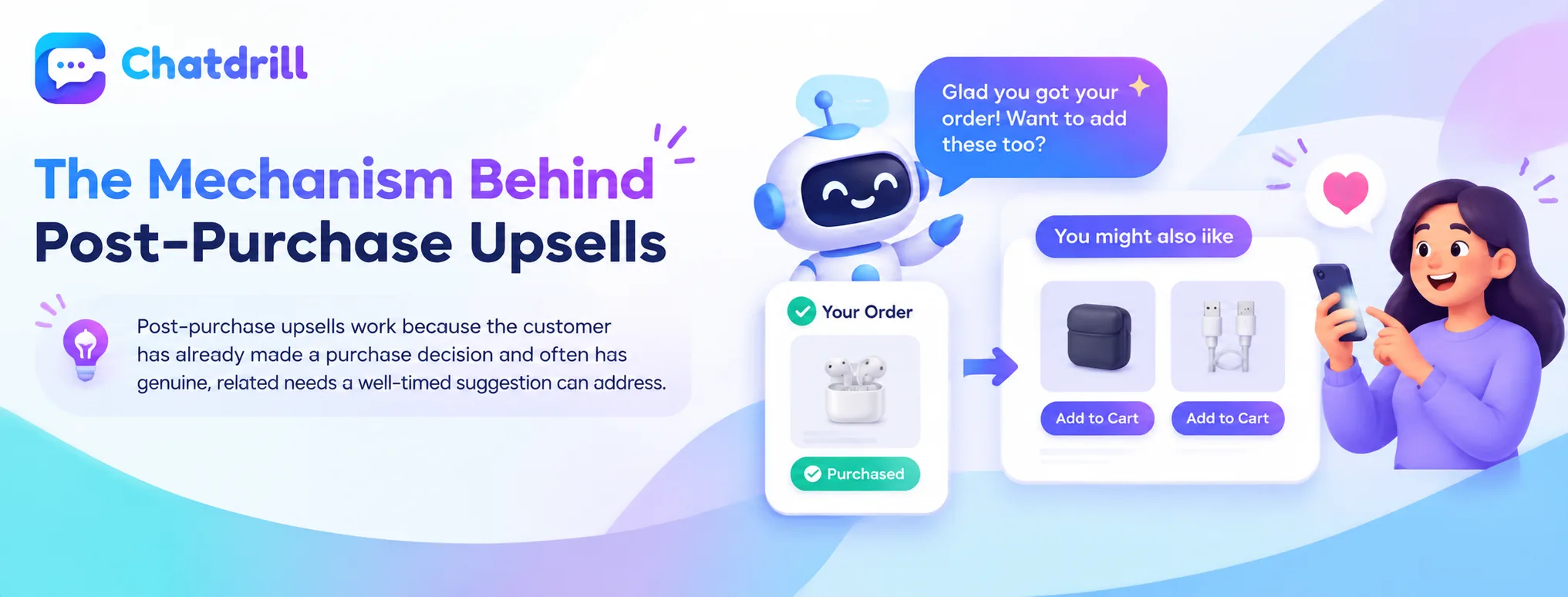
Post-purchase upsells work because the customer has already made a purchase decision and often has genuine, related needs a well-timed suggestion can address.
Why post-purchase differs from pre-purchase upselling
A customer who has just purchased has already resolved their core purchase decision, meaning a complementary suggestion doesn't compete with or complicate that original decision the way a pre-purchase upsell attempt might.
This distinction matters for tone, a post-purchase suggestion can feel like genuine, helpful guidance for getting the most from a purchase already made, rather than a sales pitch layered onto an still-undecided customer.
The customer's demonstrated willingness to spend, evidenced by the purchase they just completed, also suggests genuine openness to a relevant, well-matched additional purchase at this specific moment.
Why chat outperforms a generic post-purchase email
A conversational chat suggestion feels more personal and immediate than a generic, templated post-purchase email, which often gets treated as routine marketing rather than genuinely relevant, timely guidance.
Chat also allows for genuine back-and-forth if the customer has a question about the suggested complementary item, something a one-directional email simply can't accommodate.
Specific Timing and Tactics for Post-Purchase Upsells
Timing the suggestion to a natural moment, like order confirmation or first product use, and connecting it directly to the original purchase both improve relevance and conversion.
Timing suggestions to natural moments
The order confirmation moment, or shortly after a product's expected first-use timing, both represent natural points where a related suggestion feels like a genuinely relevant, well-timed continuation of the purchase experience rather than an unrelated interruption.
This timing consideration mirrors the broader principle that a suggestion's relevance depends heavily on when it arrives relative to the customer's actual experience and mindset.
Connecting suggestions directly to the original purchase
"Since you just picked up [product], many customers also find [complementary item] genuinely useful alongside it, want to add it to a follow-up order?" explicitly connects the suggestion to the original purchase, making the relevance immediately clear.
This explicit connection helps the suggestion feel like genuinely helpful, contextual guidance rather than a generic upsell attempt disconnected from what the customer actually just bought.
Common Mistakes in Post-Purchase Upselling
Suggesting something genuinely unrelated to the original purchase, and reaching out too soon before the customer has even received their original order, are common mistakes.
Suggesting something genuinely unrelated
A post-purchase suggestion with no clear, logical connection to what the customer just bought feels like generic, automated cross-selling rather than the genuinely helpful guidance this guide's tactics aim to provide.
Ensuring suggestions reflect real, logical complementary relationships, as covered in this guide's tactics section, directly avoids this specific, relevance-damaging mistake.
Reaching out before the original order even arrives
Suggesting an add-on before a customer has even received their original purchase can feel presumptuous or oddly timed, since they haven't yet had the chance to experience the product that would make a complementary suggestion genuinely relevant.
Timing the outreach appropriately, around actual delivery or expected first use rather than immediately after checkout, respects the customer's actual experience timeline.
Measuring the Actual Post-Purchase Upsell Impact
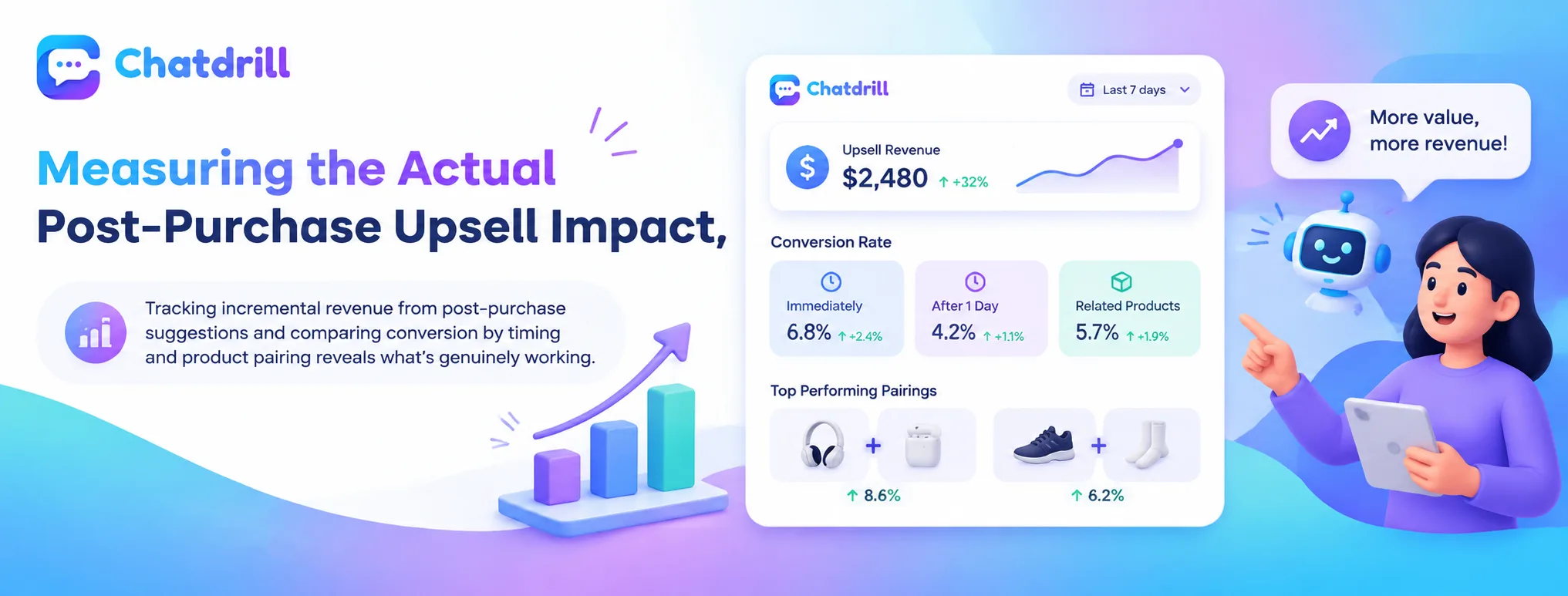
Tracking incremental revenue from post-purchase suggestions and comparing conversion by timing and product pairing reveals what's genuinely working.
Tracking genuine incremental revenue
Measuring the total additional revenue generated specifically through post-purchase chat suggestions, tracked separately from the original purchase revenue, quantifies this tactic's genuine, direct contribution to overall business results.
This tracking helps justify continued investment in post-purchase upsell tactics by connecting the effort directly to measurable, incremental revenue.
Comparing conversion by timing and pairing
Reviewing which specific timing windows and product pairings produce the highest conversion reveals where your genuine strength lies, informing where to expand or refine your post-purchase upsell approach going forward.
This comparative view produces more actionable insight than a single, blended overall conversion metric that doesn't reveal which specific tactics are actually driving the results.