
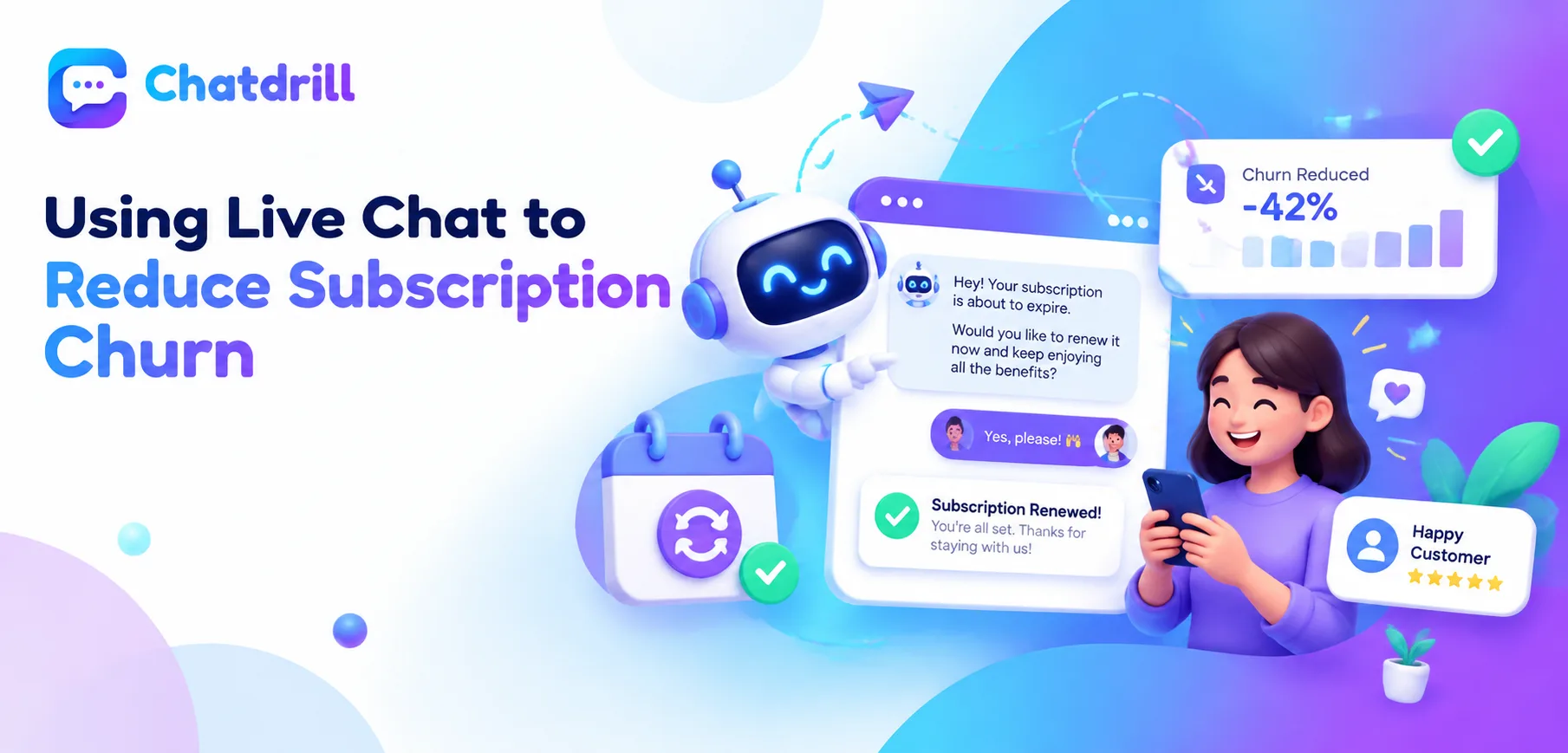
Subscription churn often has visible warning signs well before an actual cancellation, declining usage, an unresolved support issue, a stated frustration, moments where live chat can intervene meaningfully before the decision to leave becomes final.
Quick answer: Live chat reduces subscription churn by identifying early signals of disengagement or frustration and intervening proactively before a customer formally cancels, and by making the cancellation flow itself an opportunity to understand and potentially address the underlying reason, rather than simply processing the cancellation immediately.
The opportunity works at two points: proactive intervention when disengagement signals appear, and a genuine, understanding-focused conversation at the actual cancellation moment rather than immediate, frictionless processing.
Understanding both intervention points, and the specific tactics that work at each without feeling manipulative or obstructive, helps a business meaningfully reduce churn while still respecting a customer's genuine decision to leave when that's truly their choice.
This guide covers the two-point churn reduction mechanism, specific tactics for each, common mistakes, measuring the actual impact, and how ChatDrill supports churn reduction efforts.
The Two-Point Churn Reduction Mechanism
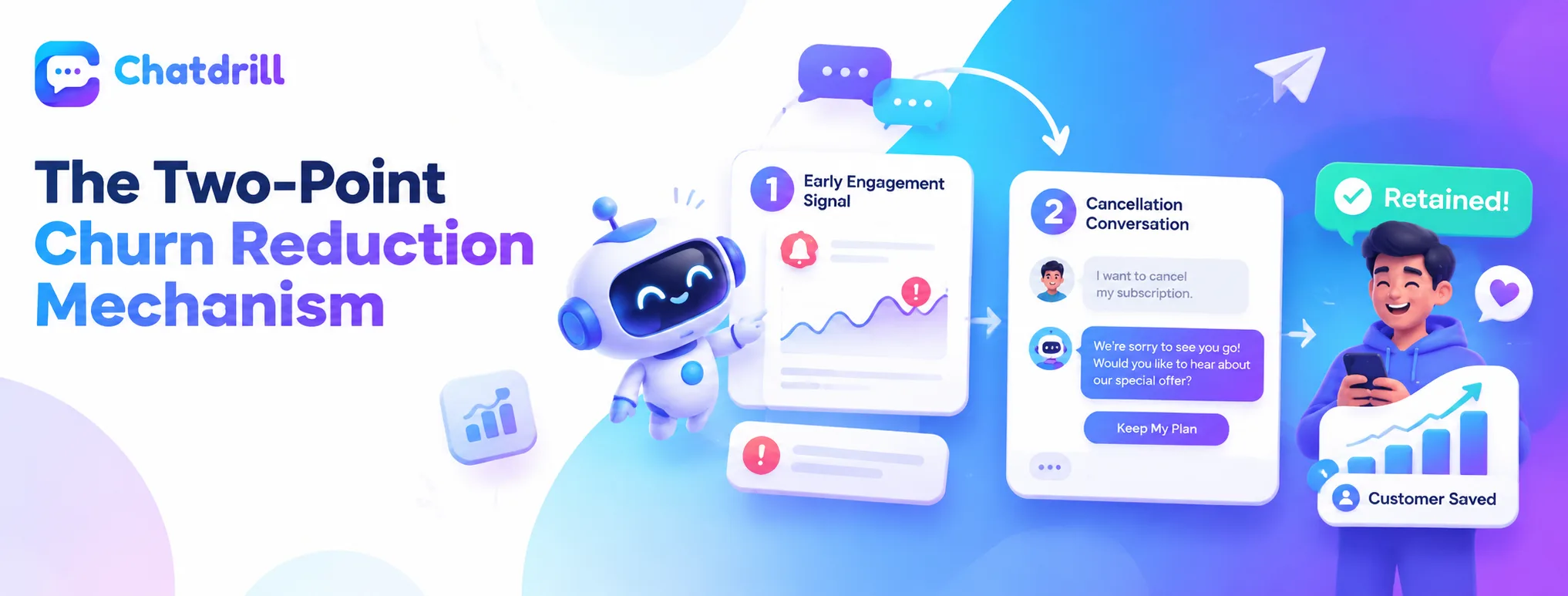
Chat reduces churn by proactively intervening on early disengagement signals and by turning the cancellation moment into a genuine understanding conversation.
Proactive intervention on early disengagement signals
A customer showing declining usage, an unresolved recurring issue, or expressed frustration in a support conversation is exhibiting a genuine, identifiable warning sign well before an actual cancellation decision, a window where proactive chat outreach can meaningfully change the trajectory.
Intervening at this early stage, before the customer has mentally committed to leaving, tends to be considerably more effective than any conversation happening only after they've already decided to cancel.
AI-assisted monitoring can systematically flag these disengagement signals across your full customer base, catching early warning signs a purely manual review process would likely miss at scale.
The cancellation moment as a genuine understanding opportunity
Rather than processing a cancellation immediately and frictionlessly, a brief, genuine chat conversation asking what led to the decision can surface a specific, addressable issue the customer hadn't otherwise had a chance to raise.
This isn't about creating obstruction, a respectful, low-pressure conversation that still processes the cancellation promptly if the customer confirms their decision, but rather about capturing the genuine opportunity a direct conversation provides.
Specific Tactics for Each Intervention Point
Training AI to recognize genuine disengagement patterns and designing a respectful, non-obstructive cancellation-flow conversation both improve churn reduction.
Training AI to recognize genuine disengagement patterns
Configuring your systems to flag customers showing a specific combination of declining usage and any recent negative support interaction, rather than either signal alone, produces more accurate, actionable disengagement identification.
This combined-signal approach reduces false positives that would otherwise trigger unnecessary outreach to customers who are actually doing fine despite one isolated signal.
Designing a respectful cancellation-flow conversation
"Before we process this, would you mind sharing what led to this decision? We'd love the chance to help if there's something we can fix." invites genuine feedback without creating an obstacle to the cancellation itself proceeding if the customer confirms their decision.
This respectful framing, offering to help without demanding justification, tends to produce more honest, useful responses than a cancellation flow that feels like it's actively trying to prevent the customer from leaving.
Common Mistakes That Undermine Churn Reduction
Making the cancellation flow feel obstructive rather than genuinely helpful, and intervening too late after a customer has already fully decided to leave, both limit effectiveness.
Making cancellation feel obstructive
A cancellation flow requiring multiple steps or aggressive retention offers before actually processing the cancellation risks damaging the customer's final impression of the business, potentially affecting whether they'd ever consider returning or recommending the business to others.
Respecting the customer's stated decision, while still offering the genuine understanding conversation this guide describes, protects this final impression even when retention specifically doesn't succeed.
Intervening too late in the disengagement process
Waiting until a customer has already reached the cancellation page to have any meaningful conversation misses the earlier, more effective intervention window this guide identifies as available when disengagement signals first appear.
Proactive, early intervention, before the customer has mentally committed to leaving, produces meaningfully better retention results than a conversation happening only at the final cancellation moment.
Measuring the Actual Churn Reduction Impact
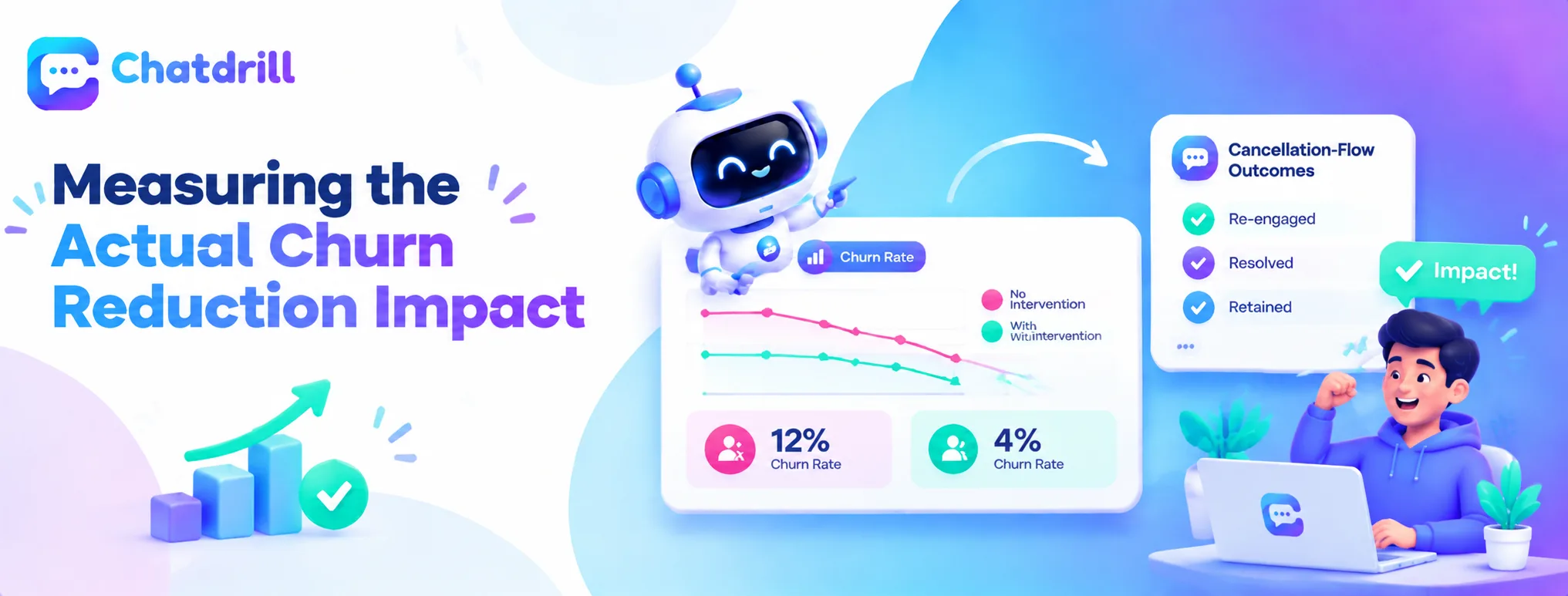
Comparing churn rates for customers who received proactive intervention against those who didn't, and tracking cancellation-flow conversation outcomes, reveals genuine effectiveness.
Comparing intervention versus non-intervention churn rates
Tracking whether customers who received proactive outreach after showing disengagement signals churn at a lower rate than similar customers who didn't receive this outreach provides direct evidence of the intervention's genuine effectiveness.
This comparison should control for genuine differences in disengagement severity between groups, ensuring a fair, meaningful measurement of the intervention's real impact.
Tracking cancellation-flow conversation outcomes
Measuring what percentage of customers who engage in the cancellation-flow conversation end up not canceling after all reveals the direct, specific effectiveness of this particular intervention point.
This tracking also reveals common, addressable reasons behind cancellation attempts, informing broader product or service improvements beyond just the individual conversation itself.