
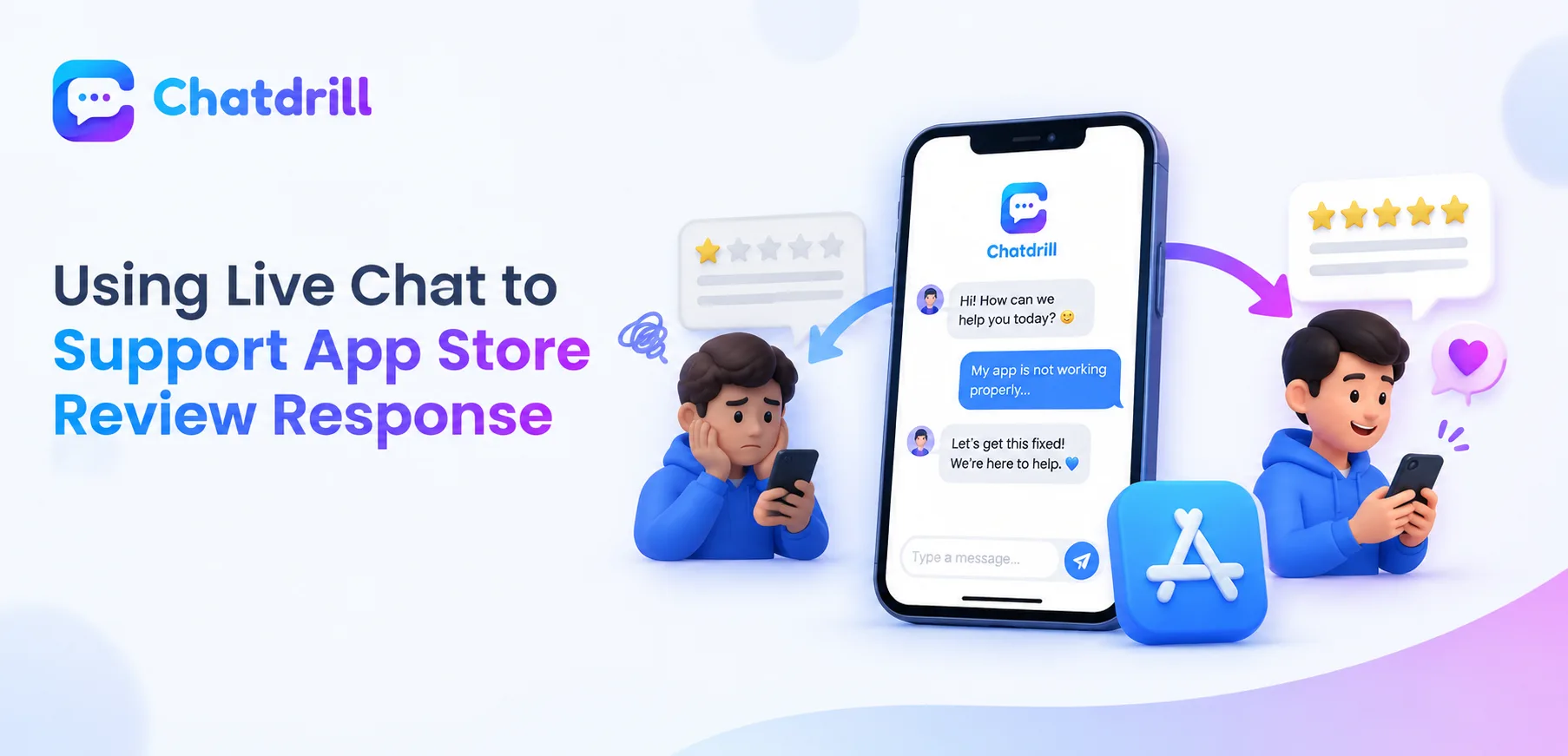
App store reviews carry outsized weight for an app's growth, since a cluster of negative reviews can meaningfully suppress future downloads, yet many negative reviews stem from a solvable frustration the user never had a genuine, immediate channel to raise before resorting to public feedback.
Quick answer: Live chat supports app store review response by giving a frustrated app user a direct, immediate path to resolve their issue before they leave a negative public review, and by providing a genuinely useful follow-up channel once a public review has already been left, since many negative reviews stem from a solvable problem the user never had a chance to raise directly.
Live chat offers exactly this kind of immediate, direct channel, positioned to intercept frustration before it becomes a public review, and to provide a genuine path to resolution and follow-up once a review has already been posted.
Understanding both intervention points, pre-review and post-review, and the specific tactics that work at each, helps an app business protect its review profile without appearing to manipulate or suppress genuine feedback.
This guide covers the two-point mechanism, specific tactics for each, common mistakes,
How does ChatDrill support app store review response strategy?
strategy.
The Two-Point Mechanism for Review Management
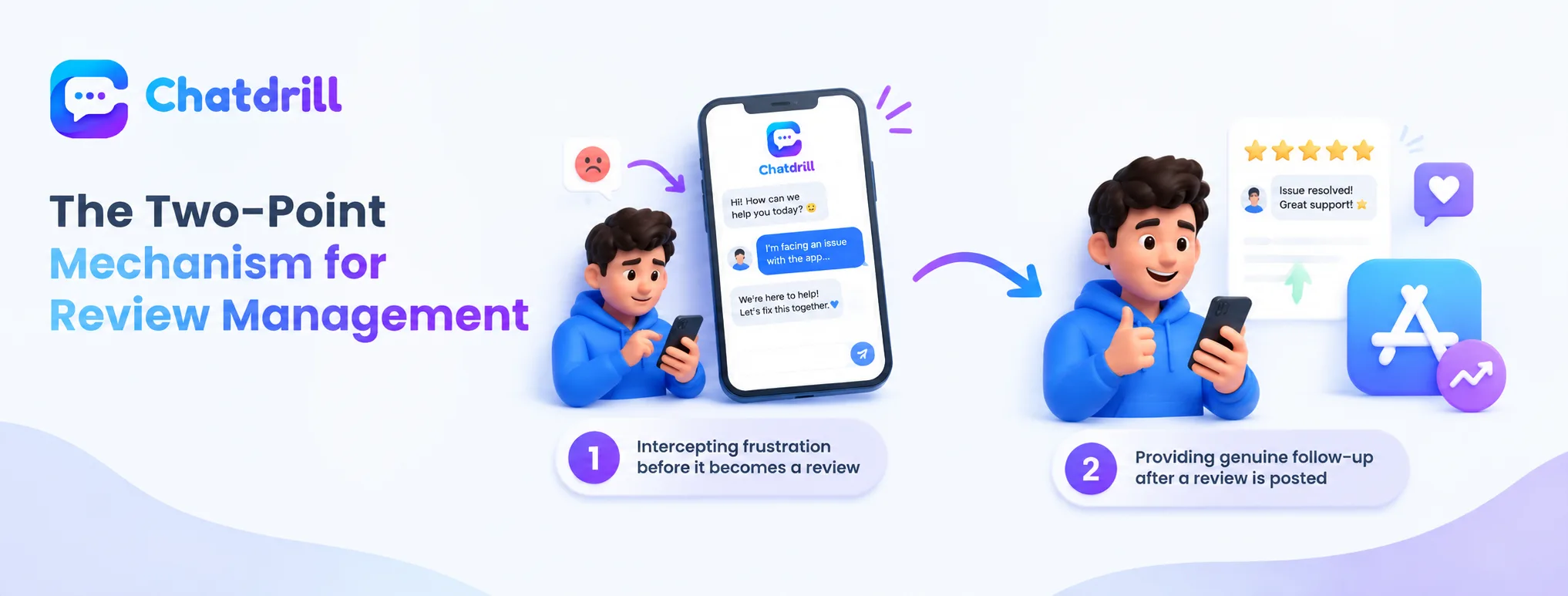
Chat intercepts frustration before it becomes a public review, and provides genuine follow-up once a review has already been posted.
Intercepting frustration before it becomes a review
A frustrated app user with an immediate, accessible in-app chat channel is considerably more likely to raise their issue there first, giving the business a genuine chance to resolve it before frustration escalates into a public, negative review.
This interception mechanism matters because many negative reviews reflect a genuinely solvable issue, a bug, a confusing feature, a billing question, that the user simply never had a direct channel to raise before resorting to the app store's review field.
Providing genuine follow-up after a review is posted
Once a negative review is posted, offering the reviewer a genuine, direct chat channel to resolve their underlying issue can lead to an updated, improved review reflecting the resolution, rather than leaving the original negative review as the final, public word.
This post-review follow-up respects that a review reflects a moment-in-time frustration, and genuinely resolving the underlying issue afterward can meaningfully shift that public record.
Specific Tactics for Each Intervention Point
Making in-app chat genuinely accessible before frustration peaks, and proactively reaching out to negative reviewers with a genuine resolution offer, both improve review outcomes.
Making in-app chat genuinely accessible
Ensuring chat support is prominently, easily accessible within the app itself, not buried several menu levels deep, gives a frustrated user the immediate outlet this guide identifies as key to intercepting frustration before it escalates to a public review.
This accessibility should be tested from a genuine new user's perspective, confirming chat is genuinely easy to find in the moment frustration actually occurs.
Proactively reaching out to negative reviewers
Monitoring new negative reviews and proactively reaching out through available channels, offering a direct chat conversation to resolve the underlying issue, captures the post-review follow-up opportunity this guide identifies as valuable.
This proactive outreach should feel genuinely helpful, not defensive or purely focused on getting the review changed, respecting that the primary goal is authentically solving the user's actual problem.
Common Mistakes in Review Response Strategy
Focusing on the review rather than the genuine issue
issue, and making in-app chat hard to find, both undermine this strategy.
Focusing on the review rather than the genuine issue Reaching out to a negative reviewer with a tone focused primarily on asking them to update or remove their review, rather than genuinely resolving their underlying frustration, can feel manipulative and potentially backfire.
Leading with genuine problem-solving, and letting any review update happen naturally as a result of authentic resolution, produces both a more ethical and typically more effective approach.
Making in-app chat difficult to find
Chat support buried deep within settings menus or requiring several taps to access defeats the interception purpose this guide identifies, since a genuinely frustrated user is unlikely to search extensively for a hidden support option.
Prioritizing genuine accessibility, as this guide's tactics recommend, ensures chat can actually intercept frustration at the moment it matters.
Measuring the Actual Review Response Impact
Tracking review-update rates following chat follow-up
follow-up reveals whether the strategy is genuinely working.
Tracking overall review sentiment trends over time
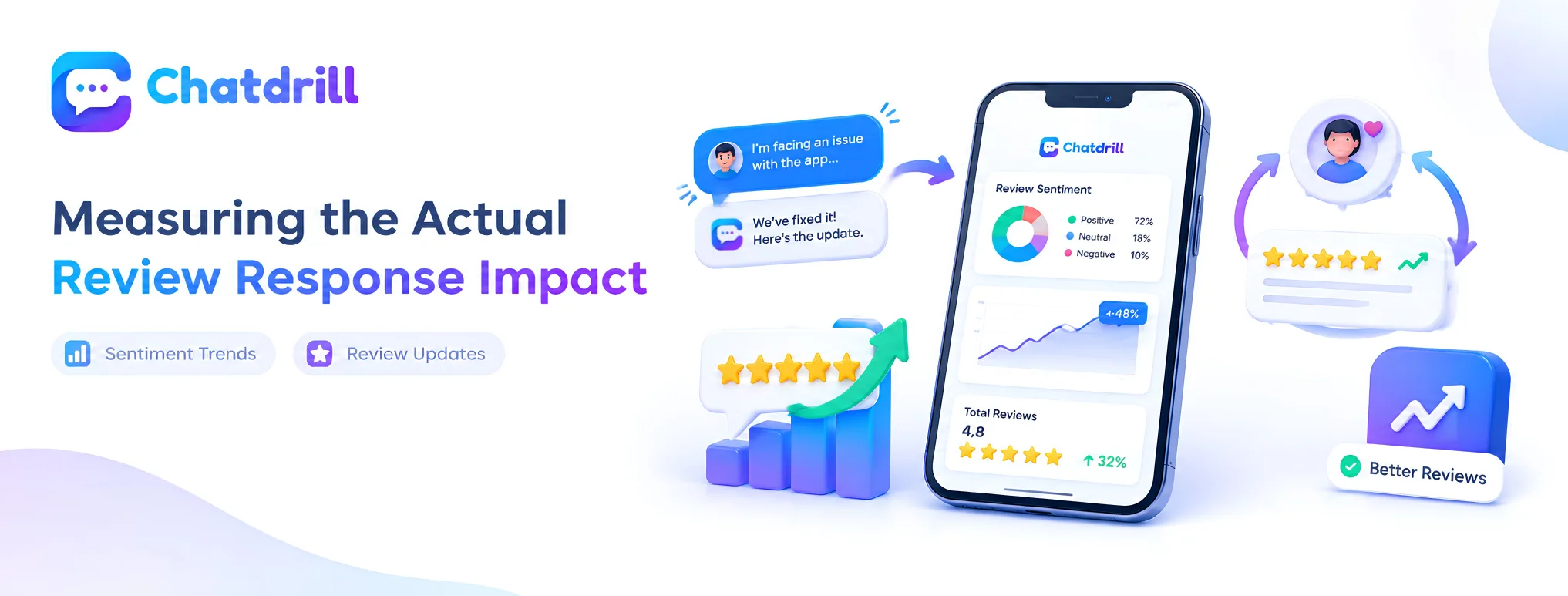
Monitoring your app's overall review sentiment and rating trend after implementing accessible in-app chat and proactive follow-up reveals whether the combined strategy is genuinely improving your public review profile over time.
This trend-level view matters more than any single review, since genuine impact shows up as a gradual, sustained shift rather than an isolated, individual change.
Tracking review-update rates following chat follow-up Measuring what percentage of negative reviewers who engage in a chat follow-up conversation subsequently update their review reveals the direct, specific effectiveness of this particular post-review intervention.
This targeted tracking helps refine the outreach approach itself, informing whether current messaging and process are genuinely working or need further adjustment.
How ChatDrill Supports App Store Review Response
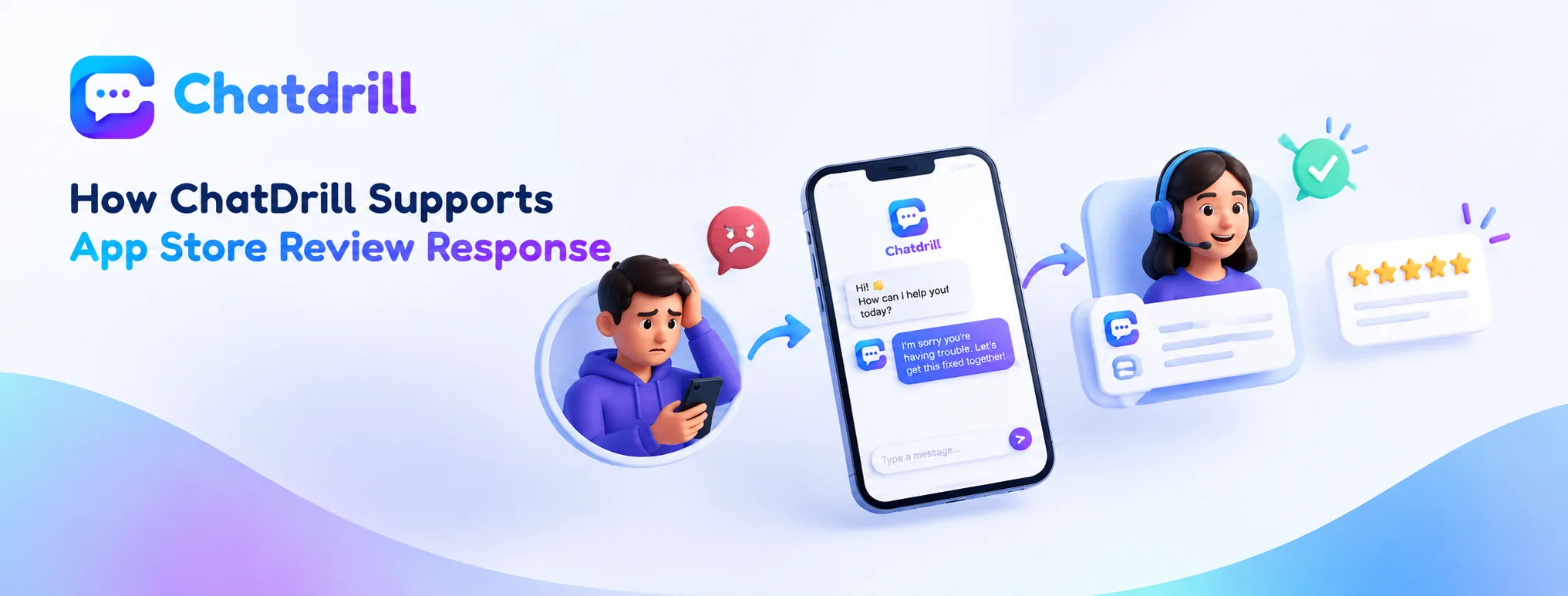
ChatDrill supports accessible in-app chat and resolution-focused outreach, reflecting both intervention points this guide identifies as key to a genuinely effective review response strategy.
Accessible chat that intercepts frustration early
ChatDrill's widget can be integrated prominently within an app experience, reflecting the accessibility this guide identifies as essential for intercepting frustration before it escalates to a public review.
This accessibility helps a business capture and resolve genuine issues at the moment they occur, rather than only learning about them after a negative review has already been posted.
Supporting genuine, resolution-focused follow-up
ChatDrill's AI, trained on your specific app and common issues, can support genuinely helpful follow-up conversations with reviewers, focused on authentic resolution rather than simply requesting a review change.
This resolution-first approach reflects the ethical, genuinely effective strategy this guide recommends, protecting both the business's review profile and its genuine reputation for authentic customer care.