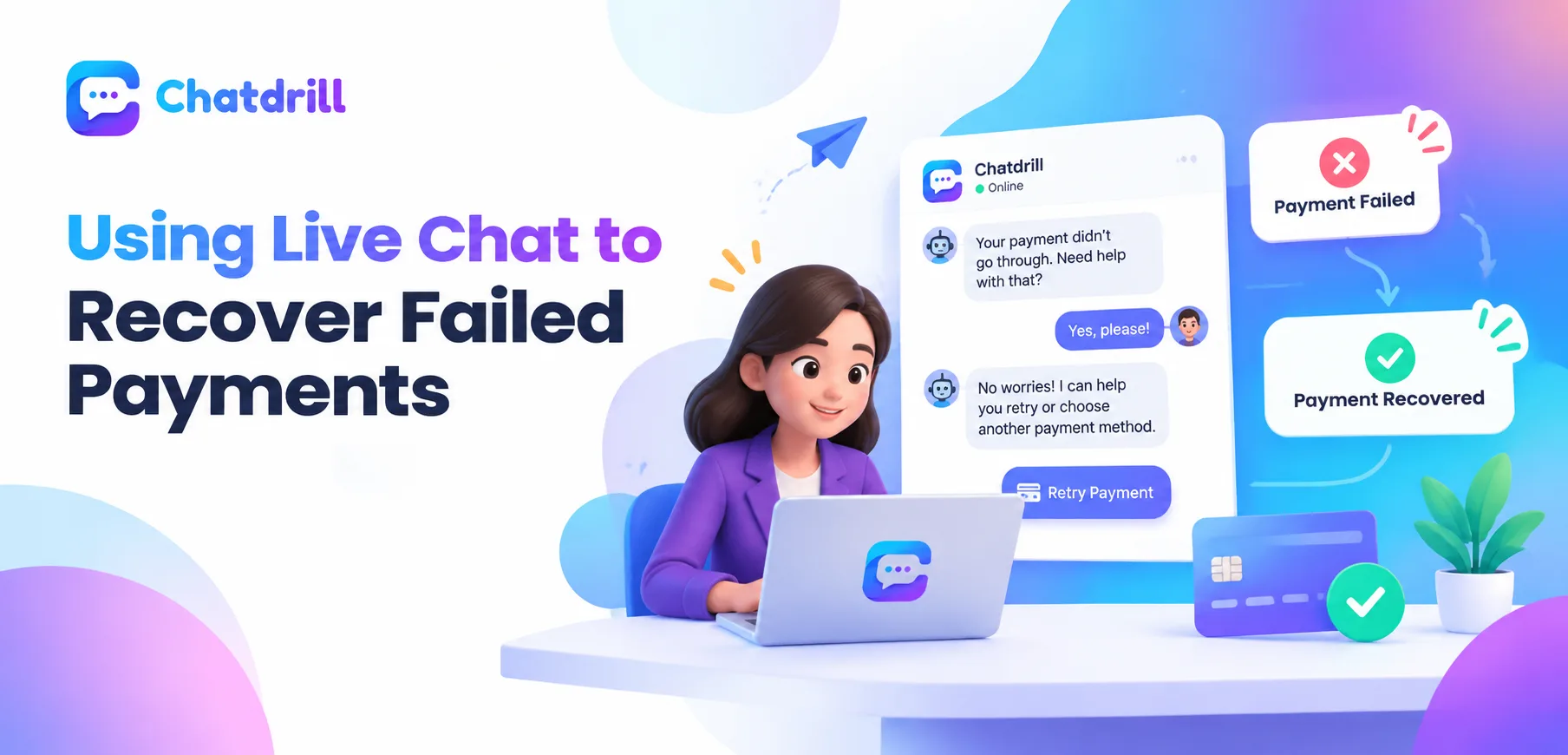

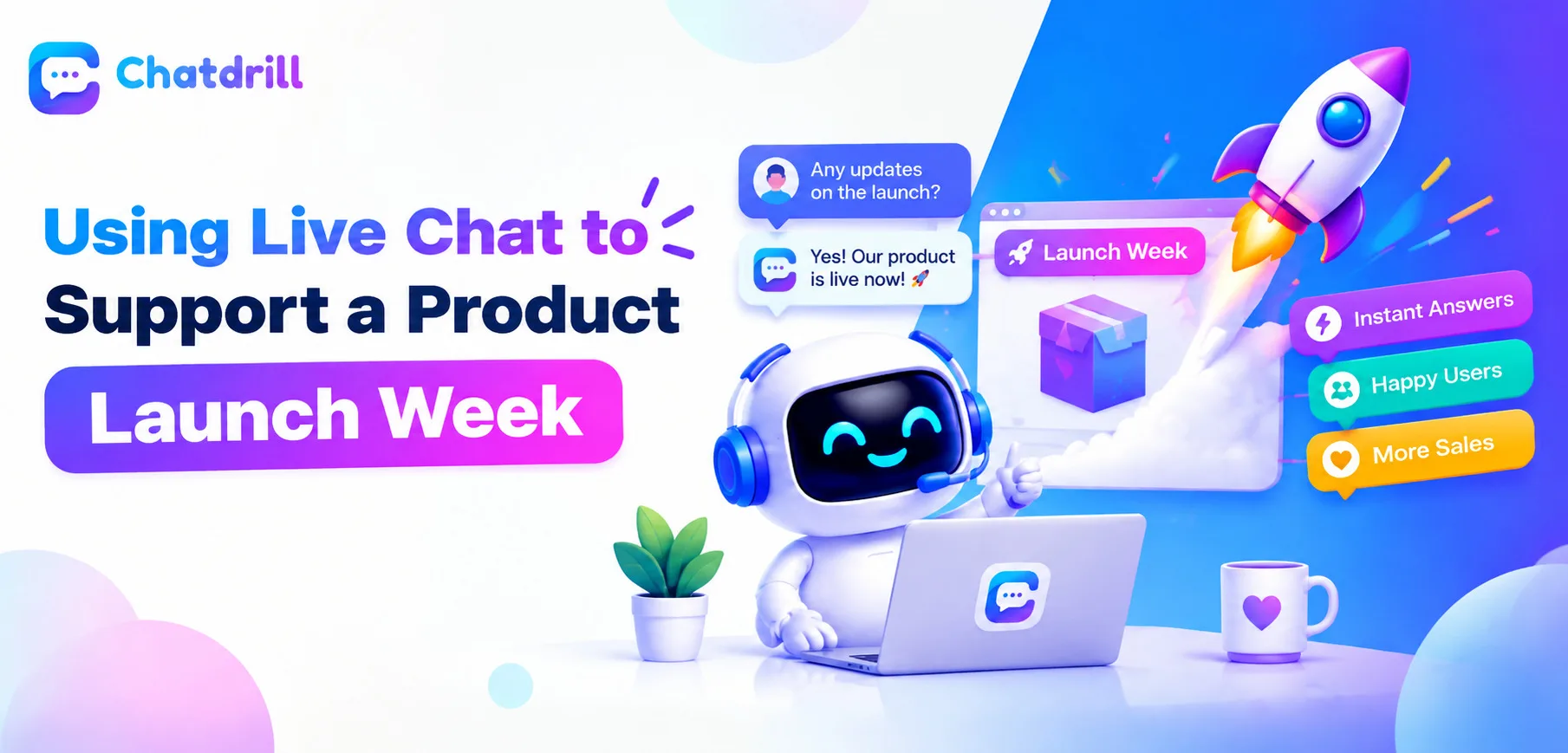
A successful product launch creates a genuinely predictable support challenge, a surge of questions from both curious new visitors and existing customers navigating something new, arriving all at once during a period when getting it right matters especially visibly.
Quick answer: Live chat supports a product launch week by absorbing the predictable spike in questions a new product generates, through pre-trained AI covering anticipated questions and temporarily adjusted staffing, preventing the launch's own success from creating a support bottleneck that damages the experience it was meant to celebrate.
Live chat's real-time nature and AI scalability make it particularly well suited to absorbing this predictable spike without requiring a permanent staffing increase that wouldn't be justified once the initial launch surge subsides.
Understanding how to prepare specifically for this predictable, temporary surge, rather than treating launch week support like any other typical week, helps a business avoid the support bottleneck that can otherwise undermine an otherwise successful launch.
This guide covers the launch-week support challenge, specific preparation tactics, common mistakes, measuring launch-week performance, and how ChatDrill supports product launch weeks.
ThePredictable Launch-Week Support Challenge
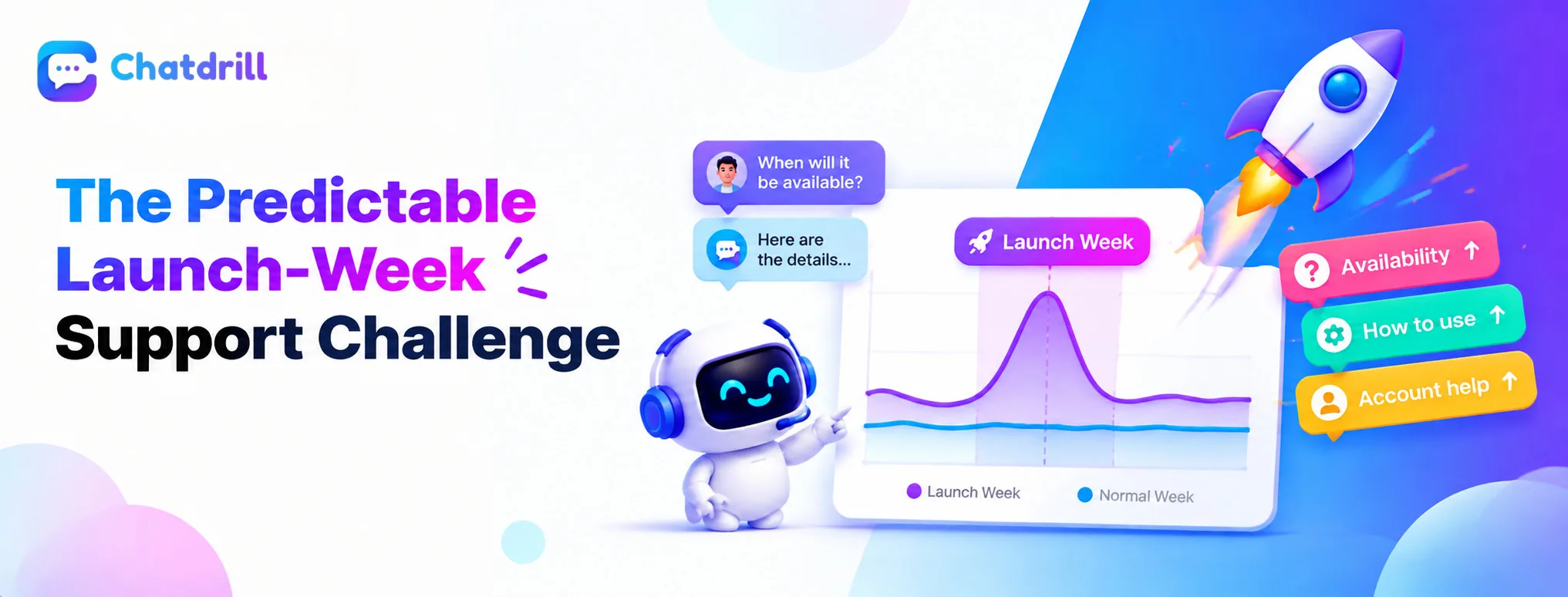
A launch generates a genuinely predictable, temporary spike in specific question types, distinct from typical, steady-state support volume patterns.
The nature of launch-specific question volume
Launch week questions concentrate heavily around the new product or feature specifically, how it works, how it differs from what existed before, whether it resolves a specific need, a genuinely predictable pattern distinct from your typical, steady-state support mix.
This concentration means launch-week volume, while genuinely higher in total, is also more predictable in content than typical support volume, an advantage worth leveraging in preparation.
Existing customers navigating a genuinely new feature or product change often generate a meaningfully different question pattern than new, curious visitors evaluating the launch for the first time, worth anticipating separately.
Why generic, steady-state staffing falls short
Support staffing and AI training calibrated for typical, steady-state volume genuinely struggles to absorb a launch week's temporary spike without either degraded response time or overwhelmed human agents.
This mismatch is precisely why deliberate, launch-specific preparation, rather than assuming existing support capacity will simply absorb the increase, matters for protecting the launch experience.
Specific Preparation Tactics for Launch Week
Pre-training AI on anticipated launch questions and temporarily adjusting staffing or concurrency both prepare a business for the predictable spike.
Pre-training AI on anticipated launch questions
Drafting accurate, comprehensive answers to the questions your team anticipates about the new launch, before it actually goes live, and training your chat AI on these anticipated questions in advance ensures readiness from the very first moment of launch traffic.
This advance preparation, rather than training reactively after questions start arriving, means your AI is ready to handle the genuine volume spike immediately rather than playing catch-up during the most visible, high-stakes period.
Temporarily adjusting staffing and concurrency
Planning temporary additional human staffing, or adjusted concurrency settings, specifically for the launch window respects that this genuinely elevated volume is temporary and doesn't justify a permanent staffing change.
This temporary adjustment approach captures the launch-specific need without creating an ongoing cost commitment beyond what the actual, sustained volume eventually settles into.
Common Launch-Week Support Mistakes
Failing to prepare AI training in advance, and assuming existing steady-state capacity will simply absorb the spike, are the most common launch-week mistakes.
Reactive rather than advance AI training
Waiting until launch questions actually start arriving to begin training chat AI on them means the highest-volume, most visible early launch period runs with the least-prepared support experience, precisely the opposite of what a successful launch needs.
Advance preparation, as this guide's tactics recommend, ensures readiness precisely when visibility and stakes are highest.
Assuming existing capacity will simply absorb the spike
Underestimating the genuine, predictable volume increase a successful launch generates risks a degraded support experience precisely during the period when new visitors and customers are forming their most visible, lasting impressions.
Planning deliberately for this predictable spike, rather than hoping existing capacity happens to suffice, protects the launch experience during this especially consequential window.
Measuring Launch-Week Support Performance
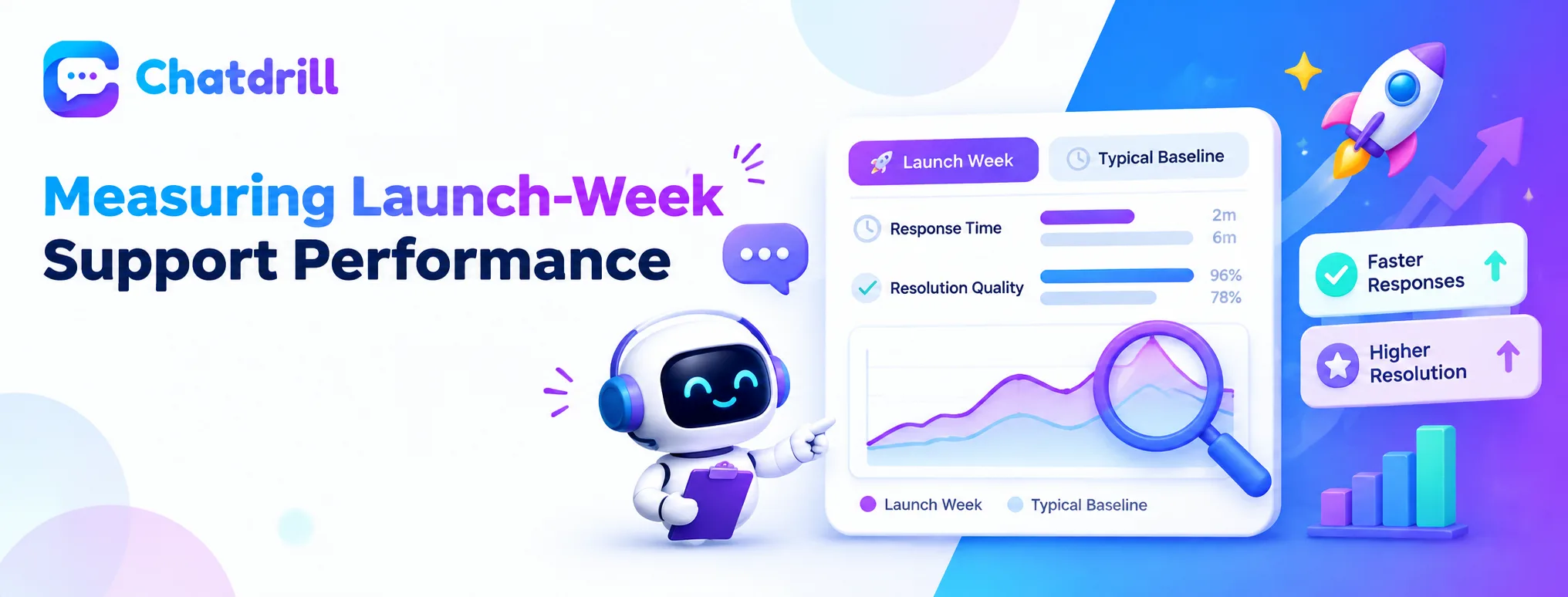
Comparing launch-week response time and resolution quality against your typical baseline reveals whether preparation genuinely protected the experience.
Comparing launch-week metrics against your typical baseline
Tracking response time, resolution accuracy, and CSAT specifically during launch week against your typical, steady-state baseline reveals whether your preparation genuinely maintained quality despite the volume spike.
A meaningful degradation compared to baseline signals that preparation for the next launch should be more aggressive, while maintained quality confirms your approach genuinely worked.
Reviewing which anticipated questions proved most common
Comparing your pre-launch anticipated question list against what genuinely came up most often during actual launch week refines your preparation accuracy for future launches.
This review helps calibrate future launch preparation to be genuinely more accurate, rather than repeating the same anticipated-question guesswork each time.