
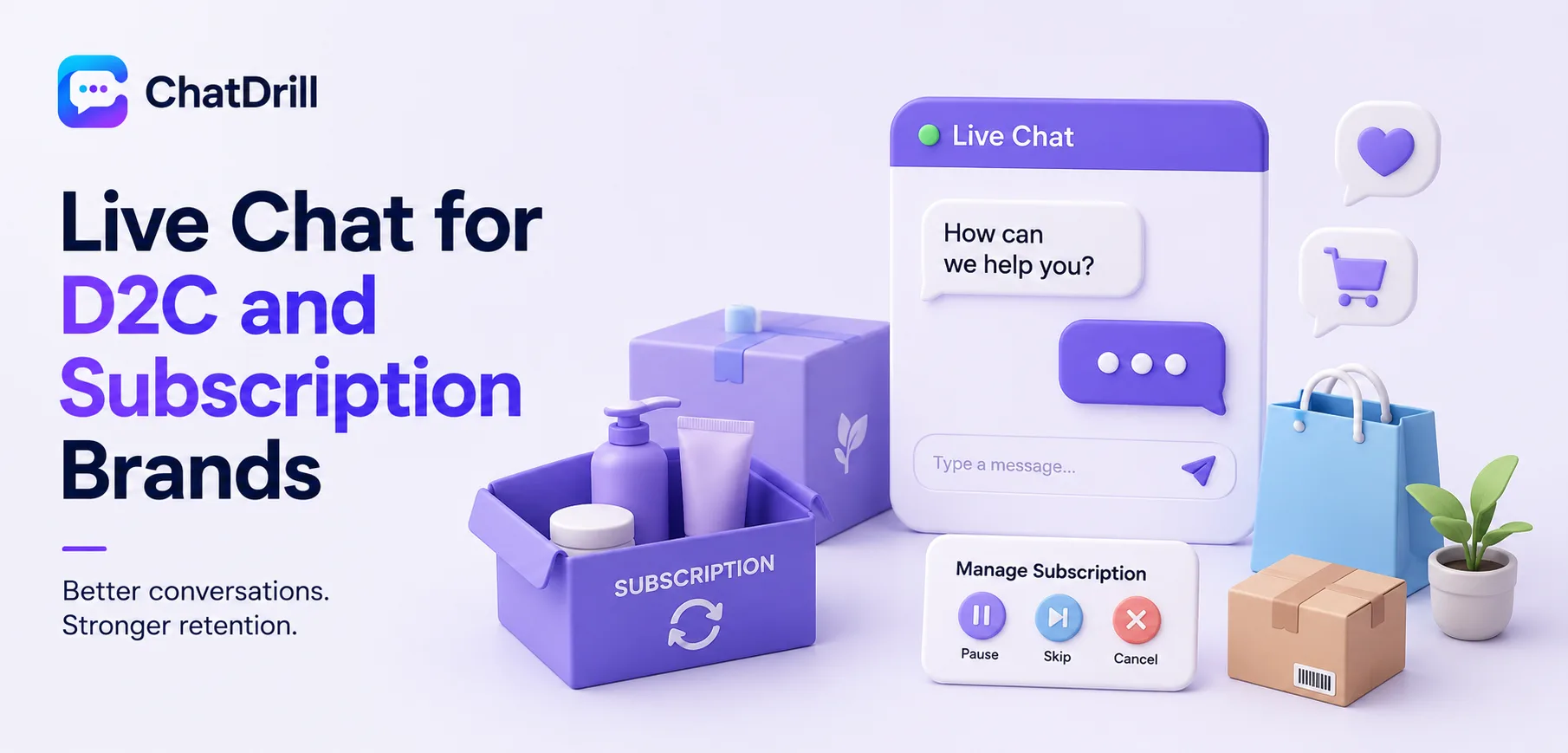
A direct-to-consumer or subscription brand's chat carries a distinct retention dimension most one-time-purchase businesses don't face, a subscriber reaching out to pause or cancel is often a churn moment in progress, making how that specific conversation is handled genuinely consequential.
Beyond subscription management, D2C brands field the same order and shipping questions as any ecommerce business, but often with a more engaged, brand-loyal customer base that expects a more personal tone than a generic transactional response.
Getting the balance right between honoring a genuine cancellation request and offering a fair, relevant retention option, without being pushy about it, shapes whether a churning subscriber leaves with goodwill or frustration.
This guide covers why D2C and subscription chat has this distinct retention dimension, what customers typically ask, a practical setup approach, and mistakes worth avoiding.
Why Subscription Chat Carries a Retention Dimension
A subscriber reaching out about pausing or canceling represents an active churn moment, making how that specific conversation is handled directly consequential for retention in a way a typical one-time purchase support conversation isn't.
The churn moment itself
A cancellation or pause request is a genuine decision point, and how chat responds, fairly and without excessive friction, tends to shape whether that customer leaves with goodwill or resentment.
This moment deserves deliberate design rather than being treated as just another routine account request.
The brand-loyalty expectation
D2C customers often have a stronger relationship with the brand than a typical marketplace shopper, expecting a chat tone that feels personal and on-brand rather than generic and transactional.
This expectation shapes both the AI's tone and the kind of retention offer, if any, that feels appropriate rather than pushy.
What Customers Actually Ask
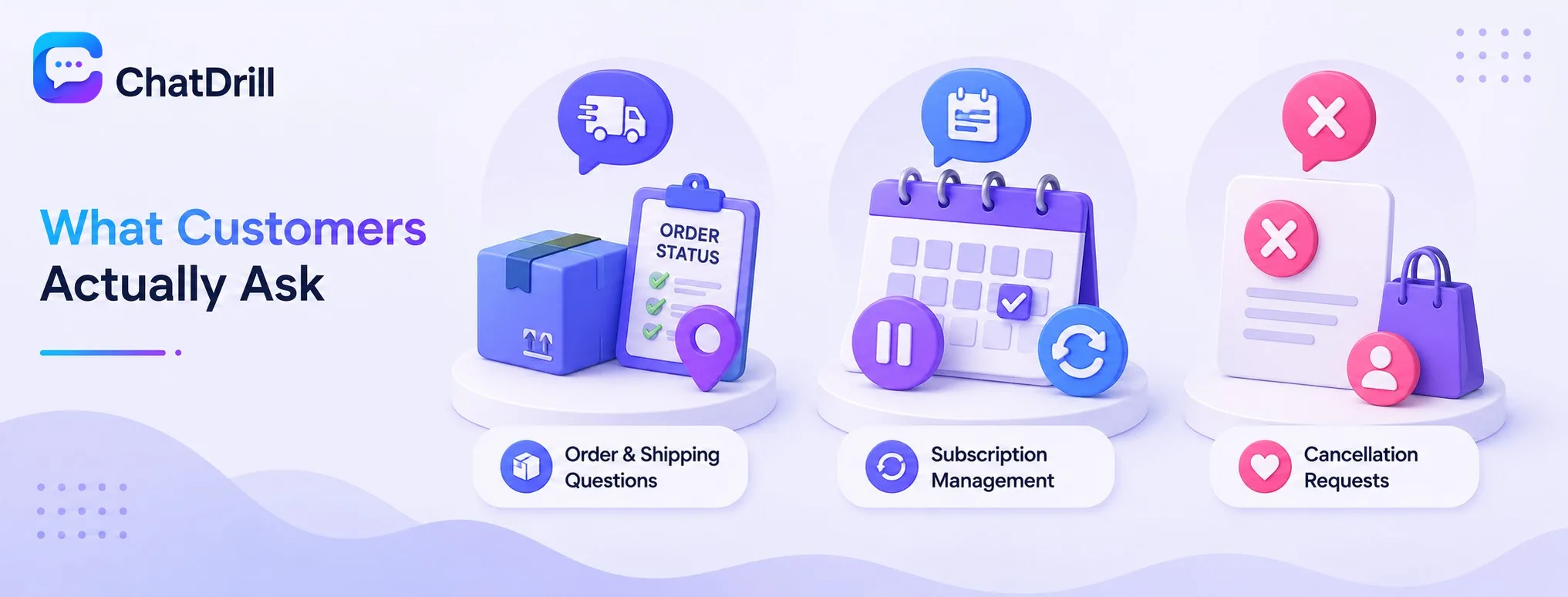
Customers ask about order and shipping status, subscription management like pausing or skipping a shipment, and cancellation requests, with the last two categories carrying the most retention sensitivity.
Order and shipping questions
Order status, shipping timing, and delivery issues make up steady chat volume similar to general ecommerce, well suited to automation once connected to order data.
This category benefits from the same accuracy and specificity that matters for any ecommerce business, though often with a more personal, brand-aligned tone.
Subscription management questions
Pausing, skipping a shipment, or changing a subscription frequency are common requests that, if handled smoothly, often prevent an outright cancellation down the line.
Making these options easy to find and act on directly within chat gives a hesitating subscriber a genuine alternative to canceling entirely.
Cancellation requests
A direct cancellation request deserves honest, low-friction handling, with an optional, genuinely relevant retention offer rather than an aggressive or repeated attempt to change the customer's mind.
This category is where the balance between honoring the request and offering a fair alternative matters most for how the customer remembers the brand afterward.
Setup Playbook for D2C and Subscription Chat
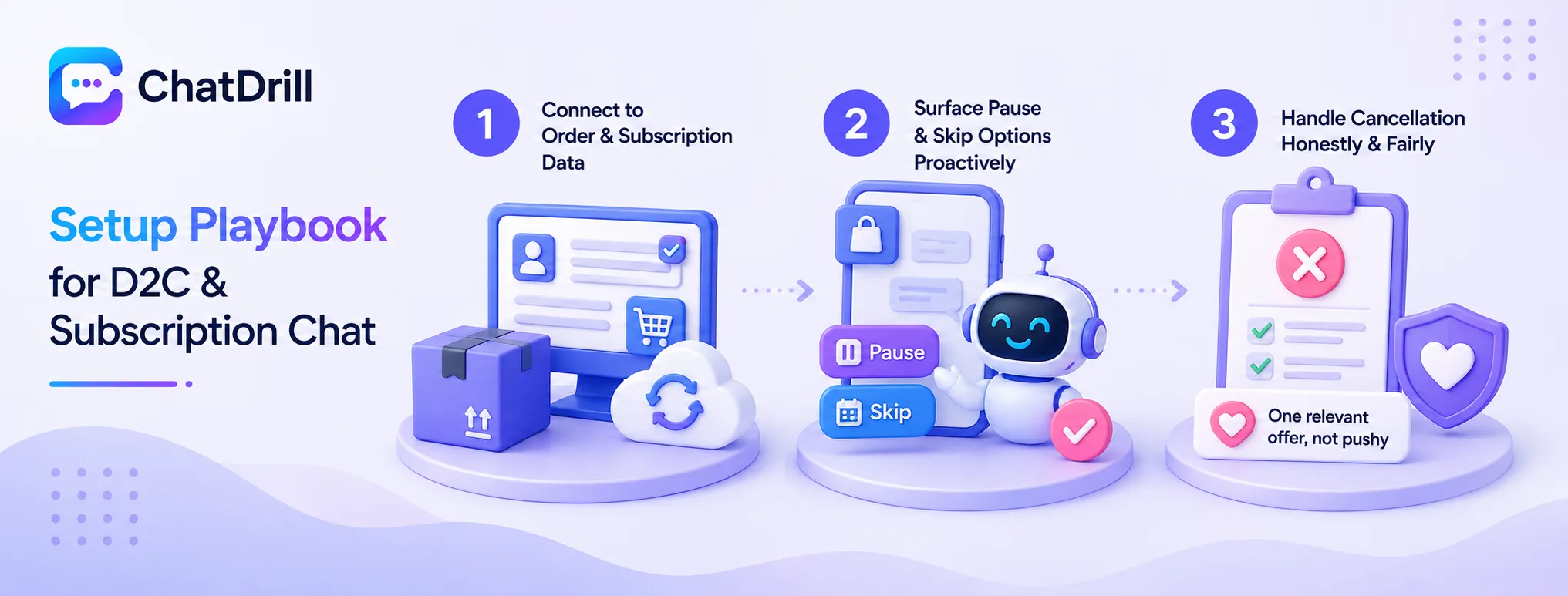
A strong setup connects chat to order and subscription data, makes pause and skip options easy to find within the conversation, and handles cancellation honestly with at most one relevant, non-pushy retention offer.
Step 1: Connect to order and subscription data
Integrating chat with your order and subscription management systems lets AI answer specific status questions and execute pause, skip, or frequency changes directly within the conversation.
This connection is the highest-value investment given how much of a subscription brand's chat volume concentrates in exactly these account-management actions.
Step 2: Surface pause and skip options proactively
Training AI to mention pause or skip as genuine alternatives when a customer expresses hesitation, rather than only offering these options if specifically asked, can meaningfully reduce outright cancellations.
This works best when presented as a genuinely helpful option rather than a sales tactic, respecting that the customer may still choose to cancel.
Step 3: Handle cancellation honestly and fairly
Design cancellation handling to honor the request promptly, offering at most one genuinely relevant retention option rather than a repeated or aggressive attempt to prevent the cancellation.
This fair approach protects the brand's reputation with a departing customer, who may return later or refer others based on how respectfully they were treated.
Common Mistakes D2C and Subscription Brands Make With Chat
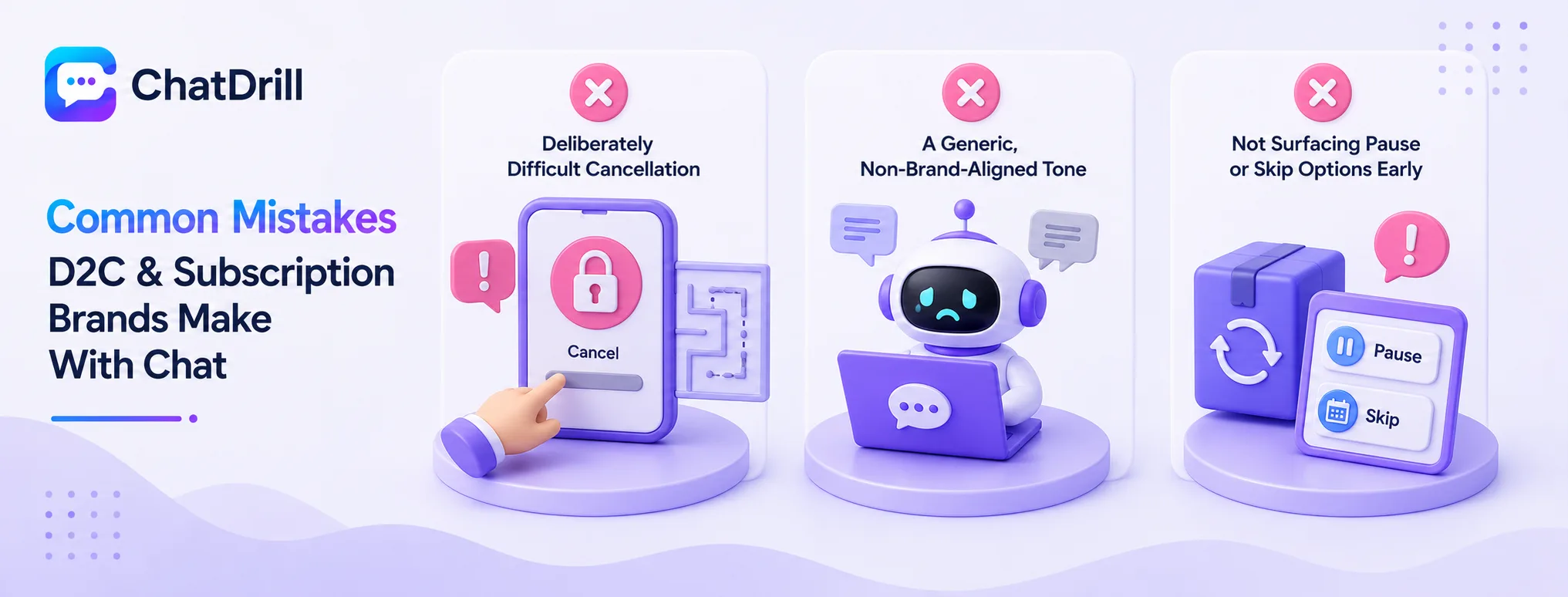
The most common mistakes are making cancellation deliberately difficult, using a generic rather than brand-aligned tone, and failing to surface pause or skip options before a customer decides to cancel outright.
Deliberately difficult cancellation
Making cancellation intentionally hard to complete through chat, hoping to retain a subscriber through friction, tends to damage brand reputation and word-of-mouth more than it retains genuine commitment.
A fair, straightforward cancellation experience protects the relationship even with a departing customer.
A generic, non-brand-aligned tone
Responding to a loyal D2C customer with a flat, transactional tone misses the personal relationship this kind of brand typically cultivates, feeling like a mismatch with the rest of the customer's experience.
Training AI with genuine brand voice, not just accurate information, is worth the investment given how much D2C brands differentiate on this exact dimension.
Not surfacing pause or skip options early
Waiting for a customer to explicitly ask about pausing or skipping, rather than proactively mentioning these as options when hesitation is detected, misses a genuine opportunity to prevent an outright cancellation.
Surfacing these options naturally in the conversation flow captures more of this retention opportunity than leaving it to the customer to discover on their own.
Measuring Success for D2C and Subscription Chat
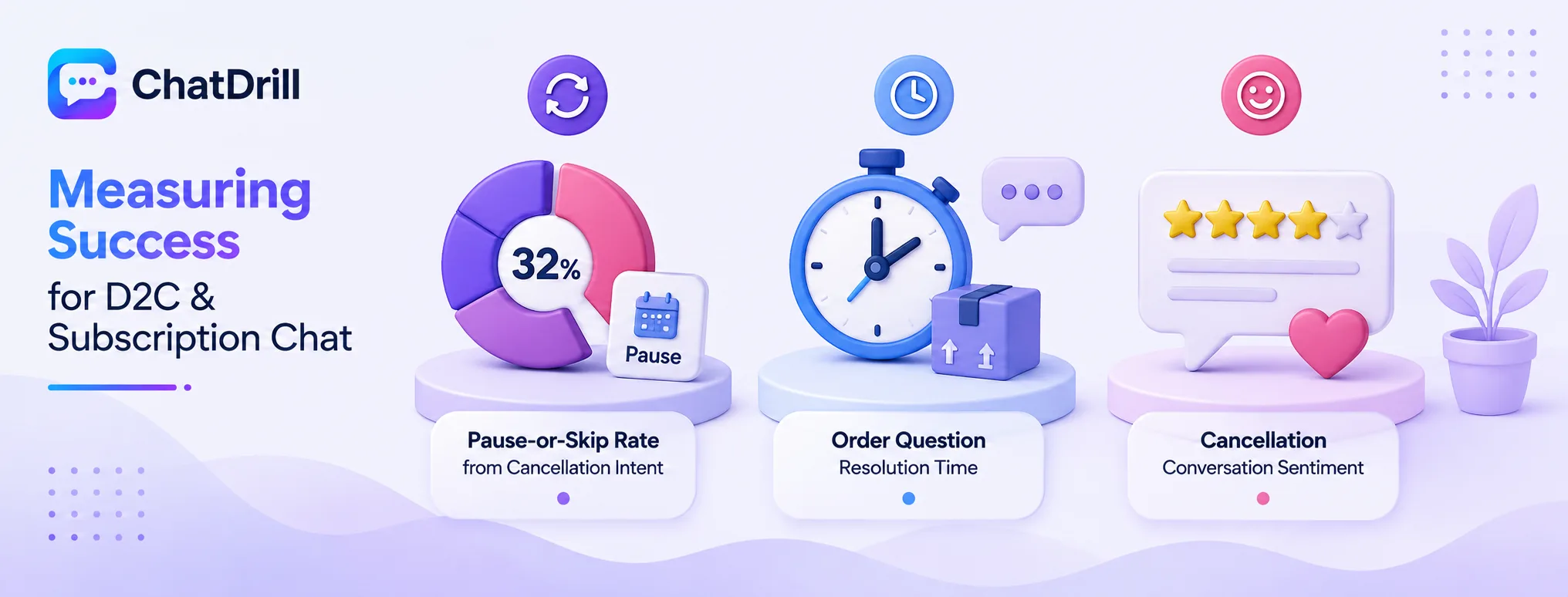
Track pause-or-skip rate among customers who initially expressed cancellation intent, chat-to-resolution time for order questions, and customer sentiment on cancellation conversations specifically.
Pause-or-skip conversion from cancellation intent
Tracking what share of customers who initially expressed intent to cancel instead chose to pause or skip quantifies the direct retention value of surfacing these options well.
This metric is one of the most directly attributable to good chat design in this specific industry.
Order question resolution time
Tracking how quickly order and shipping questions resolve within chat reflects the same efficiency standard worth applying to any ecommerce-adjacent support category.
A ChatDrill setup connected to real order data, for a brand using it, tends to show strong resolution speed in this routine, high-volume category.
Cancellation conversation sentiment
Tracking sentiment specifically for cancellation conversations, separately from general chat satisfaction, reveals whether your honest, low-friction approach is genuinely leaving departing customers with goodwill.
A positive sentiment trend here, even among canceling customers, is a strong signal your approach protects long-term brand reputation.
Rolling Out Chat for a D2C or Subscription Brand
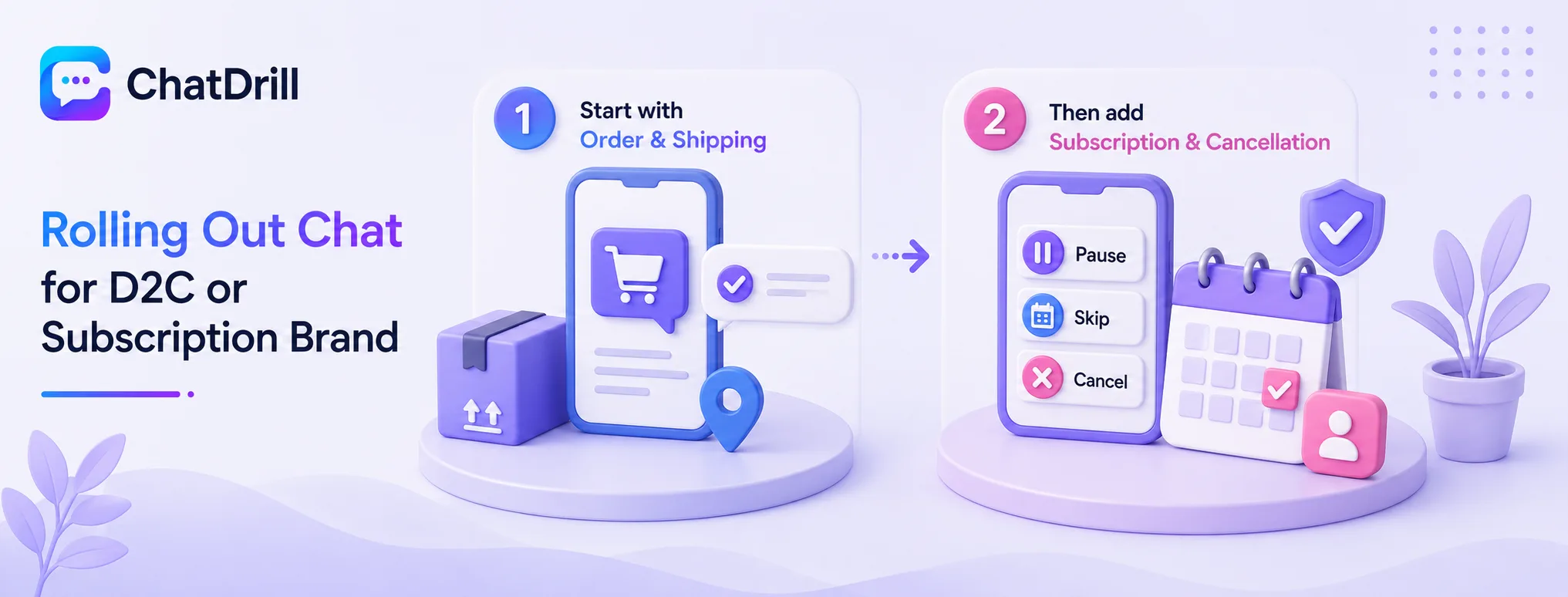
Launching chat first for order and shipping questions, then extending to subscription management and cancellation handling once brand tone and retention options are genuinely well tuned.
Starting with order and shipping support
Focusing initial launch on order status and shipping questions lets your team validate order data accuracy and brand tone in a lower-stakes category before subscription management is added.
This phase is a good opportunity to fine-tune AI's brand voice directly, reviewing real conversations for whether the tone genuinely matches the rest of the customer experience.
A few weeks of close review here typically confirms the tone and accuracy are solid before subscription-specific, retention-sensitive volume is layered in.
Extending to subscription management and cancellation
Once order-side chat is stable, adding pause, skip, and cancellation handling should be tested carefully, given how directly this category affects retention and customer sentiment.
Reviewing real cancellation conversations closely during this phase confirms the balance between honoring requests and offering fair retention options is landing as intended.
This phase deserves particular attention from whoever owns retention strategy, given how much this specific chat category can influence overall subscriber churn.