
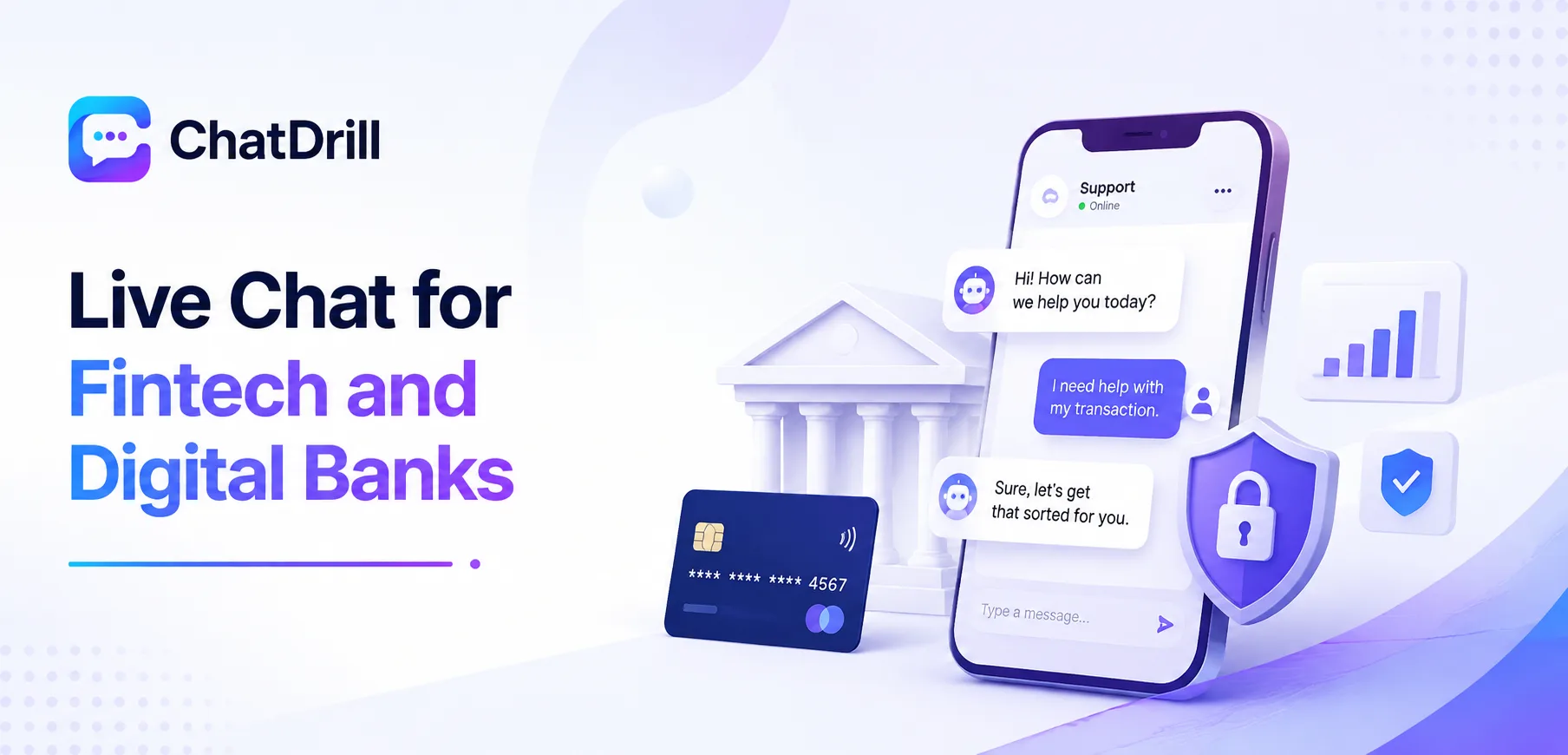
Fintech and digital bank chat operates under a genuinely different set of constraints than most industries, security and compliance considerations shape nearly every design decision, from what information can be discussed in chat to how identity verification happens before account-specific help is given.
This doesn't mean chat is less valuable here, if anything, digital-first financial businesses often depend on chat as a primary support channel given they typically lack physical branches, making getting this right especially important.
The balance to strike is between genuine efficiency, since a fintech's typically younger, digitally native customer base often prefers chat over a phone call, and the security discipline that financial services genuinely require.
This guide covers what makes fintech chat different, what customers typically ask, a setup approach respecting these security constraints, and mistakes worth avoiding.
What Makes Fintech Chat Different
Fintech chat requires navigating genuine security and compliance constraints around account-specific information, identity verification before sensitive help, and a customer base that often prefers chat as their primary support channel given the digital-first nature of these businesses.
The security and compliance dimension
Financial account information carries genuine security stakes, meaning chat design needs deliberate consideration of what can be discussed before identity verification and what always requires additional confirmation steps.
This isn't a constraint to work around, it's a foundational design consideration that shapes the entire chat experience for a financial services business specifically.
Why chat matters especially for digital-first financial businesses
A digital bank or fintech without physical branches often relies on chat as a primary, sometimes preferred support channel, making its quality and reliability genuinely central to the overall customer experience.
This centrality raises the stakes for getting chat right, compared to a traditional business where chat might be one of several equally weighted support options.
What Fintech Customers Typically Ask
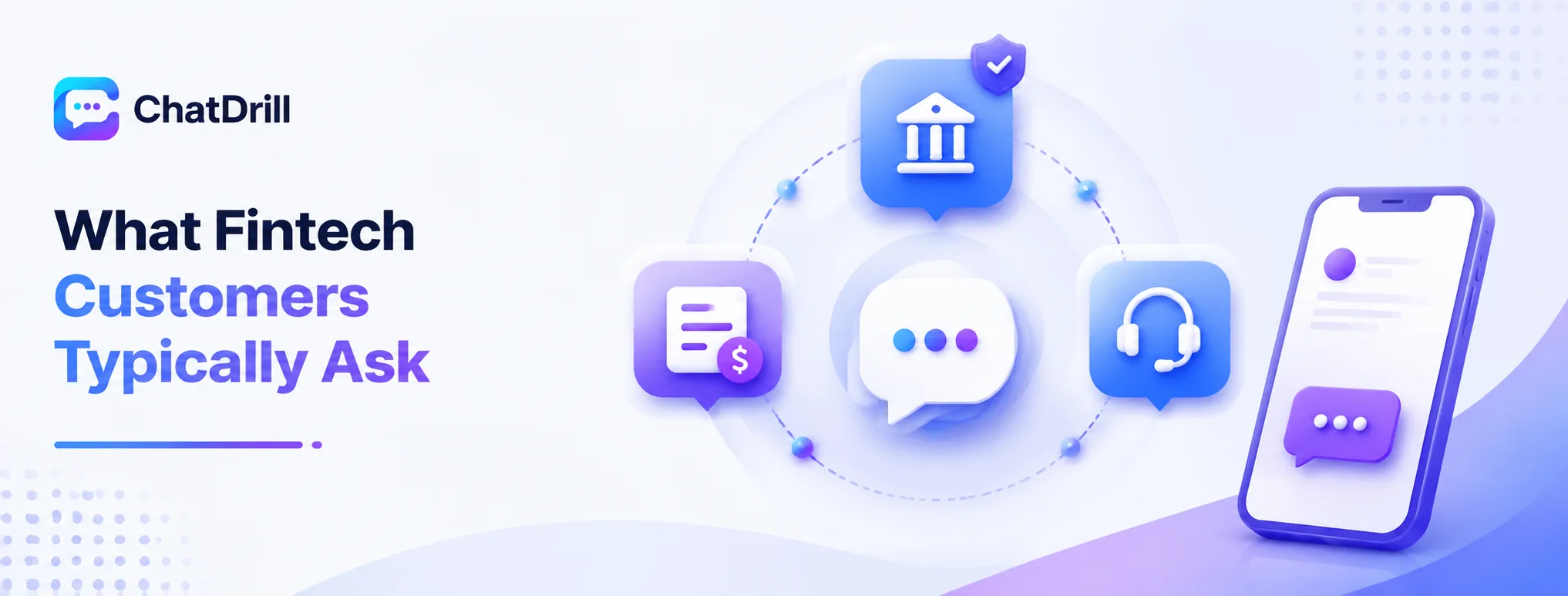
Fintech chat volume centers on account and transaction questions requiring verification, general product or fee information not requiring account access, and app or technical support issues.
Account and transaction questions
Questions about a specific transaction, balance, or account status require identity verification before any specific information can be shared, a category needing careful, deliberate handling in the chat flow.
This category benefits from a clear, secure verification step built into the conversation, rather than either avoiding account questions entirely or handling them without appropriate verification.
General product and fee questions
Questions about account types, fee structures, and general product features don't require identity verification and are well suited to direct AI handling, given they don't touch sensitive, account-specific information.
Clearly distinguishing this category from account-specific questions, both in training content and conversation flow, keeps the security-sensitive category appropriately separate.
App and technical support
Login issues, app functionality questions, and general technical troubleshooting make up meaningful volume for a digital-first financial business, often resolvable without needing to access sensitive account details directly.
This category tends to be highly automatable, given its largely technical rather than account-specific nature.
Setup Playbook for Fintech Chat
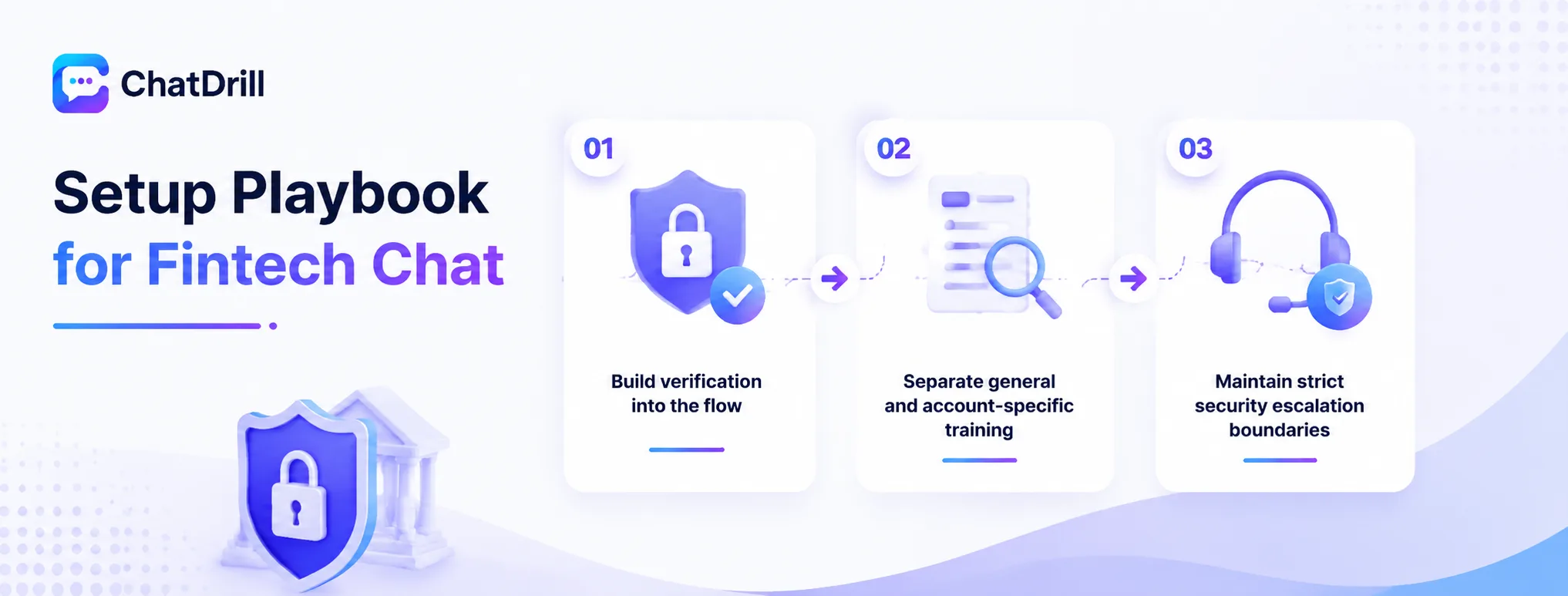
A responsible setup builds identity verification into the chat flow before any account-specific discussion, clearly separates general product information from sensitive account topics in AI training, and maintains strict escalation boundaries around anything genuinely security-sensitive.
Step 1: Build verification into the flow
Design a clear, secure verification step that occurs before any account-specific information is discussed, ensuring this isn't skipped or handled inconsistently across different conversations.
This verification step should be treated as non-negotiable, a security foundation the rest of the chat experience builds on rather than an optional friction point.
Step 2: Separate general and account-specific training
Training AI with clearly distinguished content, general product and fee information versus account-specific topics requiring verification, keeps the security-sensitive category appropriately bounded.
This separation also supports clearer conversation flow logic, routing a question to the appropriate handling path based on whether it touches sensitive account information.
Step 3: Maintain strict security escalation boundaries
Explicitly configuring AI to escalate anything genuinely security-sensitive, a suspected fraud concern, an account access dispute, rather than attempting automated resolution, protects both the customer and the business.
This boundary-setting mirrors the conservative approach worth taking in healthcare chat, given the genuinely high stakes involved in getting security-sensitive interactions wrong.
Common Mistakes Fintech Companies Make With Chat
The most common mistakes are discussing account-specific details before proper verification, blending sensitive and general content into one undifferentiated training set, and allowing AI to attempt resolution on genuinely security-sensitive situations.
Skipping or inconsistent verification
Discussing account-specific details without a consistent, deliberate verification step creates genuine security risk, regardless of how convenient it might seem to skip this friction in the moment.
This is worth treating as a strict, non-negotiable rule rather than a judgment call that could vary by conversation or agent.
Blending sensitive and general training content
Training AI without a clear separation between general information and account-specific topics increases the risk of AI inadvertently discussing something it shouldn't before appropriate verification.
This separation is worth building deliberately into the training and conversation flow design, not left to chance or general good judgment alone.
AI attempting security-sensitive resolution
Allowing AI to attempt handling a suspected fraud concern or account security dispute, rather than escalating immediately, carries genuine risk given the stakes and judgment these situations require.
This is a category where the conservative, escalate-by-default approach is clearly worth the minor efficiency cost, given what's at stake if handled incorrectly.
Measuring Success for Fintech Chat
Track AI deflection on general, non-sensitive questions, verification completion rate for account-specific conversations, and escalation rate for security-flagged situations to confirm boundaries are being respected.
Deflection on general questions
Tracking how much general product and fee question volume AI resolves without human involvement shows the efficiency gain from a well-scoped, appropriately bounded automation setup.
This metric should be reviewed specifically within the non-sensitive category, keeping the measurement aligned with what AI should genuinely be handling.
Verification completion
Tracking how smoothly customers move through the identity verification step reveals whether the security process is genuinely working well, or creating unnecessary friction worth refining.
A high drop-off at this step is worth investigating, since it could reflect either a genuine security design and product friction issue.
Security escalation rate
Regularly reviewing what share of conversations escalate for security reasons, and specifically why, confirms boundaries are being respected consistently and reveals whether escalation criteria need adjustment.
This review is worth treating as ongoing governance, similar to the escalation review practice worth maintaining in healthcare chat, given the comparable stakes involved.
Rolling Out Chat With Security Sign-Off
Involving your security and compliance team before launch, and starting with general, non-sensitive questions before layering in verified account access, gives a fintech's chat rollout the review a financial services product genuinely needs.
Getting security and compliance sign-off early
Bringing security and compliance stakeholders into the chat design process before launch, rather than after, avoids the disruptive rework of retrofitting verification and escalation rules into an already-live system.
Documenting exactly what AI is and isn't permitted to discuss, and having this reviewed and approved formally, gives the rollout a clear, defensible foundation rather than relying on informal understanding.
This upfront review tends to move faster than teams expect, provided the boundary design follows the conservative, escalate-by-default principles covered earlier rather than needing significant back-and-forth revision.
Starting with non-sensitive questions
Launching chat first for general product and fee questions, before adding verified account-specific access, lets you validate the AI's accuracy and tone in a genuinely lower-risk environment.
This phase is also useful for testing app and technical support content, another lower-risk category that can go live earlier while verification flow and account integration are still being finalized.
Once this foundation is stable and reviewed, adding the verification step and account-specific capability becomes a more contained, lower-risk expansion rather than a first-launch risk all at once.