
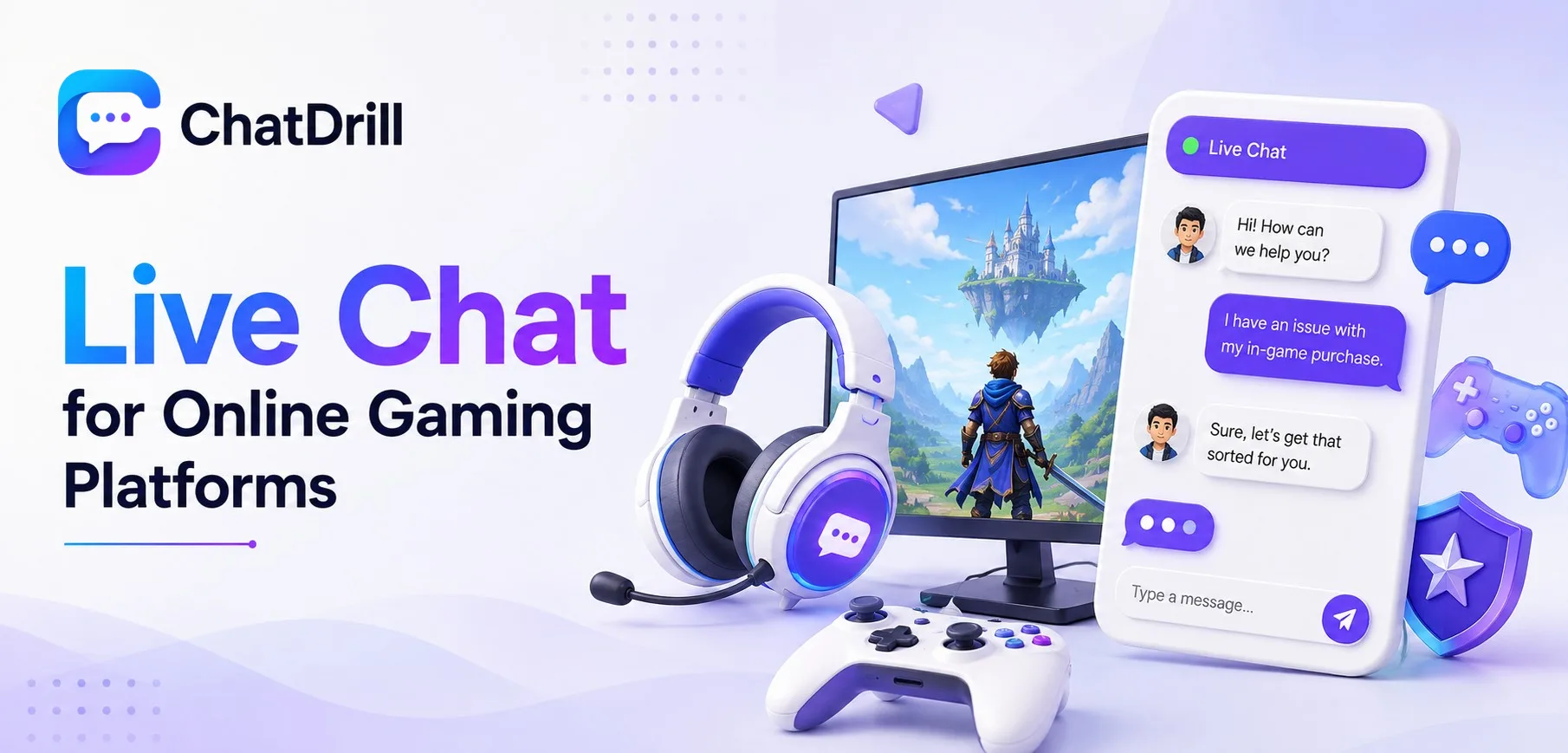
Chat for an online gaming platform serves a player base that expects fast, casual, in-the-know support, often mid-session, making both response speed and genuine familiarity with the game itself unusually important compared to a typical support context.
Account and billing issues, especially around in-game purchases, represent a category where a slow or generic response can quickly escalate a frustrated player into a public complaint, given how vocal gaming communities tend to be.
Beyond individual support, chat volume for a gaming platform often spikes sharply around a new release, patch, or known service issue, requiring a setup that can flex to meet demand rather than staying flat year-round.
This guide covers why gaming chat has its own rhythm, what players typically ask, a practical setup approach, and mistakes worth avoiding.
Why Gaming Chat Has Its Own Rhythm
Gaming platform chat needs fast, genuinely game-aware responses and the flexibility to handle sharp volume spikes around releases and known issues, a different rhythm than most other industries' steadier chat volume.
The expectation of genuine game familiarity
A player asking a game-specific question expects a response that reflects real understanding of the game's mechanics, not a generic customer service script, making training depth matter more here than in many industries.
This familiarity gap is often what separates a chat experience players trust from one they quickly route around by turning to community forums instead.
Why volume spikes sharply and predictably
A new release, a major patch, or a known service outage reliably drives a sharp, temporary spike in chat volume, very different from the steadier demand curve typical of many other industries.
Planning for these known spikes explicitly, rather than treating chat capacity as flat, is a core part of getting gaming chat right.
What Players Actually Ask
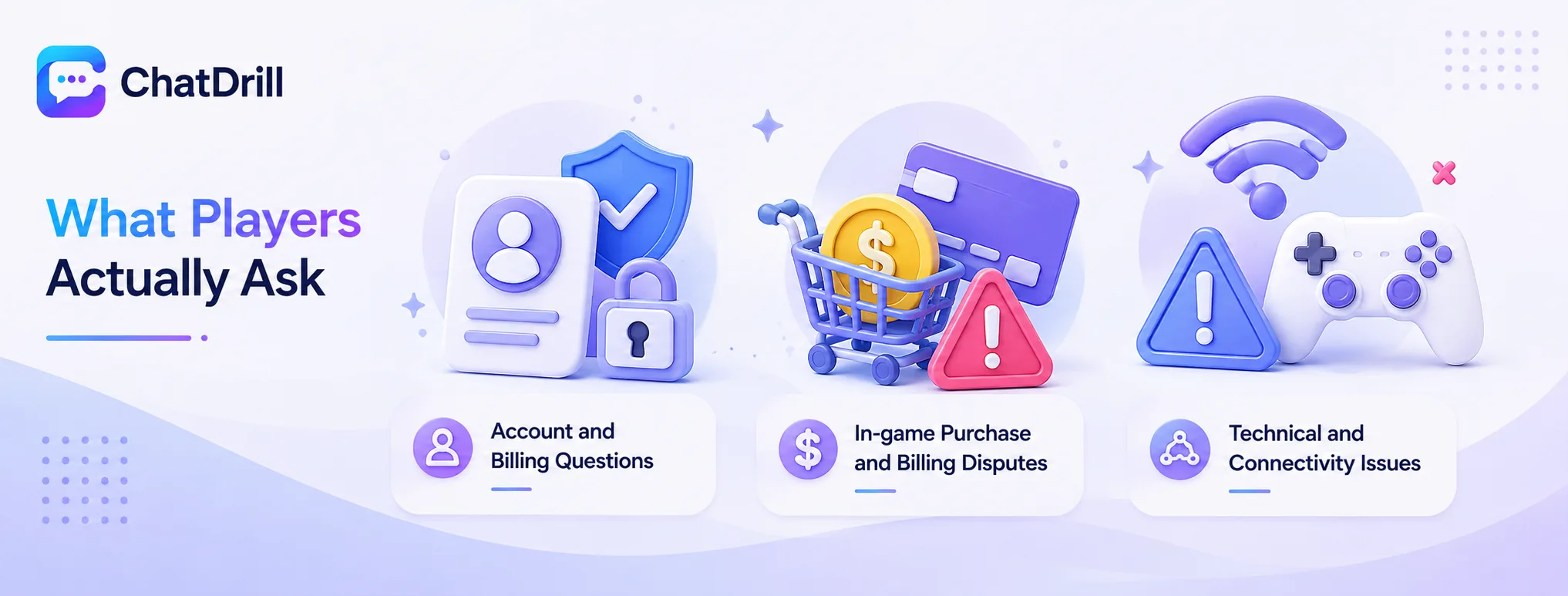
Players ask about account and billing issues, in-game purchase problems, and technical or connectivity issues, with purchase-related questions carrying particular sensitivity given how quickly frustration can escalate.
Account and billing questions
Login issues, subscription status, and general account questions make up steady, largely administrative chat volume, well suited to automation once connected to your account systems.
This category benefits from fast resolution, since a player locked out of their account is effectively locked out of something they've paid for.
In-game purchase and billing disputes
Questions and complaints about a failed or disputed in-game purchase carry real sensitivity, given how quickly this kind of frustration can turn into a public complaint on social media or a review platform.
This category rewards fast, empathetic handling and clear escalation, rather than a slow or dismissive response that risks amplifying the frustration.
Technical and connectivity issues
Questions about lag, disconnections, or a specific technical bug come up consistently and benefit from AI trained on known issues and common troubleshooting steps.
This category often spikes sharply around a known service issue, making it especially important that chat can reference current status information rather than generic troubleshooting alone.
Setup Playbook for Gaming Platform Chat
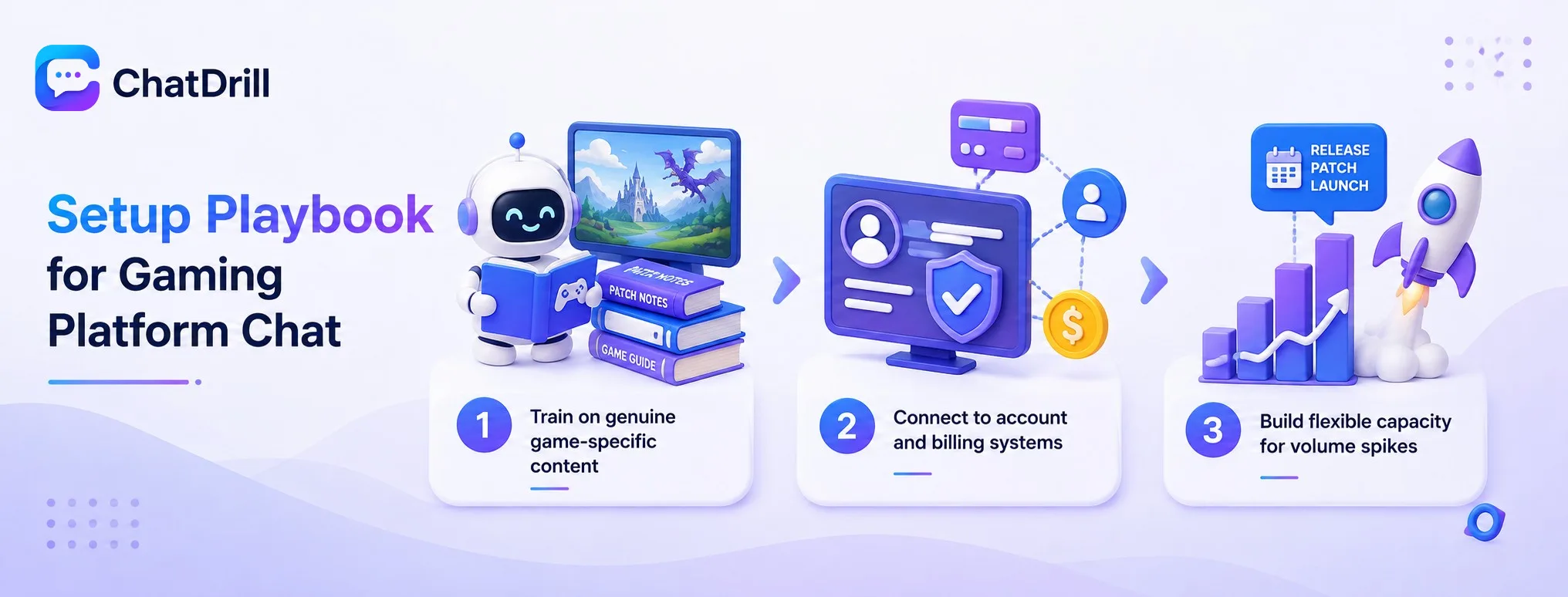
A strong setup trains AI with genuine, game-specific depth, connects chat to account and billing systems for fast resolution, and builds flexible capacity to handle known volume spikes around releases and patches.
Step 1: Train on genuine game-specific content
Feeding AI real, current game mechanics, known issues, and patch notes produces meaningfully more credible responses than generic customer service content a player would quickly see through.
This investment directly affects whether players trust chat enough to use it instead of routing around it to community forums or social media.
Step 2: Connect to account and billing systems
Integrating chat with account and billing data lets AI resolve login and purchase-status questions directly, rather than deflecting every specific question to a human agent.
This connection is particularly valuable for purchase disputes, where a fast, specific resolution can prevent frustration from escalating publicly.
Step 3: Build flexible capacity for volume spikes
Planning additional AI coverage or staffing specifically around known release dates, patches, and historically volatile periods keeps chat responsive exactly when demand is highest.
Testing your setup under a simulated launch-day volume spike helps confirm it holds up before an actual release puts it to the real test.
Common Mistakes Gaming Platforms Make With Chat
The most common mistakes are training AI on generic rather than game-specific content, handling purchase disputes too slowly or dismissively, and failing to plan capacity around known release and patch spikes.
Generic, non-game-specific training
AI trained on generic support content rather than real, current game knowledge tends to feel obviously scripted to players, undermining trust in the channel.
Investing in genuine game-specific depth is what actually makes gaming chat feel credible rather than a hollow automation exercise.
Slow or dismissive purchase dispute handling
A slow or generic response to a purchase dispute risks turning private frustration into a public complaint, given how quickly gaming communities can amplify a bad support experience.
Prioritizing fast, empathetic handling for this specific category protects both the individual player relationship and the platform's broader reputation.
No capacity planning for known spikes
Maintaining flat chat capacity through a major release or patch misses the reality that gaming platforms see sharp, predictable volume spikes around these specific events.
Reviewing historical volume data around past releases helps anticipate and prepare for the next predictable spike rather than being caught off guard each time.
Measuring Success for Gaming Platform Chat
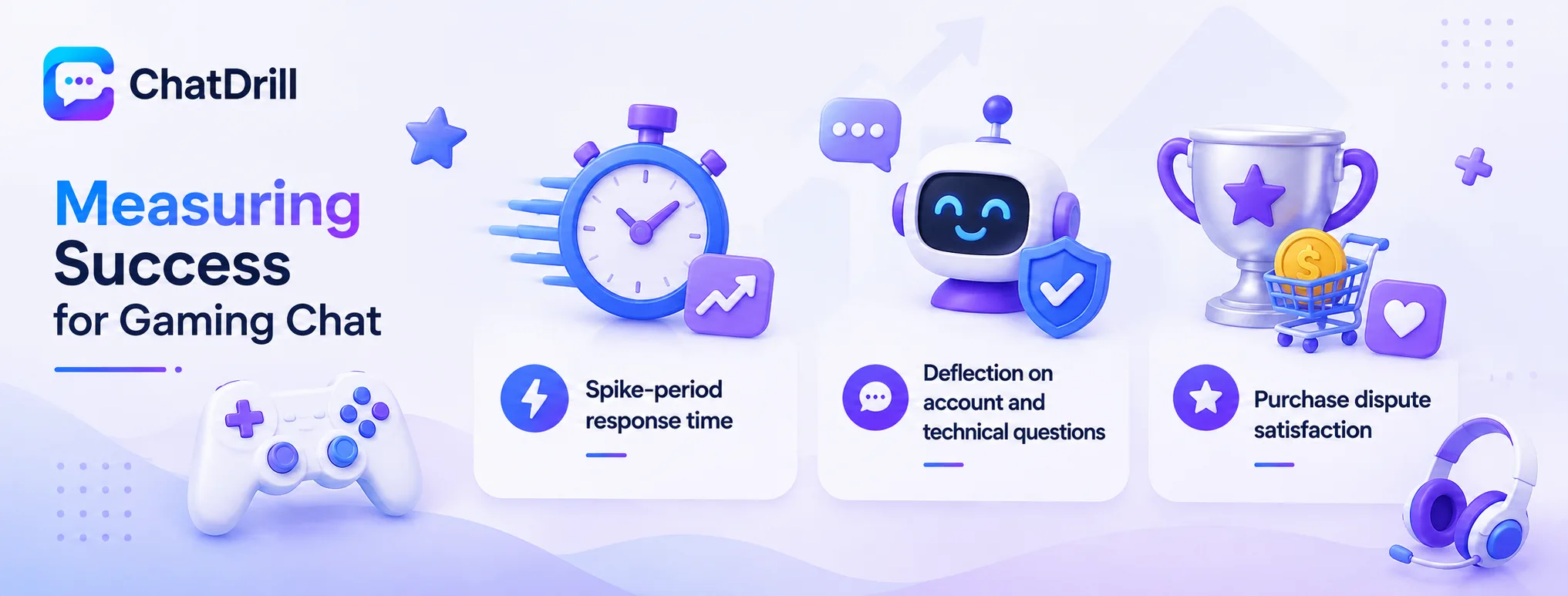
Track response time specifically during known volume spikes, AI deflection on account and technical questions, and satisfaction on purchase dispute resolution given its reputation sensitivity.
Spike-period response time
Tracking response time specifically during known release or patch periods, separately from average daily performance, confirms whether capacity planning is genuinely working when it matters most.
A strong general average can hide a real gap during these specific, predictable high-volume windows.
Deflection on account and technical questions
Tracking how much account, billing, and technical question volume AI resolves without human involvement shows the efficiency gain from well-connected systems and genuine game-specific training.
A rising deflection rate here frees support staff time for the more nuanced player situations that benefit from human judgment.
Purchase dispute satisfaction
Tracking satisfaction specifically for purchase dispute conversations, given their reputation sensitivity, confirms whether your fast, empathetic approach to this category is genuinely working.
This distinct tracking matters given how directly this category connects to public reputation in a vocal gaming community.
Rolling Out Chat for a Gaming Platform
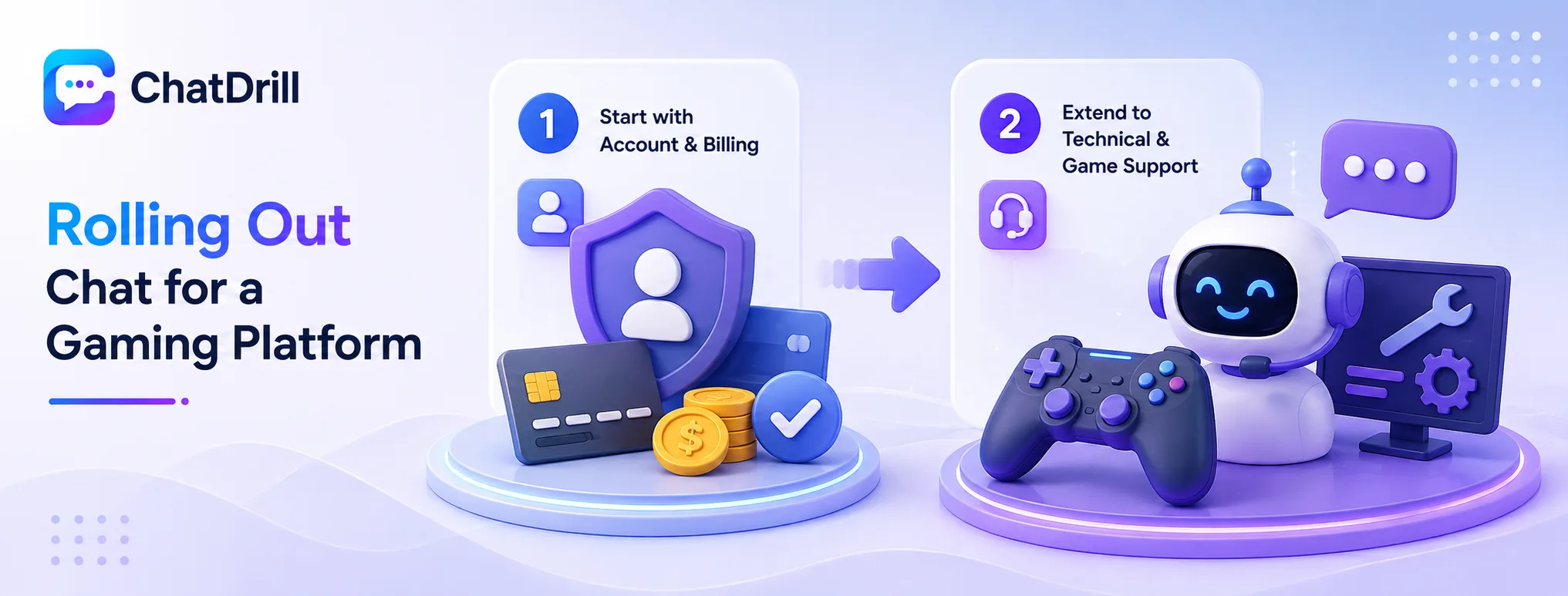
Launching chat first for account and billing questions, then extending to technical support once game-specific training is genuinely solid, keeps a gaming platform's rollout aligned with player trust building gradually.
Starting with account and billing support
Focusing initial launch on login, subscription, and billing questions gives your team a contained environment to validate account system integration before technical, game-specific volume is added.
This phase also lets you test purchase-dispute handling specifically, given its outsized reputation sensitivity, before relying on the setup during a major release.
A few weeks of close review here typically surfaces any account-data connection issues before they affect a larger volume of players.
Extending to technical and game-specific support
Once account-side chat is stable, adding genuinely deep game-specific training for technical and gameplay questions should be tested directly against real player question patterns.
Running through a simulated release-day scenario before an actual major patch confirms the setup can handle the sharp, predictable volume spike that reliably follows.
Community or player-support specialists should review a sample of AI-handled technical conversations, catching any answers that feel generic rather than genuinely game-aware.