
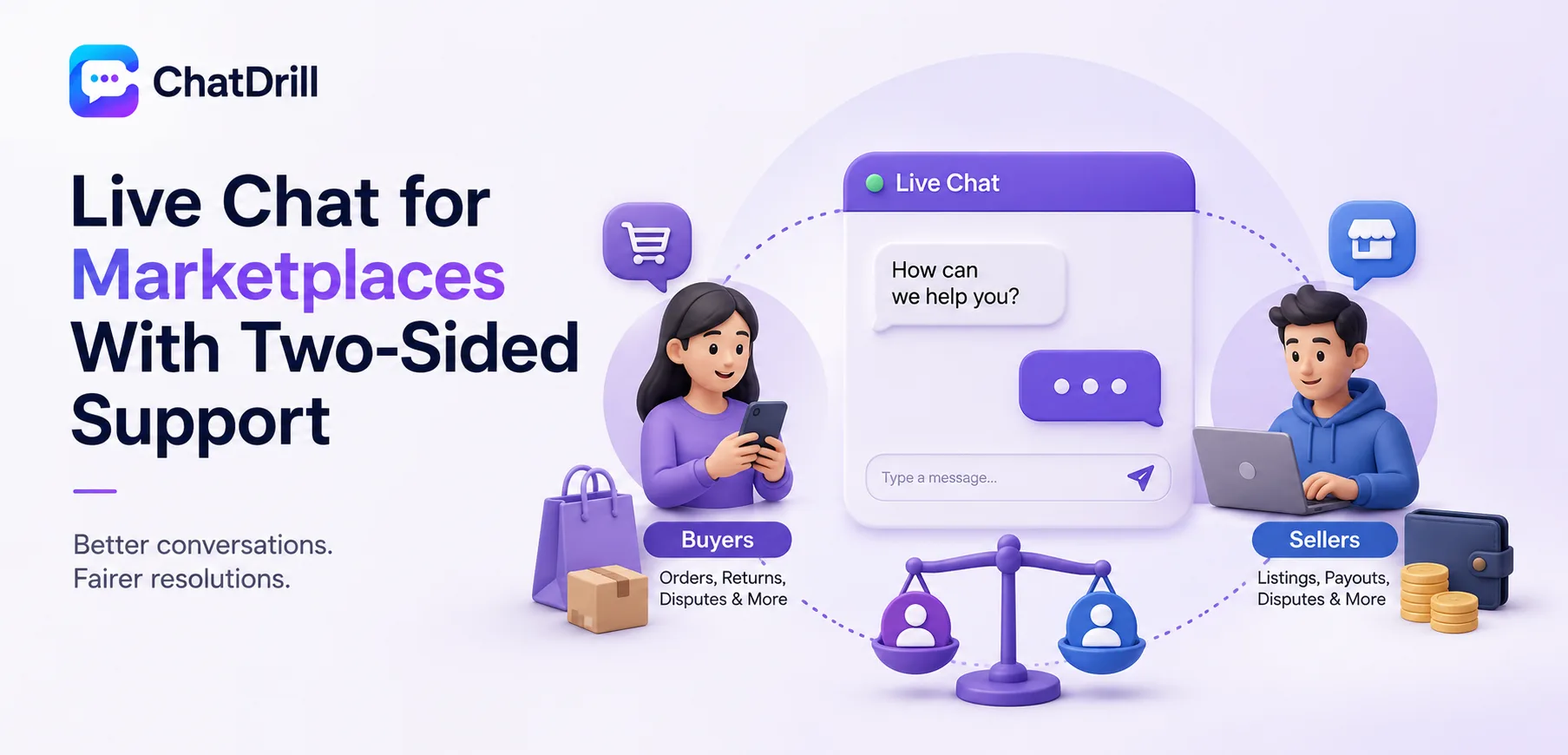
A marketplace's chat needs to serve two genuinely distinct audiences with often opposing interests, buyers with a question or complaint about an order, and sellers with questions about listings, payouts, or a dispute, each requiring a different tone and often a different resolution path.
Dispute conversations carry particular weight, since a marketplace sits in the middle of a transaction between two parties, meaning chat often needs to gather context from both sides fairly before a resolution can be reached.
Beyond disputes, buyers and sellers each generate their own steady stream of routine questions, order status and returns for buyers, payout timing and listing help for sellers, well suited to distinct, audience-specific automation.
This guide covers why marketplace chat needs to serve two sides well, what buyers and sellers typically ask, a practical setup approach, and mistakes worth avoiding.
Why Marketplace Chat Serves Two Genuinely Different Audiences
A marketplace's chat needs to serve buyers and sellers, two audiences with different questions and sometimes opposing interests in a dispute, requiring distinct handling rather than one generic flow.
The buyer experience side
A buyer reaching out is typically asking about an order's status, a return, or a problem with what they received, questions that benefit from fast, empathetic, and specific resolution.
This side of the marketplace tends to mirror general ecommerce chat needs, with an added layer of complexity when the issue actually involves a third-party seller rather than the marketplace itself.
The seller support side
A seller reaching out is typically asking about payout timing, listing visibility, or how to handle a specific buyer dispute, a genuinely different set of concerns tied to their business operating on the platform.
Recognizing sellers as a distinct audience with their own priorities, rather than treating them like buyers, is central to building trust with the sellers a marketplace depends on.
What Buyers and Sellers Actually Ask
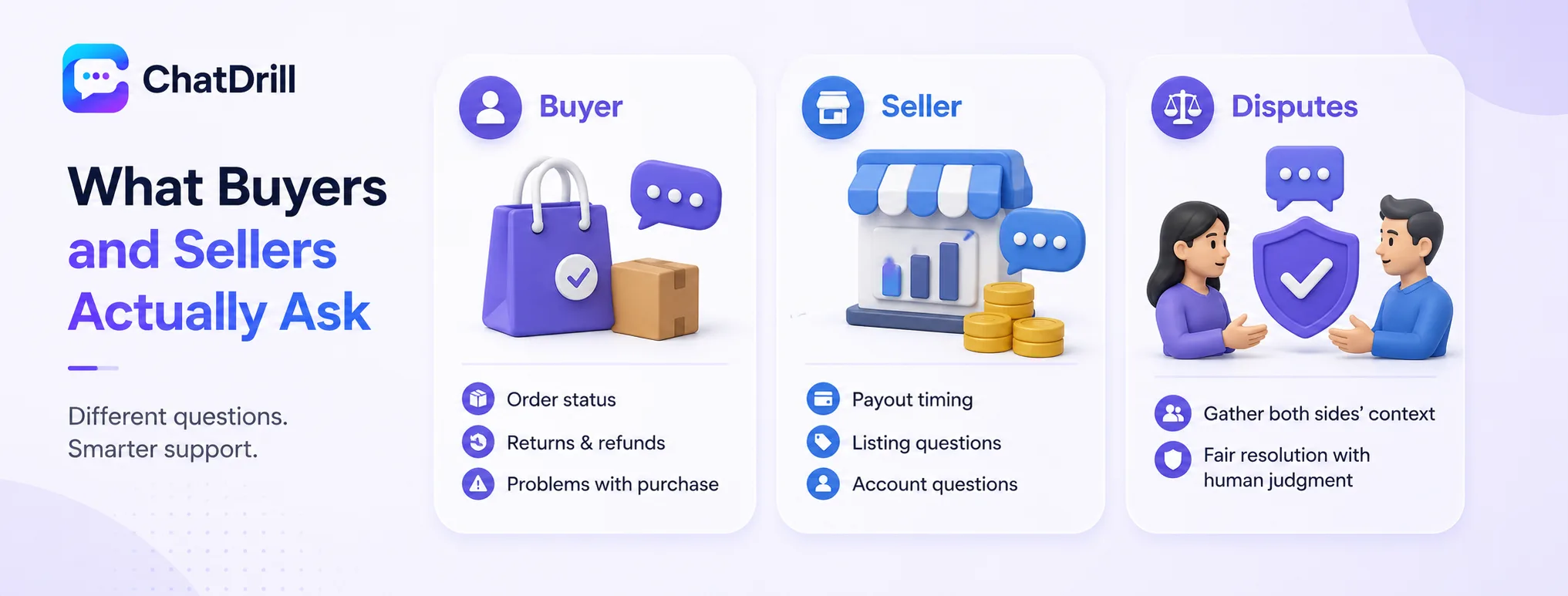
Buyers ask about order status, returns, and problems with a purchase, sellers ask about payouts, listing questions, and dispute handling, and both sides generate dispute-related conversations that require gathering context fairly.
Buyer questions
Order status, return and refund requests, and problems with a received item make up the bulk of buyer-side chat volume, well suited to automation once connected to order and seller data.
This category benefits from clear ownership, a buyer shouldn't need to figure out whether an issue is the marketplace's or the seller's responsibility before getting help.
Seller questions
Payout timing, listing visibility, and general account questions dominate seller-side chat volume, best answered with AI trained on your actual payout schedule and seller policies.
This category directly affects seller trust in the platform, making accuracy and responsiveness here particularly valuable for long-term seller retention.
Dispute-related conversations
A dispute between a buyer and seller requires gathering context from both sides before reaching a fair resolution, a category that benefits from careful, structured handling rather than a one-sided automated response.
AI can often help gather initial dispute details efficiently, but a genuine resolution decision usually benefits from human judgment given the competing interests involved.
Setup Playbook for Marketplace Chat
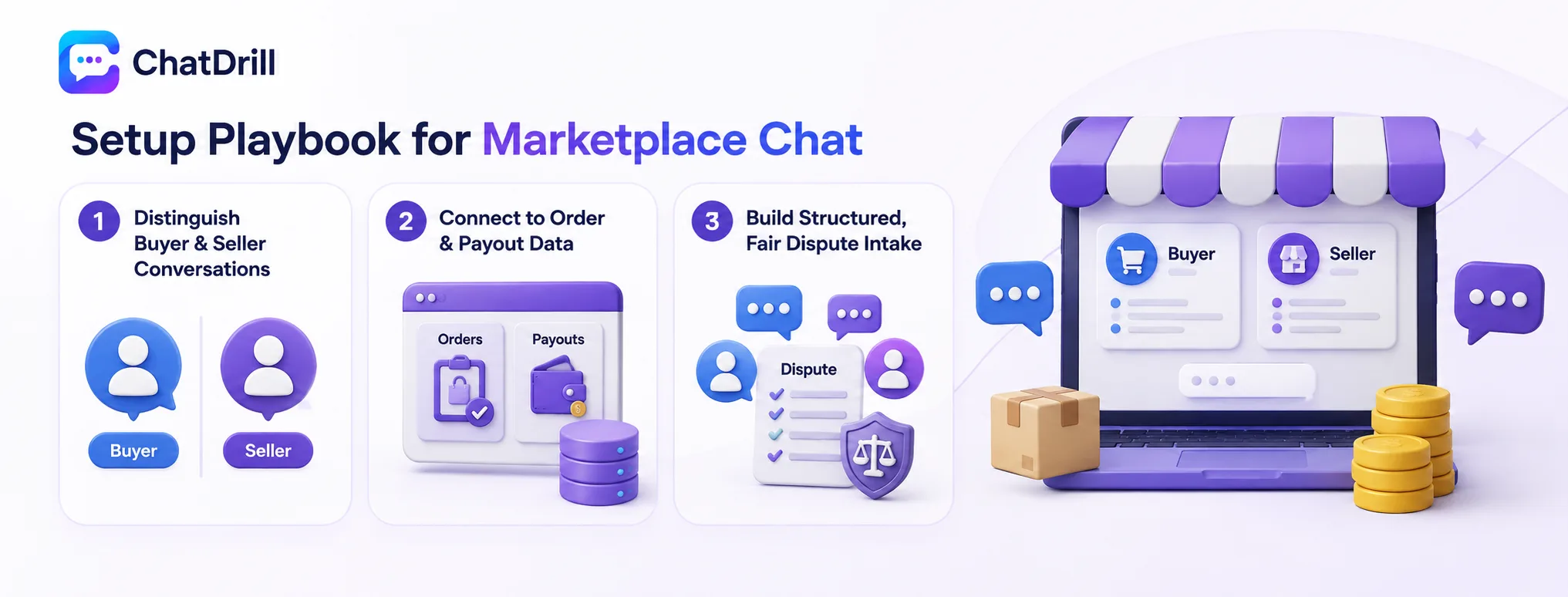
A strong setup distinguishes buyer from seller conversations from the start, connects chat to order and payout data for each audience, and builds a structured, fair intake flow for disputes.
Step 1: Distinguish buyer and seller conversations
Configuring chat to recognize whether a visitor is a buyer or a seller, and routing tone and content accordingly, ensures each audience gets an experience matched to their actual role and concerns.
This distinction also supports better internal routing, directing seller-specific issues to account management rather than general buyer support.
Step 2: Connect to order and payout data
Integrating chat with order data for buyers and payout data for sellers lets AI answer specific, accurate questions for each audience rather than giving generic responses.
This connection is the highest-value investment for both sides of the marketplace, given how much of their respective chat volume concentrates in exactly these status-checking questions.
Step 3: Build a structured, fair dispute intake flow
Designing chat to gather relevant details from whichever party initiates a dispute, then routing to a human for a genuinely fair resolution, respects the competing interests involved better than a one-sided automated response would.
This structured intake still saves meaningful time by capturing the necessary context upfront, even though the final resolution benefits from human judgment.
Common Mistakes Marketplaces Make With Chat
The most common mistakes are treating buyers and sellers identically, leaving buyers confused about whether an issue is the marketplace's or seller's responsibility, and handling disputes without gathering fair context from both sides.
Treating buyers and sellers identically
Applying the same generic chat flow to both audiences misses the opportunity to serve each of these genuinely different, sometimes opposing, sets of needs well.
Recognizing and routing these audiences distinctly produces a considerably better experience for both than a one-size-fits-all approach.
Unclear ownership of buyer issues
Leaving a buyer unsure whether the marketplace or the seller is responsible for resolving their issue creates frustration and often results in the same question being asked multiple times.
Chat that clarifies this ownership early, and routes accordingly, resolves issues more efficiently and reduces buyer frustration.
One-sided dispute handling
Resolving a dispute based only on the initiating party's account, without structured input from the other side, risks unfair outcomes that damage trust with whichever party feels unheard.
Building a genuinely structured, two-sided intake process protects the marketplace's credibility with both buyers and sellers over time.
Measuring Success for Marketplace Chat
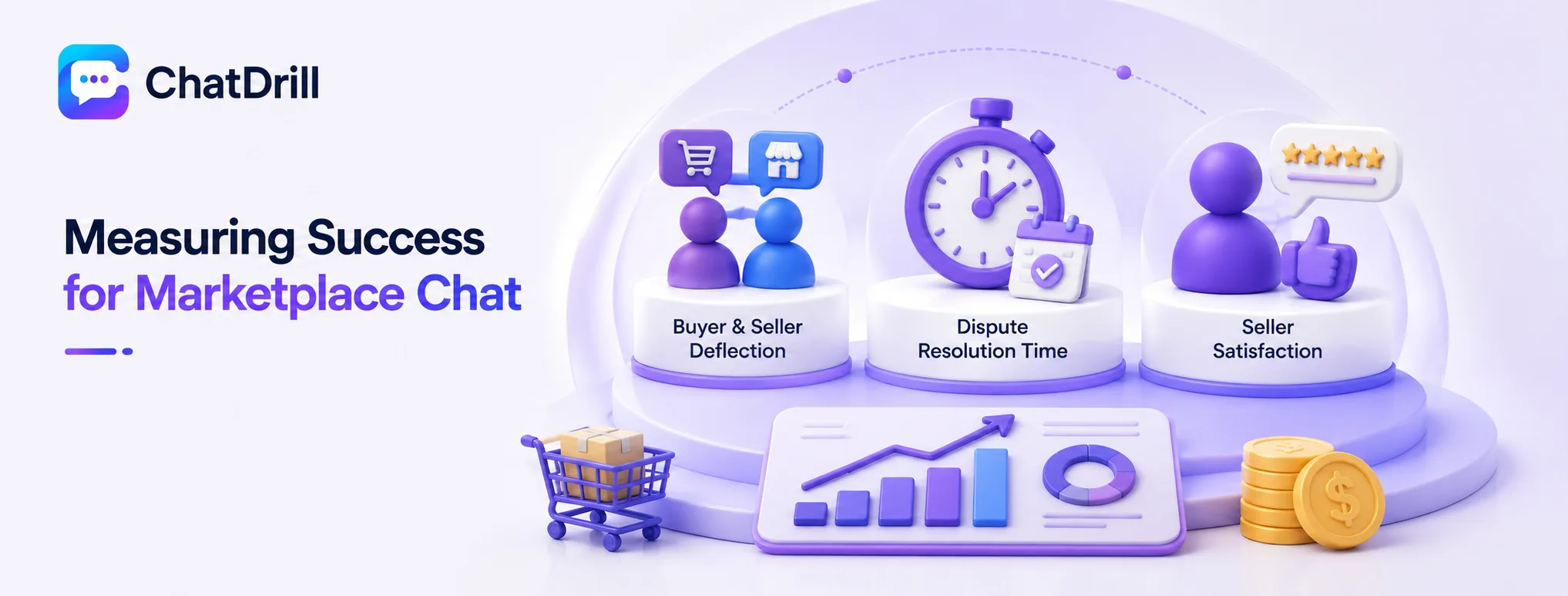
Track buyer and seller deflection rates separately, dispute resolution time, and satisfaction specifically among sellers given how directly this connects to seller retention.
Separate buyer and seller deflection
Tracking deflection rates separately for each audience reveals whether your distinct training and data connections are genuinely working for both sides rather than favoring one.
This separation also helps identify which audience's training content needs further investment based on where deflection lags.
Dispute resolution time
Tracking how long a dispute takes from initial chat contact to final resolution quantifies whether your structured intake process is genuinely speeding up this often-frustrating category.
A consistently improving resolution time suggests the intake flow is capturing the right context upfront, reducing back-and-forth during human review.
Seller satisfaction specifically
Tracking satisfaction specifically among sellers, separately from buyer satisfaction, matters given how directly seller trust connects to a marketplace's long-term supply and retention.
A declining seller satisfaction trend is worth investigating promptly, given how costly seller churn can be for a marketplace's overall health.
Rolling Out Chat Across Buyer and Seller Support
Launching chat first for buyer-side order and return questions, then extending to seller support and dispute handling once the two-sided routing is proven, keeps a marketplace's rollout manageable.
Starting with buyer support
Focusing initial launch on buyer order status and return questions lets your team validate order data accuracy in a more familiar, ecommerce-like category before seller-specific volume is added.
This phase also helps confirm whether buyer issues are being correctly routed based on marketplace versus seller ownership before a larger volume depends on that logic.
A few weeks of close review here typically surfaces any order-data gaps before they affect a larger share of buyer conversations.
Extending to seller support and disputes
Once buyer-side chat is stable, adding seller-facing payout and listing support brings a genuinely different audience worth testing with your seller account management team involved in review.
Dispute handling deserves particular care during this expansion, tested directly with realistic two-sided scenarios to confirm the intake flow gathers fair context from both parties.
This phase is worth treating as the most sensitive part of the rollout, given how directly fair dispute handling affects trust with both buyers and sellers.