
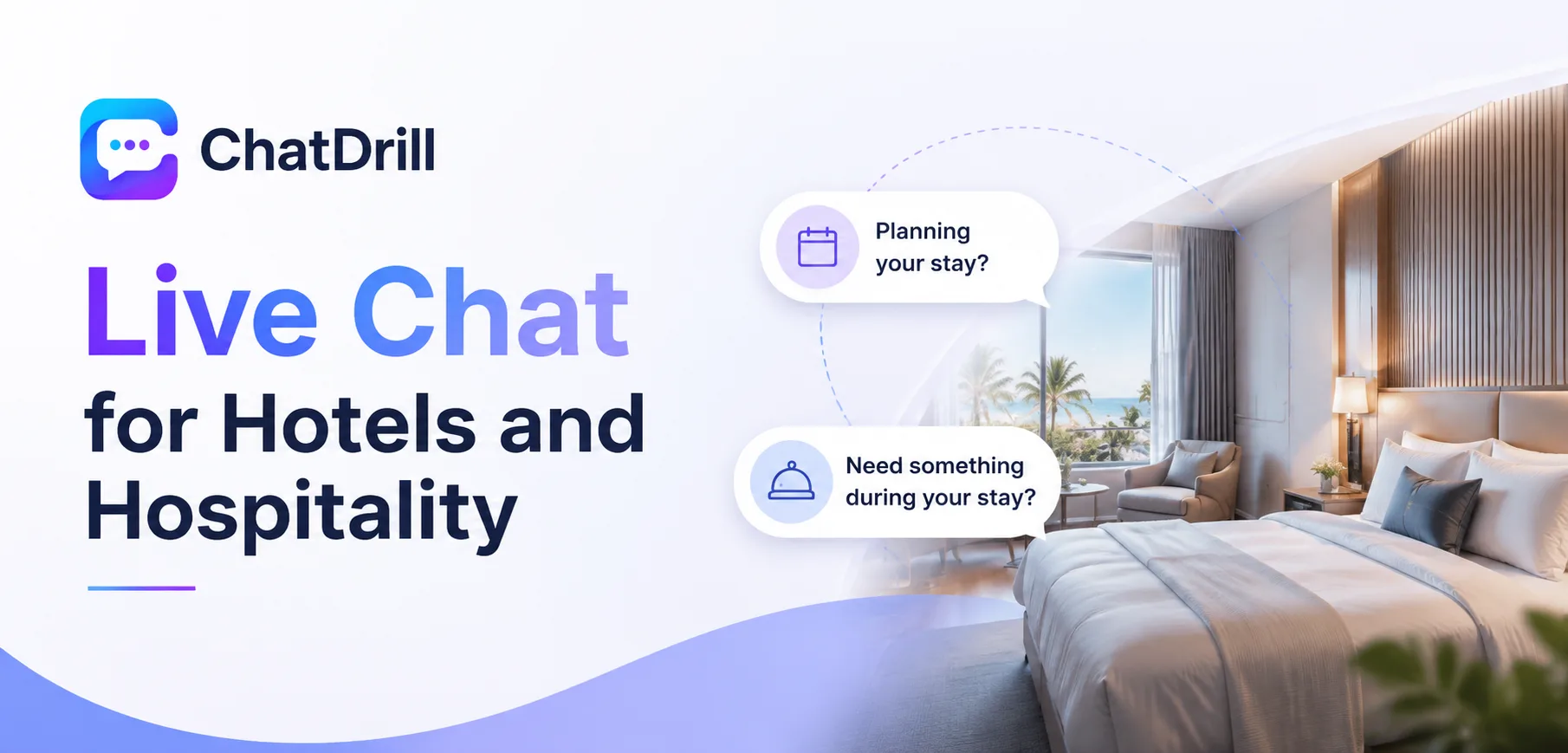
Hotel and hospitality chat spans two genuinely distinct moments, a prospective guest deciding whether to book and an already-checked-in guest with an in-stay need, each requiring a meaningfully different response approach and urgency level.
The pre-booking moment is where chat most directly influences revenue, a prospective guest comparing your property against several alternatives often books wherever they get a fast, specific answer to their question first.
In-stay chat carries a different kind of stakes, a guest already on property with a request or issue expects fast resolution, and a slow or unhelpful response here directly affects their actual experience and likely review of the stay.
This guide covers why hospitality chat serves these two distinct moments, what guests ask at each stage, a practical setup approach, and mistakes worth avoiding.
Why Hospitality Chat Spans Two Distinct Moments
Hotel chat needs to serve both a prospective guest deciding whether to book and an in-stay guest with a genuine, often time-sensitive need, requiring different priorities and response approaches for each.
The pre-booking decision moment
A prospective guest comparing your property against alternatives is often deciding based partly on how quickly and specifically their questions get answered, making chat a genuine competitive factor in the booking decision.
This moment rewards fast, accurate answers about room types, amenities, and rates, similar to how a real estate prospect responds to fast, listing-specific answers.
The in-stay experience moment
A guest already on property reaching out via chat, for a maintenance issue, a request, or a question, expects fast, real resolution given they're actively experiencing your property in the moment.
This moment carries direct reputation stakes, a poorly handled in-stay chat interaction can meaningfully affect a guest's overall impression and eventual review, more so than a pre-booking interaction typically would.
What Prospective and In-Stay Guests Ask
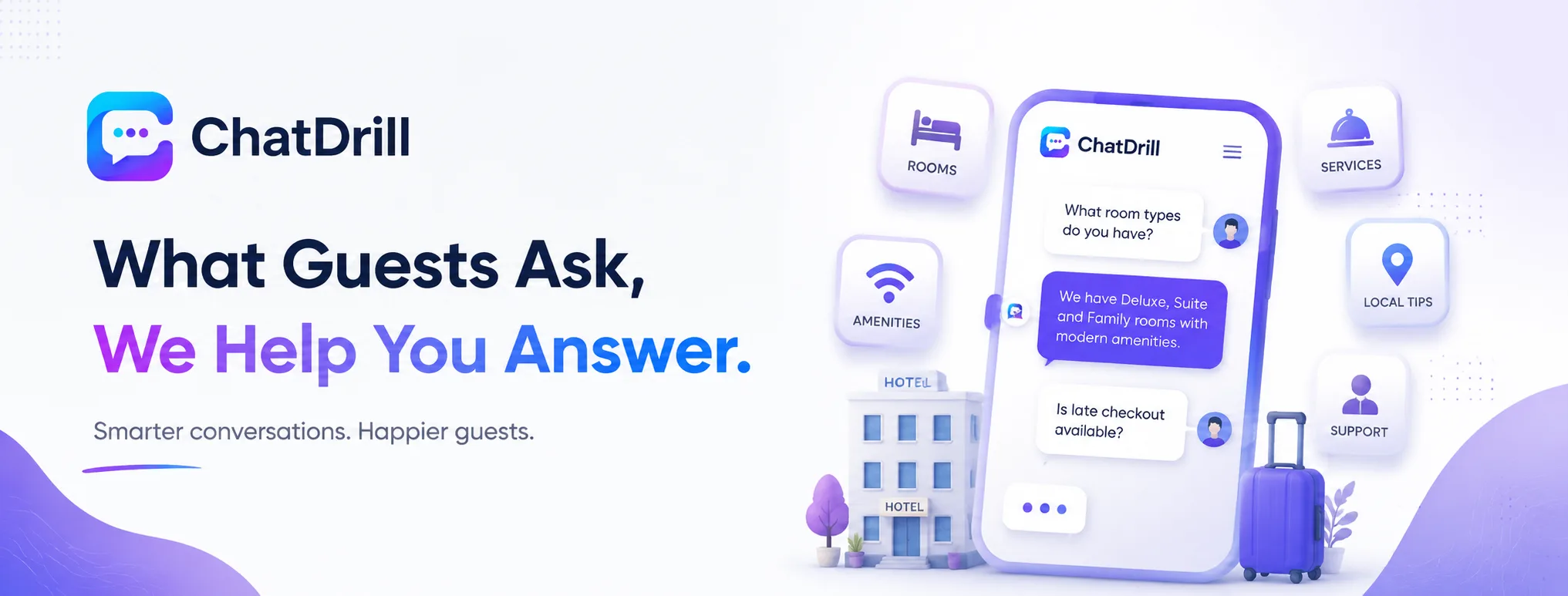
Prospective guests ask about room types, amenities, and rate or availability questions, while in-stay guests more often ask about property services, local recommendations, and specific requests or issues needing prompt resolution.
Pre-booking questions
Room type comparisons, amenity availability, and rate questions across different dates dominate pre-booking chat volume, best answered with AI trained on your actual current inventory and pricing.
This category directly ties to booking conversion, making speed and accuracy here particularly valuable given how directly comparable your property is to competing options during this research phase.
In-stay service questions
Questions about property amenities, local recommendations, and specific requests, an extra towel, a late checkout, come up consistently during a guest's stay and benefit from fast, helpful resolution.
This category rewards genuine local knowledge and specificity, a generic answer about local recommendations tends to feel less valuable than one reflecting real, curated property knowledge.
Issues and complaints
A maintenance problem, a service issue, or a genuine complaint requires fast acknowledgment and appropriate escalation, given the direct connection to guest satisfaction and likely review outcomes.
This category benefits from quick human involvement in most cases, since service recovery for a genuine issue usually requires judgment and empathy beyond what AI alone should attempt.
Setup Playbook for Hospitality Chat
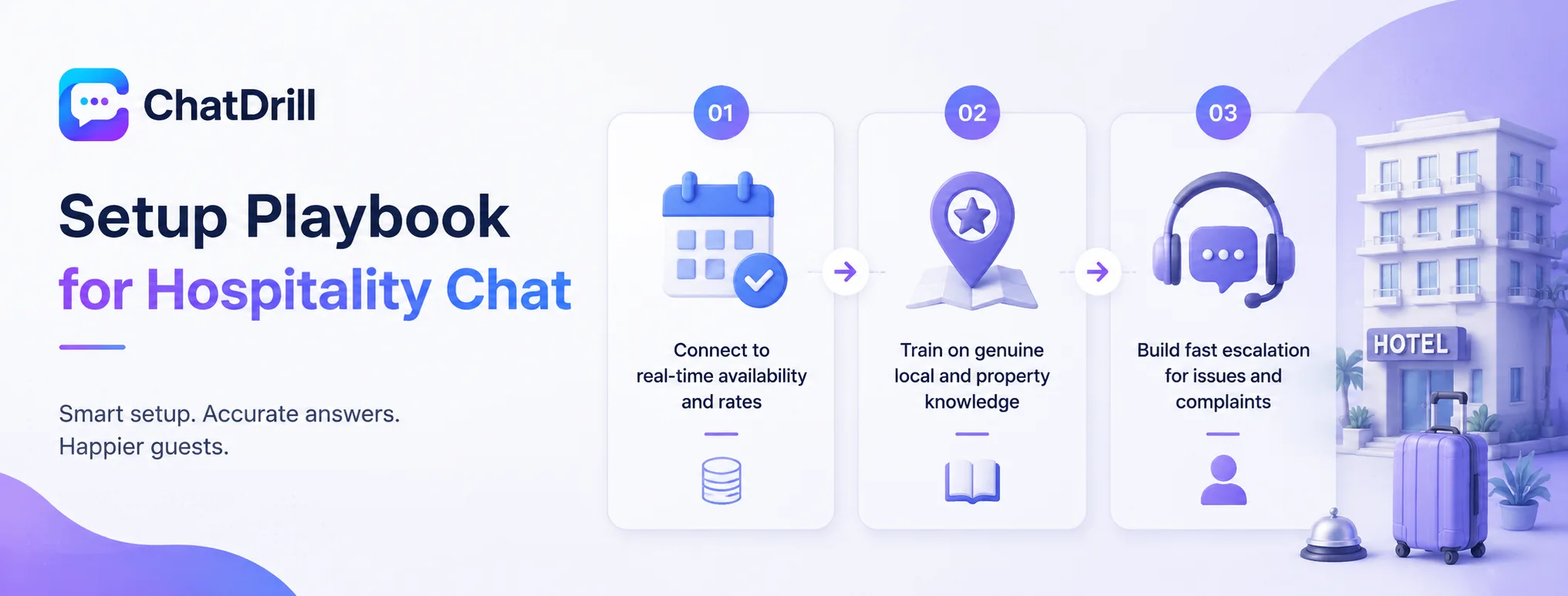
A strong setup connects chat to real-time room and rate availability for pre-booking accuracy, trains AI on genuine local and property knowledge for in-stay questions, and ensures fast human escalation for any genuine issue or complaint.
Step 1: Connect to real-time availability and rates
Integrating chat with your booking system ensures pre-booking questions get answered with genuinely current room type and rate information, rather than static or outdated details that could mislead a prospective guest.
This connection directly supports the accuracy that makes pre-booking chat genuinely competitive against other properties a prospect might be considering.
Step 2: Train on genuine local and property knowledge
Feeding AI real, specific information about your property's amenities and genuinely curated local recommendations, rather than generic content, produces meaningfully more valuable in-stay guest responses.
This depth of local knowledge is what separates a genuinely helpful hospitality chatbot from one that feels like a generic, unhelpful FAQ tool.
Step 3: Build fast escalation for issues and complaints
Configuring chat to recognize a genuine issue or complaint and quickly route it to appropriate human staff respects that service recovery in this category usually benefits from human judgment and empathy.
This fast-path routing directly protects the guest experience during exactly the moments most likely to influence a review or repeat booking decision.
Common Mistakes Hotels Make With Chat
The most common mistakes are showing outdated or inaccurate rate and availability information, providing generic rather than genuinely property-specific answers to in-stay questions, and routing genuine complaints through slow, automated escalation paths.
Outdated rate and availability information
A chatbot not connected to real-time booking data risks giving a prospective guest inaccurate information, undermining trust and potentially losing a booking to a competitor with more reliable, accurate chat responses.
This accuracy gap is worth addressing as a genuine priority, given how directly it affects the pre-booking decision moment discussed earlier.
Generic in-stay responses
In-stay questions answered with generic, non-property-specific content feel unhelpful to a guest who's actively on property and wants genuinely useful, specific information.
Investing in real, curated local and property-specific training content is what actually makes in-stay chat feel valuable rather than a hollow automation exercise.
Slow escalation for genuine complaints
A guest with a genuine issue who has to work through several automated steps before reaching a human experiences compounded frustration on top of the original problem.
Building explicit, fast recognition and escalation for this category, rather than treating every conversation with identical routing logic, protects the guest experience at exactly the moment it matters most.
Measuring Success for Hospitality Chat
Track chat-to-booking conversion for pre-booking conversations, guest satisfaction specifically on in-stay chat interactions, and escalation speed for flagged issues or complaints.
Chat-to-booking conversion
Tracking what share of pre-booking chat conversations result in an actual reservation quantifies chat's direct revenue contribution and reveals whether your accuracy and speed are genuinely competitive.
This metric benefits from comparison against your overall site conversion rate, revealing whether chat-engaged prospects convert notably better than the general visitor average.
In-stay chat satisfaction
Tracking satisfaction specifically for in-stay chat conversations, separate from pre-booking interactions, reveals whether your local knowledge and service quality genuinely land well with guests actively on property.
This distinct tracking matters because in-stay satisfaction connects more directly to overall guest experience and eventual review sentiment than pre-booking chat performance does.
Complaint escalation speed
Tracking how quickly a flagged issue or complaint reaches a human staff member confirms whether your fast-escalation setup is genuinely working during the moments most likely to affect guest satisfaction and reviews.
This metric deserves close attention, given how directly it connects to the reputation stakes involved in handling a genuine in-stay problem well or poorly.
Rolling Out Chat Across Front Desk and Reservations
Launching pre-booking chat first, then extending to in-stay guest support once front desk and reservations staff are aligned on escalation handling, keeps a property's rollout manageable rather than introducing both moments at once.
Starting with pre-booking chat
Focusing initial launch on room, rate, and availability questions lets your reservations team validate accuracy against real-time booking data before in-stay volume, with its different tone and urgency, is added.
This phase is also the right time to confirm your booking system integration is genuinely reliable, since any data gap here directly undermines the pre-booking accuracy guests are comparing across properties.
A couple of weeks reviewing real pre-booking conversations typically surfaces whether rate and availability answers are landing as intended before wider reliance on the setup.
Extending to in-stay support
Once pre-booking chat is stable, adding in-stay questions, local recommendations, amenity details, service requests, brings a genuinely different tone worth testing with front desk staff directly involved in review.
Complaint escalation deserves particular attention during this expansion, run through realistic complaint scenarios to confirm the fast-path routing to a human actually works before a real guest depends on it.
Front desk staff should understand clearly what triggers escalation so a routed complaint arrives with context rather than requiring the guest to explain their issue a second time.