
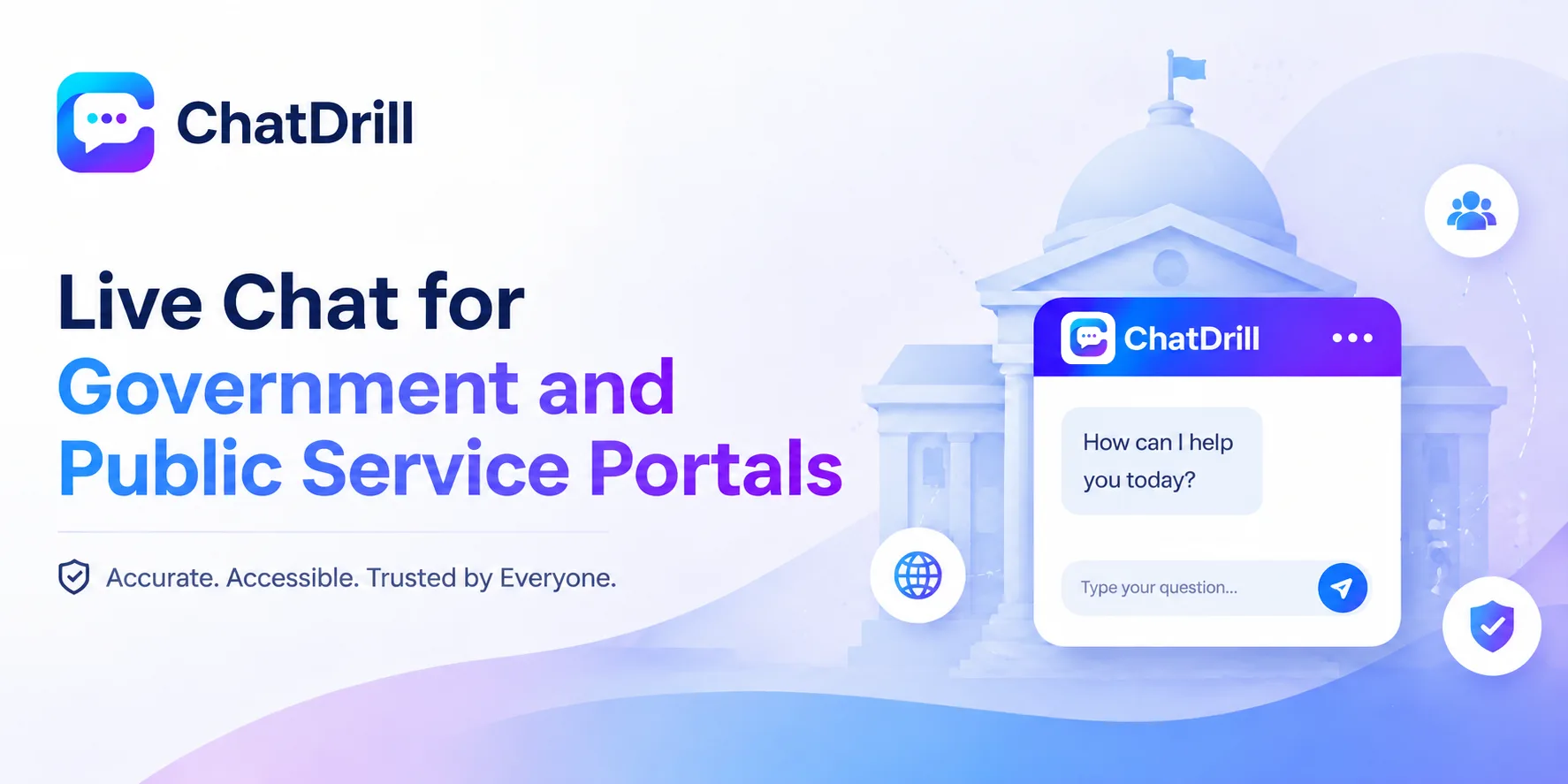
Chat for a government or public service portal serves an unusually broad, diverse public audience, meaning accessibility, clarity, and accuracy matter more here than almost anywhere else, since incorrect or confusing information can genuinely affect someone's access to a service they need.
Multilingual support also carries particular weight in this context, given how directly language access affects equitable service delivery across a genuinely diverse public that a private business's more targeted customer base typically doesn't need to serve as broadly.
The stakes of an inaccurate AI response are also meaningfully higher here than in many other contexts, given how directly government services can affect someone's benefits, legal standing, or access to essential support.
This guide covers why government chat requires particular care around accuracy and accessibility, what the public typically asks, a practical setup approach, and mistakes worth avoiding.
Why Government Chat Requires Particular Care
A government portal serves an unusually broad, diverse public audience where accuracy, clarity, and accessibility carry higher stakes than in most private business contexts, given how directly incorrect information can affect someone's access to a needed service.
The accuracy stakes are genuinely higher
An incorrect answer about eligibility, a deadline, or a required document can genuinely affect someone's access to a benefit or service they need, a meaningfully higher stakes category than most private business chat interactions.
This elevated stakes level warrants a more conservative approach to AI automation than many other industries, favoring clear escalation over confident automated answers wherever genuine ambiguity exists.
Why accessibility and multilingual support matter especially here
A government portal by definition serves the full breadth of the public it represents, making genuine accessibility and multilingual capability a service equity issue, not just a nice-to-have feature.
This broader responsibility distinguishes government chat from a private business that can reasonably focus resources on its specific target customer base's typical needs and languages.
What the Public Typically Asks
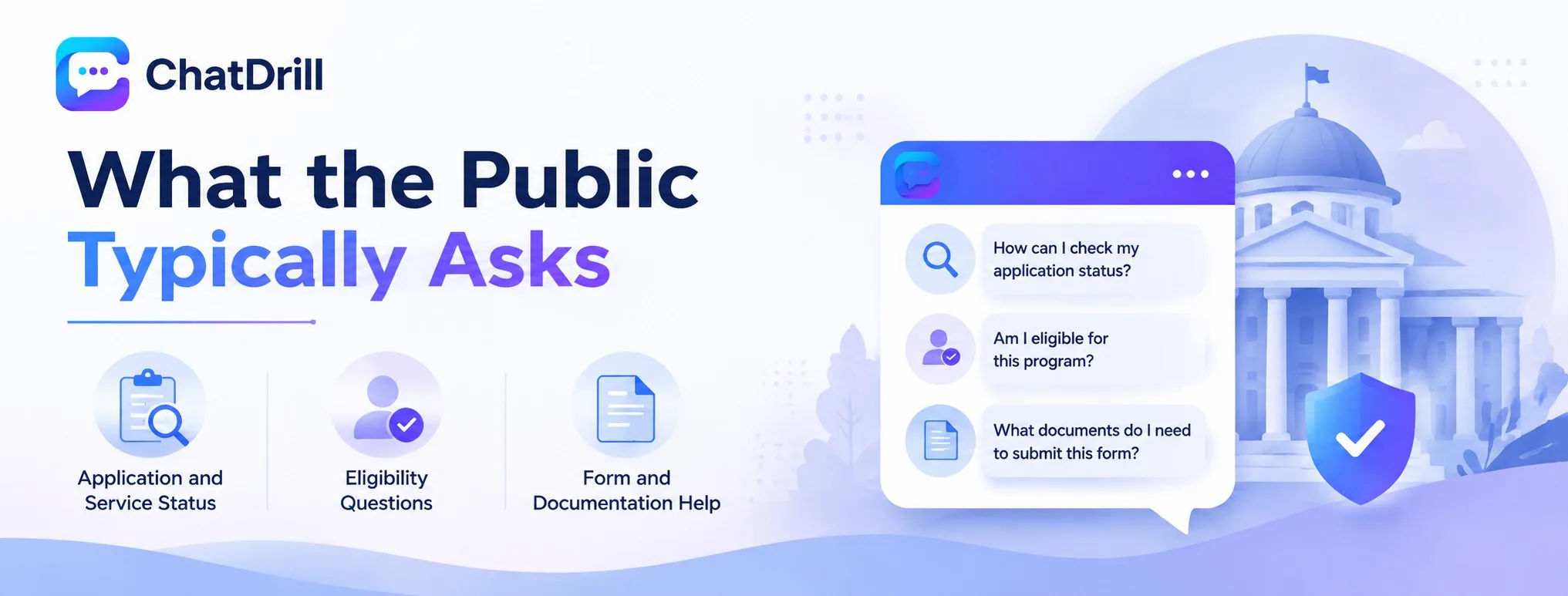
The public asks about service or application status, eligibility requirements for a specific program, and how to complete or submit required forms and documentation.
Application and service status
Checking the status of a submitted application or request is a consistently high-volume category, well suited to automation once connected to the relevant tracking or case management system.
This category delivers genuine public value when accurate, reducing the need for a phone call or in-person visit just to check a status update.
Eligibility questions
Questions about whether someone qualifies for a specific program or service require careful handling, since an incorrect eligibility answer carries real consequences, worth erring toward clear general guidance with escalation for anything genuinely ambiguous.
This category is where the conservative, escalate-when-uncertain approach matters most, given the direct impact an incorrect answer could have on someone's access to a needed benefit.
Form and documentation help
Questions about how to complete a specific form, what documentation is required, or where to submit an application come up frequently and are generally well suited to clear, accurate AI guidance.
This category rewards genuine clarity in training content, given how much confusion an unclear or incomplete answer can create for someone navigating a bureaucratic process.
Setup Playbook for Government Portal Chat
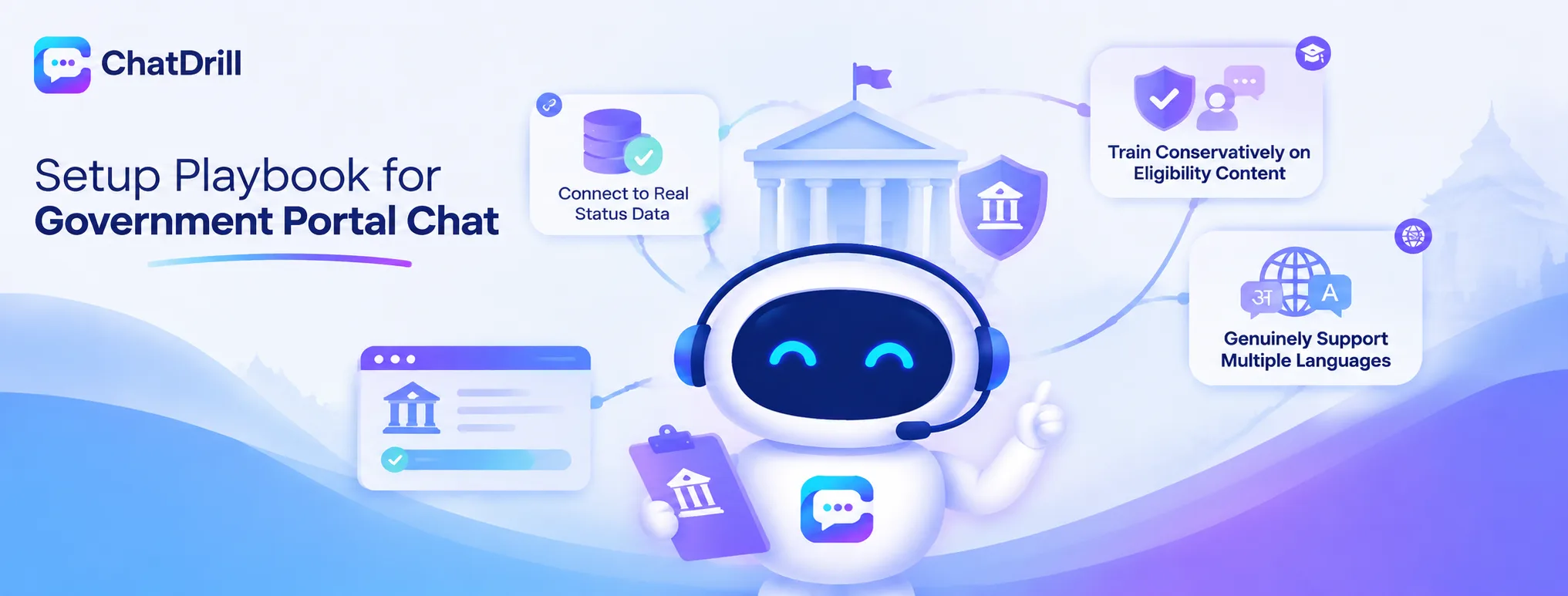
A responsible setup connects chat to real application or case status data, trains AI conservatively on eligibility questions with clear escalation for ambiguous cases, and genuinely supports multiple languages given the broad public this kind of portal serves.
Step 1: Connect to real status data
Integrating chat with your application or case management system lets AI provide accurate, current status information directly, reducing the need for a phone call or in-person visit for this routine, high-volume category.
This connection delivers genuine public service value while also reducing burden on phone and in-person channels for this specific, repetitive need.
Step 2: Train conservatively on eligibility content
Configure AI to provide general eligibility guidance while escalating anything genuinely ambiguous or case-specific to a human, given the real consequences an incorrect answer could have.
This conservative approach mirrors the careful escalation boundaries worth setting in healthcare and legal contexts, given the comparable stakes involved in a government eligibility determination.
Step 3: Genuinely support multiple languages
Given the broad public a government portal serves, investing in genuine multilingual chat capability, not just a token translation feature, matters as a real service equity consideration.
This investment should be tested directly across the specific languages your actual constituent population speaks, rather than assuming generic multilingual support is automatically sufficient.
Common Mistakes Government Portals Make With Chat
The most common mistakes are allowing AI to give confident but potentially incorrect eligibility determinations, treating multilingual support as an afterthought rather than a core requirement, and having no real connection to application status data.
Overconfident eligibility answers
Allowing AI to give a confident-sounding eligibility determination without appropriate escalation for genuinely ambiguous cases risks real harm if that answer turns out to be incorrect for someone's specific situation.
This is the single most important boundary to protect in government chat, given the direct consequences an incorrect eligibility answer can have on someone's access to needed services.
Multilingual support as an afterthought
Treating language accessibility as a minor feature, rather than a core service equity requirement, underserves a meaningful portion of the public a government portal is meant to serve.
This deserves genuine investment and testing, not a token translation feature assumed to be sufficient without direct verification.
No connection to status data
A chatbot unable to check actual application or case status forces every status inquiry back to a phone call or in-person visit, missing genuine efficiency potential for both the public and the agency's own capacity.
This gap is worth prioritizing given how high-volume and routine this specific category typically is for a government service portal.
Measuring Success for Government Portal Chat
Track AI deflection on status inquiries, escalation rate on eligibility questions to confirm conservative boundaries are respected, and chat usage and satisfaction across different languages to confirm genuine accessibility.
Status inquiry deflection
Tracking how much application and case status volume AI resolves without human involvement quantifies the efficiency gain from your status data connection, a genuinely high-value metric given this category's typical volume.
This deflection reduces burden on phone and in-person channels, freeing capacity for interactions that genuinely require human involvement.
Eligibility escalation rate
Regularly reviewing what share of eligibility conversations appropriately escalate, rather than receiving a potentially risky automated answer, confirms your conservative boundaries are being respected consistently.
This review deserves ongoing attention, similar to the boundary review practice worth maintaining in healthcare and legal chat contexts given comparable stakes.
Cross-language usage and satisfaction
Tracking chat usage and satisfaction broken out by language reveals whether your multilingual support is genuinely serving the full breadth of your constituent population well, not just technically available.
This distinct tracking matters given the genuine service equity stakes involved in ensuring language isn't a barrier to accessing government services through this channel.
Rolling Out Chat Across Departments and Language Teams
Starting with a single service or department's status inquiries before expanding portal-wide, and involving language access staff from the beginning, gives a government rollout the careful review this elevated-stakes context genuinely needs.
Piloting with one service area
Launching chat first for one specific service's status inquiries, rather than the full portal at once, lets staff closely review real conversations and confirm accuracy before wider public exposure.
This narrower start is also the right time to validate eligibility escalation boundaries directly, running realistic ambiguous scenarios through the flow to confirm it errs toward human review as intended.
A formal review by the department's own staff before expanding further gives the rollout a documented, defensible foundation appropriate to a public-facing government service.
Involving language access staff from the start
Bringing language access or equity office staff into the chat design process early, rather than adding multilingual support as an afterthought, ensures this genuine service equity consideration is built in from the beginning.
Testing chat directly in each language your constituent population actually speaks, with native or fluent reviewers, catches translation quality issues a purely automated check would likely miss.
Expanding to additional departments only after both the eligibility boundary and language coverage are validated keeps the rollout's elevated accuracy and accessibility standards consistent portal-wide.