
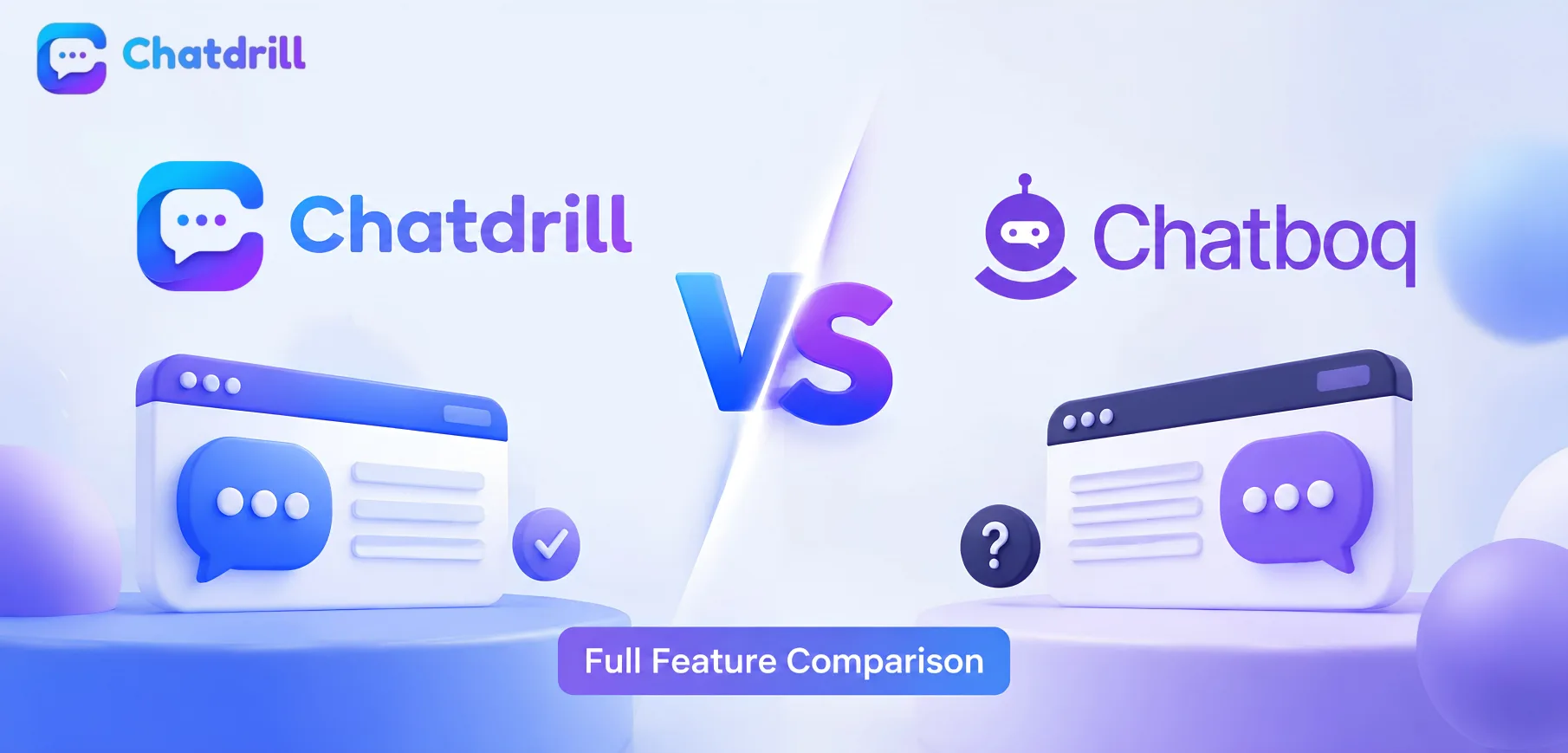
Chatboq has positioned itself as an accessible, straightforward live chat option for growing businesses, emphasizing a simple setup process that gets a team live with basic AI-assisted chat quickly.
ChatDrill takes a somewhat different emphasis, investing more heavily in deep, custom AI training that reflects your specific business content, trading a bit of setup simplicity for more tailored, accurate long-term results.
Both platforms serve a genuinely similar market of growing businesses wanting AI-assisted chat without enterprise-level complexity, making the specific feature and training-depth differences the most useful basis for comparison.
This comparison covers setup approach, AI training depth, pricing, and which type of business each platform tends to fit, along with practical guidance for testing both.
Quick answer: ChatDrill and Chatboq both offer live chat with AI-assisted automation aimed at growing businesses, but ChatDrill emphasizes deeper, custom AI training built specifically around your product content, while Chatboq focuses on a simpler, more accessible setup
process, making the right choice depend on whether you prioritize AI depth or quick, straightforward deployment.
Setup Approach and Time to Launch
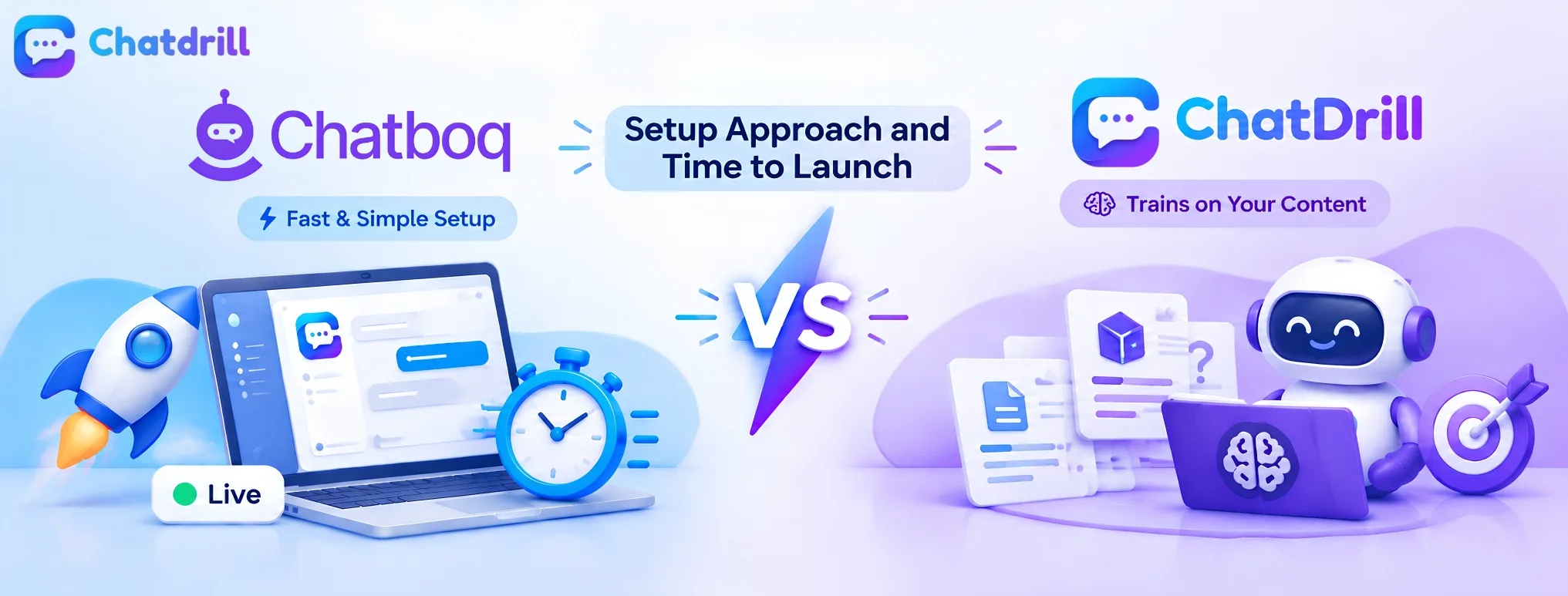
Chatboq emphasizes a fast, simple setup process, while ChatDrill's setup involves more upfront investment in training AI around your specific content.
Chatboq's streamlined onboarding
Chatboq's setup flow is designed to get a business live with functional chat quickly, using simpler configuration steps that don't require extensive upfront content preparation.
This approach genuinely suits a business wanting to launch chat with minimal setup friction, accepting a more general, less deeply customized starting point.
ChatDrill's investment in initial training
ChatDrill's setup process involves training AI directly on your product details and common questions, requiring somewhat more upfront effort but producing responses genuinely tailored to your specific business from the start.
This investment tends to pay off in more accurate, business-specific answers once live, compared to a more generic initial configuration.
AI Training Depth and Accuracy
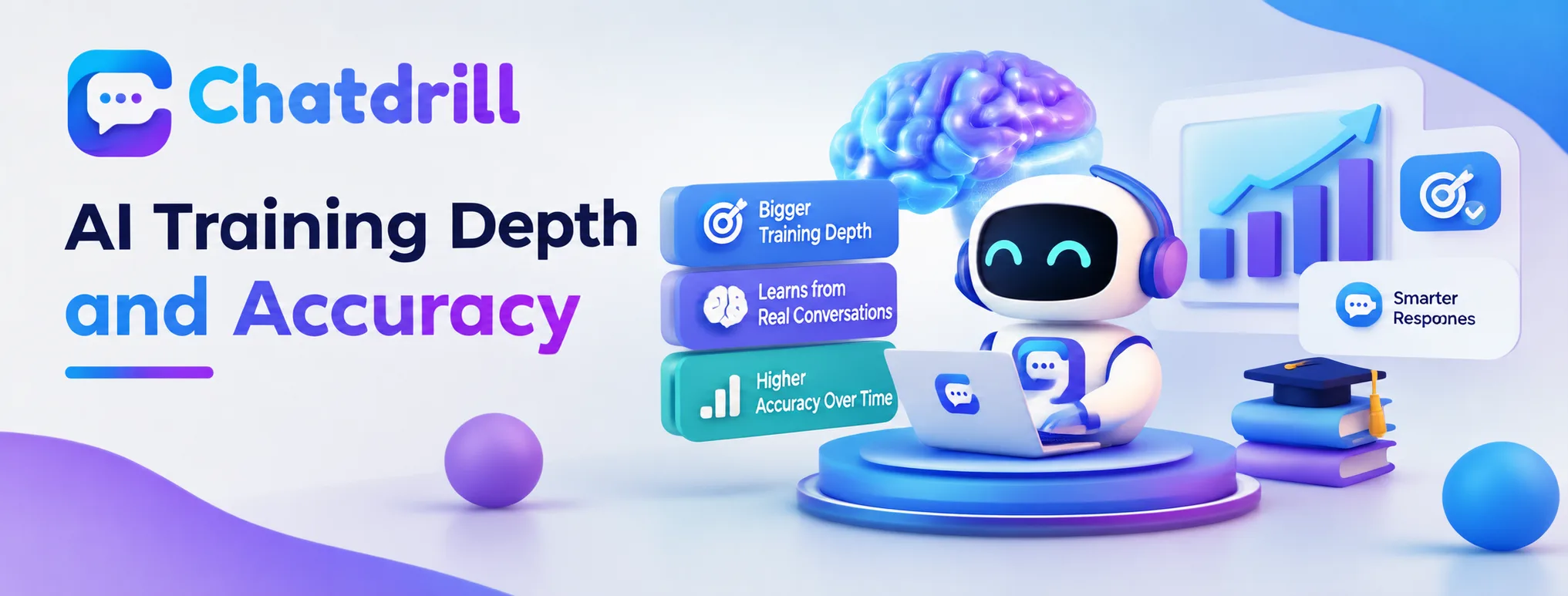
ChatDrill's custom training approach tends to produce more accurate, business-specific AI responses over time compared to Chatboq's more streamlined, general automation.
How ChatDrill's training compounds over time
Because ChatDrill is built around ongoing refinement based on real conversation patterns, its accuracy for your specific business tends to improve meaningfully as more real usage data feeds back into training.
This compounding improvement rewards a business willing to invest attention in reviewing and refining AI performance over its first few months of use.
Chatboq's more general automation approach
Chatboq's automation, while genuinely functional for common scenarios, doesn't emphasize the same depth of custom training, meaning accuracy for highly specific or unusual business questions may not match a more deeply trained alternative.
This works well for a business whose support needs are fairly standard and predictable, closely matching common patterns Chatboq's automation already handles well.
Pricing Comparison
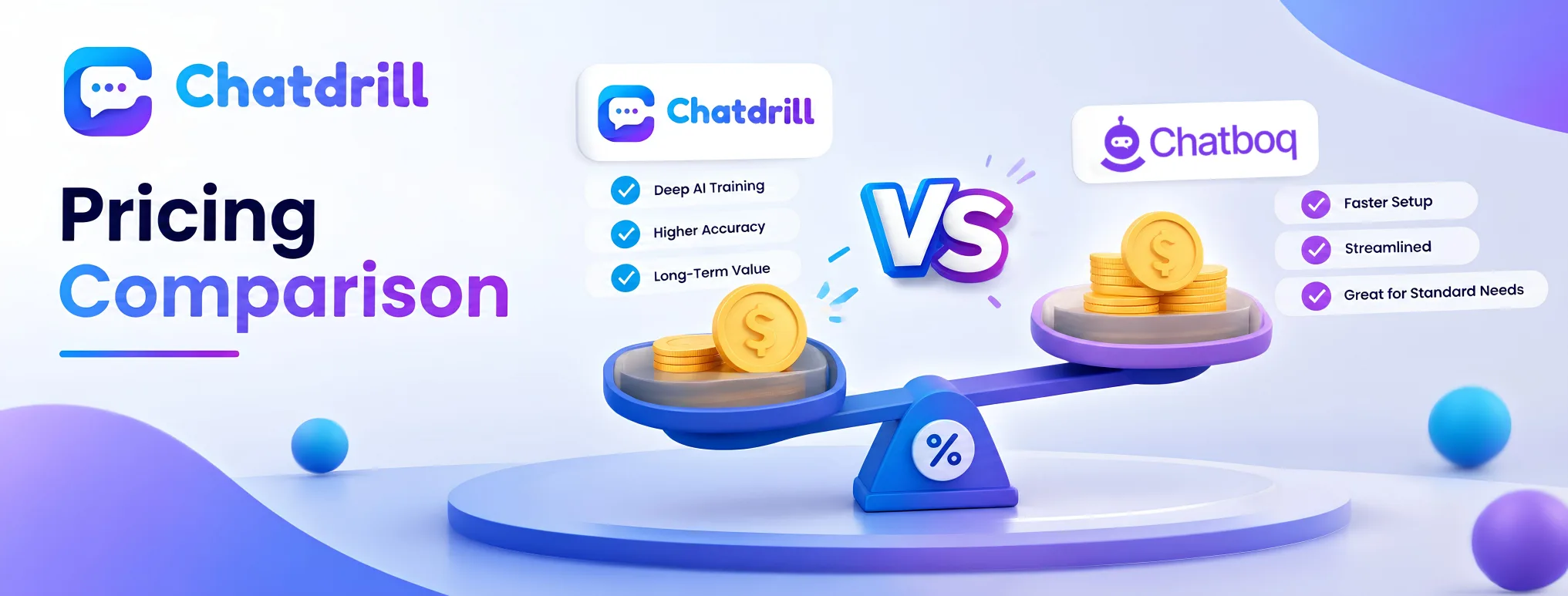
Both platforms price accessibly for growing businesses, though the value calculation differs based on how much you weigh setup speed against long-term AI accuracy.
Evaluating cost against setup speed
For a business prioritizing the fastest possible path to live chat, Chatboq's pricing paired with its streamlined setup may deliver acceptable value even without deep customization.
This tradeoff favors speed to launch over the more gradual, compounding accuracy improvement ChatDrill's approach offers.
Evaluating cost against long-term accuracy
For a business planning to rely on chat significantly over time, ChatDrill's pricing reflects an investment in AI depth that tends to deliver increasing value the longer the platform is used and refined.
This longer-term view often favors ChatDrill's approach once the initial setup investment is weighed against months or years of improving accuracy.
Which Business Each Platform Fits
Chatboq fits a business prioritizing fast, simple deployment, while ChatDrill fits a business willing to invest modest additional setup effort for deeper, compounding AI accuracy.
When Chatboq is likely the better fit
A business wanting to launch chat quickly with minimal setup investment, and whose support needs are fairly standard and predictable, tends to find Chatboq's streamlined approach a genuinely good match.
This fit is strongest for a business prioritizing speed over long-term, deeply tailored AI accuracy.
When ChatDrill is likely the better fit
A business with more specific product details or support needs, or one planning to rely on chat as a genuinely central channel over time, tends to find ChatDrill's deeper training investment delivers more value as the relationship matures.
This fit is strongest for a business willing to trade a bit of setup simplicity for meaningfully more accurate, tailored results long-term.
Testing Both Platforms Before Committing
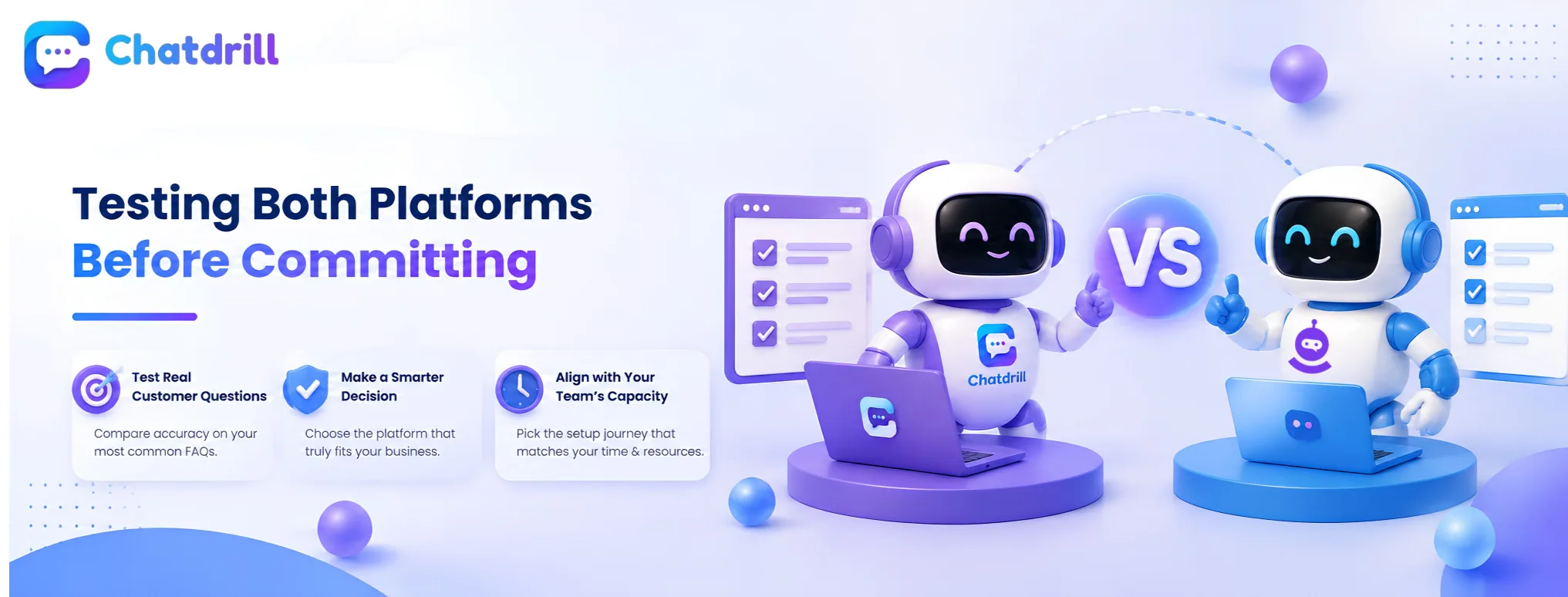
Running a direct, hands-on comparison against your own real customer questions gives a more reliable answer than relying on either platform's general positioning alone.
Comparing initial accuracy on your own FAQs
Testing how each platform's out-of-box setup handles a handful of your most common, genuinely representative customer questions reveals the practical accuracy gap more concretely than marketing claims from either side.
This comparison is worth running with your actual, sometimes idiosyncratic product details specifically, since generic test questions may not reveal a meaningful difference either way.
Weighing your own team's setup capacity
Honestly assessing how much time your team can realistically invest in initial chat setup helps determine whether Chatboq's faster path or ChatDrill's deeper investment better matches your actual current capacity, not just your long-term ideal.
This practical constraint sometimes matters as much as the theoretical best choice, especially for a smaller team without dedicated time for extensive AI training work upfront.