
Olark built a long-standing reputation around a clean, straightforward chat widget paired with genuinely useful analytics, appealing to businesses wanting solid conversion tracking without excessive automation complexity.
ChatDrill approaches conversion differently, investing in AI trained to genuinely qualify and guide a visitor toward conversion automatically, rather than relying primarily on a human agent to drive that conversation.
The question of which platform "converts better" depends heavily on your actual chat volume and how much of your conversion process can reasonably be automated versus genuinely needing human touch.
This comparison covers each platform's approach to conversion, automation capability, pricing, and which type of business tends to see better conversion results with each, along with practical measurement guidance.
Quick answer: Olark is known for its straightforward, conversion-focused chat widget with strong analytics and simple automation rules, while ChatDrill's genuinely trained AI tends to resolve and qualify more conversations without human involvement, meaning ChatDrill
generally converts better for a business with meaningful volume, while Olark remains a solid, simple choice for lower-volume, human-led conversion conversations.
Different Approaches to Driving Conversion

Olark relies primarily on human agents guided by simple automation rules, while ChatDrill's AI actively qualifies and guides visitors toward conversion with less required human involvement.
Olark's human-led conversion approach
Olark's automation rules can trigger proactive messages and route conversations, but the actual conversion conversation typically relies on a human agent applying genuine sales or support skill in real time.
This human-led approach can perform very well when skilled agents are consistently available, but scales less efficiently as volume grows beyond what agents can personally handle.
ChatDrill's AI-driven conversion approach
ChatDrill's AI is trained to actively ask qualifying questions and guide a visitor toward a genuine next step, whether that's a purchase, a demo booking, or a qualified handoff to sales, without requiring a human to drive every conversation.
This approach scales more efficiently with volume, since AI can apply consistent qualification logic across many simultaneous conversations without the capacity limits a human team faces.
Analytics and Optimization Capability
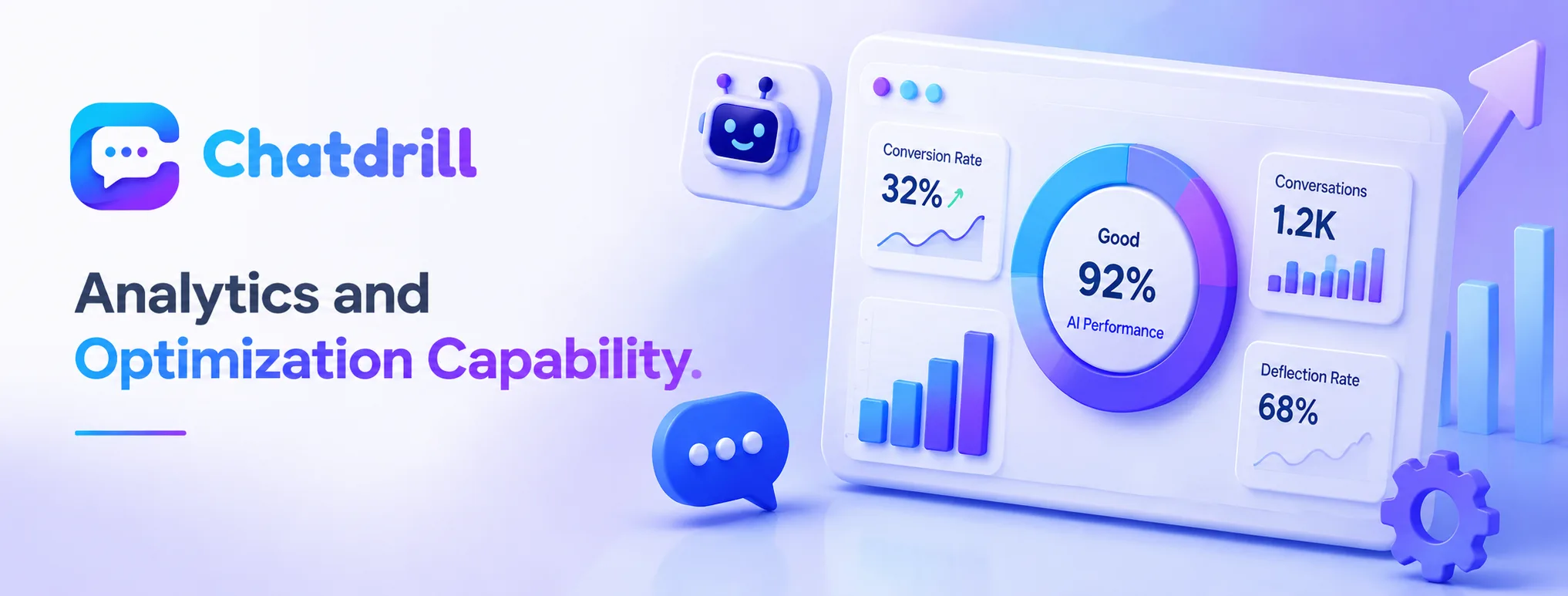
Olark's analytics are genuinely strong for tracking conversation-level conversion data, while ChatDrill's analytics extend into AI-specific performance metrics relevant to automated qualification.
Olark's established conversion analytics
Olark offers solid, well-established reporting on conversation volume, agent performance, and conversion tracking, giving a team clear visibility into how human-led conversations are performing.
This analytics depth reflects Olark's longer platform history and specific focus on conversion-relevant metrics for human-handled chat.
ChatDrill's AI-specific performance tracking
ChatDrill's analytics extend into AI-specific metrics, qualification accuracy, deflection rate, and automated conversion rate, giving visibility specifically into how well the AI itself is driving results without human involvement.
This AI-focused reporting matters most for a business wanting to understand and improve automated conversion performance specifically, not just overall conversation outcomes.
Pricing and Volume Considerations
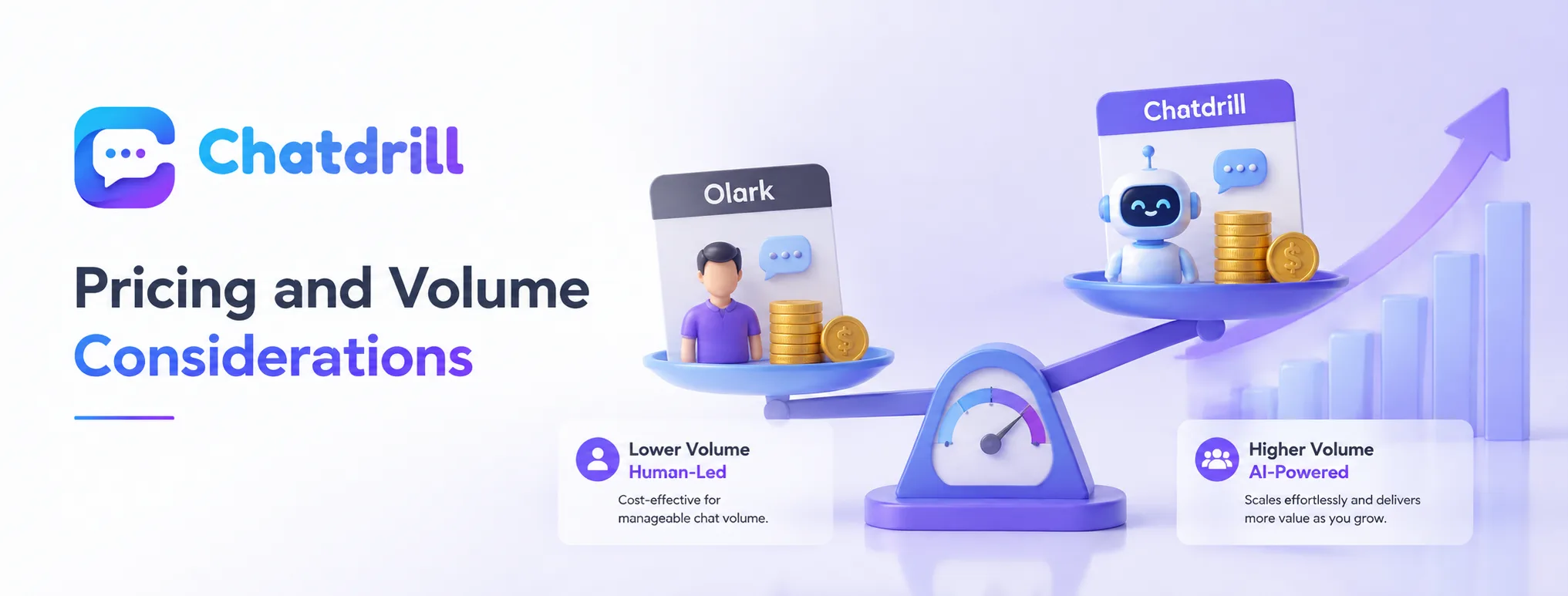
Olark's pricing suits a lower-volume, human-led conversion approach, while ChatDrill's pricing reflects AI capability that delivers more value as volume grows.
When Olark's pricing model works well
For a business with manageable chat volume where human agents can genuinely handle most conversion conversations personally, Olark's pricing tied to straightforward chat functionality represents solid, appropriate value.
This works especially well when the human touch itself is a genuine part of what drives conversion for your specific business or audience.
When ChatDrill's pricing model works well
As volume grows beyond what a human team can personally handle for every conversion conversation, ChatDrill's AI investment increasingly pays for itself by maintaining consistent qualification quality at a scale human agents alone couldn't sustain.
This value curve tends to favor ChatDrill more clearly as your business grows, even if Olark represented reasonable value at an earlier, lower-volume stage.
Which Business Sees Better Results With Each
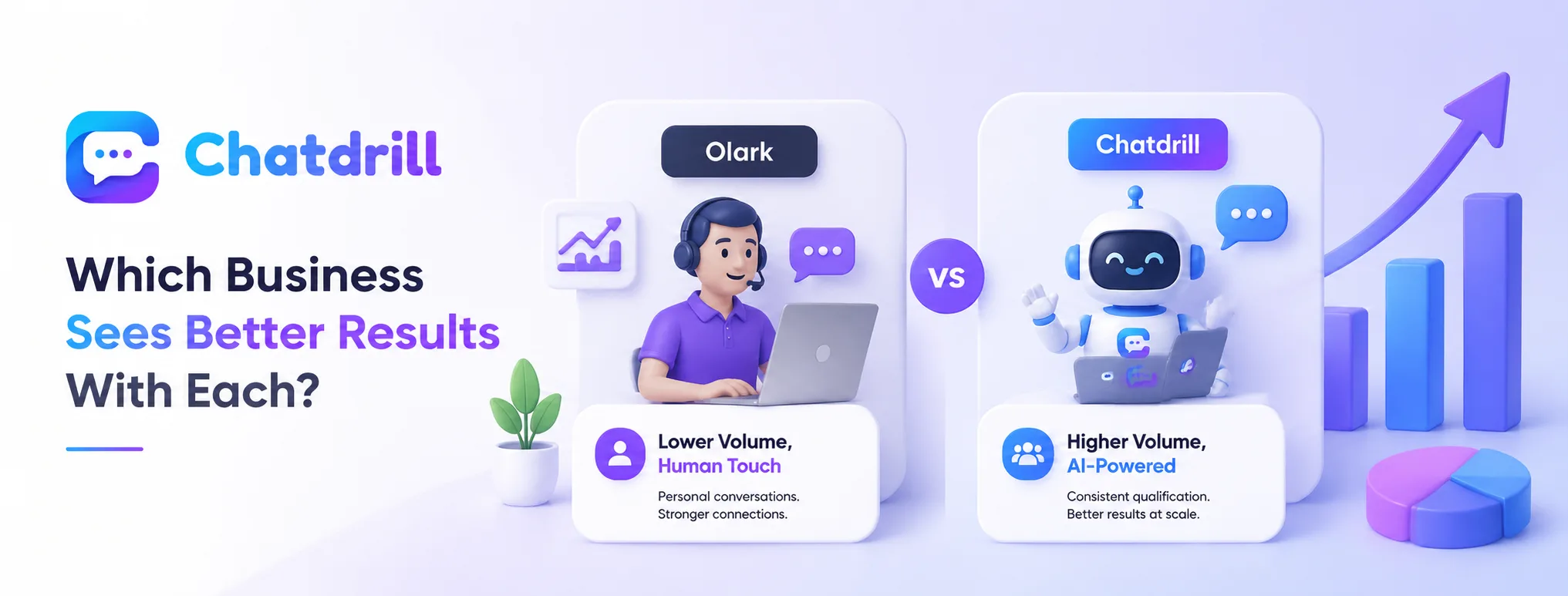
Olark tends to perform well for a business with manageable volume and a genuinely strong human sales or support team, while ChatDrill tends to perform better at higher volume or when consistent, automated qualification matters most.
When Olark is likely to convert better
A business with a smaller, skilled human team personally driving most conversion conversations, at a volume that team can genuinely sustain well, often converts effectively with Olark's straightforward, human-led approach.
This works especially well when your specific product or service genuinely benefits from personalized, human-driven conversation during the buying decision.
When ChatDrill is likely to convert better
A business with higher, less manageable volume, or one wanting consistent qualification logic applied every time regardless of which agent might otherwise handle a given conversation, tends to see stronger, more consistent conversion results with ChatDrill's AI-driven approach.
This advantage compounds specifically during peak volume periods when a human-only approach would otherwise mean some conversations receive less attention than others.
How to Measure Conversion Performance Directly
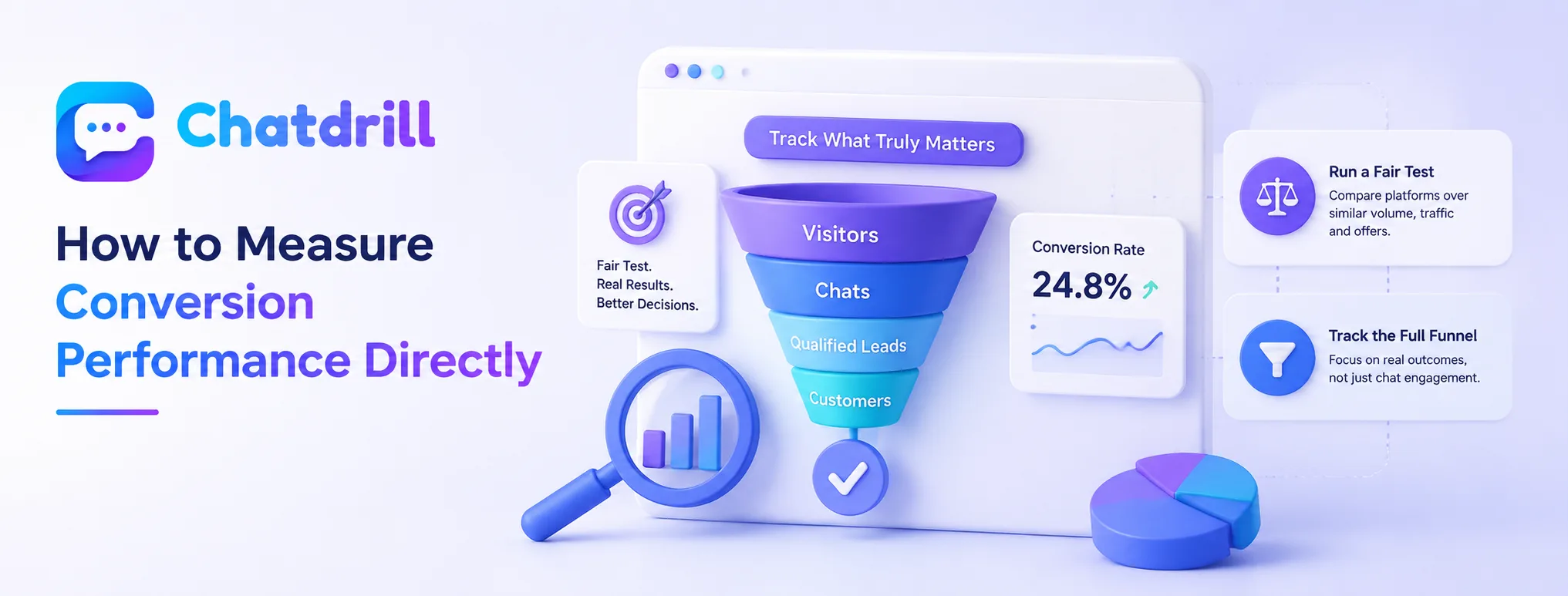
Rather than relying on general claims about which platform converts better, tracking your own actual conversion rate through each platform over a comparable period gives a genuinely reliable answer.
Running a fair, comparable test period
Testing each platform over a similar volume period, ideally with similar traffic sources and offers, isolates the platform's actual effect on conversion rather than conflating it with unrelated changes in traffic quality or seasonality.
This kind of controlled comparison, even if imperfect, produces far more reliable insight than assuming a general claim about either platform applies directly to your specific business.
Tracking the full funnel, not just chat engagement
Measuring actual downstream conversion, purchases, bookings, qualified leads reaching sales, rather than just chat engagement rate alone, ensures you're comparing genuine business outcomes rather than a surface-level engagement metric that might not reflect real value.
This full-funnel view is what ultimately answers the question of which platform "converts better" for your specific business.