
The cheapest way off Intercom isn't necessarily the free tier of a competitor, it's a platform that includes genuine AI automation in a low-cost base plan, since dropping AI entirely to save money usually just shifts cost back onto human agent time.
That distinction matters because a lot of "cheap" alternatives achieve their low price by stripping out AI entirely, which can end up costing more in agent hours than the platform savings are actually worth.
The businesses best served by this comparison are typically small or early-stage teams that liked Intercom's AI capability but were priced out by its seat-plus-usage model, not teams looking to abandon automation altogether.
Finding the right balance means weighing sticker price against genuine AI capability rather than defaulting to whichever option has the lowest number on its pricing page.
This guide covers what to look for in a genuinely cheap Intercom alternative that still includes AI, the strongest options in 2026, how they fit different budgets, a closer look at pricing, and what to plan for before switching.
Why "Cheapest" Shouldn't Mean Dropping AI
Choosing the cheapest Intercom alternative by sticker price alone often means losing AI automation entirely, which shifts cost back onto human agent time rather than genuinely saving money once the full picture is considered.
Simple overview
A lot of budget-friendly live chat platforms achieve their low price specifically by excluding AI automation, treating it as a premium feature reserved for higher tiers.
This trade-off can look appealing on a pricing page but often costs more in practice, since a team without AI ends up spending more agent hours on the same conversation volume.
The real question isn't which platform is cheapest overall, it's which platform is cheapest while still including the AI automation that actually saves money on labor.
The hidden cost of dropping AI to save money
Without AI qualification or resolution, every conversation requires a human, which scales cost directly with chat volume rather than allowing automation to absorb a meaningful share.
Teams that switch to a cheaper, AI-less platform sometimes find their total cost, platform fee plus additional agent hours, actually higher than a slightly pricier AI-inclusive alternative.
This hidden cost rarely shows up on the pricing page comparison that first drives the switching decision, which is exactly why it's worth calculating explicitly.
What a genuinely cheap AI-inclusive alternative looks like
The right platform balances a low base price with AI automation included, not gated behind a premium tier that erases the savings.
This combination is increasingly available as AI features become more standard across the category, narrowing the gap between budget and premium platforms.
Finding this balance requires comparing total cost, platform fee plus labor savings from automation, not sticker price alone.
What to Look for in a Cheap Intercom Alternative With AI
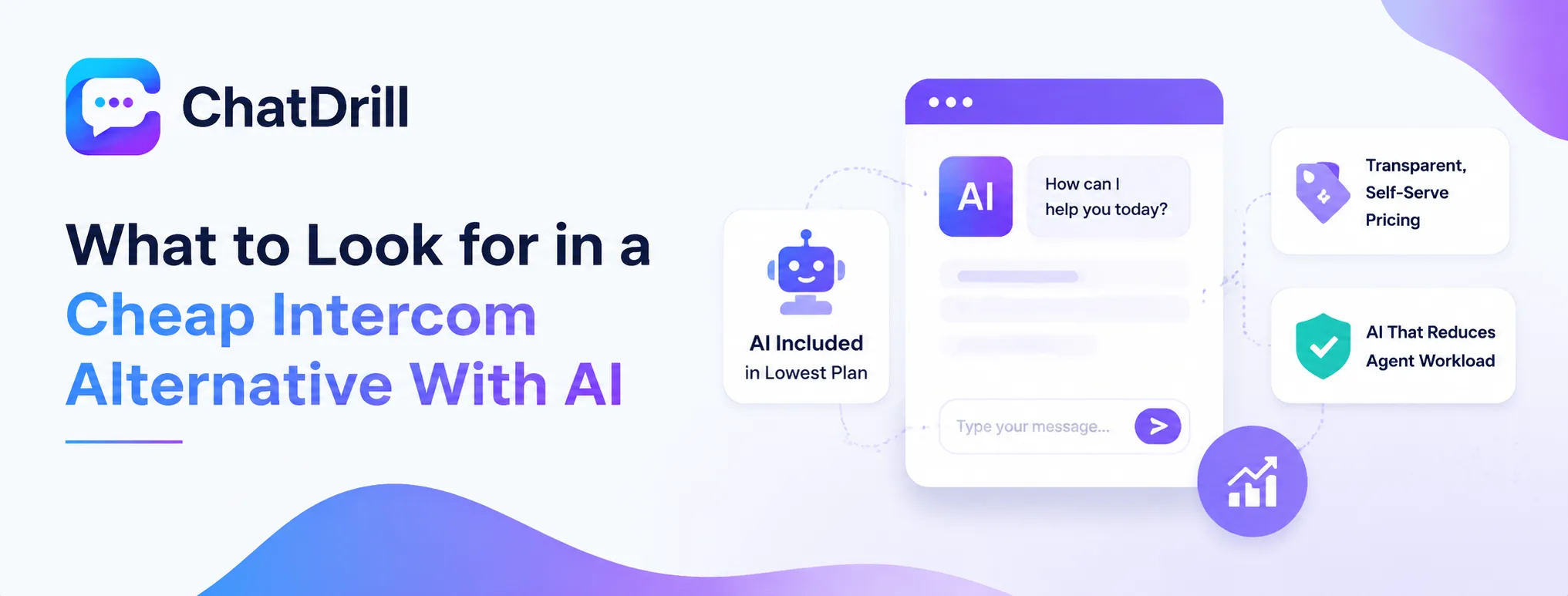
A genuinely cheap Intercom alternative with AI offers automation included in its lowest paid tier, transparent pricing that doesn't require a sales call to understand, and AI that performs well enough to actually reduce agent workload.
AI included in the lowest paid tier
Look specifically at whether AI automation is available at the entry-level paid plan, not just at a premium tier that erases the cost advantage.
This is the single most important filter for this specific comparison, since a cheap plan without AI doesn't solve the actual problem being addressed here.
Reading the fine print on feature tiers carefully avoids assuming a low headline price includes capability that's actually reserved for a higher plan.
Transparent, self-serve pricing
A platform with published pricing that doesn't require a sales call to understand makes it easier to confirm the true cost before investing evaluation time.
This transparency also tends to correlate with a platform genuinely designed for smaller, budget-conscious teams rather than one built primarily for enterprise sales cycles.
AI that genuinely reduces agent workload
The AI needs to actually resolve or meaningfully assist with real conversations, not just offer a token automation feature that rarely gets used in practice.
Testing this directly with real customer questions during a trial confirms whether the included AI genuinely saves agent time or is more of a marketing checkbox.
The Cheapest Intercom Alternatives That Still Include AI
ChatDrill leads for AI included at its lowest paid tier, with Tidio, Crisp, Chatboq, Smartsupp, and Chatra each offering a genuinely budget-friendly AI-inclusive option worth comparing directly.
ChatDrill — cheapest option with genuine AI qualification
ChatDrill includes AI chatbot automation and lead scoring even at its entry-level paid plan, avoiding the common pattern of reserving automation for a premium tier.
Teams specifically prioritizing cost without sacrificing AI depth tend to find this combination hard to match among Intercom alternatives.
Its setup is also fast enough that a small team can be fully operational within a day, minimizing the internal time cost of switching.
Tidio — cheapest ecommerce-focused AI option
Tidio's free and low-cost tiers include basic AI chatbots, a genuinely useful automation layer even at a budget price point.
This suits a small ecommerce business specifically, where Tidio's product-aware automation tends to outperform a generic chatbot at a comparable price.
Teams needing more AI depth than Tidio's entry tier offers should plan to budget for its next tier up as chat volume grows.
Crisp — cheapest fully free entry point
Crisp's free tier includes a unified inbox, though AI automation requires a paid upgrade, making it more of a starting point than a fully AI-inclusive cheap option.
For a team truly starting from zero budget, Crisp remains a reasonable landing spot before graduating to an AI-inclusive paid plan.
This makes Crisp better suited to the very earliest stage of a business rather than a genuine long-term cheap-with-AI solution.
Chatboq — cheapest AI-first ecommerce option
Chatboq includes AI automation focused on ecommerce conversion at a competitive entry price, a strong fit for a small store with a limited budget.
Its narrower focus on ecommerce specifically means it's less suited to a general-purpose small business outside that use case.
Teams choosing Chatboq should confirm its ecommerce-specific automation actually fits their catalog before committing.
Smartsupp — cheapest option with visitor insight included
Smartsupp's lower tiers include both basic AI and visitor session recordings, a combination not many budget platforms offer together.
This is worth choosing specifically when understanding visitor behavior matters as much as basic chat automation for a cost-conscious team.
Its AI depth is lighter than ChatDrill's, worth weighing against how much qualification depth is actually needed at this budget level.
Chatra — cheapest simple paid upgrade with light automation
Chatra offers light automation at a low, straightforward price point, suited to a team wanting a modest step up from a fully free tool without a big jump in cost.
Its automation is genuinely lighter than the AI-first options on this list, worth choosing specifically when basic automation is enough for current needs.
Teams outgrowing Chatra's lighter automation should plan to reassess as their qualification needs grow more sophisticated.
Cheapest Intercom Alternatives by Budget Level
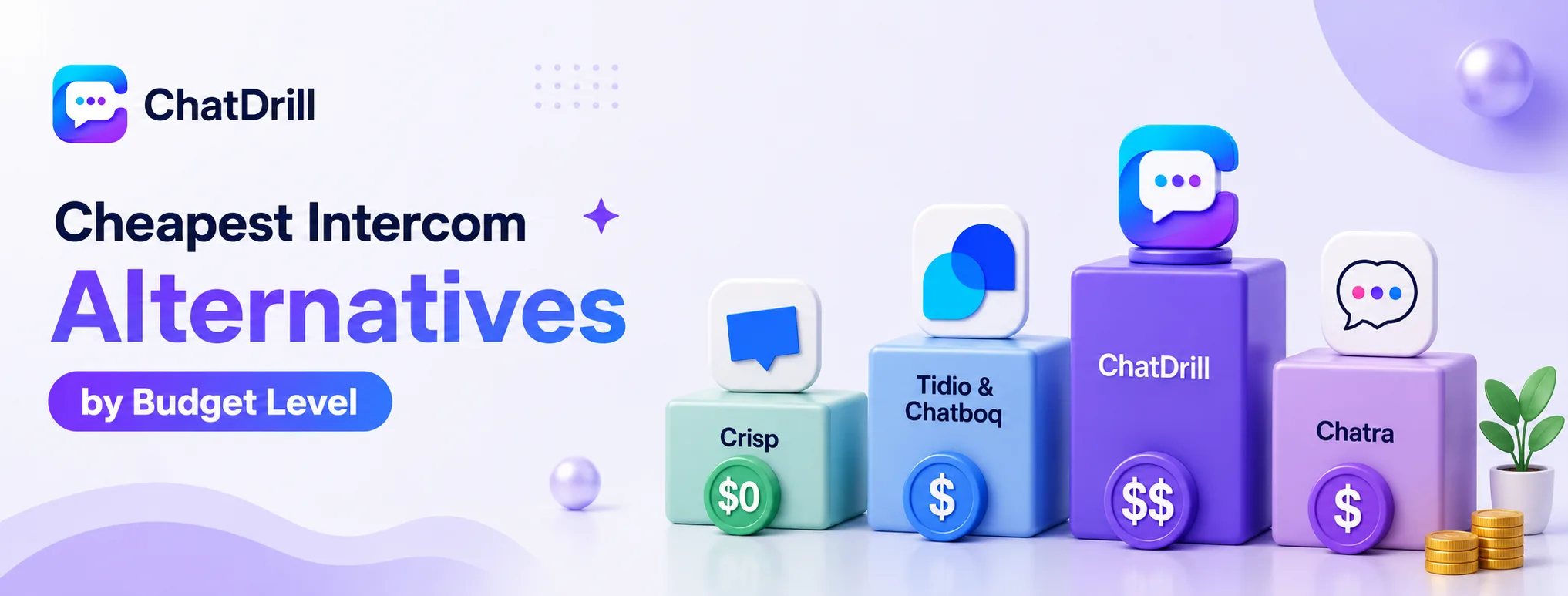
ChatDrill offers the best AI-to-cost ratio overall, Crisp suits a genuinely zero-budget starting point, Tidio and Chatboq suit budget-conscious ecommerce, and Chatra suits a team wanting a small step up from free.
Best AI-to-cost ratio overall
ChatDrill includes genuine AI qualification at its entry-level paid tier, offering the strongest balance of low cost and real automation capability on this list.
This makes it the natural first comparison for a team specifically prioritizing this combination over any other single factor.
Best for a genuinely zero-budget starting point
Crisp's free tier remains the most reasonable landing spot for a team not yet ready to spend anything on chat software at all.
Teams starting here should plan for an eventual upgrade once AI automation becomes a genuine priority worth paying for.
Best for budget-conscious ecommerce
Tidio and Chatboq both offer AI trained on product data at accessible price points, a strong fit for a small store with limited budget.
Either suits a store prioritizing shopping-question automation without committing to a larger platform investment.
Best for a small step up from free
Chatra offers a modest, low-cost upgrade with light automation, suited to a team not ready for a bigger jump to a fully AI-first platform.
This is a reasonable intermediate step for a team gradually increasing its chat software investment over time.
Intercom Pricing vs the Cheapest Alternatives
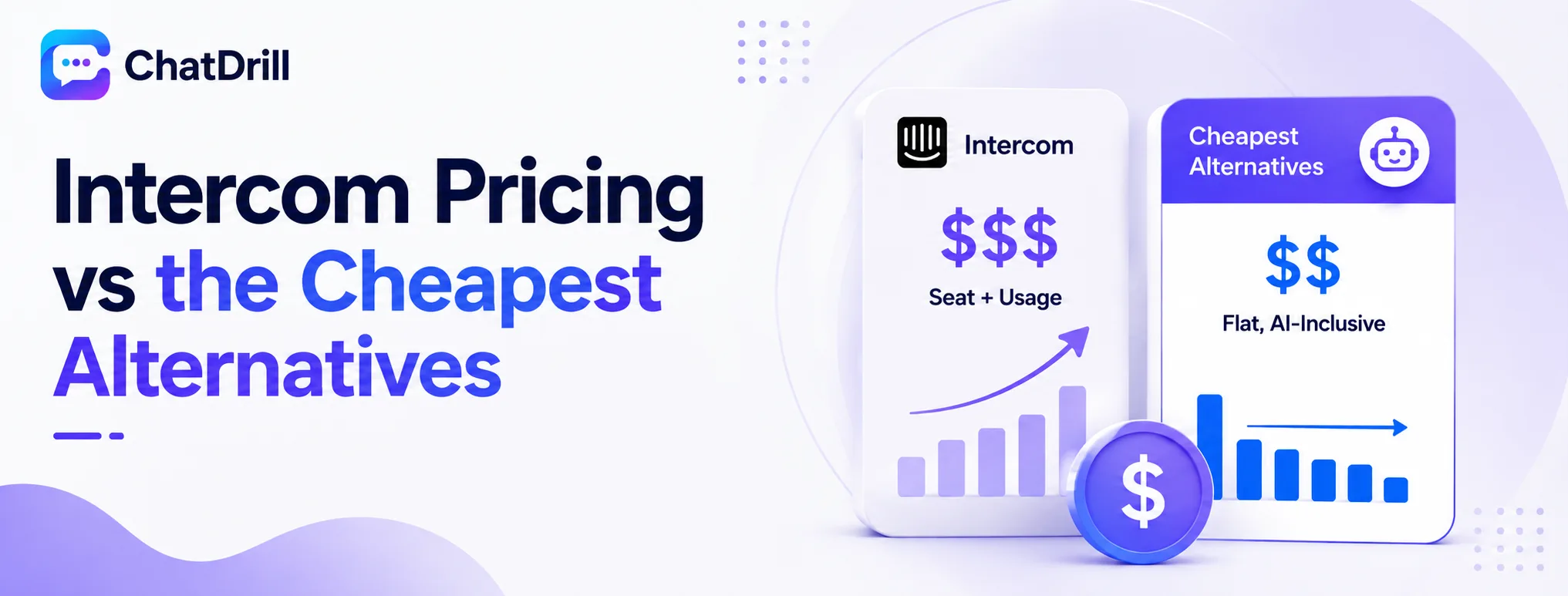
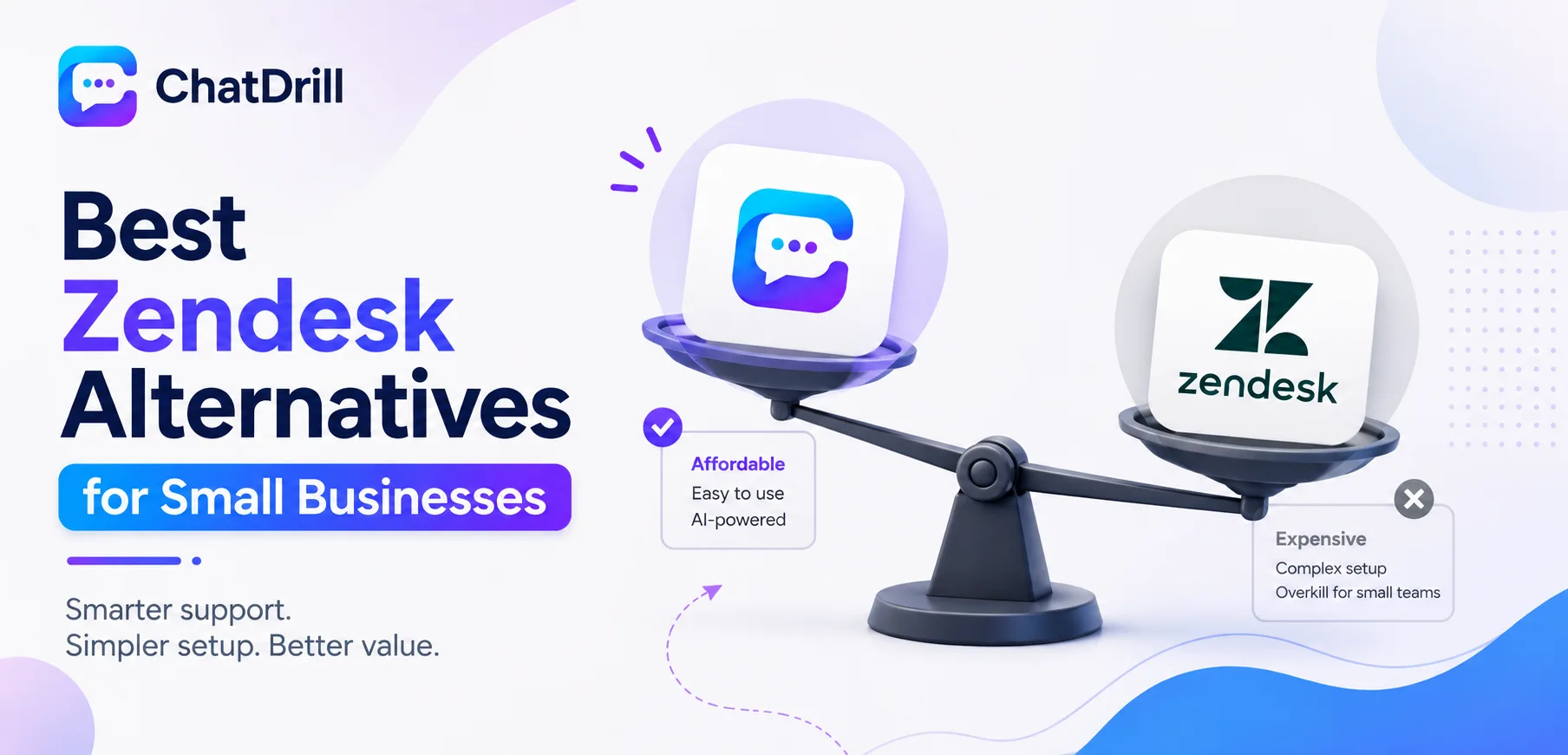
Intercom's seat-plus-usage pricing model makes it one of the more expensive options in the category, worth comparing directly against the flat, AI-inclusive plans offered by the cheaper alternatives above.
How Intercom's pricing compares to budget alternatives
Intercom's combination of per-seat fees and usage-based AI charges puts its total cost well above the flat, AI-inclusive plans offered by ChatDrill and similar budget-friendly options.
This gap widens specifically as chat volume grows, since Intercom's usage-based AI billing scales with success in a way flat-plan alternatives don't.
Where the savings are most significant
The clearest savings show up for a small team with growing chat volume, exactly the scenario where Intercom's usage-based AI fees compound fastest.
Teams in this position tend to see the largest gap between Intercom's actual bill and a flat-rate AI-inclusive alternative's cost.
What to verify before assuming an alternative is cheaper
Confirm that AI automation is genuinely included at the tier being compared, not reserved for a higher plan that erases the apparent savings.
It's worth requesting a written cost breakdown from any vendor at your specific team size, rather than comparing headline prices alone.
Calculating real savings from switching
Real savings should account for the full picture: platform fee difference, any change in agent hours needed, and migration effort, not just the sticker price gap.
This fuller calculation often reveals savings even larger than the platform price difference alone suggests, once reduced agent workload is factored in.
What to Consider Before Switching to a Cheaper Alternative
Before switching purely for cost savings, confirm AI quality genuinely matches your needs, export existing conversation history, and budget for the internal time a migration takes even on a tight timeline.
Confirming AI quality before committing
Test the AI directly with real customer questions during a trial, since a cheap plan's automation quality can vary significantly even among AI-inclusive options.
A slightly higher-priced platform with meaningfully better AI can still be the more cost-effective choice once agent time savings are factored in.
Exporting existing conversation history
Export Intercom conversation history before switching, confirming the new platform's import process preserves the detail needed for continuity.
Testing a small export and import batch first catches formatting issues before a full migration is underway.
Budgeting internal time for the switch
Even a low-cost platform migration takes internal time to set up and train the team on, worth budgeting for honestly rather than assuming it's effortless.
This internal time cost is part of the true cost comparison, not a separate consideration from the platform's sticker price.
Signs You're Ready to Pay More Than the Cheapest Option
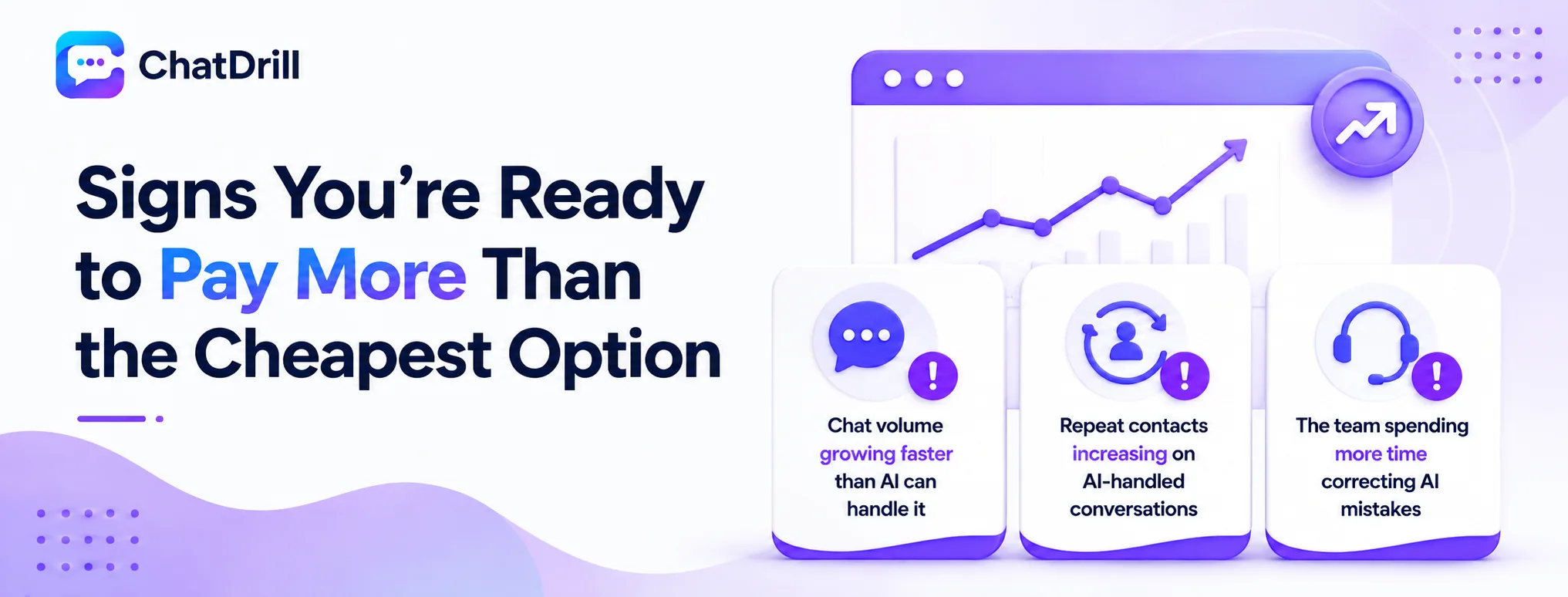
Some signals suggest a team has outgrown the cheapest AI-inclusive tier and would genuinely benefit from investing in a more capable plan, even within a budget-conscious search for Intercom alternatives.
Chat volume growing faster than AI can handle it
If AI deflection rate is declining even as chat volume grows, that's a sign the entry-level AI capability is being stretched past what it was designed to handle well.
This is usually the clearest, most objective signal that budget alone shouldn't be the only factor in the ongoing platform decision.
Repeat contacts increasing on AI-handled conversations
A rising repeat-contact rate specifically on conversations the AI handled suggests its answers aren't fully resolving customer questions the first time.
Tracking this metric specifically, rather than overall repeat contact rate, isolates whether the entry-level AI tier's limitations are the actual cause.
The team spending more time correcting AI mistakes than it saves
If agents are regularly stepping in to fix or clarify something the AI got wrong, the automation may be creating rework rather than genuinely saving time.
This is worth tracking explicitly for a month or two before deciding whether an upgrade is justified, rather than reacting to a single frustrating incident.