

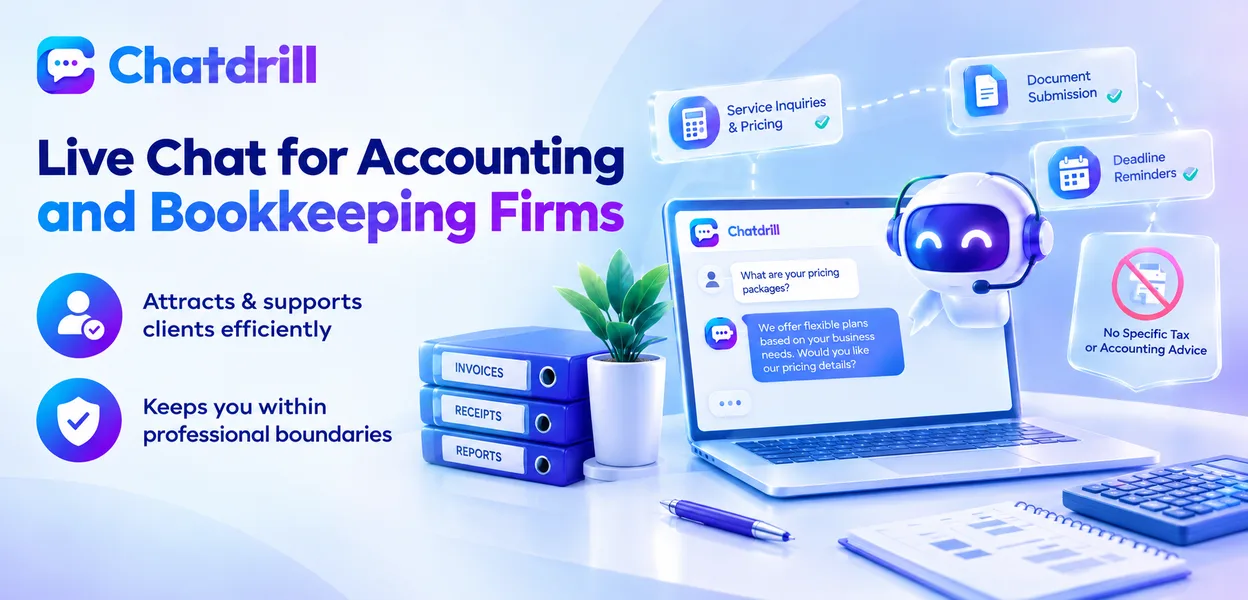
An accounting or bookkeeping firm's chat needs span both attracting prospective clients evaluating services and supporting existing clients through practical, ongoing needs, while requiring the same careful boundaries around specific advice relevant to other regulated professional services.
Quick answer: Live chat helps accounting and bookkeeping firms efficiently handle prospective client inquiries about services and pricing structure, and support existing clients with quick, practical questions about document submission or deadline reminders, while carefully avoiding specific tax or accounting advice that should genuinely come from a licensed professional reviewing actual client financials.
Live chat can genuinely improve efficiency across both areas, provided it maintains a clear, consistent line around never offering specific tax or accounting guidance that requires actual review of a client's genuine financial details.
Understanding both the efficiency opportunity and the careful boundaries this context requires helps an accounting firm implement chat that serves clients well without creating professional liability risk.
This guide covers the dual chat need for this business type, maintaining appropriate boundaries, common mistakes, measuring the actual impact, and how ChatDrill supports accounting and bookkeeping firms.
The Dual Chat Need for Accounting Firms
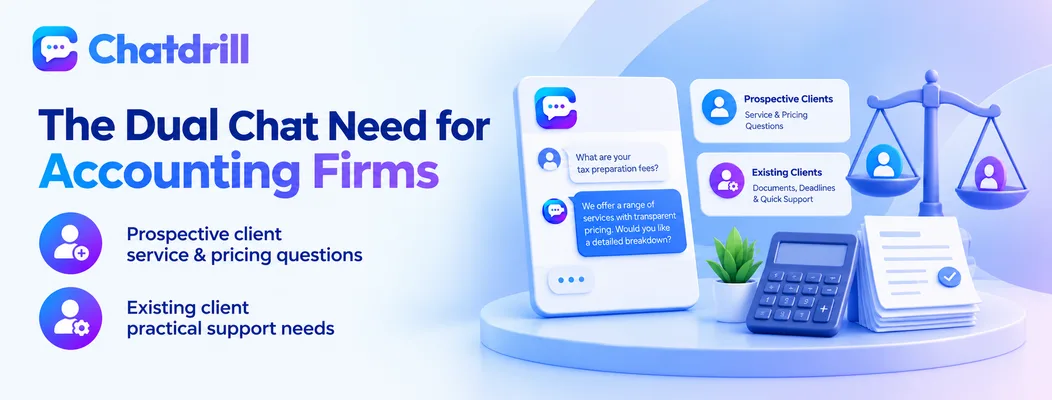
Prospective-client service inquiries and existing-client practical support represent two genuinely distinct chat needs this business type must address well.
Prospective client service and pricing questions
A prospective client evaluating accounting services benefits from clear, efficient answers about general service offerings and pricing structure, helping them assess fit before committing to an initial consultation.
This conversion-focused conversation mirrors the pre-purchase hesitation-resolution mechanism relevant to many professional service chat contexts.
Existing client practical support needs
An existing client needing to submit documents, confirm a deadline, or ask a quick logistical question represents a genuinely different, practical need distinct from the earlier conversion-focused conversation.
Handling this need efficiently directly supports client satisfaction and retention throughout an ongoing engagement, particularly important during high-stakes periods like tax season.
Maintaining Appropriate Boundaries Around Advice
Chat should consistently redirect any specific tax or accounting guidance question toward a proper consultation involving actual review of client financials.
Redirecting specific tax or accounting questions
"That really depends on the specifics of your situation, let's get that in front of your accountant who can review your actual numbers." redirects a specific advice question appropriately, rather than offering a general answer that might not genuinely apply.
This consistent redirection protects both the client and the firm, ensuring specific guidance only happens after genuine review of the client's actual financial details.
Handling deadline and general process questions safely
General questions about filing deadlines, required documentation categories, or the firm's typical process represent genuinely safe territory for chat to address directly, distinct from client-specific advice.
Clearly distinguishing this safe, general territory from client-specific guidance, as this guide's tactics recommend, helps chat deliver genuine value without crossing into inappropriate advice-giving.
Common Mistakes in Accounting Firm Chat
Offering a general answer to what's genuinely a client-specific question, and failing to prioritize appropriately during high-stakes deadline periods, are common mistakes.
Offering general answers to client-specific questions
Providing a general tax guidance answer to a question that genuinely depends on a specific client's actual financial situation risks giving advice that doesn't actually apply, potentially creating real liability.
Recognizing when a question requires genuine, client-specific review, as this guide's tactics recommend, protects against this specific, liability-relevant mistake.
Not prioritizing appropriately during peak periods
During tax season or another high-stakes filing deadline period, failing to prioritize genuinely urgent client questions over routine inquiries risks a client missing a critical deadline due to delayed response.
Establishing clear prioritization logic specifically for these predictable, high-stakes periods protects against this particular, consequential risk.
Measuring the Actual Impact for Your Firm
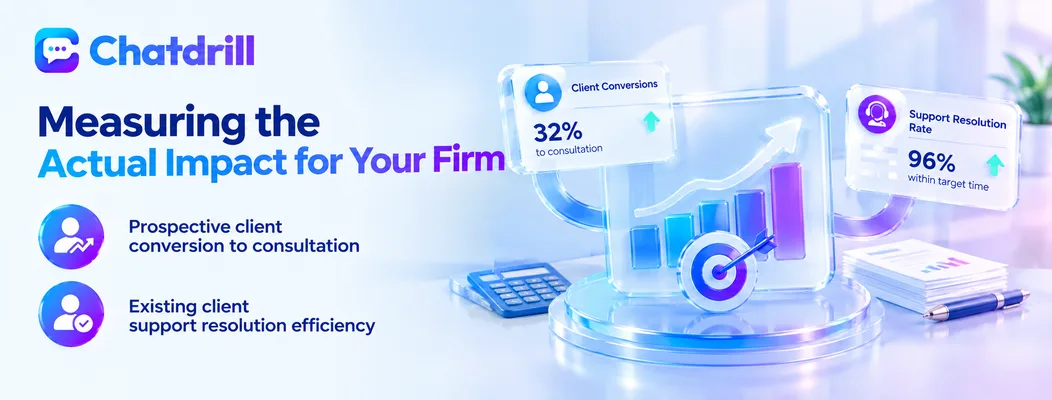
Tracking prospective client conversion and existing client support efficiency together reveal chat's genuine, dual contribution to an accounting firm.
Prospective client conversion to consultation
Tracking what percentage of prospective-client chat inquiries convert into a booked initial consultation reveals chat's contribution to the firm's client acquisition funnel.
This metric helps confirm whether chat investment is genuinely translating into the concrete next step toward new client relationships.
Existing client support resolution efficiency
Measuring how quickly and completely existing-client practical questions get resolved through chat, particularly during high-stakes deadline periods, reveals whether this support channel is genuinely serving client satisfaction as intended.
This efficiency tracking, alongside the conversion metric above, together confirm whether chat delivers value across both sides of this firm's dual need.