
A co-working space's chat needs span two genuinely distinct audiences, prospective members evaluating whether to join, and existing members with practical, day-to-day questions about using the space they already belong to.
Quick answer: Live chat helps co-working spaces answer a prospective member's genuine questions about membership tiers, amenities, and availability in real time, and supports existing members with quick, practical questions about booking meeting rooms or day-to-day facility access, addressing both the sales and ongoing-member-support sides of this specific business model.
Live chat serves both audiences well, provided the underlying setup accounts for these genuinely different needs rather than treating every conversation identically regardless of whether the person is a prospect or an existing member.
Understanding both sides of this dual need, and the specific tactics that address each effectively, helps a co-working business support its full member lifecycle through chat.
This guide covers the dual chat need for this business model, specific tactics for each audience, common mistakes, measuring the actual impact, and how ChatDrill supports co-working space chat.
The Dual Chat Need for Co-Working Spaces
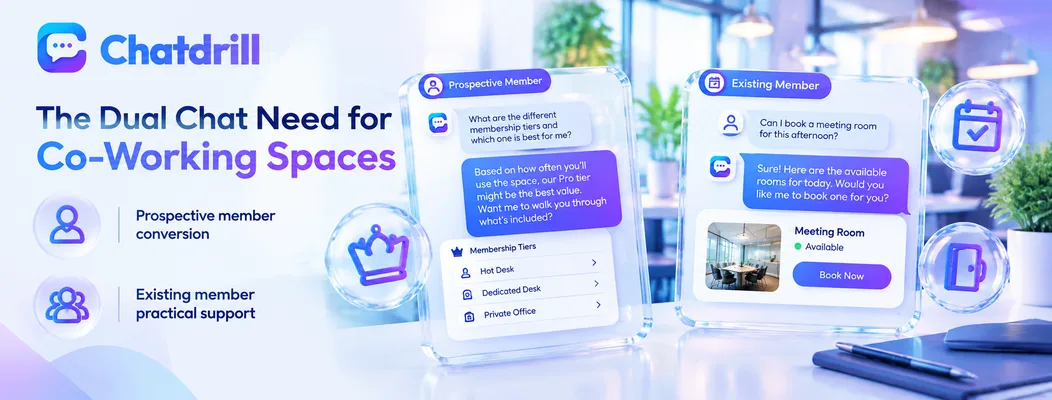
Prospective-member conversion and existing-member practical support represent two genuinely distinct chat needs this business model must address well.
Prospective member conversion questions
A prospective member researching membership tiers, amenities, and available locations benefits from real-time chat answers that resolve hesitation before they simply move on to researching a competing co-working option nearby.
This conversion-focused need mirrors the pre-purchase hesitation-resolution mechanism relevant across many chat use cases, applied specifically to the membership-tier decision this business model presents.
Existing member practical support questions
An existing member needing to book a meeting room, ask about guest policy, or resolve a facility access issue represents a genuinely different, practical support need distinct from the earlier conversion-focused conversation.
Addressing this ongoing support need well matters directly for member retention, since a frustrating day-to-day experience can undermine an otherwise satisfied membership relationship.
Specific Tactics for Each Audience
Clear, accurate membership tier comparisons for prospects and quick, practical booking support for existing members both address this business model's dual need effectively.
Clear membership tier guidance for prospects
"Based on how often you'd use the space, [specific tier] might be the best value, want me to walk you through what's included?" helps a prospective member navigate tier options based on their genuine, specific usage pattern rather than a generic tier comparison.
This tailored guidance reflects genuine attentiveness to the prospect's actual situation, more compelling than a static, one-size-fits-all comparison chart alone.
Quick, practical support for existing members
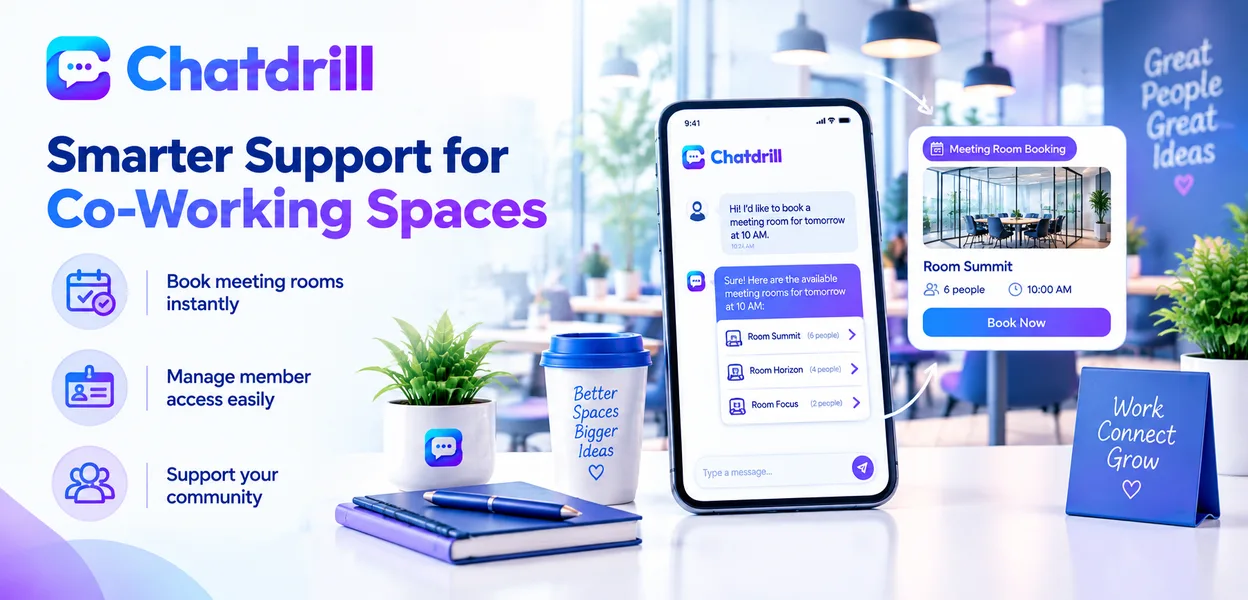
Supporting direct meeting room booking or quick answers about guest policy and facility hours through chat respects that an existing member's questions are typically practical and time-sensitive, deserving fast, efficient resolution.
This efficiency directly supports the day-to-day member experience that contributes meaningfully to overall membership satisfaction and retention.
Common Mistakes in Co-Working Space Chat
Treating every chat interaction as a sales conversation regardless of member status, and failing to integrate chat with actual booking systems, are common mistakes.
Treating every interaction as a sales conversation
Responding to an existing member's practical support question with sales-oriented tier-upgrade messaging, rather than efficiently resolving their actual, practical need, feels tone-deaf and can genuinely frustrate an already-paying member.
Recognizing and appropriately distinguishing between prospect and existing-member conversations, as this guide's tactics recommend, avoids this specific, relationship-damaging mismatch.
Failing to integrate chat with booking systems
A chat conversation that can't directly support meeting room booking, requiring the member to separately navigate a different booking system, adds unnecessary friction to what should be a genuinely quick, convenient interaction.
Direct integration with your actual booking system, where technically feasible, captures the full efficiency potential this guide identifies for existing-member support.
Measuring the Actual Impact for Your Space
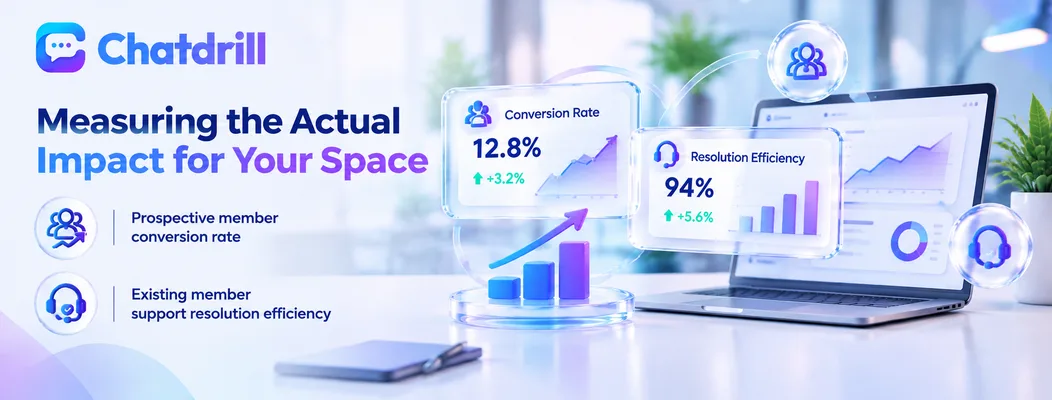
Tracking prospective-member conversion rate and existing-member support resolution efficiency together reveal chat's genuine, dual contribution to your business.
Prospective member conversion rate
Tracking what percentage of prospective-member chat conversations convert into an actual membership signup reveals chat's genuine contribution to the sales side of this business model.
This metric helps justify chat investment specifically for its member-acquisition contribution, distinct from its separate, existing-member support value.
Existing member support resolution efficiency
Measuring how quickly and completely existing-member practical questions get resolved through chat reveals whether this support channel is genuinely serving member retention as intended.
This efficiency tracking, alongside the conversion metric above, together confirm whether chat is genuinely delivering value across both sides of this business model's dual need.