

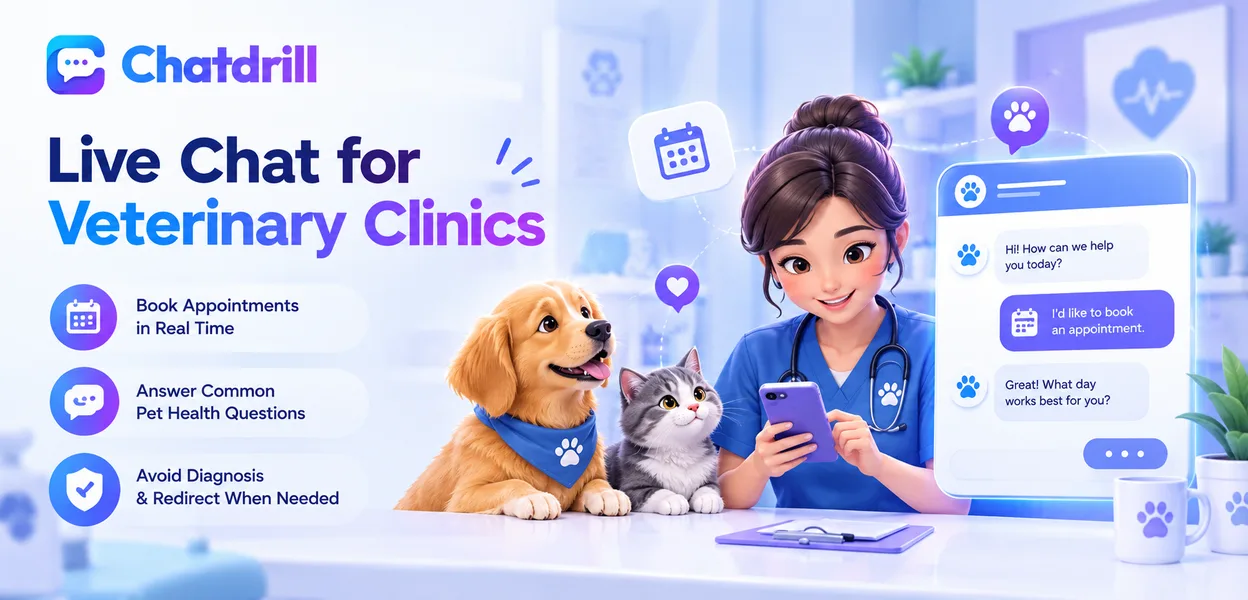
A veterinary clinic's chat needs mirror many of the same scheduling and information-access priorities common to healthcare-adjacent businesses, while requiring the same careful, liability-conscious boundaries around any language that could resemble medical advice.
Quick answer: Live chat helps veterinary clinics efficiently handle appointment scheduling and common, non-emergency pet health questions in real time, while carefully avoiding any language that could be mistaken for a diagnosis, always redirecting a genuinely concerning symptom toward scheduling an actual exam or an emergency clinic referral.
Live chat can genuinely improve a clinic's client experience by efficiently handling scheduling and common questions, provided it maintains a clear, consistent boundary around never diagnosing or interpreting a pet's specific symptoms.
Understanding both the genuine efficiency opportunity and the careful boundaries this context requires helps a veterinary practice implement chat that serves clients well without creating liability risk.
This guide covers the efficiency opportunity chat offers, handling symptom mentions appropriately, common mistakes, measuring the actual impact, and how ChatDrill supports veterinary clinic chat.
The Genuine Efficiency Opportunity for Veterinary Clinics
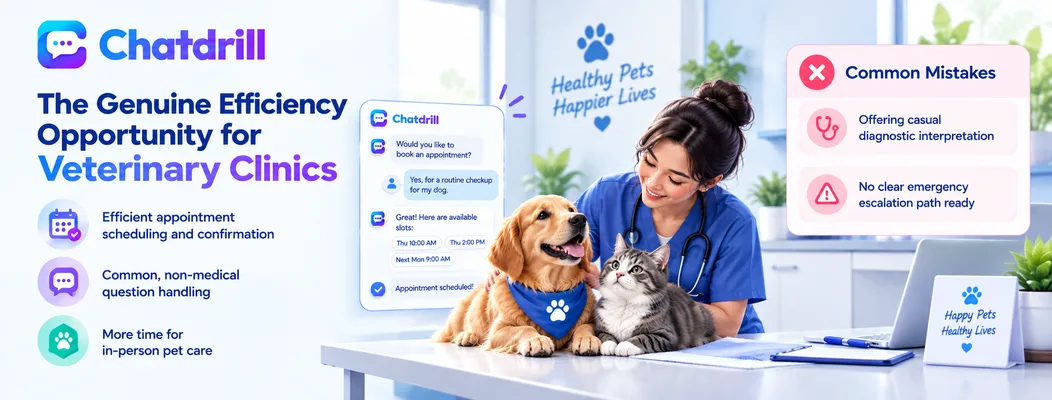
Efficient appointment scheduling and confirmation
questions, freeing clinic staff for in-person patient care.
Efficient scheduling and common-question handling
A pet owner scheduling a routine checkup, vaccination, or grooming appointment benefits from chat's real-time scheduling capability, avoiding a phone call that might otherwise interrupt clinic staff actively caring for patients.
This efficiency matters particularly for a busy clinic where front-desk staff are frequently balancing phone calls, in-person clients, and administrative tasks simultaneously.
Common, non-medical question handling
Questions about clinic hours, accepted payment methods, parking, or general pre-visit preparation represent genuinely common, non-medical inquiries chat can resolve instantly without requiring staff attention away from patient care.
Handling this volume efficiently through chat frees clinic staff to focus more fully on the in-person veterinary care that represents the practice's core value.
Handling Symptom Mentions Appropriately
When a pet owner mentions a symptom, chat should acknowledge with genuine care while firmly redirecting toward scheduling an exam, never offering diagnostic interpretation.
Acknowledging without diagnosing
"I'm sorry to hear that, let's get your pet seen by the doctor as soon as possible so they can take a proper look." acknowledges genuine concern warmly while staying strictly within scheduling territory rather than commenting on the symptom itself.
This careful language avoids any implication of veterinary diagnosis, which chat staff or AI are not qualified or authorized to provide, protecting both the pet owner and the practice.
Escalating a potentially urgent situation
"That sounds like it may need urgent attention, please call our clinic directly at [number] or, if this is after hours, please contact the nearest emergency veterinary clinic." provides a clear, safe escalation path for anything sounding potentially serious.
This kind of clear redirect reflects appropriate caution given chat's genuine limitations for handling a potential veterinary emergency.
Common Mistakes in Veterinary Chat
Offering any casual diagnostic interpretation, and failing to have a clear emergency escalation path ready, are the most common mistakes in this context.
Offering casual diagnostic interpretation
A response suggesting a symptom "is probably nothing to worry about" or offers any casual medical interpretation, however well-intentioned, oversteps what chat staff are qualified to provide and creates genuine liability risk for the practice.
Staying strictly within scheduling and logistical language, as this guide's tactics recommend, protects against this specific, serious risk.
No clear emergency escalation path ready
Failing to have clear, ready escalation language for a genuinely urgent-sounding symptom mention risks a delayed response precisely when a pet owner needs immediate direction toward emergency care.
Preparing this escalation language in advance, as this guide recommends, ensures a fast, appropriate response is available whenever this situation arises.
Measuring the Actual Impact for Your Clinic
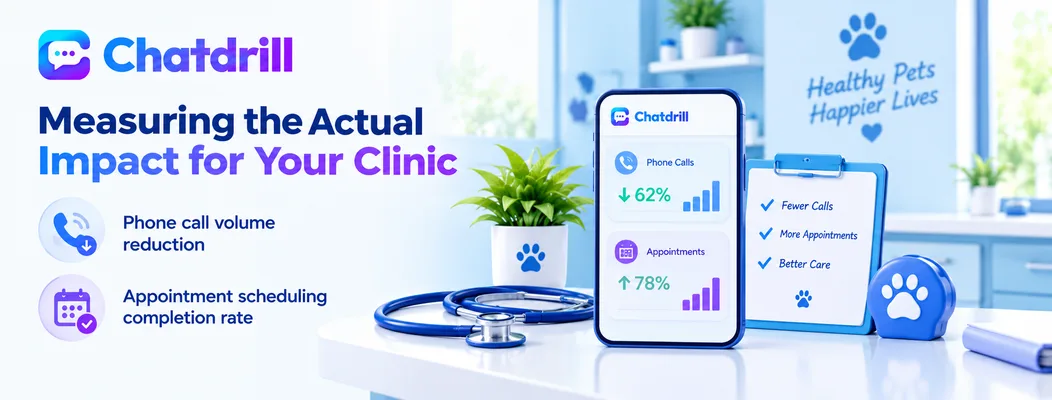
Tracking phone call volume reduction and appointment scheduling efficiency reveals chat's genuine operational impact for a veterinary practice.
Phone call volume reduction
Comparing phone call volume for routine scheduling and general questions before and after implementing chat reveals how much front-desk capacity chat genuinely frees for other clinic priorities.
This reduction directly reflects the efficiency opportunity this guide identifies as chat's core value for a busy veterinary practice.
Appointment scheduling completion rate
Tracking what percentage of chat-initiated scheduling conversations result in a genuinely confirmed appointment, rather than an abandoned or unresolved interaction, reveals whether chat's scheduling capability is functioning smoothly in practice.
This completion-rate view helps identify any process friction worth addressing to fully capture chat's scheduling efficiency potential.