
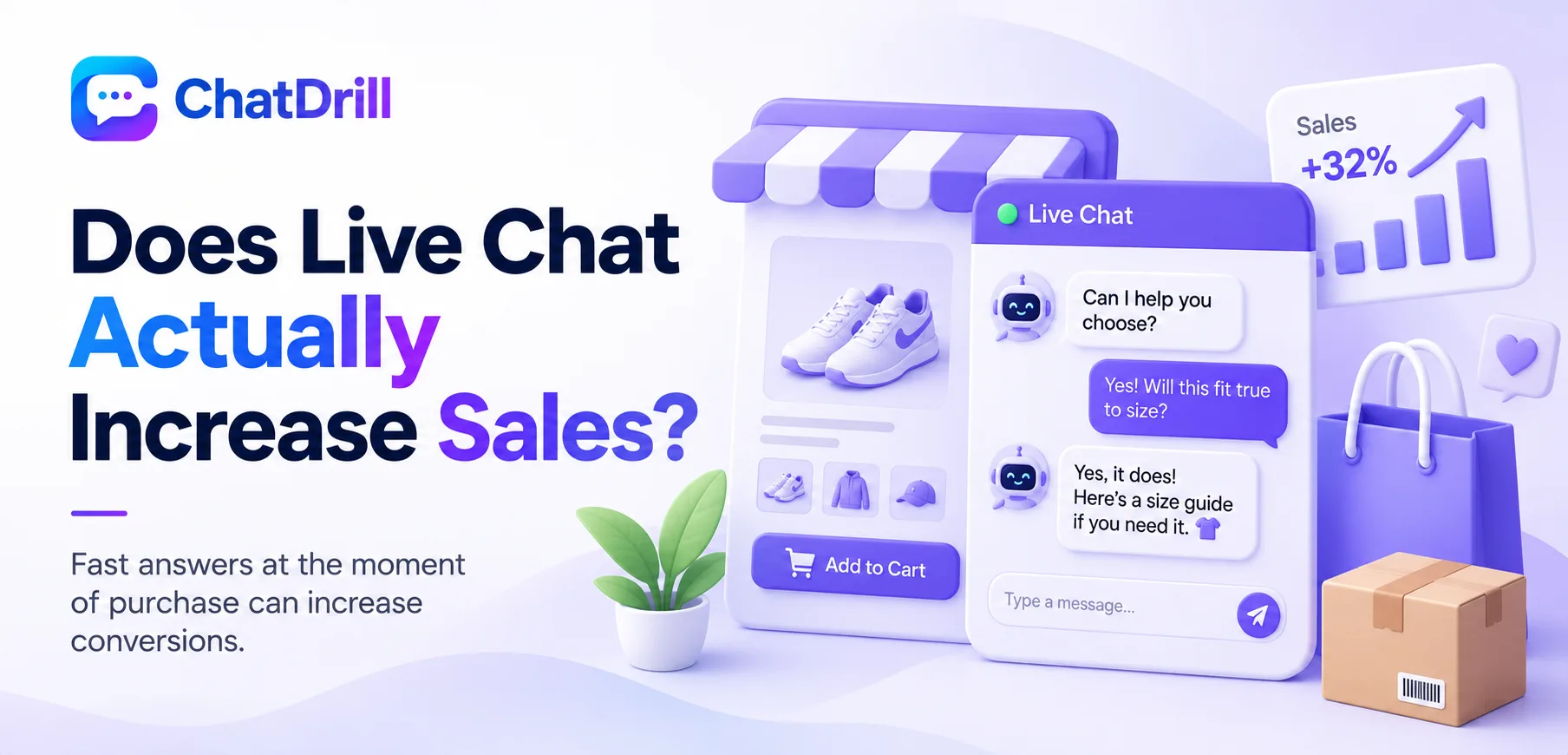
Whether live chat genuinely increases sales is one of the most common questions a business asks before investing in it, and the honest answer is a qualified yes, the effect is real but depends heavily on execution rather than the mere presence of a chat widget.
Quick answer: Yes, live chat generally increases sales when it's staffed and trained well, since it answers pre-purchase questions at the exact moment a visitor is deciding whether to buy, but the effect depends heavily on response speed and answer accuracy, not on simply having a chat widget present.
The underlying mechanism is straightforward, a visitor with a pre-purchase question who gets a fast, accurate answer is measurably more likely to complete a purchase than one left to guess, abandon the page, or wait for a delayed email response.
Understanding exactly when and why chat drives this sales lift, and where it fails to, helps set realistic expectations rather than assuming any chat implementation automatically produces a sales increase.
This guide covers the mechanism behind the sales lift, when chat helps most, common reasons it fails to deliver, how to measure the actual effect, and how ChatDrill supports sales-driving chat.
The Mechanism Behind the Sales Lift
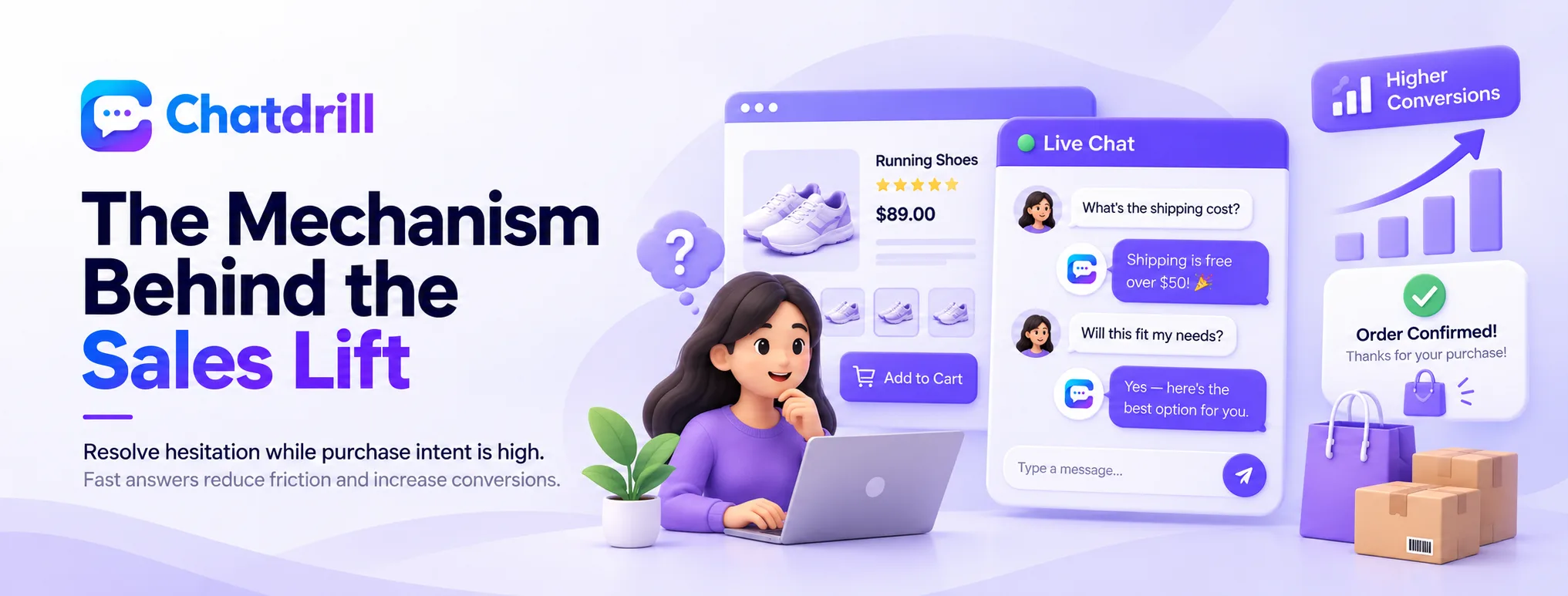
Live chat increases sales primarily by resolving pre-purchase hesitation at the exact moment a visitor is deciding, before that hesitation turns into an abandoned page.
Capturing genuine purchase intent in the moment
A visitor browsing a product or pricing page with an unanswered question represents a moment of genuine, high purchase intent, and chat's real-time nature lets a business capture and resolve that intent before it fades or the visitor leaves to compare options elsewhere.
This timing advantage is the core reason chat outperforms slower channels for sales specifically, since email's inherent delay means the moment of peak interest has often already passed by the time a reply arrives.
The window during which this intent stays genuinely high tends to be quite narrow, often just the few minutes a visitor spends actively comparing options, which is exactly why real-time resolution matters so much more here than for less time-sensitive interactions.
Reducing the friction of uncertainty
Uncertainty about a product detail, shipping cost, or return policy is one of the most common reasons a visitor abandons a purchase decision, and chat directly removes this friction by answering the specific question holding someone back.
This friction-removal effect compounds across many individual visitors, meaning even a modest per-visitor conversion lift can translate into a meaningful overall sales increase at scale.
When Chat Drives the Strongest Sales Impact
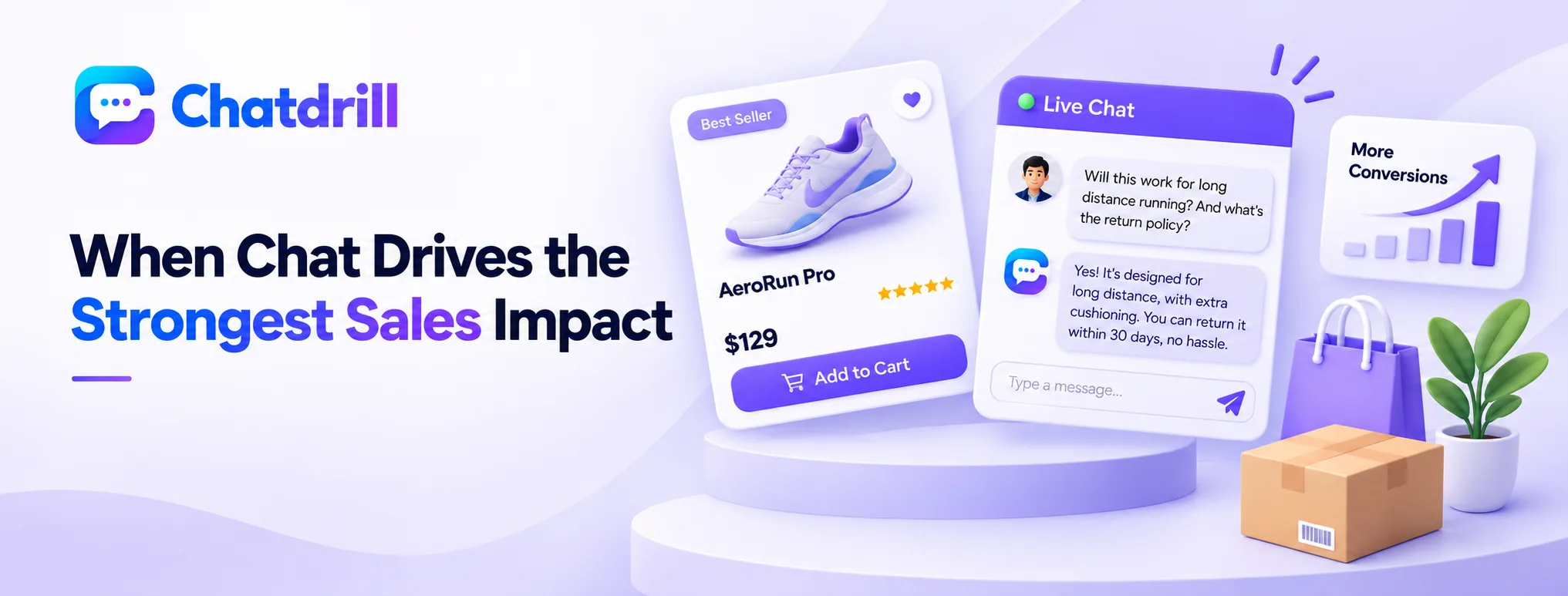
Chat delivers the strongest sales impact on higher-consideration purchases, pricing pages, and situations where a visitor has a specific, answerable question standing between them and a decision.
Higher-consideration and higher-price purchases
For a purchase involving genuine consideration, a significant price point, a B2B decision, a service commitment, chat's ability to resolve specific concerns in real time tends to matter more than for a simple, low-stakes impulse purchase.
This is why chat often shows its clearest sales impact on pricing and product-detail pages specifically, rather than uniformly across every page type on a site.
A simple, low-cost purchase rarely involves enough genuine deliberation for a chat interaction to meaningfully change the outcome, which is why prioritizing chat coverage on higher-consideration pages tends to deliver a better return than spreading attention evenly across the entire site.
Situations with a specific, answerable blocker
Chat performs best when a visitor's hesitation stems from a specific, factual question, compatibility, shipping timing, a policy detail, that a fast, accurate answer can genuinely resolve.
Chat's impact is naturally more limited when hesitation stems from something a chat conversation can't address, like genuine budget constraints or a fundamental product-fit mismatch.
Common Reasons Chat Fails to Increase Sales
Chat fails to deliver a sales lift most often due to slow response times, inaccurate answers, or a widget that's poorly integrated into the actual buying journey.
Slow response undermining the timing advantage
A chat widget that takes several minutes to respond loses the exact timing advantage that makes chat effective in the first place, since the visitor's moment of peak interest may have already passed.
This is why response speed specifically, not just chat's mere presence, correlates so directly with whether it actually delivers a sales benefit.
A business that adds chat but staffs it inconsistently often sees results no better than having no chat at all, since visitors quickly learn a slow, unreliable widget isn't worth their time.
Inaccurate or generic answers
A chat response that's vague, generic, or simply wrong fails to resolve the actual hesitation, and can even damage trust more than no chat interaction at all, since it demonstrates the business either doesn't know or doesn't care about the specific concern raised.
This risk is precisely why answer accuracy deserves at least as much attention as availability when evaluating whether a chat implementation is likely to succeed.
How to Measure the Actual Sales Effect
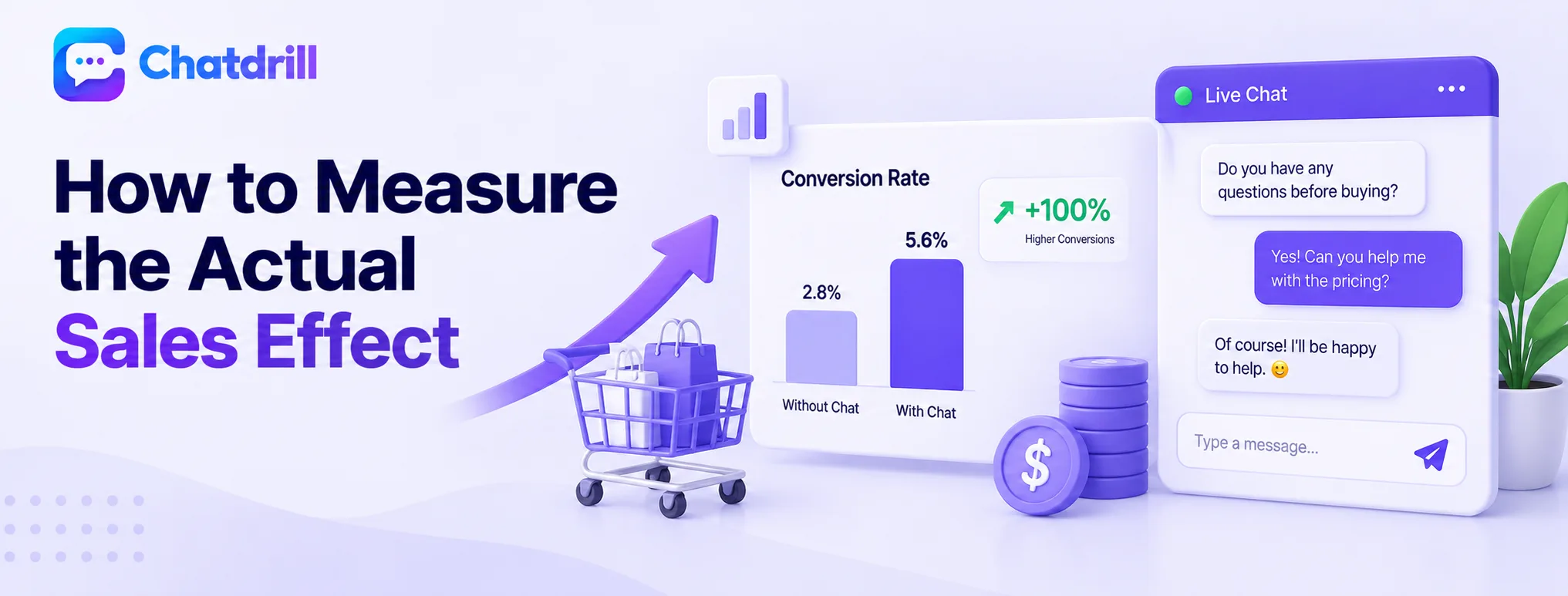
Comparing conversion rates between visitors who engage with chat and those who don't, using a controlled comparison period, reveals the genuine sales impact for your specific business.
Comparing chat-engaged versus non-engaged conversion rates
Tracking eventual purchase completion separately for visitors who used chat versus those who didn't, ideally controlling for similar traffic sources and page types, isolates chat's genuine incremental effect rather than relying on assumption.
This comparison should account for the possibility that visitors already more likely to buy might also be more likely to engage with chat, a genuine measurement nuance worth keeping in mind when interpreting results.
Tracking the effect specifically on high-consideration pages
Segmenting this comparison specifically for pricing or product-detail pages, where chat's impact tends to be strongest, often reveals a clearer, more measurable effect than looking at site-wide averages alone.
This targeted measurement approach also helps identify exactly where chat delivers the most value, informing where to prioritize response speed and staffing investment.
How ChatDrill Helps Drive a Genuine Sales Lift
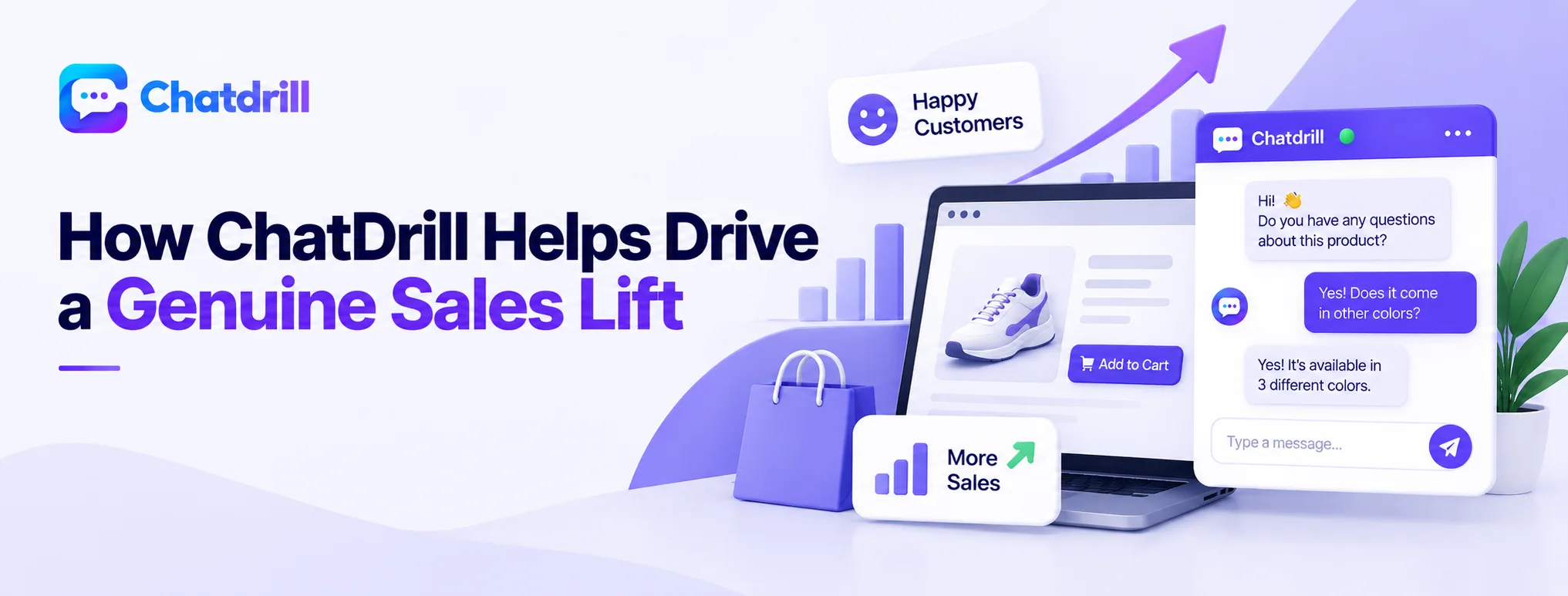
ChatDrill combines fast AI-assisted response with accurate, business-trained answers specifically designed to resolve the pre-purchase hesitation this guide identifies as the core sales-driving mechanism.
Speed that preserves the timing advantage
ChatDrill's AI can respond within seconds to common pre-purchase questions, preserving the exact timing advantage that research consistently identifies as central to chat's sales impact.
This speed applies consistently regardless of visitor volume, protecting the sales-driving mechanism even during high-traffic periods when human-only response would naturally slow down.
Because this speed doesn't depend on staffing levels at any given moment, the sales-driving mechanism holds up even during unexpected traffic spikes that would otherwise strain a purely human-staffed setup.
Accuracy trained on your actual product and policy details
Because ChatDrill's AI is trained on your specific product details and policies, its answers to pre-purchase questions are genuinely accurate rather than generic, directly addressing the accuracy factor this guide identifies as essential to a real sales benefit.
This combination of speed and accuracy is what positions ChatDrill to deliver the sales lift live chat is genuinely capable of, rather than the underwhelming result a poorly executed implementation often produces.
Because the same training data can be refined as new common questions emerge, accuracy tends to improve further over time rather than staying fixed at initial launch quality.
Building a Genuine Business Case for Chat Investment
Translating the sales-lift mechanism into a concrete internal business case means estimating your own potential impact using your actual traffic and average order value, rather than relying on general claims alone.
Estimating your own potential sales lift
Applying a conservative estimated conversion improvement to your own current pricing-page traffic and average order value produces a rough, defensible estimate of chat's potential revenue impact specific to your business.
This kind of grounded, business-specific estimate tends to be more persuasive internally than citing a general industry claim without connecting it to your own actual numbers.
Even a deliberately conservative estimate, well below what more optimistic industry figures might suggest, often makes a compelling enough case on its own once translated into real revenue terms specific to your traffic volume.
Planning a fair test before full commitment
Running chat on a subset of high-consideration pages first, then comparing conversion against a similar page without chat, provides genuine, business-specific evidence before committing to a larger rollout.
This staged approach reduces risk while still generating the real data needed to confirm whether the sales-lift mechanism this guide describes genuinely applies to your specific traffic and product.