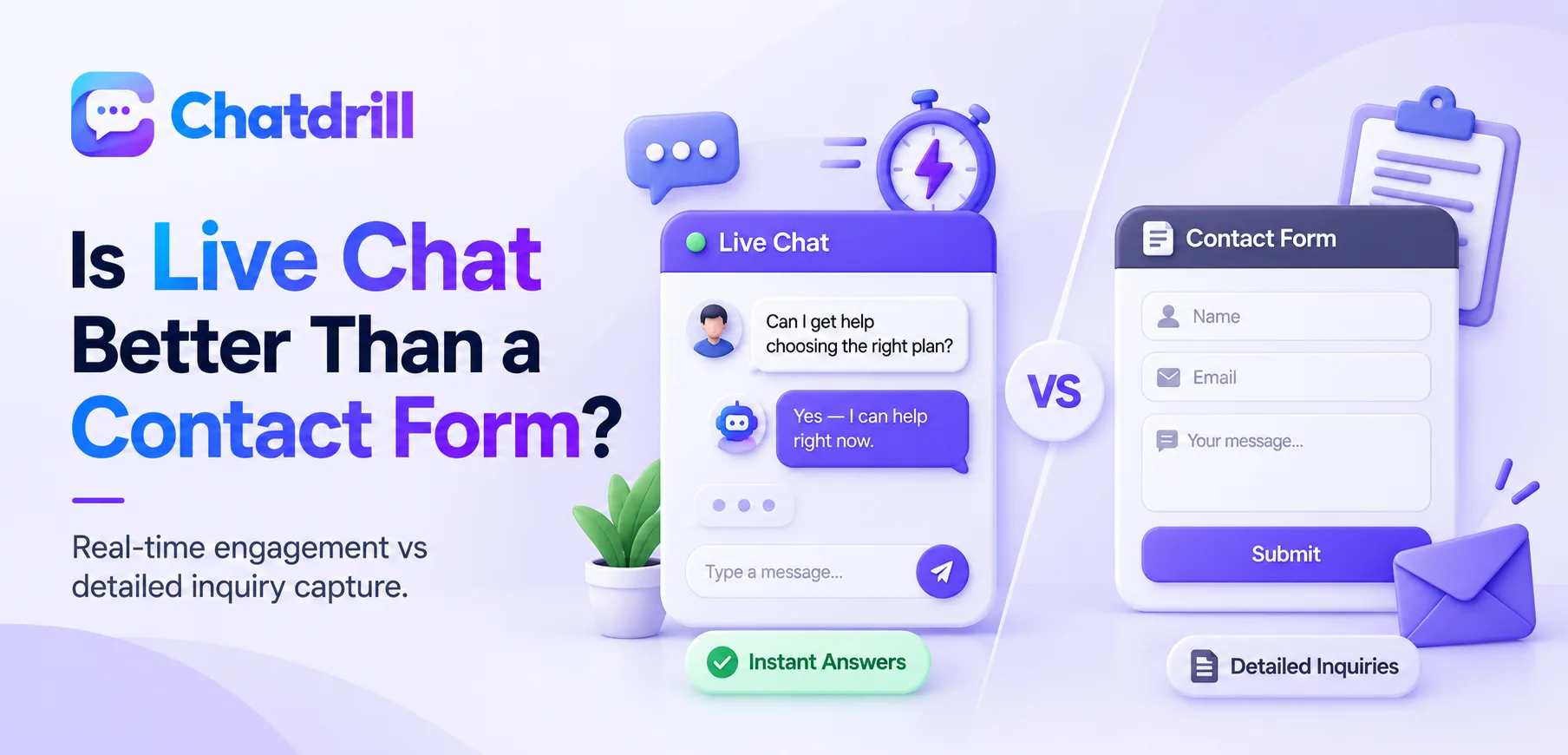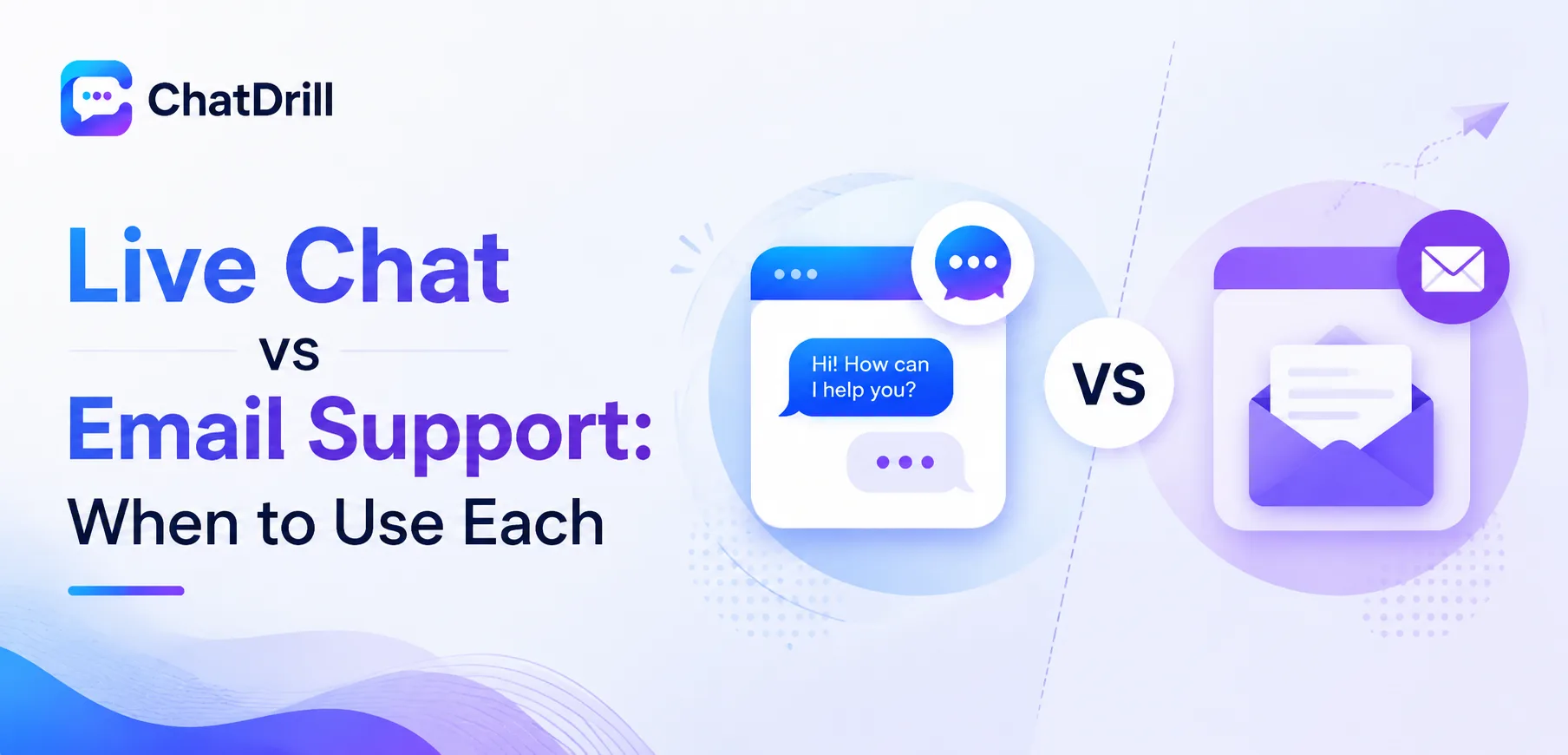

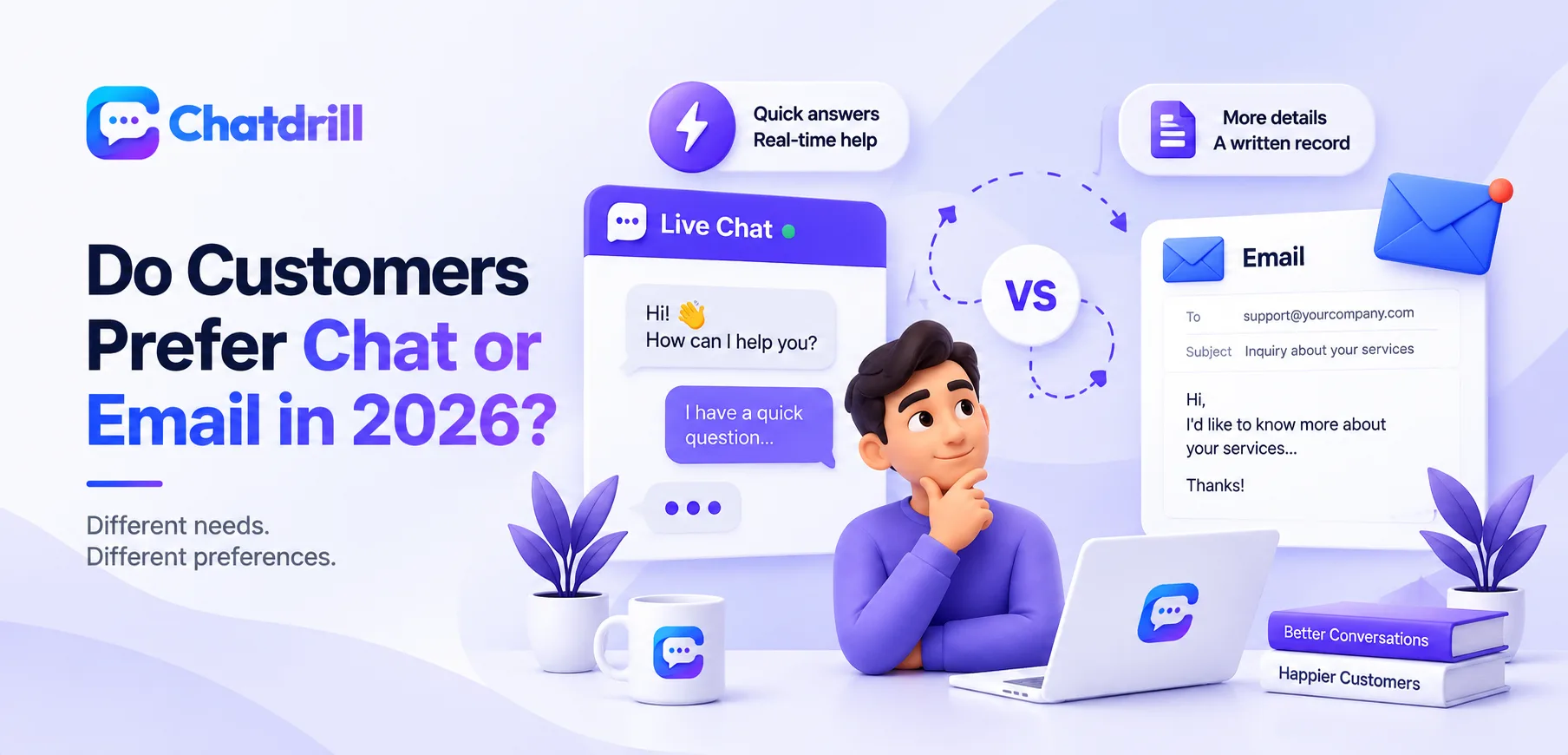
The question of whether customers prefer chat or email doesn't have a single, universal answer, since genuine preference shifts considerably based on the urgency and complexity of what someone actually needs help with.
Quick answer: In 2026, most customers prefer live chat over email for urgent or simple questions because of its real-time speed, while email remains preferred for detailed, non-urgent inquiries or when a written record is genuinely useful, meaning the honest answer is that preference depends on the specific situation rather than one channel winning universally.
What's genuinely clear from current customer behavior patterns is that chat has become the default expectation for anything feeling urgent or simple, while email retains real value for situations where speed matters less than thoroughness or a written record.
Understanding this situational preference, rather than assuming one channel has definitively won, helps a business offer the right channel for the right moment rather than over-investing in one at the expense of the other.
This guide covers current preference patterns, why urgency drives channel choice, where email still holds genuine advantages, generational differences worth noting, and how ChatDrill supports channel-appropriate response.
Current Customer Preference Patterns
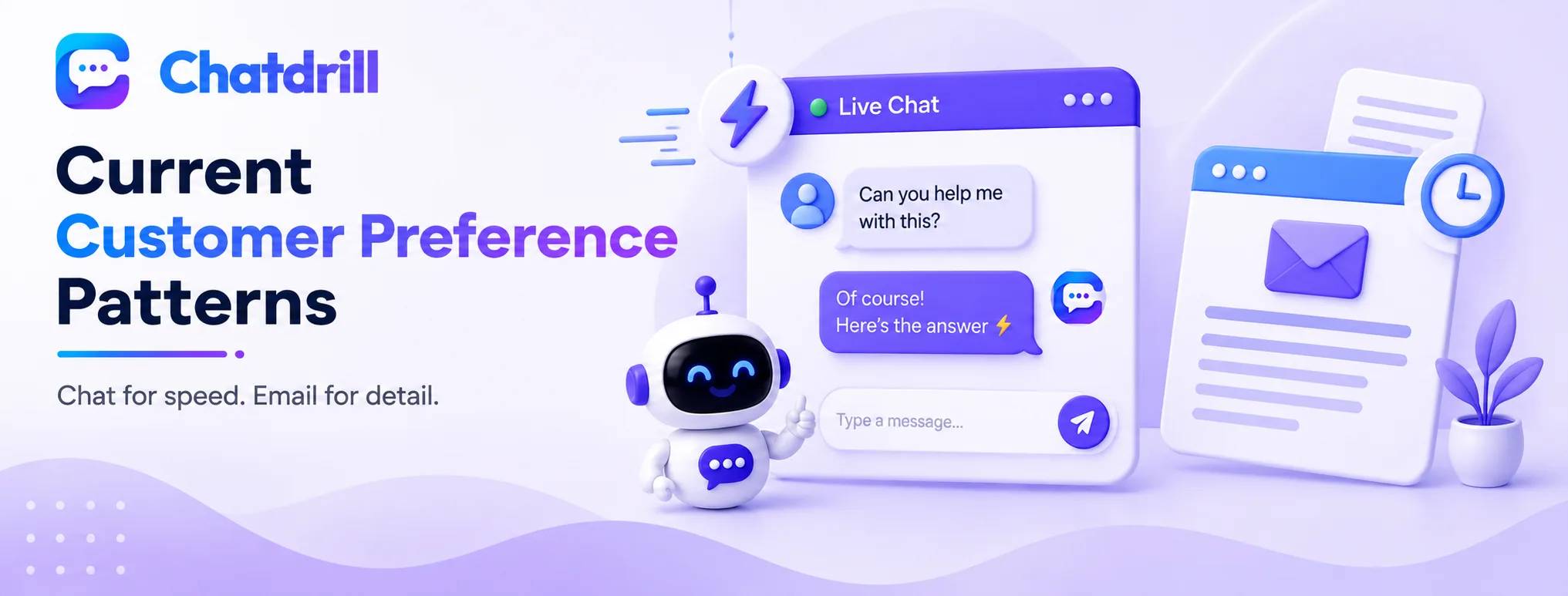
Customers increasingly default to chat for immediate needs while still reaching for email when a question is detailed or doesn't feel urgent.
The rising default preference for chat
For a question feeling urgent or simple, current customer behavior consistently shows a strong preference for live chat, reflecting both its real-time nature and the broader cultural shift toward instant digital communication in daily life.
This preference has strengthened considerably compared to just a few years earlier, as more businesses have adopted chat and customers have grown accustomed to expecting it as a standard option.
Where email preference genuinely persists
For a detailed, complex, or genuinely non-urgent inquiry, many customers still actively prefer email, valuing the ability to compose a complete, considered message and receive an equally thorough, considered reply.
This persistent email preference reflects a genuine, situational need rather than simple unfamiliarity with or resistance to newer channels.
Why Urgency Drives Channel Preference
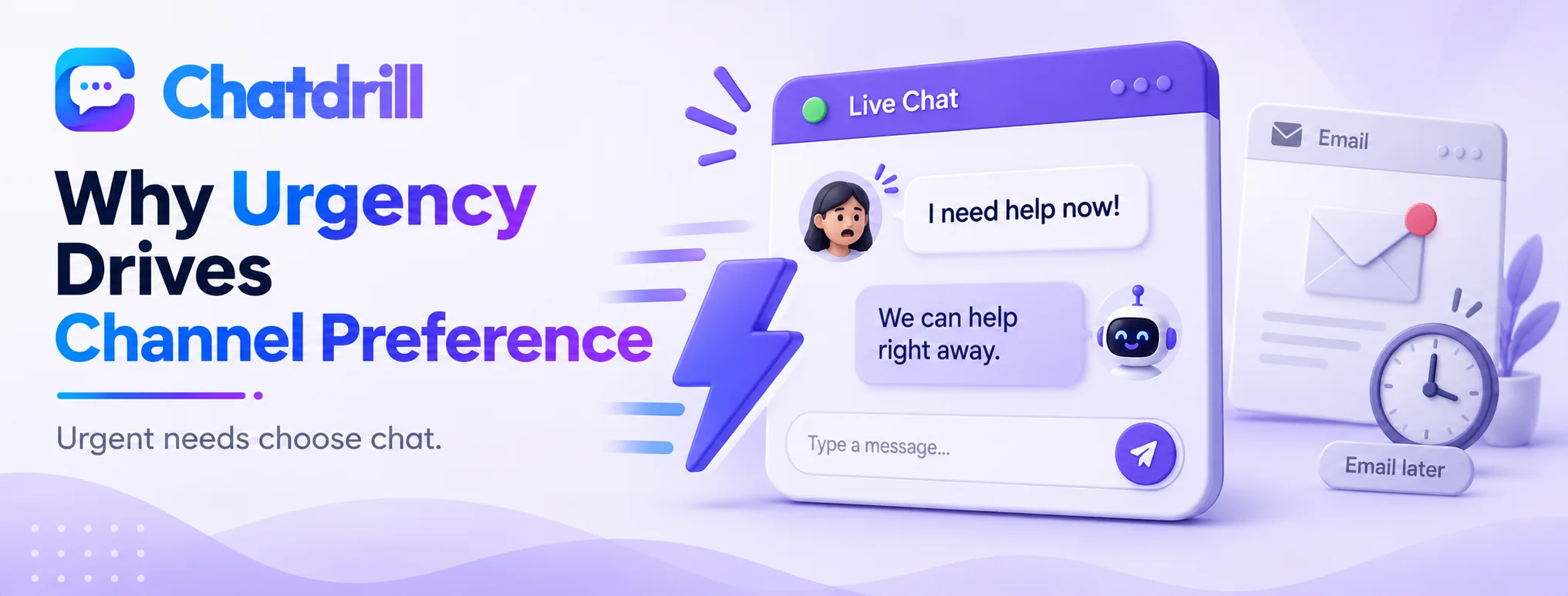
The core driver behind channel preference is how urgently a customer needs an answer, with chat winning decisively for time-sensitive needs and email holding its ground for patient, detailed ones.
Urgency as the primary preference driver
A customer facing an urgent, blocking issue, an incomplete purchase, a service disruption, overwhelmingly prefers the fastest available channel, making chat the natural, strongly preferred choice in these moments.
This urgency-driven preference explains why chat has grown so significantly for support and pre-purchase questions specifically, situations where genuine time pressure exists.
Patience allowing for a different channel calculus
When a customer genuinely isn't in a hurry, submitting a detailed question and waiting for a considered reply, the way email allows, doesn't carry the same friction it would for an urgent need.
This patience factor is why email preference persists specifically for non-urgent situations, even as chat has become the default for time-sensitive ones.
Where Email Still Holds Genuine Advantages
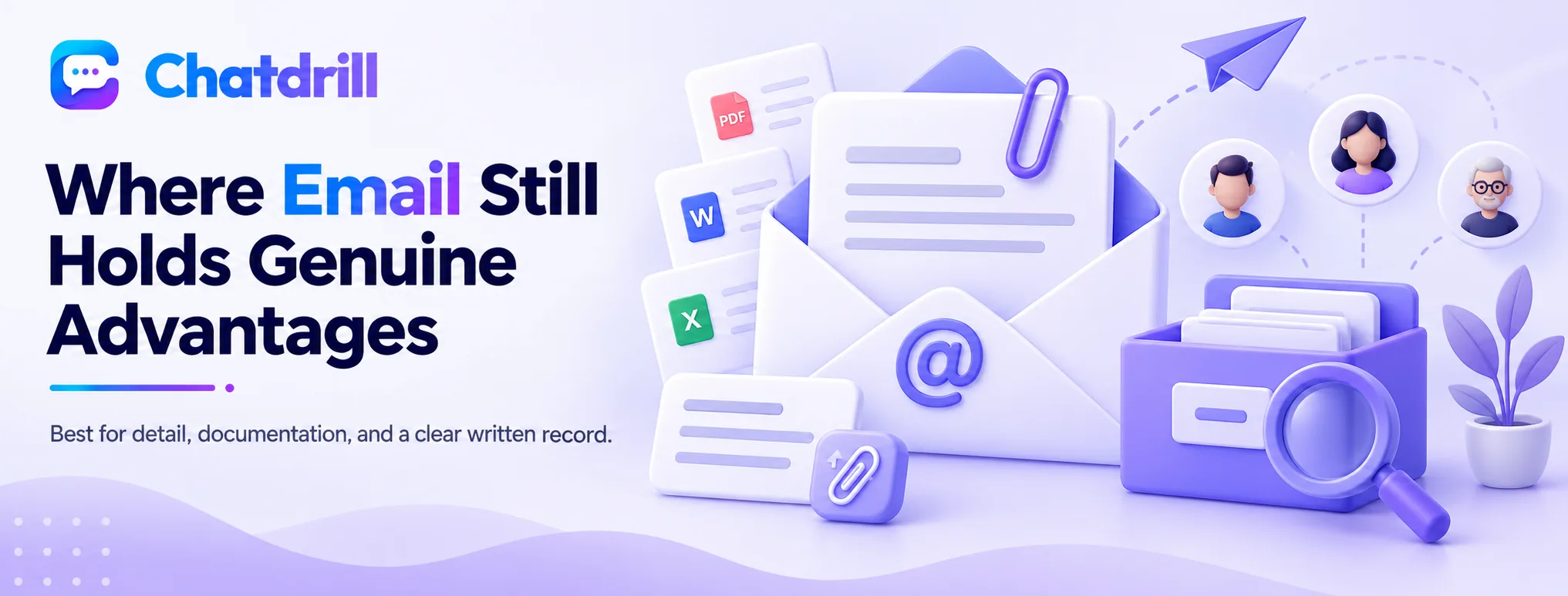
Email remains genuinely preferred for complex, documentation-heavy inquiries and for customers wanting a clear written record of an interaction.
Complex inquiries needing supporting documentation
A customer needing to attach files, provide extensive background, or reference specific documentation often finds email's format genuinely better suited to their needs than a real-time chat exchange.
This structural fit is a genuine, persistent reason some interactions continue to favor email regardless of chat's broader growth.
Wanting a clear, searchable written record
A customer handling something they might need to reference later, a formal complaint, a significant transaction detail, often prefers email specifically for the clear, easily searchable record it naturally creates.
This record-keeping value is distinct from urgency and represents a genuine, ongoing reason to maintain email as a channel option.
Generational and Demographic Differences Worth Noting
While chat preference skews somewhat toward younger demographics, the urgency-based preference pattern holds broadly across most age groups rather than being purely generational.
General patterns across age groups
While younger customers often show a somewhat stronger overall preference for chat, the core pattern, chat for urgent needs and email for detailed ones, tends to hold reasonably consistently across most age groups rather than being purely a generational divide.
This means designing for the urgency-based pattern generally serves a broader customer base better than assuming preference is determined mainly by age alone.
Avoiding oversimplified generational assumptions
Assuming older customers universally reject chat, or younger customers universally reject email, oversimplifies a preference pattern that's genuinely more about situational urgency than a hard demographic divide.
A business offering both channels well, rather than assuming a rigid generational split, tends to serve its actual, mixed customer base more effectively.
How ChatDrill Supports Channel-Appropriate Response
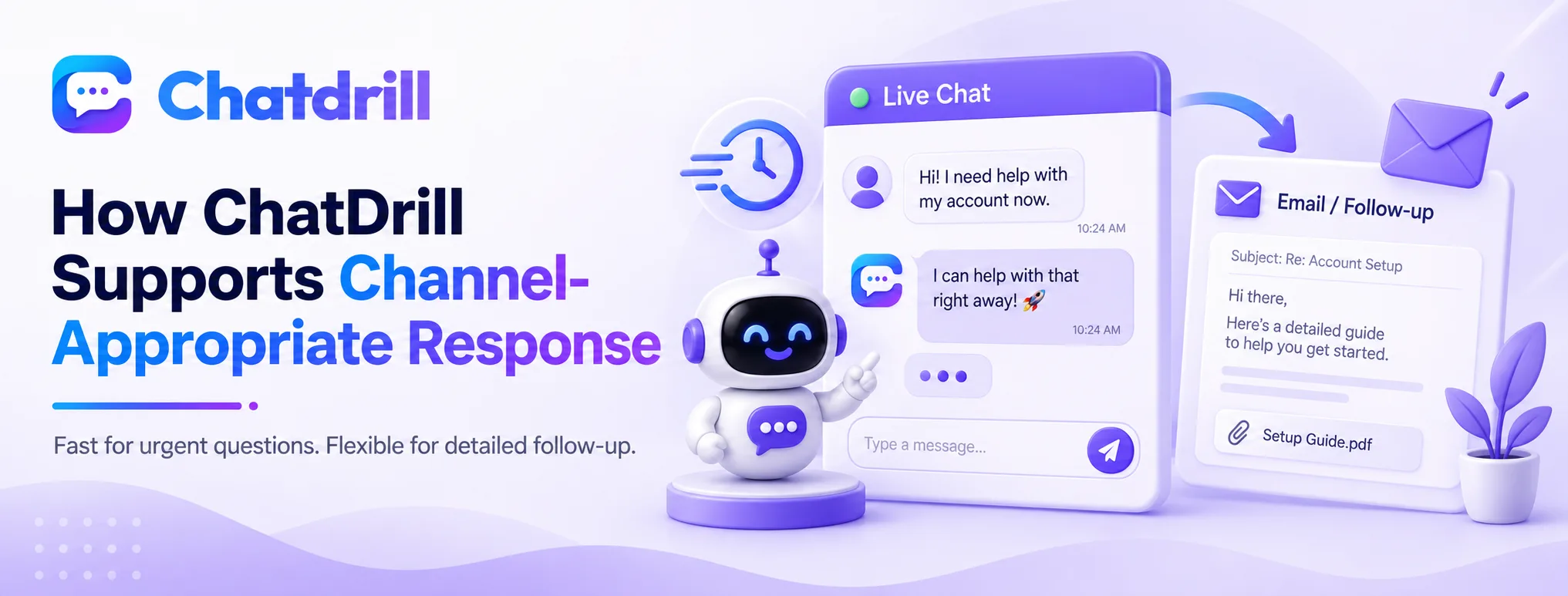
ChatDrill's fast AI response serves the urgency-driven preference for chat, while its handoff and follow-up capabilities respect that some inquiries are still better served by a more detailed, considered channel.
Fast response matching urgent preference patterns
ChatDrill's AI responds to common questions within seconds, directly matching the strong preference for speed that drives chat adoption for urgent and time-sensitive needs specifically.
This responsiveness helps a business capture the genuine preference shift toward chat without requiring proportionally larger human staffing investment.
This speed advantage holds regardless of when a customer reaches out, meaning the urgency-driven preference is served consistently rather than only during staffed business hours.
Recognizing when a different channel genuinely fits better
ChatDrill can appropriately direct a genuinely complex or documentation-heavy inquiry toward email or a follow-up process, respecting that not every interaction is best served by real-time chat alone.
This flexibility reflects the genuinely situational preference pattern this guide describes, rather than assuming chat should handle every type of inquiry regardless of fit.
Adapting Your Channel Strategy Over Time
Customer channel preference continues to evolve, meaning a channel strategy that fit well a few years ago may already be somewhat outdated today.
Reviewing your own channel usage data periodically
Looking at your own actual data on which channels customers use for which situations, rather than relying on general industry commentary alone, reveals whether your specific customer base's preference matches or diverges from the broader patterns this guide describes.
This periodic review helps a business stay genuinely aligned with its own customers' evolving preferences rather than assuming a static, one-time channel decision remains correct indefinitely.
Staying flexible as new communication norms emerge
As new messaging platforms and communication norms continue to emerge, maintaining flexibility in channel strategy, rather than treating today's chat-versus-email balance as permanent, positions a business to adapt as genuine customer preference continues shifting.
This adaptability mindset matters more than committing rigidly to any single channel philosophy, given how much genuine preference has already shifted within a relatively short period.