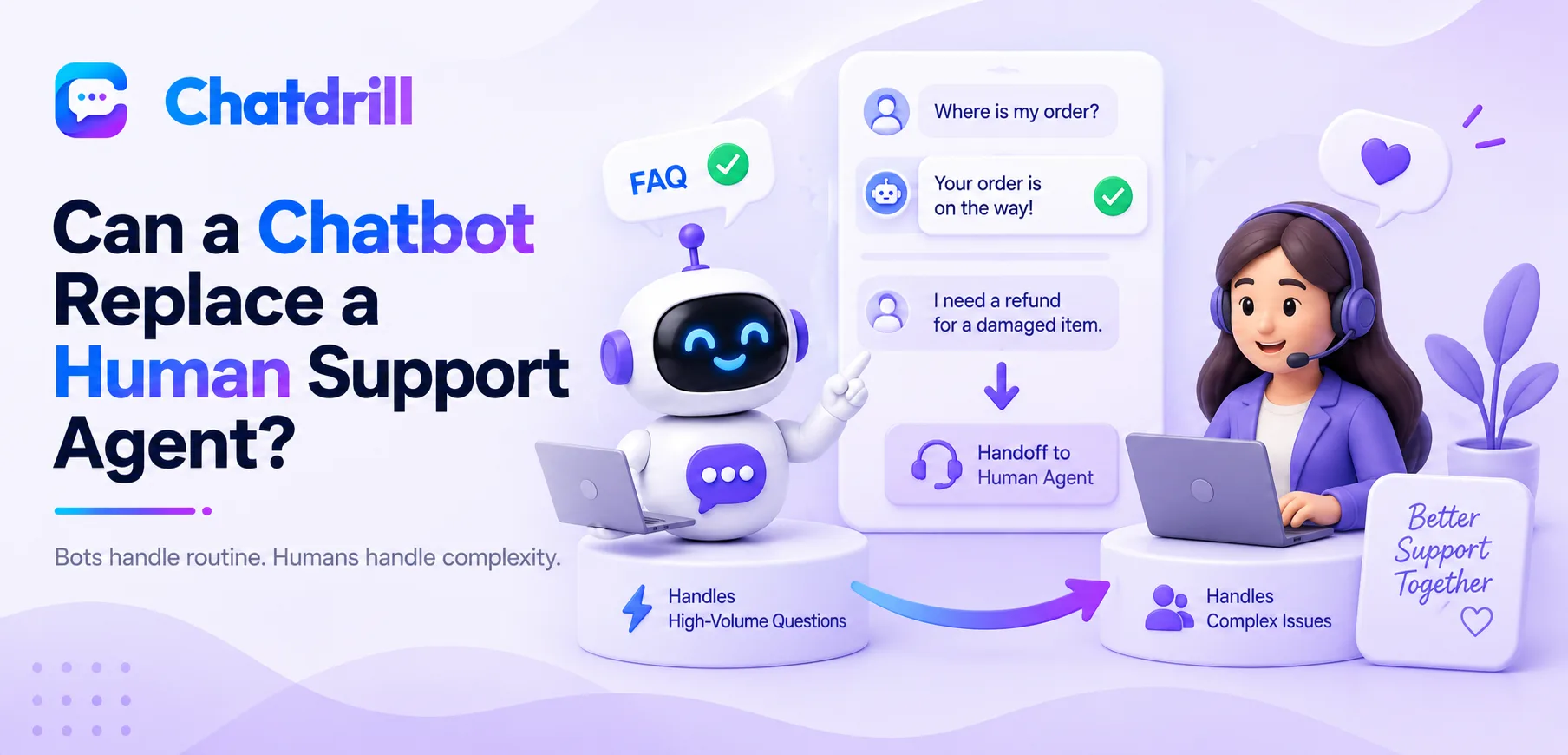


Determining whether a chatbot is genuinely helping, rather than just being present and technically functional, requires looking at specific, measurable outcomes rather than relying on a vague sense that it seems to be working reasonably well.
Quick answer: You know a chatbot is genuinely helping when it measurably reduces support volume reaching humans, resolves questions accurately without requiring follow-up, and maintains or improves customer satisfaction, all of which require tracking specific metrics rather than relying on a general impression that it seems to be working.
A chatbot that's simply installed and answering some questions isn't necessarily delivering genuine value, since the real test is whether it's measurably reducing workload, resolving issues accurately, and maintaining customer satisfaction compared to before it was deployed.
Understanding exactly which metrics to track, and how to interpret them together rather than in isolation, provides a genuinely reliable answer to whether your specific chatbot deployment is delivering real value.
This guide covers the core metrics to track, how to interpret them together, common false signals of success, and how ChatDrill supports genuine effectiveness measurement.
The Core Metrics That Reveal Genuine Value
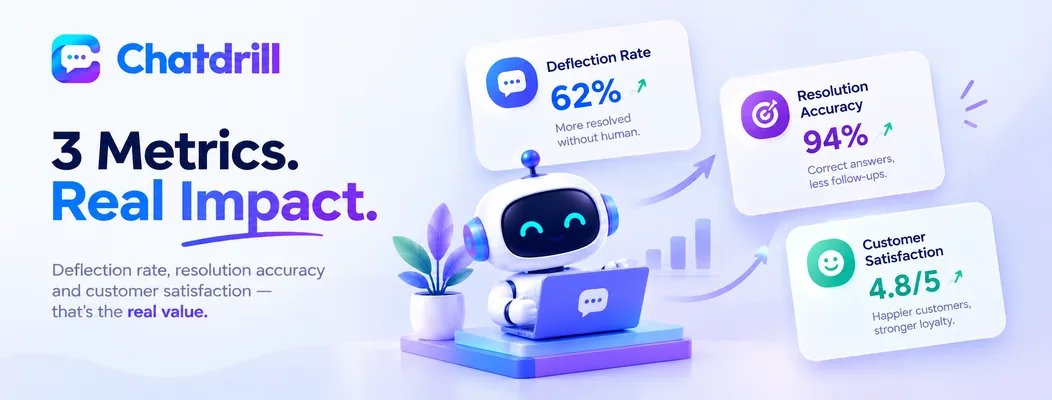
Deflection rate, resolution accuracy, and customer satisfaction together reveal whether a chatbot is genuinely helping rather than just technically present.
Deflection rate as a volume indicator
Tracking what share of total conversations the chatbot resolves without human involvement shows its genuine contribution to reducing overall support workload, a foundational efficiency metric worth monitoring consistently.
This metric alone doesn't tell the whole story, since a high deflection rate achieved through inaccurate or unsatisfying resolutions wouldn't represent genuine success despite the impressive-looking number.
Resolution accuracy and follow-up rate
Checking whether chatbot-resolved conversations genuinely stay resolved, rather than generating a follow-up contact for the same underlying issue, reveals whether the bot's answers are actually accurate rather than just superficially closing the conversation.
This follow-up tracking specifically catches the gap between a conversation appearing resolved and genuinely being resolved, an important distinction this guide emphasizes throughout.
How to Interpret These Metrics Together
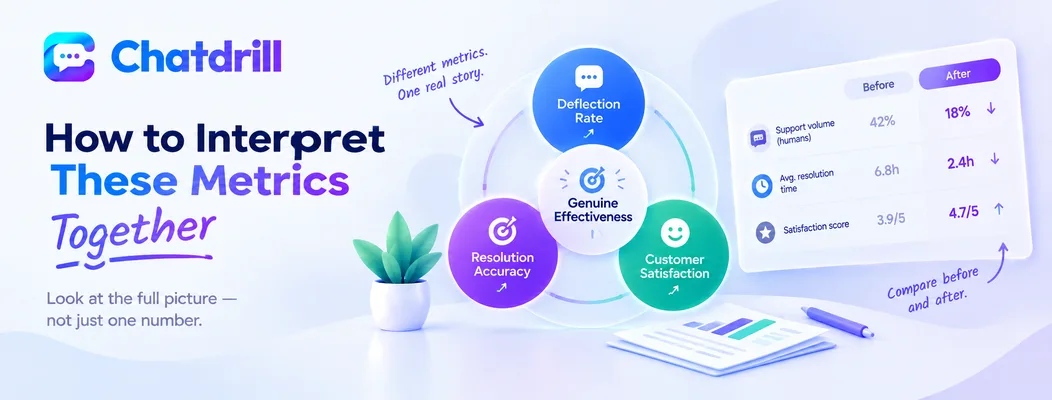
No single metric alone confirms genuine chatbot success, deflection rate, accuracy, and satisfaction need to be reviewed together to get a genuinely reliable picture.
Why a single metric can mislead
A high deflection rate paired with a low satisfaction score suggests the bot is resolving volume at the cost of genuine quality, while a lower deflection rate with excellent satisfaction might indicate an overly cautious bot escalating more than genuinely necessary.
Reviewing these metrics together, rather than celebrating or worrying about any single number in isolation, produces a considerably more accurate read on genuine effectiveness.
Establishing a genuine before-and-after comparison
Comparing key metrics, support volume reaching humans, average resolution time, satisfaction scores, from before and after chatbot deployment provides the clearest, most direct evidence of genuine impact.
This before-and-after framing avoids the trap of judging the chatbot against an abstract ideal rather than against your own actual, concrete prior baseline.
Common False Signals of Success
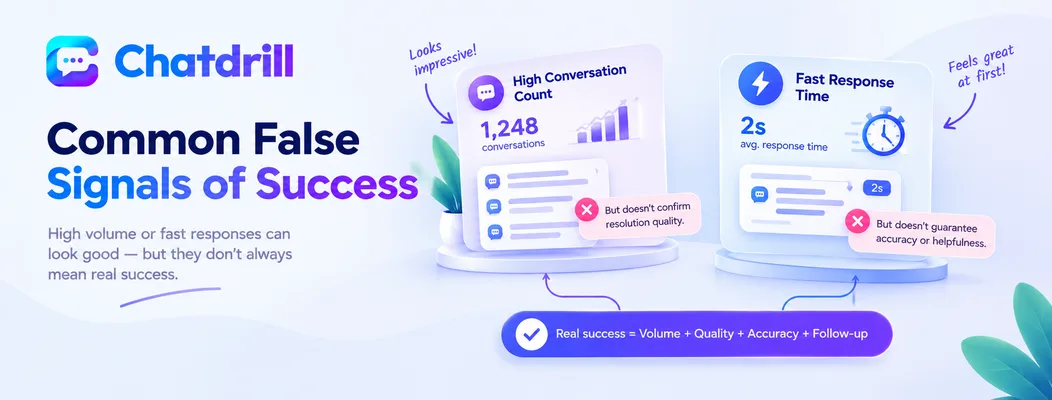
A high conversation count or fast response time alone can create a false impression of success without genuinely confirming the underlying resolutions were accurate or satisfying.
Conversation volume without resolution quality
A chatbot handling a large volume of conversations sounds impressive, but this number alone says nothing about whether those conversations were genuinely, accurately resolved rather than superficially closed.
Volume metrics need pairing with genuine quality and follow-up data to avoid this common, misleading false signal.
Speed without genuine accuracy
A chatbot responding extremely quickly creates a positive first impression, but speed alone doesn't confirm the response was actually correct or helpful, meaning fast, wrong answers can look successful by a narrow speed measure while genuinely failing customers.
Balancing speed metrics against accuracy and follow-up data avoids mistaking fast responses for genuinely effective ones.
How ChatDrill Supports Genuine Effectiveness Measurement
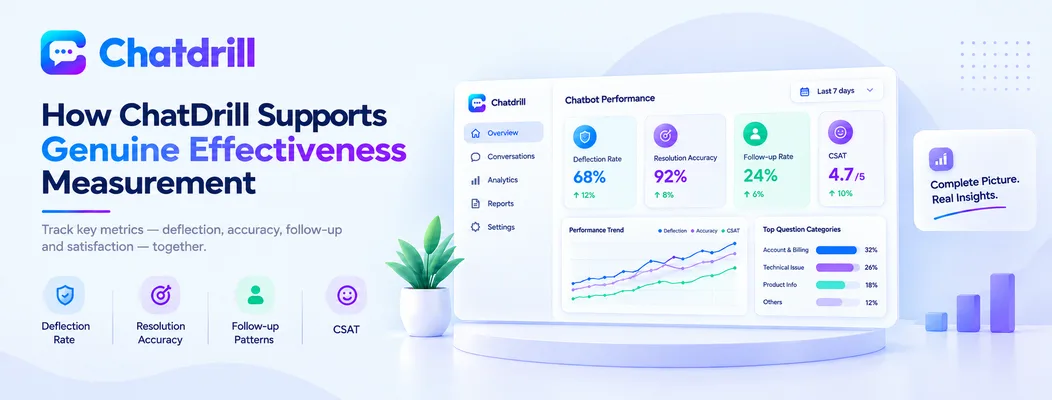
ChatDrill's comprehensive analytics track deflection, accuracy, follow-up patterns, and satisfaction together, giving a business the complete picture this guide identifies as necessary for genuine effectiveness measurement.
Comprehensive, combined metric tracking
ChatDrill's dashboard presents deflection rate, resolution accuracy indicators, and CSAT together, avoiding the misleading, incomplete picture any single metric viewed in isolation would provide.
This combined view directly supports the balanced interpretation approach this guide recommends for genuinely understanding chatbot effectiveness.
Follow-up and pattern tracking for genuine accuracy insight
ChatDrill can track whether resolved conversations generate follow-up contact, giving direct visibility into whether resolutions are genuinely holding rather than just appearing complete in the moment.
This tracking capability directly addresses the false-signal risk this guide identifies as a common trap in evaluating chatbot success.
Segmenting this follow-up data by question category also reveals specifically which topics need further training attention, rather than leaving that diagnosis to guesswork.
Building a Regular Effectiveness Review Habit
Reviewing these metrics on a consistent, ongoing schedule, rather than only when a concern arises, catches emerging issues early and confirms genuine, sustained value over time.
Setting a consistent review cadence
Reviewing the combined metric picture on a regular schedule, weekly or monthly depending on your volume, builds a habit of ongoing verification rather than only checking in in response to a specific complaint or concern.
This consistency helps catch a gradually developing issue, like slowly declining accuracy on a particular topic, before it becomes a significant, visible problem.
Sharing findings beyond the immediate team
Sharing genuine effectiveness findings with broader business stakeholders, not just the support team, helps build organizational confidence in the chatbot investment based on real, verified evidence rather than general impression.
This visibility also creates useful accountability, encouraging continued attention to genuine effectiveness rather than treating initial deployment as the end of the evaluation process.