
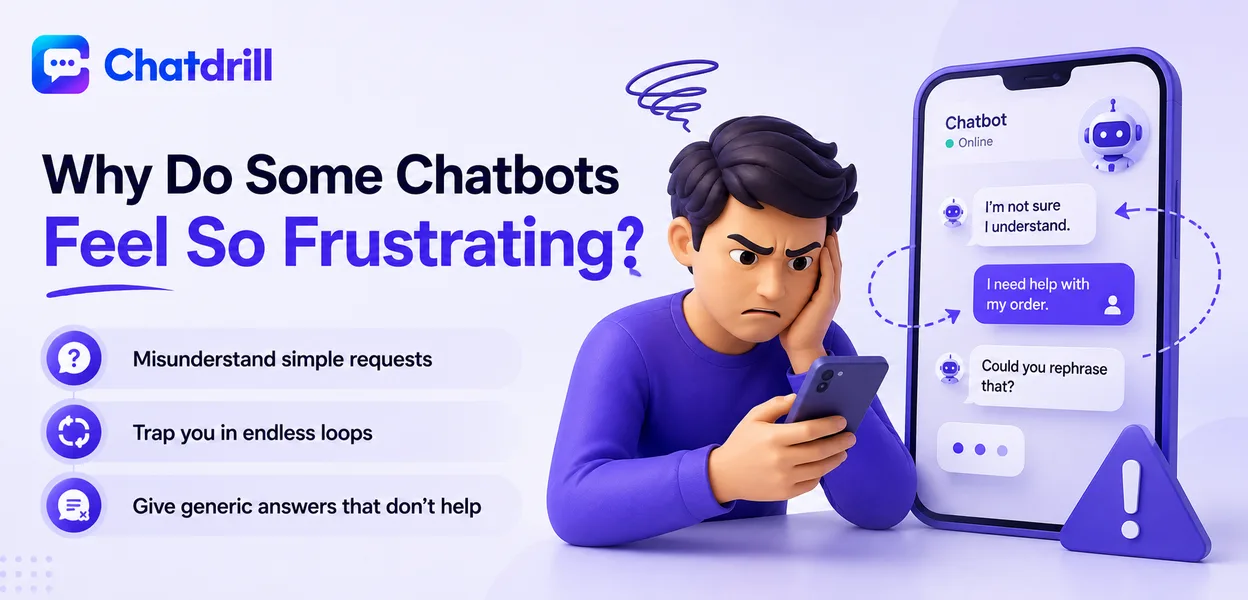
The frustration many people associate with chatbots is genuine and widespread, but it stems from specific, identifiable design and training failures rather than chatbots being inherently, unavoidably frustrating technology.
Quick answer: Chatbots feel frustrating mainly when they misunderstand simple requests, trap a user in a repetitive loop with no path to a human, or give generic answers that don't address the actual question, problems that stem from poor training and rigid design rather than chatbots being inherently frustrating technology.
Understanding exactly what causes this frustration, misunderstanding, dead-end loops, generic non-answers, clarifies that well-designed, properly trained chatbots can avoid these specific failure patterns entirely.
This distinction matters because it means the solution isn't avoiding chatbots altogether, but recognizing and avoiding the specific design mistakes that produce the frustrating experiences people rightly complain about.
This guide covers the core sources of chatbot frustration, why these specific patterns feel so
How can a well-designed chatbot avoid these frustrations?
common failure points.
The Core Sources of Chatbot Frustration
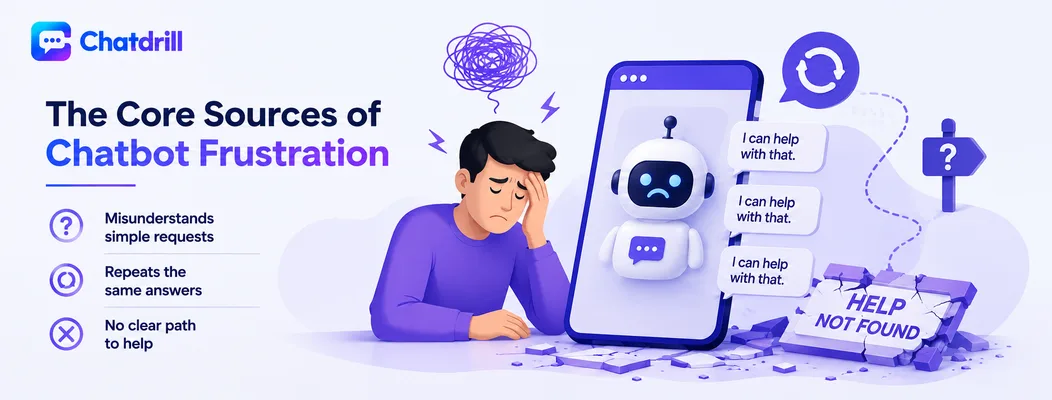
Misunderstanding simple requests, trapping users in repetitive loops, and giving generic non-answers represent the most consistently cited sources of genuine chatbot frustration.
Misunderstanding simple, reasonable requests
A chatbot that fails to understand a genuinely simple, reasonably phrased question, forcing a user to rephrase repeatedly or resort to unnatural, robotic phrasing just to be understood, creates immediate, justified frustration.
This failure pattern often stems from limited or poorly designed natural language understanding, a technical shortcoming rather than an inherent limitation of chatbot technology broadly.
Trapping users in repetitive, dead-end loops
A chatbot that repeats the same unhelpful response regardless of how a user rephrases their question, with no apparent path to a human or alternative resolution, represents one of the most acutely frustrating experiences possible.
This loop problem reflects a specific design failure, inadequate fallback logic, rather than a fundamental, unavoidable limitation of the underlying technology.
Why These Specific Patterns Feel So Aggravating
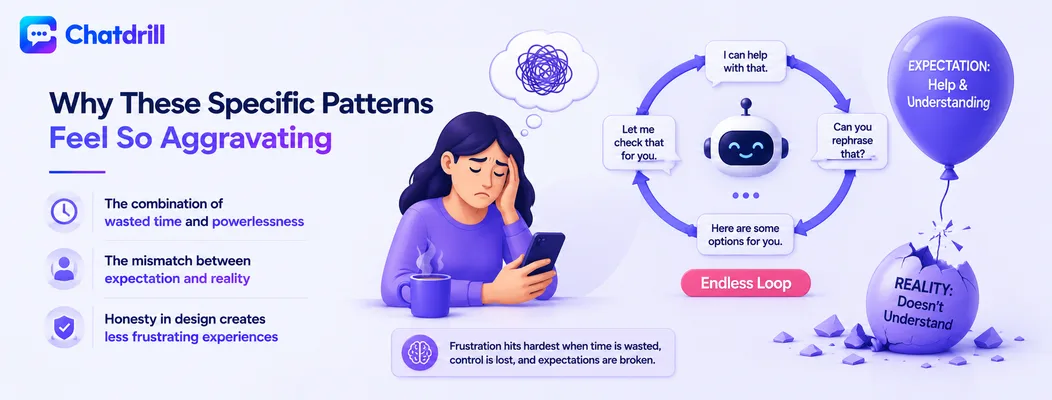
These frustration sources feel particularly aggravating because they combine wasted time with a genuine sense of powerlessness, unlike a simple delay that at least implies eventual resolution.
The combination of wasted time and powerlessness
Unlike waiting for a delayed but eventually helpful response, a frustrating chatbot loop combines wasted time with a genuine sense of having no control over reaching an actual resolution, a particularly aggravating psychological combination.
This powerlessness element, not just the delay itself, is what makes chatbot frustration feel distinctly worse than an equivalent wait through a different, human-staffed channel.
The mismatch between expectation and reality
A chatbot's conversational interface implicitly suggests genuine understanding and helpfulness, making the eventual revelation that it fundamentally doesn't understand feel like a kind of broken promise, compounding the frustration beyond what a more honestly limited interface might produce.
This expectation mismatch is part of why transparent, honest chatbot design, one that doesn't oversell its own capability, tends to produce a less frustrating experience even when genuine limitations exist.
How Well-Designed Chatbots Avoid These Failures
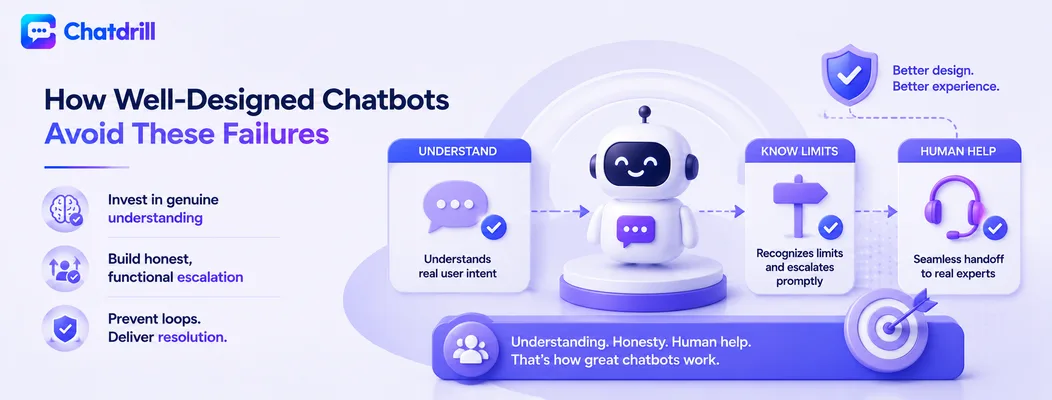
Genuine natural language understanding, honest fallback logic, and a reliable human escalation path together prevent the specific patterns that make chatbots feel frustrating.
Investing in genuine understanding capability
A chatbot trained with genuinely broad, representative examples of how real users actually phrase questions avoids the misunderstanding-driven frustration this guide identifies as a primary complaint source.
This investment in understanding quality directly prevents the most commonly cited source of chatbot frustration before it ever becomes a problem for an actual user.
Building honest, functional escalation paths
A chatbot designed to recognize its own limitations and escalate to a human promptly, rather than looping unhelpfully, prevents the dead-end frustration this guide identifies as particularly aggravating.
This escalation design reflects the honest, mature chatbot design principle that acknowledging limitation is better than pretending capability that doesn't genuinely exist.
How ChatDrill Addresses These Common Failure Points
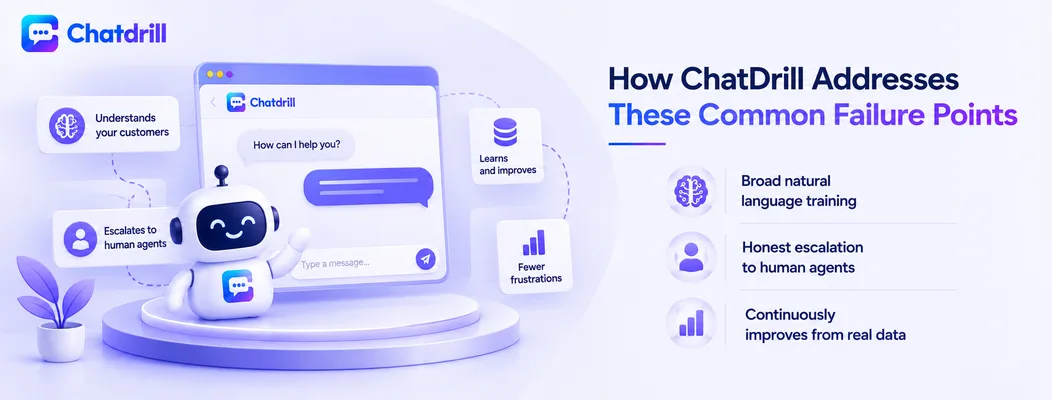
ChatDrill's broad natural language training and honest escalation design directly target the specific frustration sources this guide identifies, rather than treating frustration as an inevitable chatbot limitation.
Broad training preventing common misunderstanding
ChatDrill's AI is trained on genuinely representative examples of how your actual customers phrase questions, directly addressing the misunderstanding-driven frustration this guide identifies as the most commonly cited complaint.
This training approach reflects the specific design investment this guide identifies as necessary to avoid frustrating a real user with a genuinely reasonable question.
This same training also gets refined continuously based on real conversations, meaning genuine misunderstanding gaps get identified and corrected rather than persisting indefinitely.
Honest escalation preventing dead-end loops
Rather than looping unhelpfully when it can't resolve a question, ChatDrill escalates to a human agent promptly with full context, directly preventing the powerlessness-driven frustration this guide identifies as particularly aggravating.
This design reflects the honest, mature chatbot design principle this guide recommends, acknowledging genuine limitation rather than trapping a customer in an unproductive loop.
Spotting Frustration Signals in Your Own Chat Data
Reviewing real conversation transcripts specifically for signs of repeated rephrasing or abandoned conversations reveals whether your own chatbot is producing the frustration patterns this guide describes.
Watching for repeated rephrasing attempts
A conversation where a visitor rephrases the same underlying question multiple times signals a genuine misunderstanding problem worth investigating and addressing through additional training.
Tracking how often this pattern occurs across your real conversations gives a concrete, measurable indicator of whether misunderstanding-driven frustration is a genuine, ongoing issue for your specific implementation.
Tracking mid-conversation abandonment
A visitor leaving a conversation partway through, without reaching any apparent resolution, often signals frustration significant enough that they gave up rather than continuing to seek help.
Reviewing these specific abandoned conversations directly reveals whether they follow the misunderstanding or dead-end-loop patterns this guide identifies, informing exactly where improvement would deliver the most genuine value.