
Natural language understanding, commonly shortened to NLU, is one of those foundational technologies working quietly behind many customer support tools without customers ever needing to know its name.
Quick answer Natural language understanding, or NLU, is the technology that lets a customer support system interpret the actual meaning behind a customer's message, even with typos, slang, or varied phrasing, so it can respond accurately rather than requiring exact, pre-anticipated wording.
In customer support specifically, NLU is what allows a chatbot or automated system to grasp what a customer genuinely means, even when their message includes typos, casual phrasing, or wording that doesn't match any specifically anticipated script.
Understanding NLU as a distinct concept, separate from the broader AI system it powers, clarifies why some support automation feels remarkably capable while other, more limited automation frustrates customers by missing the point of genuinely simple questions.
This guide covers the definition, how NLU actually processes a message, common challenges it addresses, its relationship to broader conversational AI, and how ChatDrill applies NLU.
The Full Definition Explained
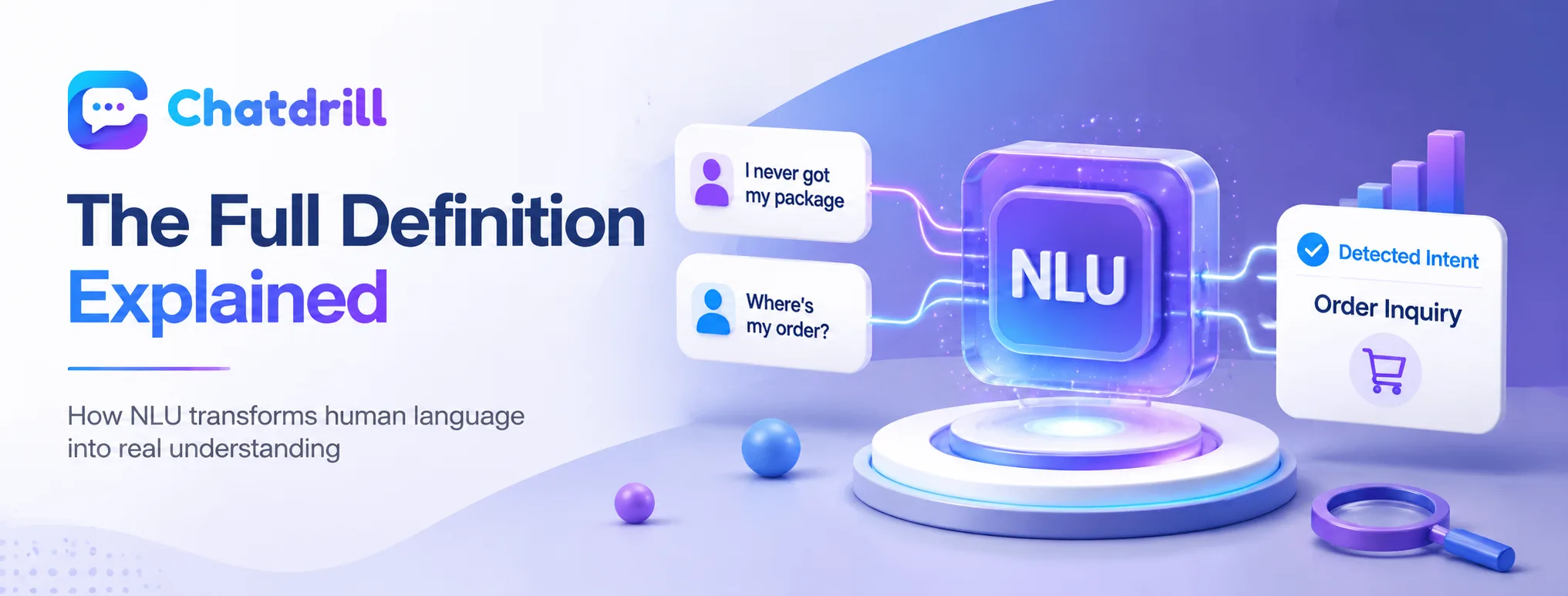
NLU is the specific technology component that extracts genuine meaning and intent from human language, handling the natural variation in how people actually phrase things.
What NLU actually does
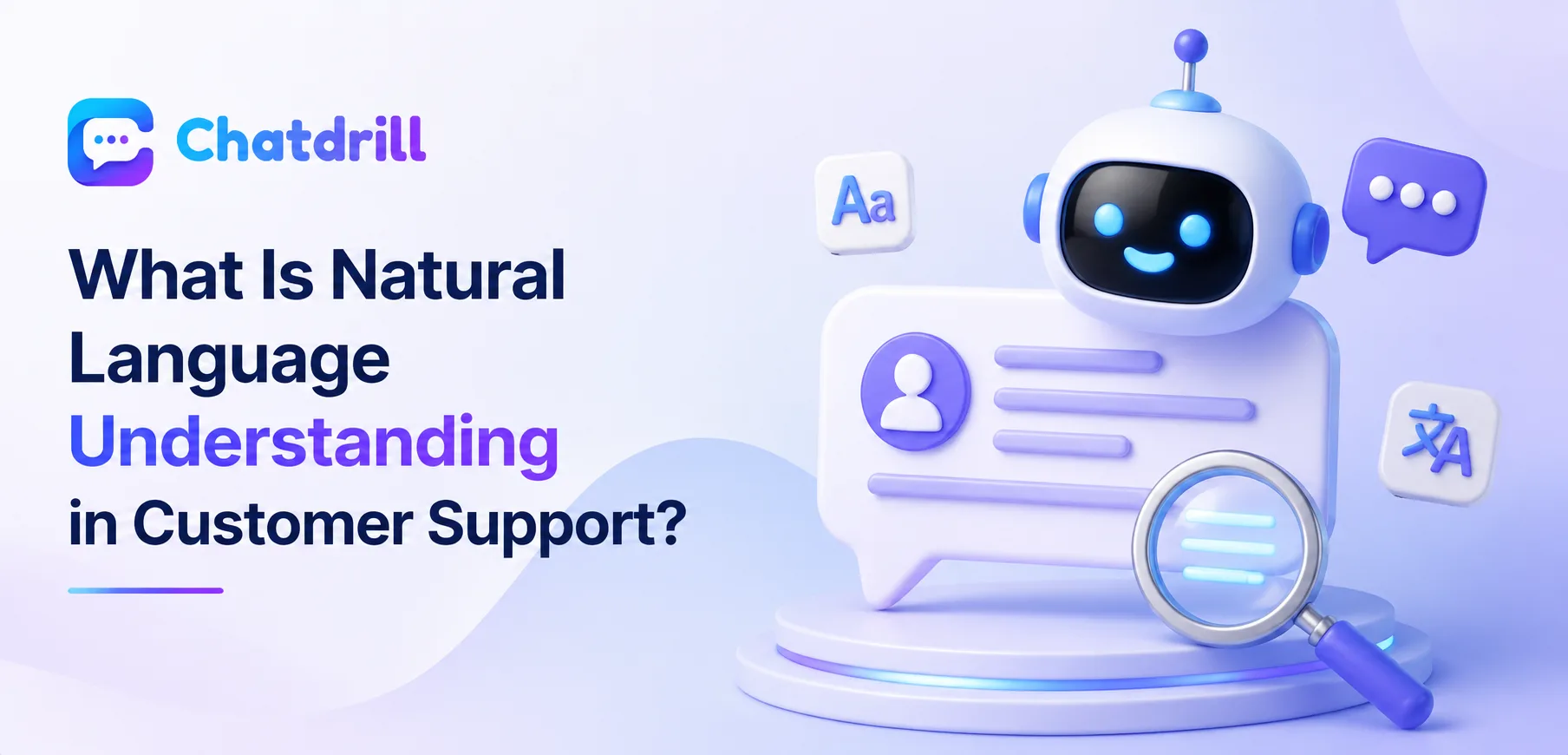
NLU takes an incoming message, whether written or spoken, and analyzes it to determine the underlying intent and any relevant details, converting naturally messy human language into a structured understanding a system can act on.
This processing happens essentially instantly, translating a customer's specific, individual wording into a genuine, actionable understanding of what they need.
Without this component, a system would need to match input to specifically anticipated exact phrases, an approach that breaks down constantly given how varied real human communication actually is.
Why understanding beats matching
Genuine understanding, rather than simple pattern matching, is what allows a system to correctly interpret "I never got my package" and "where's my order" as expressing the same underlying concern despite sharing almost no common words.
This distinction between genuine comprehension and superficial matching is the core value NLU provides within any customer support automation system.
How NLU Processes a Customer Message
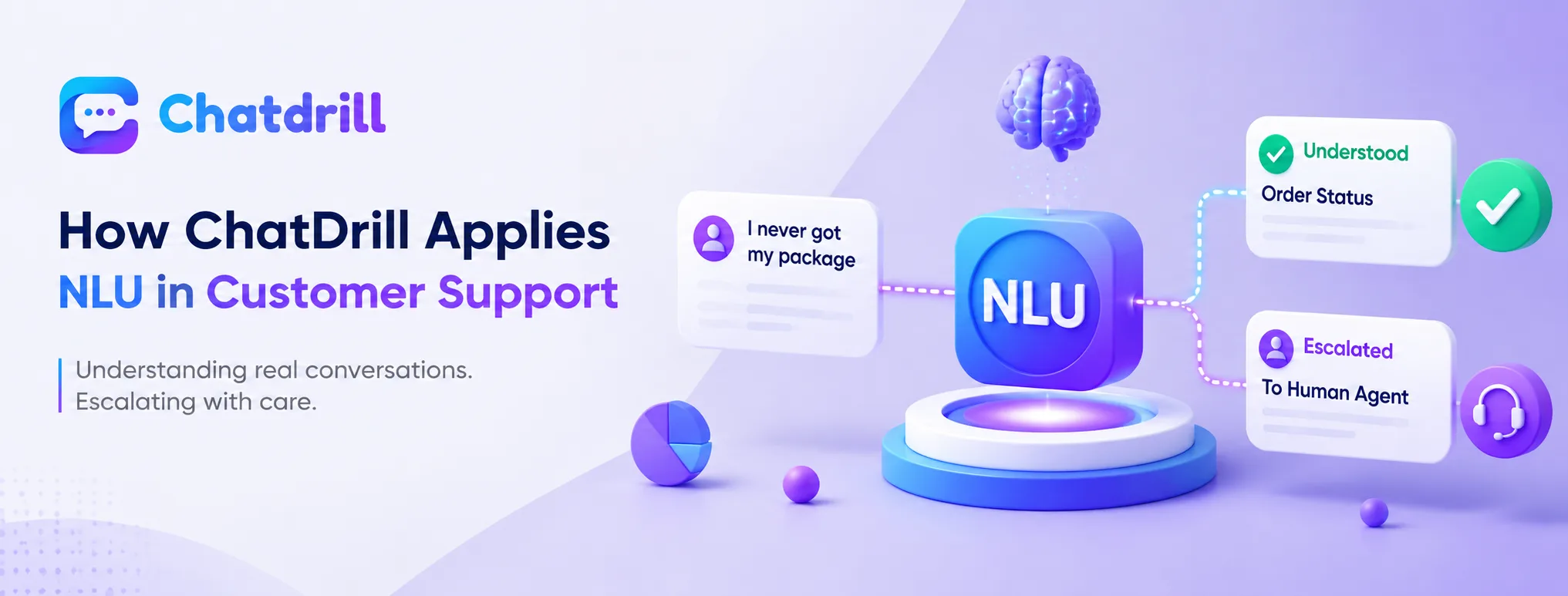
NLU typically involves identifying intent, extracting relevant entities like order numbers, and handling natural language variation like typos and slang.
Intent identification and entity extraction
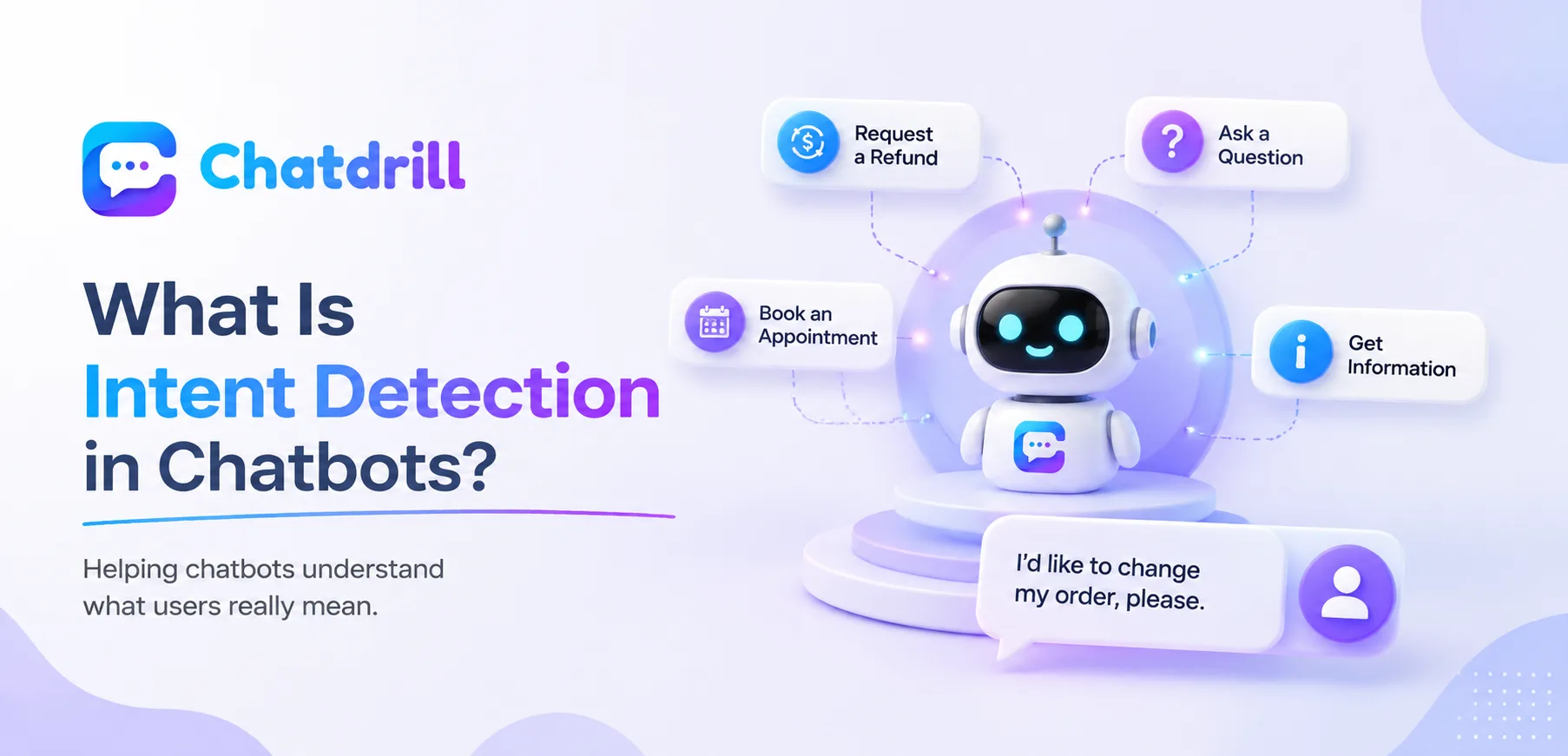
NLU first identifies the customer's underlying intent, what they're trying to accomplish, then extracts specific relevant details, entities, like a product name, order number, or date mentioned within the message.
Both pieces are typically needed to produce a genuinely useful, specific response rather than a generic one, knowing someone wants a refund is only useful once you also know which order they're referring to.
Handling natural language messiness
Real customer messages frequently include typos, abbreviations, slang, or grammatically imperfect phrasing, and effective NLU is specifically designed to handle this messiness rather than requiring pristine, formal input.
This tolerance for genuine, natural imperfection is what makes NLU-powered systems feel considerably more forgiving and usable than older systems requiring precise, formal phrasing.
Handling this variation well is often what separates a genuinely capable support automation system from a fragile one that breaks down on anything but perfectly formatted input.
Common Challenges NLU Addresses
NLU specifically addresses ambiguity, context dependency, and the sheer variety of ways the same underlying request can be expressed.
Resolving genuine ambiguity
A message like "it's not working" is genuinely ambiguous without further context, and effective NLU either identifies this ambiguity and asks a clarifying question, or uses surrounding conversation context to resolve it appropriately.
Handling this kind of genuine ambiguity gracefully, rather than guessing incorrectly, is a meaningful mark of quality NLU implementation.
Accounting for context across a conversation
A message's true meaning often depends on what was said earlier in the same conversation, and effective NLU incorporates this conversational context rather than analyzing each message in complete isolation.
This context-awareness is essential for handling natural follow-up questions that don't repeat full context themselves, the way real conversation actually flows.
NLU's Relationship to Broader Conversational AI
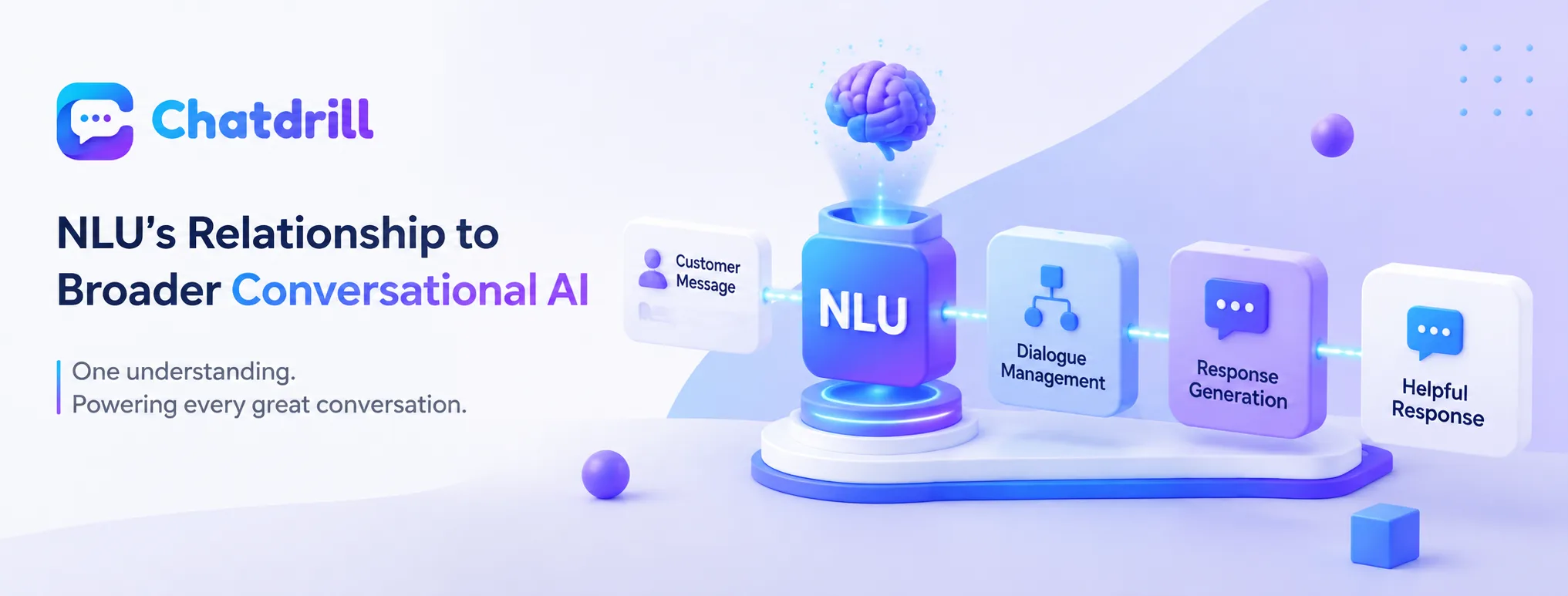
NLU is one specific component within the broader conversational AI pipeline, working alongside dialogue management and response generation to produce a complete, useful reply.
Where NLU sits in the overall pipeline
NLU handles the initial understanding step, interpreting what a customer means, while separate components handle maintaining conversation context and actually generating the response text sent back.
This division of labor means NLU quality directly caps overall system quality, even excellent response generation can't compensate for a system that fundamentally misunderstood what the customer actually wanted.
Why NLU quality matters disproportionately
Since every other step in a conversational AI system depends on genuinely correct initial understanding, weaknesses in NLU specifically tend to produce the most visible, frustrating failures a customer actually experiences.
This makes NLU quality a particularly important factor to evaluate when assessing any customer support automation system's genuine, real-world capability.
Evaluating NLU Quality in a Support Tool
Testing a system against genuinely varied, real customer phrasing, including typos and casual language, reveals NLU quality more reliably than a polished vendor demo.
Testing with real, messy examples
Rather than testing a system only with clean, well-formatted example questions, trying genuinely varied phrasing pulled from real past customer messages, typos and all, reveals how the NLU actually performs under realistic conditions.
This kind of hands-on, realistic testing is considerably more revealing than relying on a vendor's own curated, polished demonstration.
Watching for graceful handling of genuine confusion
Beyond raw accuracy, observing how a system handles a message it genuinely can't confidently interpret, whether it guesses wrong, asks a clarifying question, or escalates appropriately, reveals meaningful quality differences between systems.
This graceful-failure behavior often matters as much as raw accuracy for the actual customer experience in edge cases.
How ChatDrill Applies NLU in Customer Support
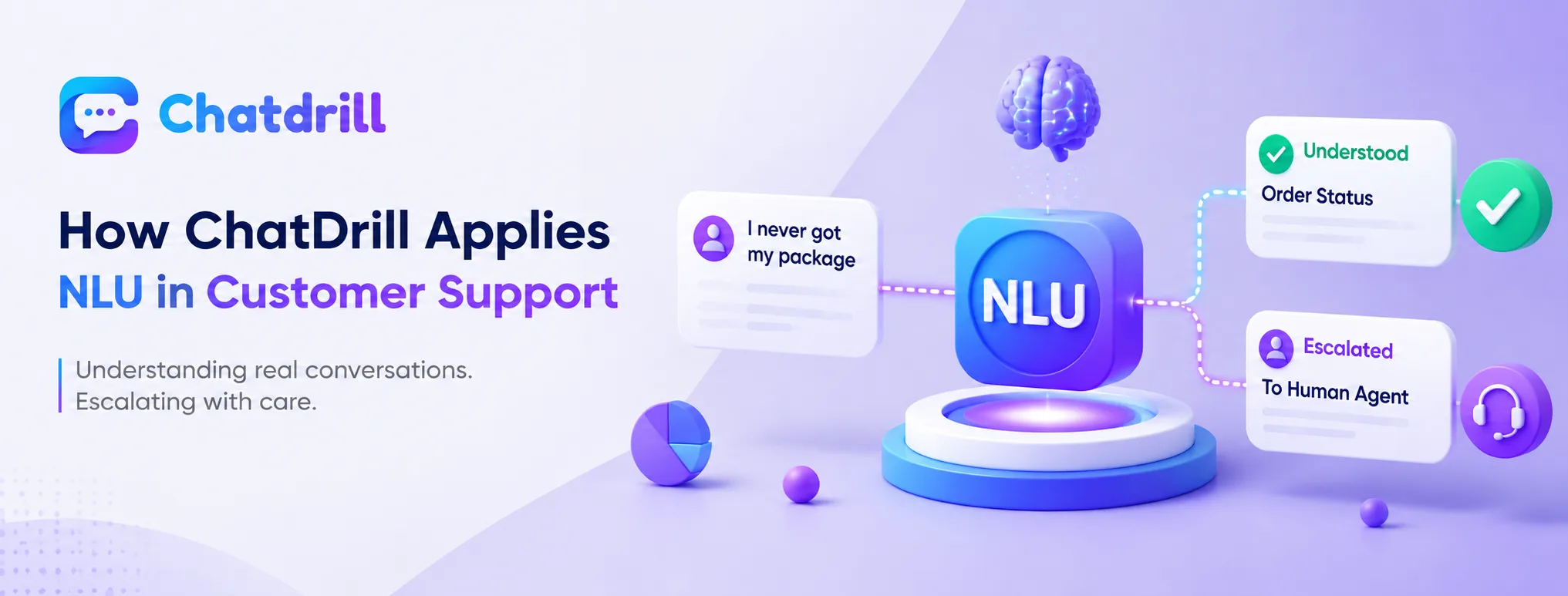
ChatDrill's NLU is trained on real conversation patterns from your business, handling natural variation and ambiguity while gracefully escalating genuinely unclear messages to a human agent.
Trained on genuine business-specific patterns
ChatDrill's NLU is trained using real or representative conversation examples specific to your business, ensuring it recognizes the particular ways your actual customers phrase their questions, not just generic, idealized examples.
This grounding in genuine, business-specific patterns is what produces meaningfully more accurate understanding than a generic, one-size-fits-all NLU model.
Graceful escalation for genuine ambiguity
When ChatDrill's NLU encounters a message it can't confidently interpret, it hands off to a human agent with full context rather than guessing incorrectly, protecting the customer experience precisely in the situations where NLU limitations would otherwise show.
This graceful fallback reflects the quality-evaluation criteria worth watching for in any customer support automation system.
Improving NLU Accuracy Over Time
Reviewing conversations where NLU misunderstood a message, and feeding those specific examples back into training, is the most direct way to improve accuracy for your particular business.
Learning from genuine misunderstanding examples
Identifying real conversations where the system misinterpreted a customer's message provides the most directly useful training material for improvement, since these examples pinpoint exactly where genuine gaps exist.
This targeted approach to improvement tends to produce faster, more meaningful accuracy gains than broad, general retraining without this specific diagnostic input.
Building a feedback loop into ongoing operations
Establishing a regular process for agents to flag conversations where NLU clearly struggled creates a genuine, ongoing feedback loop that keeps improving system accuracy over time.
This operational habit turns every human-handled escalation into a potential source of future automated improvement, rather than treating each as an isolated, one-off event.