
What is a bot handoff?
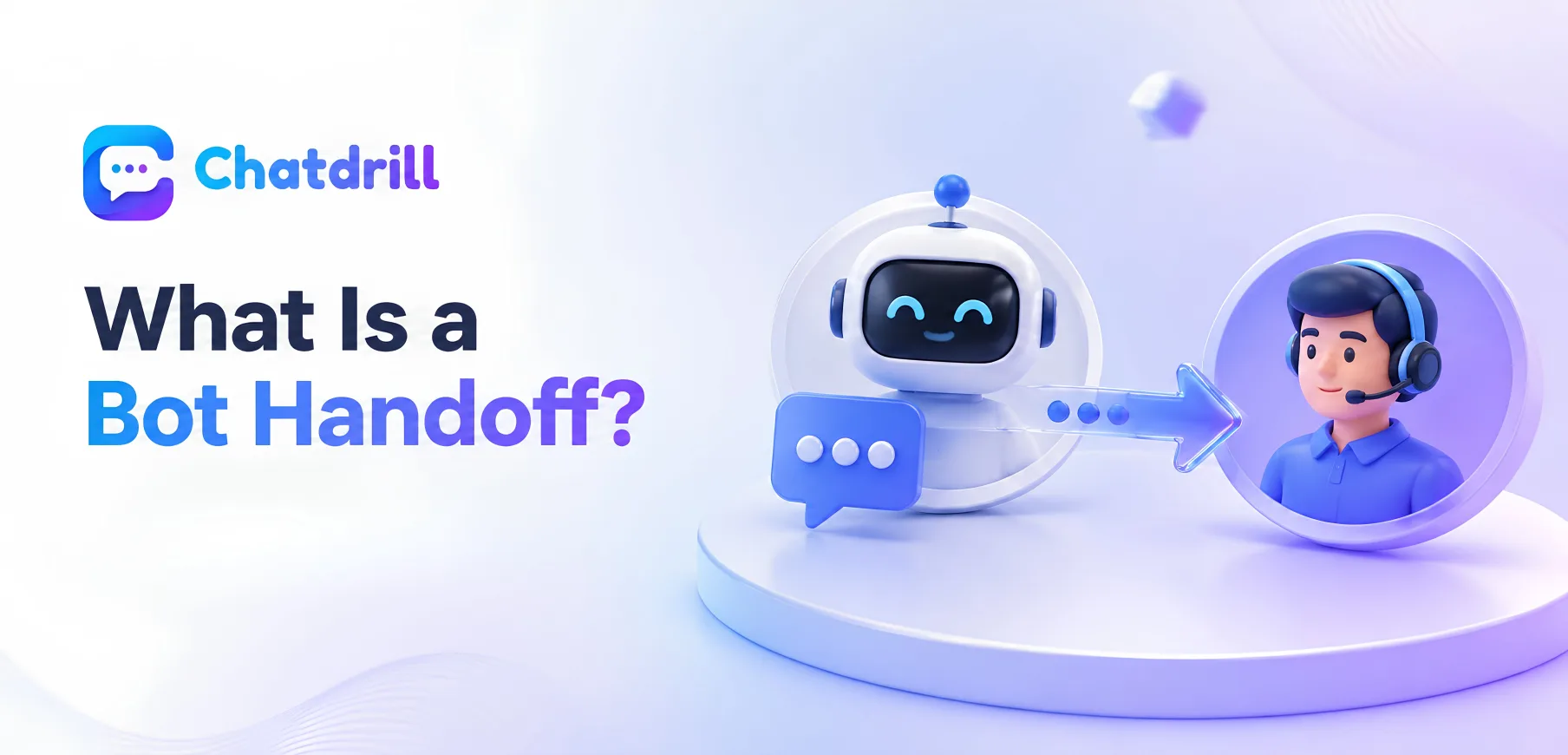
A bot handoff is the specific moment where an automated conversation transitions to human hands, a genuinely common and important event in any well-designed AI-powered support system, even one with highly capable automation.
Quick answer A bot handoff is the process of transferring an ongoing conversation from an AI chatbot to a human agent, typically triggered when the bot can't confidently resolve the issue, along with the full conversation context so the human doesn't have to start from scratch.
How well this transition happens, whether it feels seamless or jarring, often shapes a customer's overall impression of an interaction more than either the bot's or the human's individual performance alone.
Understanding what a good handoff genuinely requires, beyond just the mechanical act of transferring a conversation, clarifies why some AI-powered support systems feel considerably more polished and trustworthy than others.
This guide covers the precise definition, when handoffs typically get triggered, what makes a handoff genuinely effective, common mistakes, and how ChatDrill handles bot handoffs.
The Full Definition Explained
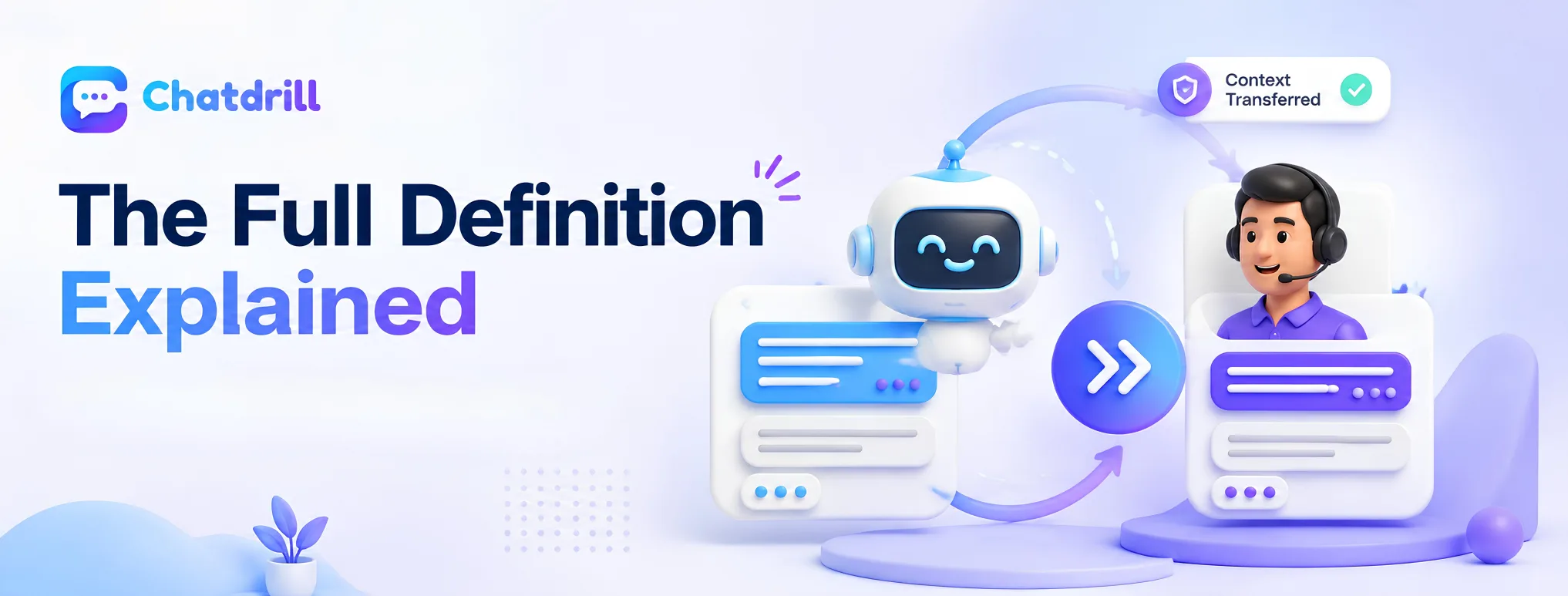
A bot handoff is the transfer of an ongoing conversation from AI automation to a human agent, ideally carrying full context along with it.
The basic mechanism
When a handoff triggers, the conversation, including everything discussed so far, transfers from the AI system to a human agent's queue, ideally with relevant context, like the customer's original question and anything the bot already attempted, attached.
The customer typically continues in the same conversation window, meaning the transition happens behind the scenes without necessarily requiring them to start an entirely new conversation.
This behind-the-scenes transfer is what allows a handoff to feel seamless from the customer's perspective, even though a significant operational shift, from automation to human judgment, is happening underneath.
Why context transfer matters so much
The genuine value of a handoff depends heavily on whether context, what's already been discussed and attempted, actually transfers along with the conversation itself.
A handoff without this context transfer forces the customer to repeat everything from scratch, effectively negating much of the efficiency and continuity benefit the handoff was meant to provide.
When Bot Handoffs Typically Get Triggered
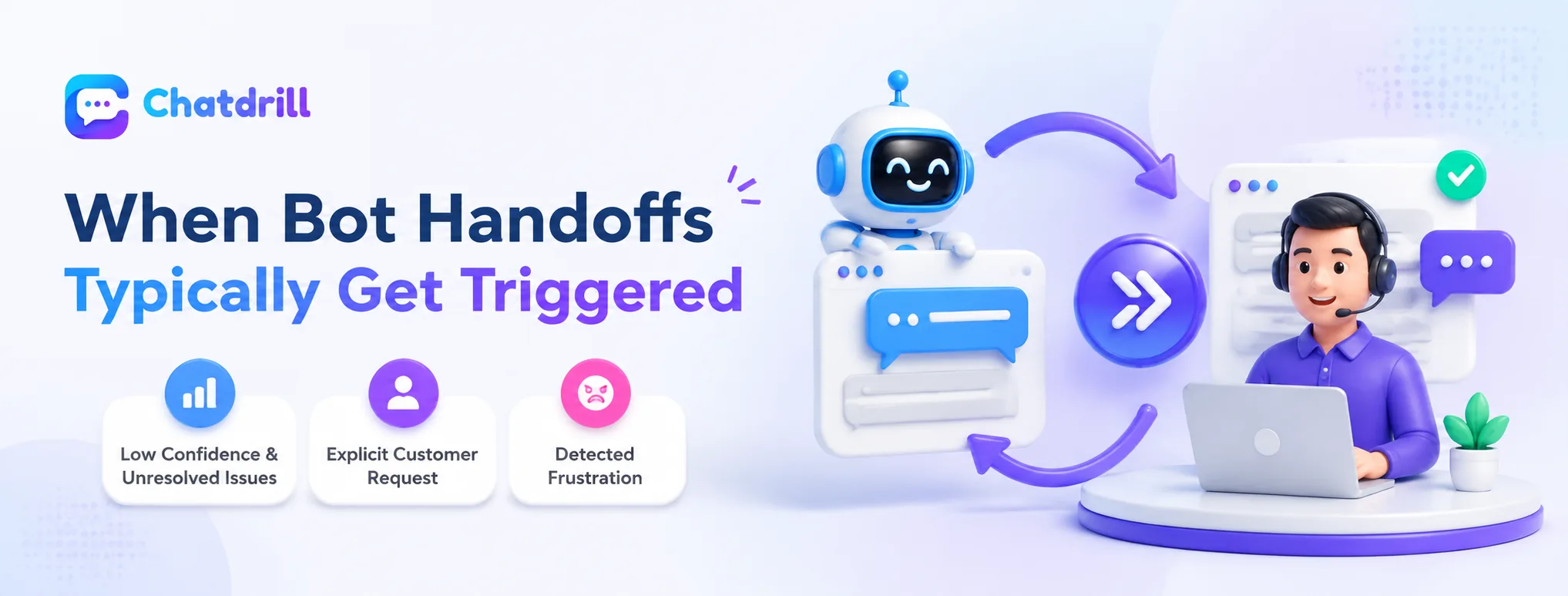
Handoffs commonly trigger on low AI confidence, explicit customer request, or detected frustration, each representing a genuinely different reason a human becomes appropriate.
Low confidence and unresolved issues
When an AI system's confidence in understanding or resolving a question falls below a defined threshold, or when a bot's attempted resolution genuinely doesn't address the issue, handoff to a human represents the appropriate, honest next step.
This confidence-based trigger reflects the same fallback logic covered in broader discussions of chatbot fallback design, applied specifically to the decision of when to escalate to a human.
Explicit requests and detected frustration
A customer directly asking to speak with a human agent should generally trigger an immediate handoff, respecting their explicit preference rather than continuing to insist on bot-only interaction.
Detected frustration, through sentiment analysis or repeated unsuccessful attempts within the same conversation, can also appropriately trigger a proactive handoff even before the customer explicitly requests one.
What Makes a Bot Handoff Genuinely Effective
An effective handoff transfers complete context, happens promptly once triggered, and is communicated honestly to the customer rather than happening invisibly and confusingly.
Complete, accurate context transfer
Beyond just the conversation transcript, a genuinely effective handoff includes relevant customer data, what's already been tried, and any AI-generated notes summarizing the situation for the receiving human agent.
This completeness is what actually allows a human agent to pick up efficiently, rather than needing to piece together context from a raw, unannotated transcript alone.
Prompt execution and honest communication
Once a handoff is genuinely warranted, executing it promptly, rather than letting the bot continue attempting unsuccessful resolution for an extended period, respects the customer's time.
Communicating the handoff honestly, letting the customer know they're being connected with a human agent, rather than leaving the transition unexplained and potentially confusing, maintains trust throughout the transition.
Common Bot Handoff Mistakes
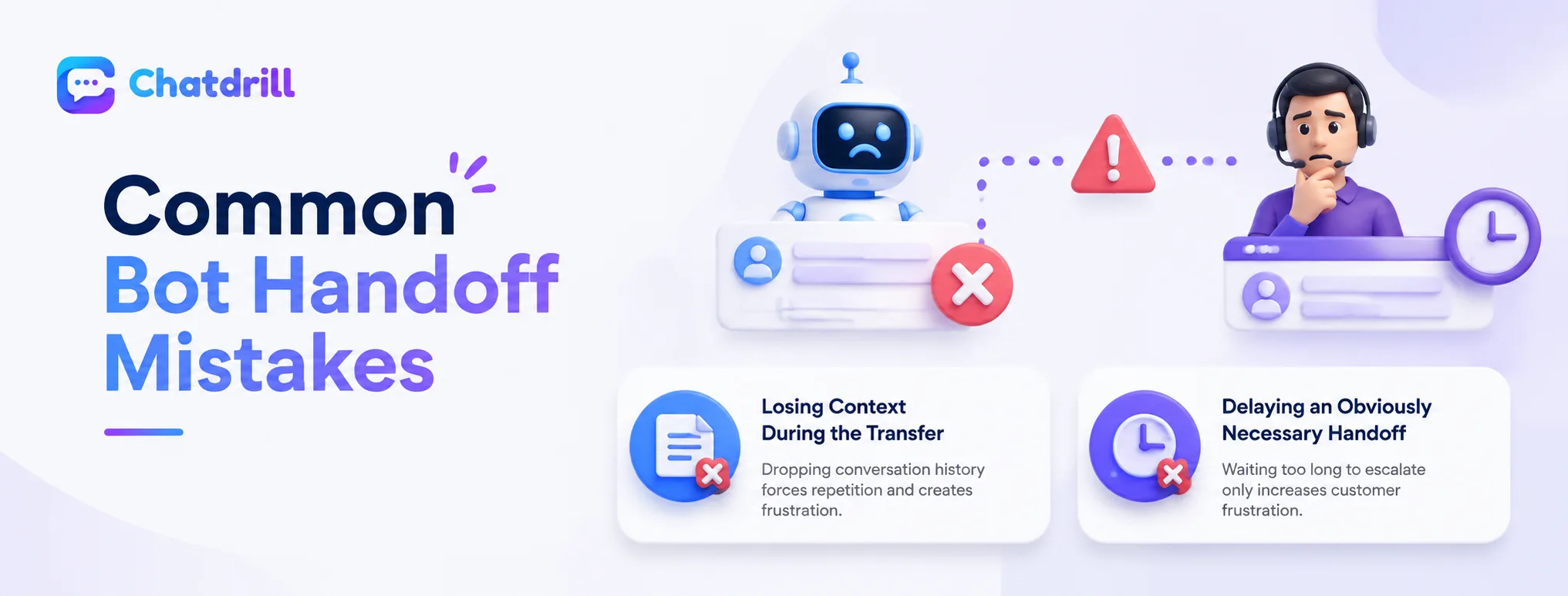
The most common mistakes are losing context during transfer, delaying an obviously necessary handoff too long, and failing to communicate the transition clearly to the customer.
Losing context during the transfer
A handoff that drops relevant conversation history or customer details forces exactly the repetition and effort that damages customer experience, effectively undoing much of the value a well-designed handoff should provide.
This is arguably the single most damaging handoff failure, since it directly recreates the frustration a genuinely good handoff is specifically designed to prevent.
Delaying an obviously necessary handoff
Continuing to let a bot attempt resolution well past the point where it's clearly struggling, rather than escalating promptly, extends customer frustration unnecessarily before the eventual, appropriate handoff finally happens.
Setting a reasonable threshold for when a handoff should trigger, rather than only escalating after significant, visible customer frustration has already built up, prevents this common delay problem.
The Reverse Direction Human-to-Bot Handoff
Less commonly discussed but equally relevant, a conversation can also transition from a human back to bot handling for routine follow-up, applying similar context-preservation principles.
When reverse handoffs make sense
A human agent resolving a complex issue might hand a routine follow-up question, like confirming a tracking number update, back to the bot, freeing the human agent's time for genuinely complex work while the bot handles the simpler remainder.
This reverse handoff direction applies the same efficiency logic as the more common bot-to-human direction, just flowing the opposite way based on where genuine complexity actually resides.
Maintaining the same context principles in reverse
Just as a bot-to-human handoff should carry full context, a human-to-bot handoff should ensure the bot has visibility into what the human agent already resolved, avoiding a scenario where the bot's subsequent responses ignore that established context.
This bidirectional context principle reflects a genuinely mature, well-designed hybrid support system rather than treating automation and human handling as entirely separate, disconnected tracks.
How ChatDrill Handles Bot Handoffs
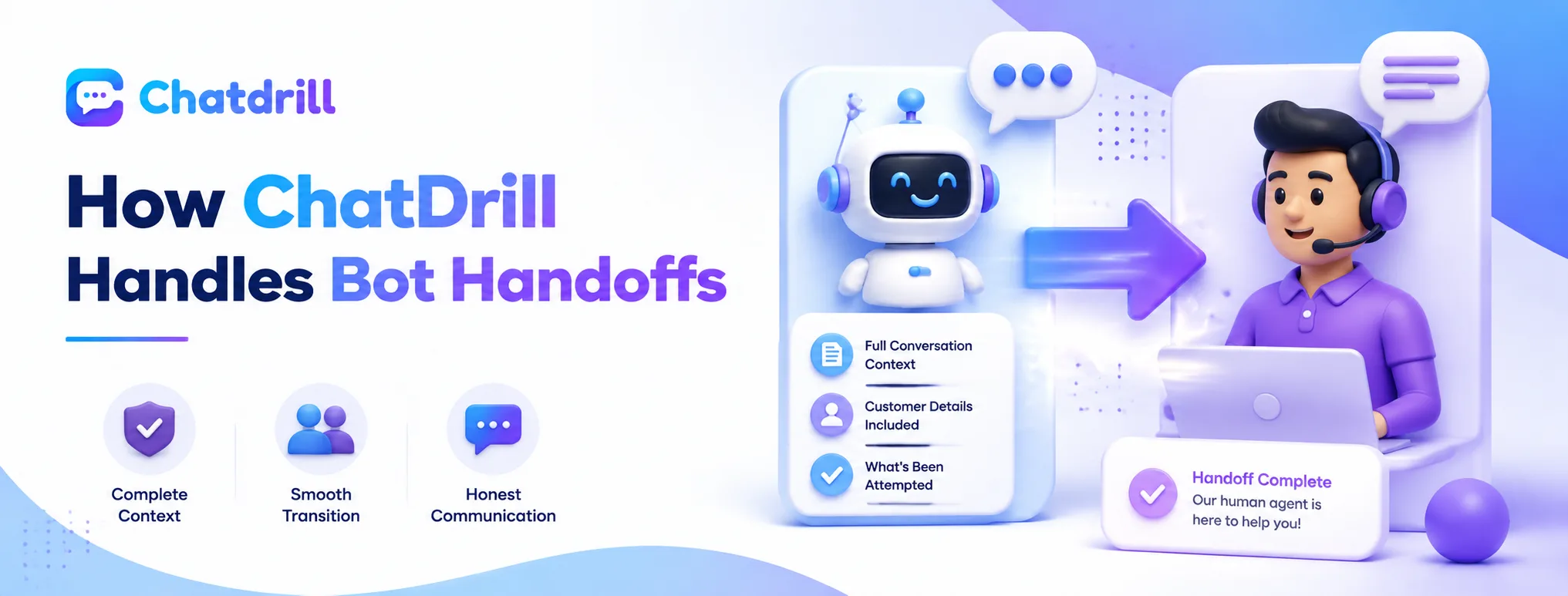
ChatDrill transfers complete conversation context automatically during a handoff and communicates the transition honestly to the customer, avoiding the most common handoff failures.
Automatic, complete context transfer
When ChatDrill's AI hands off to a human agent, the full conversation history, relevant customer data, and a summary of what's already been attempted transfer automatically, ensuring the receiving agent has genuine, complete context.
This automatic completeness directly addresses the context-loss failure mode that damages customer experience most severely in poorly designed handoff systems.
Honest, prompt handoff communication
ChatDrill is designed to trigger a handoff promptly once genuinely warranted, and to communicate the transition clearly to the customer, rather than leaving them confused about whether they're still talking to a bot or now a human.
This honest, prompt approach reflects the specific effectiveness criteria covered throughout this guide, applied directly within ChatDrill's actual handoff design.
Measuring Handoff Quality Over Time
Tracking handoff frequency, reason, and post-handoff resolution outcomes reveals whether a handoff system is genuinely working well or quietly degrading customer experience.
Tracking handoff frequency and reasons
Monitoring how often handoffs occur and for what specific reason, low confidence, explicit request, detected frustration, reveals patterns worth addressing, like a particular question type consistently triggering unnecessary escalation.
This tracking turns handoff data into a genuine diagnostic tool for improving AI training, not just an operational statistic to file away unreviewed.
Reviewing post-handoff outcomes specifically
Checking whether conversations that received a handoff eventually resolved well, and how customers rated those specific interactions, reveals whether the handoff process itself is genuinely serving customers or simply relocating an unresolved problem.
This outcome-focused review closes the loop on handoff quality, ensuring the transition itself is judged by its actual downstream result, not just how smoothly the transfer mechanically occurred.